
Enterprise SEO: Strategy, Workflows, and Scaling Content Operations
Enterprise SEO is not just SEO for a bigger website. It is a different operating model. At enterprise scale, the person who spots an SEO issue is almost never the person who can fix it. A single template change can affect thousands or millions of pages, and a single mistake can cost serious revenue. This article explains how enterprise SEO differs from smaller-scale SEO, how to prioritize work across departments, and how to build scalable content operations that support both traditional search and AI-powered answer engines.
What Makes Enterprise SEO Different
Enterprise SEO: Strategy, Workflows & Scaling Content - What Makes Enterprise SEO Different.
Enterprise SEO is search engine optimization applied to large organizations managing thousands of pages, multiple domains, international markets, and complex technical stacks. The fundamentals of SEO do not change, but the approach, coordination, and stakes are completely different.
| Dimension | Smaller-scale SEO | Enterprise SEO |
|---|---|---|
| Implementation | The person who finds the issue can often fix it directly | Fixes are owned by engineering, regional marketing, or legal teams |
| Approvals | Little to no sign-off needed | Legal, brand, regional, and technical teams may all need to approve a single change |
| Coordination | One person or a small team runs most SEO work | Multiple departments manage the same site with competing priorities |
| Scope of a change | A fix affects one or a handful of pages | A template change can affect thousands or millions of pages |
| Reporting | Rankings, traffic, and conversions | Revenue, pipeline, and executive-level business outcomes |
At enterprise scale, finding a problem and fixing it are two different jobs held by different people in different departments with different budgets. The real skill is deciding what is worth pushing, to whom, and in what order.
Where Enterprise SEO Gets Hard at Scale
Enterprise SEO: Strategy, Workflows & Scaling Content - Where Enterprise SEO Gets Hard at Scale.
Technical SEO Lives in Templates
Most technical SEO problems at enterprise scale live in a template or shared system, not a single page. Crawl budget, faceted navigation, duplicate URL parameters, and internal linking all need to be enforced at the template level. No one can manually manage links across millions of pages. This means technical fixes are typically owned by engineering teams, and SEOs must build business cases rather than make direct changes.
Content Scaling Without Scaling Headcount
Enterprise websites have too much content to review page by page. Quality has to be built into templates and workflows instead of enforced by one person. Templated content standards apply styles and quality checks to every new page of that type, removing the need for manual page creation and optimization. For global sites, these pages also need effective translation and localization, which is usually a cross-team job involving legal and regional marketing.
Migrations Touch Every Page
Migrating to a new domain or changing a content management system is where enterprise SEO's implementation problem is most obvious. SEO might own the redirect strategy, engineering handles the migration process, and integrations with CRMs, ERP systems, and marketing automations add further dependencies. Getting sign-off from all these departments takes time, meaning enterprise migrations usually take months rather than days.
A Prioritization Framework for Enterprise SEO
Enterprise SEO: Strategy, Workflows & Scaling Content - A Prioritization Framework for Enterprise SEO.
Since you cannot act on every finding directly, you need a way to score opportunities. Use three factors, each on a 1 to 5 scale:
- Expected impact: How much the task could move rankings, traffic, or revenue if implemented.
- Implementation cost: How much time and investment it will take to put in place.
- Approval friction: How many teams need to sign off before it can ship.
Calculate a priority score:
Priority score = (Impact x 2) - (Implementation cost + Approval friction)
Consider a million-URL e-commerce site with two equally valuable opportunities. Fixing duplicate title tags on faceted navigation might score high because it is a template change one team can implement. Rewriting product descriptions for the top 500 SKUs might score lower because it needs manual work and sign-off from other teams. Both have similar potential impact, but the template fix should be prioritized.
This framework helps you build a business case that speaks to engineering, legal, and regional teams in terms they care about.
How AI Search Changes Enterprise SEO Priorities
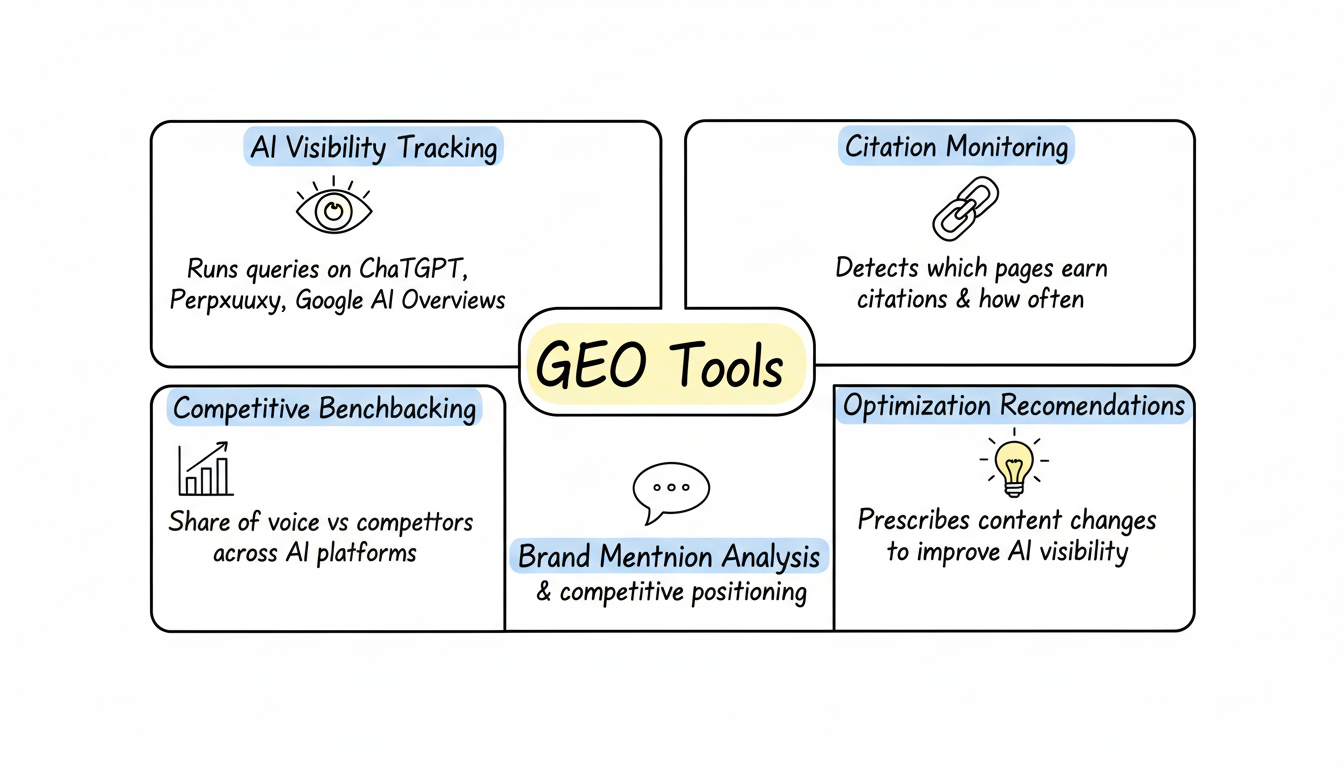
Enterprise SEO: Strategy, Workflows & Scaling Content - How AI Search Changes Enterprise SEO Priorities.
AI search changes what counts as a high-priority opportunity. Whether AI tools mention, cite, and recommend your brand is a growing part of visibility. AI search visibility breaks down into four layers, and the SEO team's ability to act alone shrinks as you move through them:
- Discoverability: Indexing, crawlability, and whether AI crawlers can access your content. This has largely the same technical foundation as traditional SEO.
- Clarity: How accurately language models describe what your business does and the solutions you offer. This depends on consistent messaging across your site, often set by product marketing.
- Authority: Whether you are cited and corroborated as a credible expert across other authoritative sources. This is largely a PR and digital PR function.
- Trust: Community sentiment, reviews, and consistent, verified claims. This is mostly owned by customer experience and brand reputation teams.
SEO can influence discoverability directly, but the largest influence on clarity, authority, and trust comes from separate teams. This means enterprise SEO priorities now extend beyond the SEO team's responsibilities.
Building Scalable Content Operations
Scaling content without scaling headcount requires systems, not heroics. Here is how to approach it.
Start With a Source of Truth
Before generating content at scale, you need a reusable source of truth about your product, market, and brand voice. This is where an AI content marketing automation platform like AgentBooks can help. AgentBooks crawls your website to create a reusable brand data platform, then builds a categorized keyword plan, generates articles with approval workflows, and publishes to a hosted content site with custom domain support. This connects product understanding, market research, keyword planning, article creation, publishing, and future updates in one workspace.
For enterprise teams, the value is not just speed. It is consistency. When every article is grounded in the same product understanding and brand voice, you reduce the review burden on legal and regional teams.
Build a Categorized Keyword Plan
A categorized keyword plan maps topics to pages and helps you avoid cannibalization across thousands of URLs. Start with seed keywords, analyze search volume, difficulty, and intent, then map keywords to pages. For a deeper walkthrough, see Keyword Research: A Practical Step-by-Step Guide.
Use Approval Workflows
Enterprise content needs review. Approval workflows let you route drafts to the right stakeholders, whether that is legal, regional marketing, or product experts. This is how you scale content without scaling risk.
Publish and Update Continuously
Publishing is not the end. Enterprise content needs to be updated as products evolve, markets shift, and search algorithms change. A platform that connects publishing and future updates in one workspace helps you maintain accuracy over time.
Evaluating Enterprise SEO Platforms
When evaluating enterprise SEO platforms, consider these criteria:
- Unified data: Can the platform bring together keyword data, content performance, and technical audits in one place?
- AI built for your business: Does the AI learn from your product and market, or does it produce generic output?
- Automation that frees your team: Can it handle repetitive tasks like internal linking recommendations or content gap analysis?
- Workflows that get teams aligned: Does it support task assignment, permissions, and approval routing?
- Real-time monitoring: Can it catch problems before they become crises?
- Reporting that proves ROI: Does it tie SEO performance to revenue, not just rankings?
For a practical look at how AI writing agents fit into this workflow, see AI Writing Agent: How Autonomous Content Tools Work.
How Much Does Enterprise SEO Cost?
Enterprise SEO costs vary widely based on the platform, team size, and scope. Some platforms charge based on the number of keywords tracked or pages managed. Others charge based on seats or usage. When building your budget, account for the platform itself, the people who will run it, and the cost of implementation across engineering and content teams. The ROI case should focus on revenue impact, not just traffic.
Related reading
- How to Use Surfer: A Beginner's Guide to Mapping Data - Learn how to use Surfer by Golden Software: import data, create contour maps, customize layers, and export results. A practical tutorial for beginners.
- Autoblogging.ai Free Trial: What You Get in 2025 - Autoblogging.ai's free trial gives you 10 free credits every month, no credit card required. See what those credits cover, what they don't, and how to test it.
Sources and further reading
- Enterprise SEO: What it is & how to build a winning strategy - Enterprise SEO involves optimizing a website’s visibility at scale, using templated and automated approaches.
- Enterprise SEO Solutions: Criteria for Scalable Performance - Understand the differences between enterprise SEO and traditional SEO, and the unique challenges faced by large organizations.
- What is an Enterprise SEO Platform? SEO and AEO at Scale - Understand what enterprise SEO is—its challenges, tactics, and ROI—and the best features of an enterprise SEO platform for executing an SEO / AEO strategy.
FAQ
What is enterprise SEO?
Enterprise SEO is search engine optimization at scale, built for large organizations managing thousands of pages, coordinating cross-functional teams, and driving real revenue impact. It requires templated implementations, automation, and workflows that roll out changes across many pages at once.
How is enterprise SEO different from traditional SEO?
Traditional SEO often focuses on smaller websites where one person can manage the entire strategy. Enterprise SEO deals with thousands or millions of pages across multiple domains, requires specialized teams, and involves complex technical challenges like international hreflang implementations and JavaScript rendering issues.
Why does enterprise SEO stall?
Enterprise SEO stalls because finding a problem and fixing it are two different jobs held by different people in different departments with different budgets. Fixing a problem involves filing a ticket, building a business case, and waiting on a team that does not report to you.
How do you prioritize enterprise SEO tasks?
Use a priority score that weighs expected impact against implementation cost and approval friction. Template changes that one team can implement should generally be prioritized over manual work that requires sign-off from multiple departments.
How does AI search change enterprise SEO?
AI search adds new layers to visibility: discoverability, clarity, authority, and trust. SEO can influence discoverability directly, but clarity, authority, and trust depend on product marketing, PR, and customer experience teams. Enterprise SEO priorities now extend beyond the SEO team's responsibilities.
Can AI content automation help with enterprise SEO?
Yes, when it is grounded in a reusable source of truth about your product and market. An AI content marketing automation platform like AgentBooks can crawl your website, build a categorized keyword plan, generate articles with approval workflows, and publish to a hosted content site with custom domain support. This helps enterprise teams scale content without scaling headcount.
Conclusion
Enterprise SEO is a different operating model. It requires templated implementations, cross-team coordination, and a prioritization framework that accounts for approval friction. As AI search grows, enterprise SEO priorities extend beyond the SEO team to product marketing, PR, and customer experience. The organizations that win treat SEO as a strategic discipline, build scalable content operations, and prove ROI to leadership. Start by assessing your current visibility, identifying gaps, and building a roadmap that includes the platform, workflows, and team alignment needed to execute.