Machined Demo: What It Is, Why It Matters & How to Plan One
A machined demo is a physical showcase of what a CNC machine can do. It usually takes the form of a purpose-built demo part—a mill-turn casing, a 5-axis impeller, a prismatic test block—machined live or on video to prove speed, accuracy, surface finish, and process integration. Machine tool builders, job shops, and cutting tool suppliers all use machined demos to turn abstract specifications into something a buyer can see, measure, and trust.
This guide breaks down what machined demos are, why they matter in CNC sales and marketing, the types you will encounter, and how to plan, film, and promote one effectively.
What Is a Machined Demo?
Machined Demo: What It Is, Why It Matters & How to Plan One - What Is a Machined Demo?.
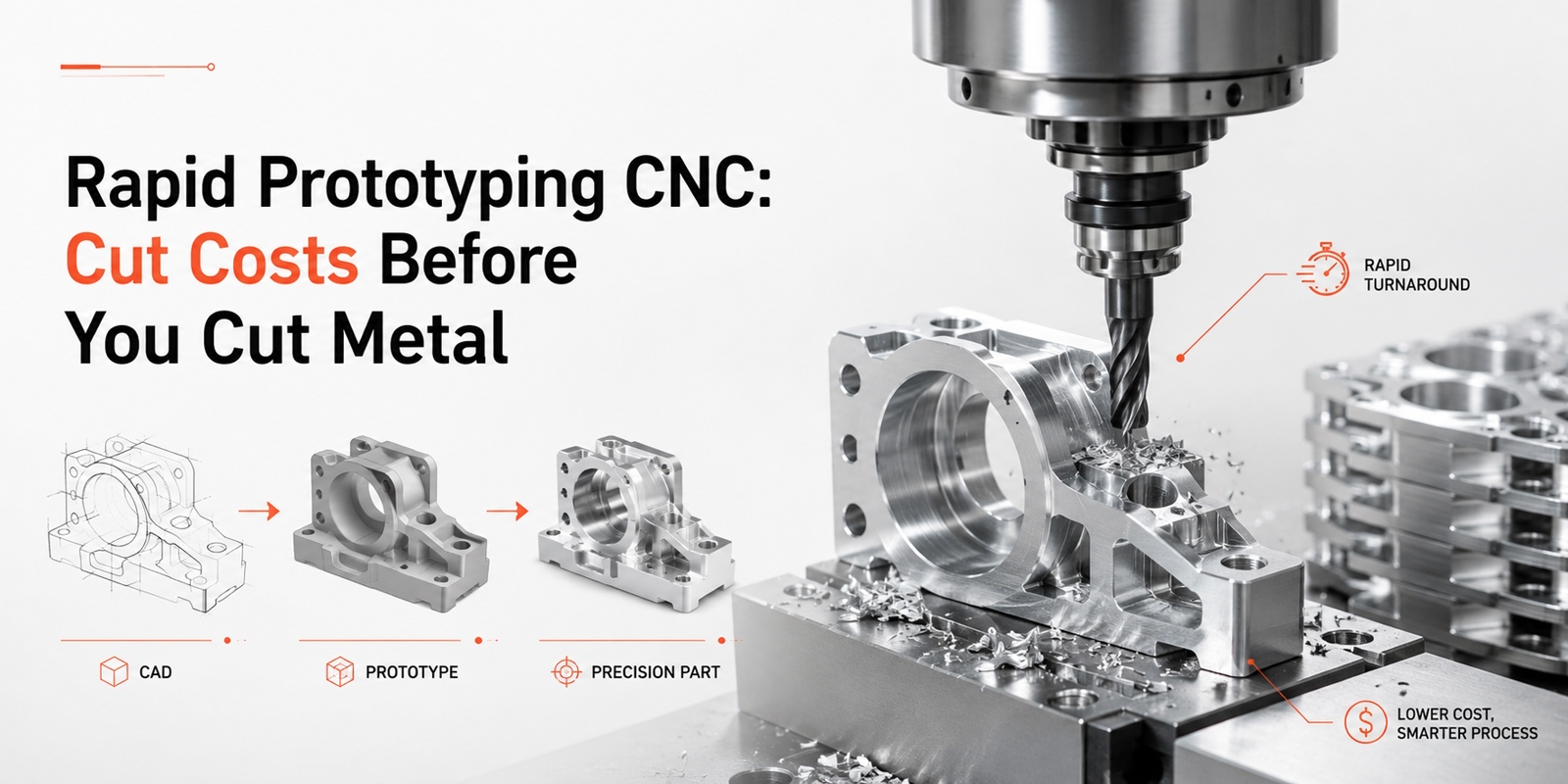
A machined demo is a controlled demonstration of machining capability. Instead of telling a prospect that a machine holds ±0.005 mm tolerance, the vendor shows it by cutting a part that requires that tolerance. The demo part becomes the evidence.
Demos can be:
- Live at a trade show — a machine cuts a part in the booth while attendees watch.
- Recorded video — a high-production-value clip showing the full process from stock to finished part.
- In-house capability demo — a job shop machines a sample part to prove it can handle a prospective customer's geometry.
- Benchmark or test cut — a standardized part used to compare machines before purchase.
The common thread is that the demo is designed to answer a specific question: Can this machine, tool, or shop actually do what is claimed?
Why Machined Demos Matter in CNC Sales
Machined Demo: What It Is, Why It Matters & How to Plan One - Why Machined Demos Matter in CNC Sales.
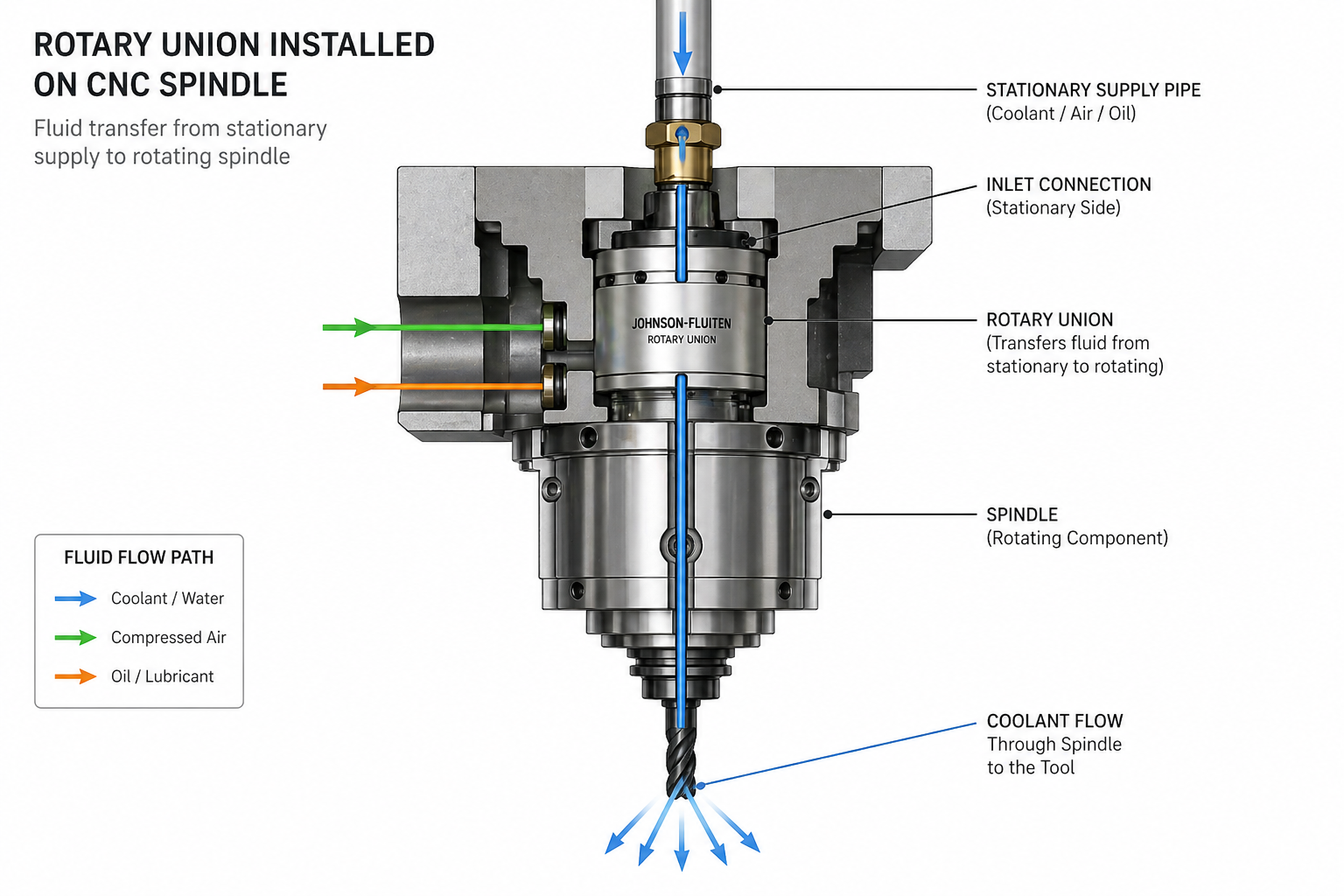
CNC equipment is expensive, and the buying decision is risk-heavy. A spec sheet says a machine has a 20,000 RPM spindle and 60 m/min rapids. A machined demo shows whether those numbers translate into a good part in a reasonable cycle time.
Key reasons demos matter:
- They compress the sales cycle. A buyer who sees a complex part machined cleanly is closer to trusting the machine than one who only reads a brochure.
- They expose real-world constraints. Chip evacuation, workholding rigidity, thermal drift, and tool access all show up in a demo that a spec sheet hides.
- They differentiate similar machines. Two 5-axis machines can look identical on paper. A demo part with deep pockets, thin walls, and blended surfaces reveals which one actually performs.
- They create shareable proof. A well-filmed demo travels through LinkedIn, YouTube, and email far better than a PDF.
Common Types of Machined Demos
Mill-Turn Demo Parts
Mill-turn demos showcase process integration: milling, turning, drilling, eccentric turning, and interpolation turning on a single machine. The DMG MORI mill-turn casing demo on the DMC 85 H monoBLOCK is a strong example. The part is designed so that every operation matters, and the horizontal spindle orientation shows free chip fall—a real production advantage that is hard to explain without seeing it.
These demos are especially persuasive for buyers considering a switch from separate lathes and machining centers to a single multi-tasking machine.
5-Axis Demo Parts
5-axis demos typically use impellers, blisks, or sculpted housings that cannot be made efficiently on a 3-axis machine. The goal is simultaneous motion: showing the tool tilting and the part rotating while maintaining surface quality.
A compact 5-axis demo part, like the one shown in Ethereal Machine's 5-axis demo video, highlights high-speed, high-accuracy cutting through combined turning and 5-axis multi-task machining. These demos target aerospace, medical, and mold-making buyers who need complex geometry in fewer setups.
Speed and Throughput Demos
Some demos are less about geometry and more about cycle time. The Haas VF-2SS & HRC210 demo was designed specifically to show higher spindle speed, faster rapids, and quick rotary indexing. The message is throughput: how many parts per hour, how fast the tool changes, how quickly the machine moves between features.
These demos resonate with high-volume job shops where minutes per part directly determine profitability.
Capability and Tolerance Demos
Job shops and contract manufacturers often machine a sample part that mirrors a prospect's difficult features—deep bores, thin walls, tight true position callouts, or challenging materials. The demo part is then measured on a CMM and the inspection report is shared with the prospect. This is the most directly sales-oriented type of machined demo because it is tailored to a specific opportunity.
What Makes a Good Machined Demo Part?

Machined Demo: What It Is, Why It Matters & How to Plan One - What Makes a Good Machined Demo Part?.
Not every part makes a good demo. The best demo parts share several characteristics:
- Visually legible. A viewer should be able to see that the part is complex. Deep pockets, angled surfaces, and fine details communicate difficulty instantly.
- Process-diverse. The part should require multiple operations—milling, turning, drilling, threading—so the demo shows range, not just one trick.
- Challenging but achievable. A demo that crashes or produces scrap destroys trust. The part should push the machine near its limits without crossing them.
- Measurable. The part should include features that can be inspected, so the demo can end with data, not just a shiny object.
- Relevant to the target buyer. A mold shop cares about surface finish and 3D contouring. A production shop cares about cycle time and repeatability. The demo part should reflect the audience's actual work.
How to Plan a Machined Demo
1. Define the Objective
Start with the single most important message. Is it speed? Accuracy? Multi-tasking capability? Surface finish? The objective determines the part design, the operations shown, and how the demo is filmed and narrated.
2. Design or Select the Demo Part
If you have engineering resources, design a part that hits the objective. If not, adapt a proven demo part design. Consider material choice carefully: aluminum cuts fast and looks good on camera, but it does not prove much about machining hard alloys. Steel, titanium, or Inconel demos carry more weight with serious buyers but take longer and cost more.
3. Plan the Process
Map every operation, tool, and fixture before the machine runs. A demo is a performance. You want the impressive operations front-loaded for video, with safe, predictable cuts in between. Include in-process probing if the machine supports it—seeing a probe verify part location and feature dimensions adds credibility, as shown in the Haas demo with the WIPS system.
4. Run and Validate
Machine the part at least once before the public demo. Measure it. Adjust speeds, feeds, and toolpaths. A machined demo is only persuasive if the part is actually good. The validation run also gives you cycle time data and inspection results to share alongside the video.
5. Film with Purpose
Video is the highest-leverage format for machined demos. A few filming principles:
- Show the stock at the start and the finished part at the end.
- Capture close-ups of critical operations—chip formation, tool engagement, surface finish.
- Include the inspection step. A CMM report on screen is more convincing than a voiceover claim.
- Keep the video focused. A 2–4 minute demo video outperforms a 20-minute raw recording.
- Add captions or narration explaining what the viewer is seeing and why it matters.
Promoting a Machined Demo
A machined demo only creates value if the right people see it. Distribution matters as much as the machining itself.
Use It Across Channels
- YouTube — the primary home for demo videos. Optimize the title, description, and tags around the machine model and the type of demo.
- LinkedIn — short clips with a clear hook perform well with manufacturing buyers and engineers.
- Email — send the demo to prospects who asked about a specific capability. A demo video is a strong follow-up after a quote or a technical discussion.
- Trade show booth — loop the video on a screen next to the actual demo part. Attendees can watch the process and hold the result.
Pair the Demo with Supporting Content
A video alone rarely closes a deal. Pair it with:
- A written case study or technical note explaining the part, the tolerances, and the cycle time.
- The inspection report or CMM data.
- A downloadable drawing or 3D model so engineers can evaluate the geometry themselves.
- A comparison page that positions the machine against alternatives the buyer is considering.
For teams producing demos regularly, an autonomous content platform like AgentBooks can turn each demo into a repeatable publishing workflow. Once the platform understands your product and market, it can plan related topics, research what ranks for machining-related searches, and publish supporting articles in your brand voice—so a single demo becomes a cluster of useful content rather than a one-off video. This is especially helpful for machine tool builders and job shops that have deep technical expertise but limited time for manual content production.
Machined Demo vs. Spec Sheet: When Each Wins
| Scenario | Spec Sheet | Machined Demo |
|---|---|---|
| Initial vendor shortlist | Strong | Overkill |
| Comparing two finalists | Weak | Decisive |
| Proving a difficult feature is possible | Weak | Essential |
| Communicating cycle time | Moderate | Strong |
| Showing surface finish quality | Weak | Strong |
| Budget-level initial quote | Strong | Unnecessary |
The pattern is simple: specs get you into the conversation; demos win the conversation. Buyers evaluating a six-figure machine purchase almost always want to see a demo part or a test cut before signing.
Common Mistakes to Avoid
- Machining a part that is too easy. A simple bracket proves nothing. The demo should look hard.
- Skipping the validation run. A crash or a scrapped part on camera is worse than no demo at all.
- Filming without a narrative. Raw machine footage without context confuses viewers. Explain what they are seeing.
- Ignoring the inspection step. The part is only proof if it measures in spec. Show the data.
- Publishing once and stopping. A demo video should be repurposed into clips, articles, email follow-ups, and sales collateral.
Related reading
- Brand24 Review 2025: Features, Pricing & Real-World Test - An evidence-based Brand24 review covering real-world testing, AI insights, sentiment accuracy, pricing plans, ideal users, and limitations before you buy.
- What Is ContentBot AI Used For? 9 Real Workflows - Discover what ContentBot AI is used for, from blog writing and AI Flows to bulk imports and humanization. See real workflows, limits, and alternatives.
- Contentpen Review: AI Blog Writer, Pricing & Real Workflow - A practical Contentpen review covering its AI blog writing workflow, SEO and AEO scoring, pricing plans, and how it compares with autonomous content platforms.
Frequently Asked Questions
What is the difference between a machined demo and a test cut?
A machined demo is typically a public or semi-public showcase designed to impress and inform. A test cut is usually a private, buyer-specific validation run—often on the buyer's own part or material—to confirm the machine can hit required tolerances and cycle times before purchase.
How long should a machined demo video be?
For marketing purposes, 2–4 minutes is the sweet spot. It is long enough to show stock-to-part progression and key operations, but short enough to hold attention. Longer technical walkthroughs can be offered as follow-up content for serious buyers.
What materials are best for a machined demo part?
Aluminum is popular because it machines quickly, looks clean on camera, and keeps demo costs low. However, if your target buyer works in steel, titanium, or superalloys, machining the demo in that material is far more persuasive. Match the material to the audience.
Do I need a 5-axis machine to create an impressive machined demo?
No. A well-designed 3-axis demo with tight tolerances, deep pockets, and good surface finish can be just as compelling. The key is showing capability that matters to your buyer, not just axis count.
How can I promote a machined demo effectively?
Publish the video on YouTube with a descriptive title, share short clips on LinkedIn, send the full demo to prospects in follow-up emails, and pair the video with inspection data and a written technical note. Repurposing one demo across channels multiplies its value.
Conclusion
A machined demo is one of the most persuasive tools in CNC sales and marketing. It converts abstract specifications into visible, measurable proof—a part that exists because the machine performed. The best demos are designed around a clear objective, machined with a validated process, filmed with purpose, and distributed across the channels where buyers actually look.
Whether you are a machine tool builder showcasing a new 5-axis platform, a job shop proving capability to a prospect, or a tooling supplier demonstrating a new cutter, the principle is the same: show, don't just tell. And when a demo works, extend its reach with supporting content that helps buyers find it, understand it, and act on it. For teams that want to scale that content effort without losing technical depth, platforms like AgentBooks can turn domain expertise into a continuous stream of search-visible articles that reinforce every demo you publish.