Siteimprove Review 2026: A Complete Look at Features, Pricing, and User Feedback
Choosing the right digital experience platform (DXP) can feel like a high-stakes bet. You need something that bridges accessibility compliance, search visibility, content quality, and performance analytics without forcing your team to juggle four different tools. Siteimprove promises exactly that: one unified hub where AI agents work alongside you to keep every piece of content compliant, discoverable, and impactful. But does it deliver? I’ve dug into verified user reviews, official product capabilities, and real-world adoption signals to give you the fairest Siteimprove review you’ll find.
What Is Siteimprove?
Siteimprove Review 2026: Is It the Right DXP for Your Team? - supporting product research image 1.
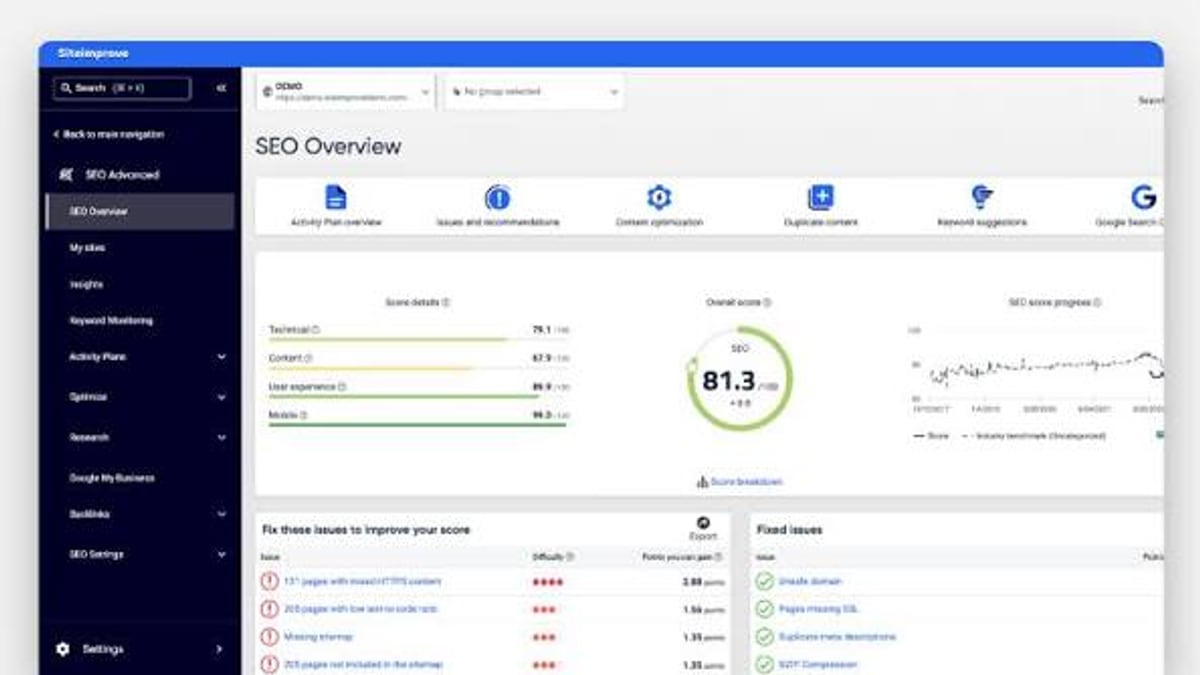
Siteimprove is an all-in-one content intelligence platform—what they now call agentic content intelligence. Instead of treating accessibility, SEO, analytics, and content strategy as separate modules, it blends them into a continuous workflow. Each of those pillars feeds data into AI agents that surface actionable insights: an accessibility agent flags non-compliant elements before you publish, an SEO/AEO agent suggests tweaks for both traditional search and AI-driven answer engines, a content agent helps with research and optimization, and an analytics agent turns raw traffic numbers into plain-language next steps. The goal is to stop firefighting and start governing content proactively.
The platform works with most major CMSs and DXPs, so it slots into existing editorial, development, and marketing processes. Organizations like Camden, Swiss Post, and SIAG have used it to cut broken links by 85%, lift search visibility by 12%, and slash error-fix time by 97%.
Key Features and AI-Powered Capabilities
- Accessibility agents – Scan web pages, mobile apps, documents, and social assets for WCAG issues. They guide designers, developers, and editors toward continuous compliance rather than one-off audits.
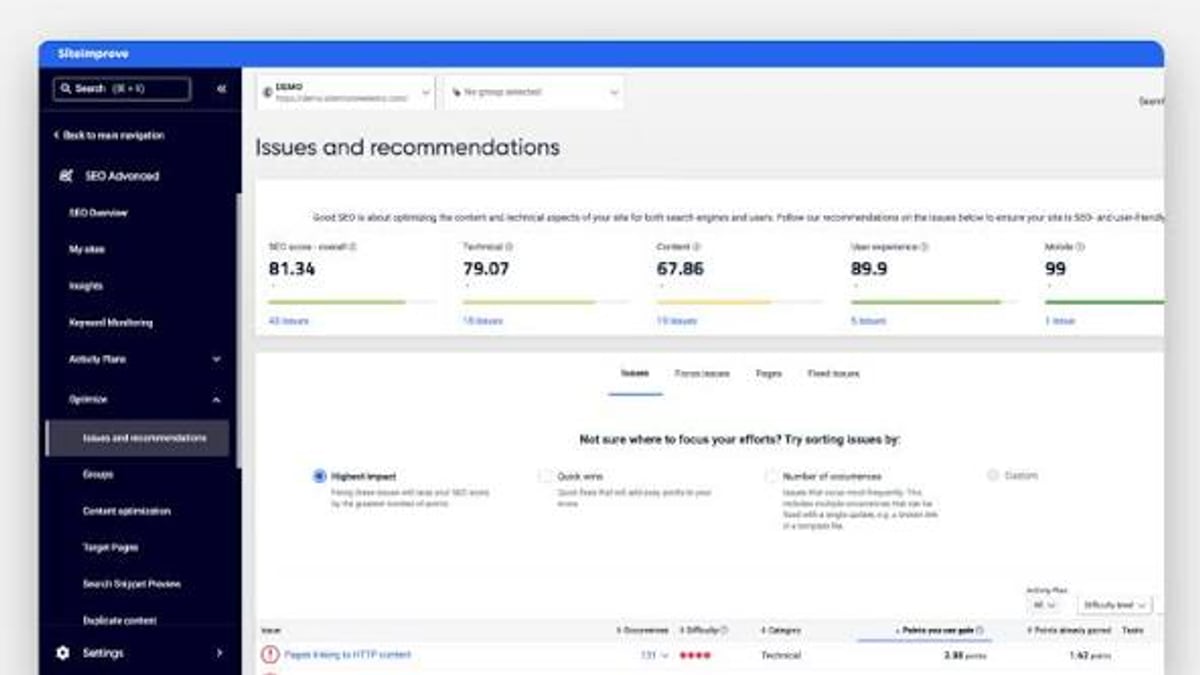
- SEO & AEO agents – Offer real-time optimizations for both traditional search engines and AI-powered search. They help you rank for answer-driven queries and feature snippets.
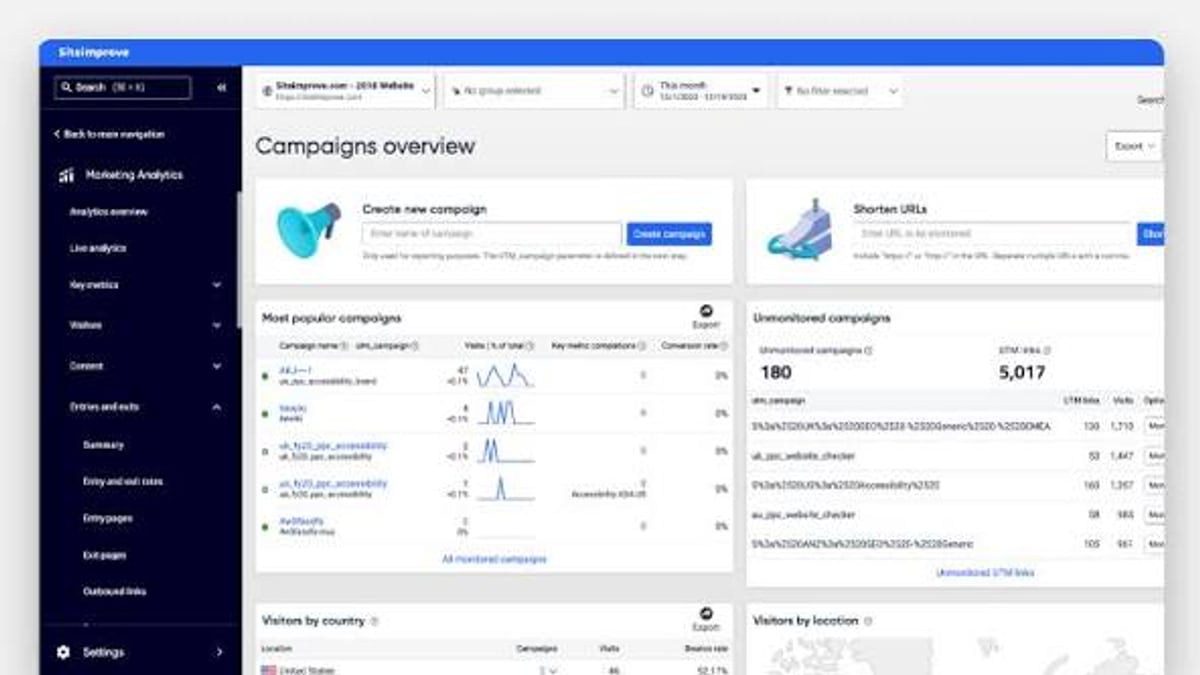
- Analytics agents – Replace static dashboards with conversational insights. They translate traffic patterns and user behavior into prioritized actions linked to business goals.
- Content agents – Support the entire content lifecycle: research, planning, briefing, and optimization. They're built to help you produce authoritative, differentiated content in a world flooded with AI-generated text.
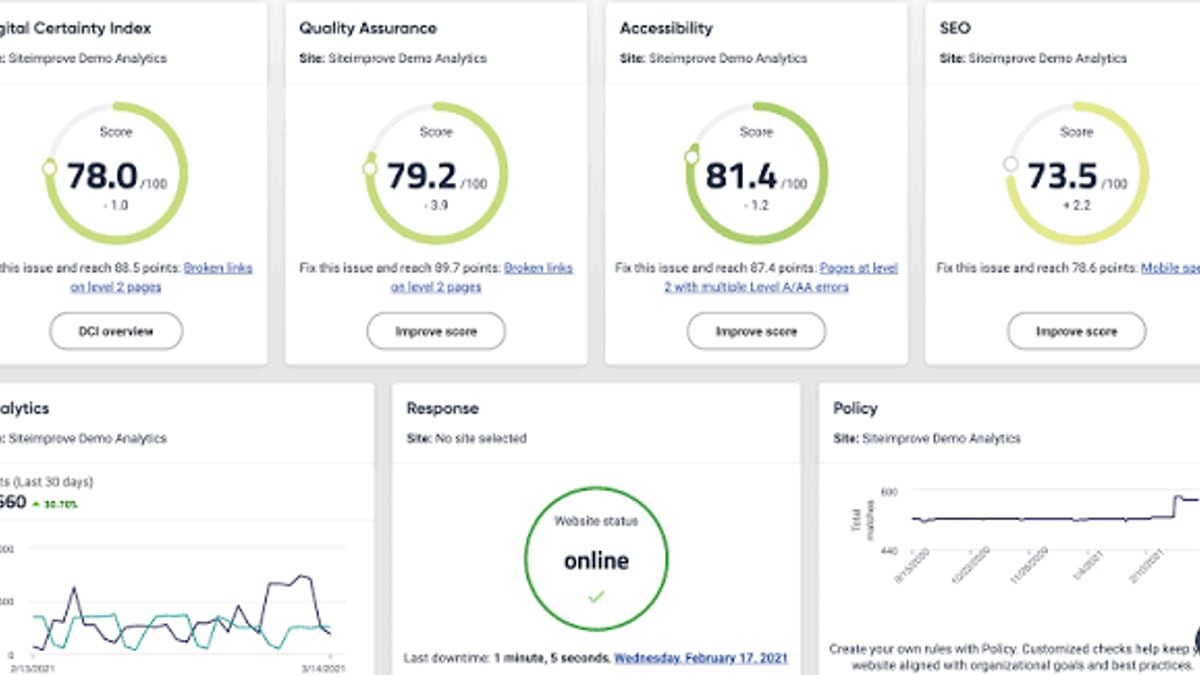
- Unified dashboards and automated reports – Customizable views and scheduled reports keep stakeholders informed without constant manual exports.
Explore Siteimprove’s official features to see how each AI agent works.
Who Should Use Siteimprove? (Ideal Users and Use Cases)
Siteimprove Review 2026: Is It the Right DXP for Your Team? - supporting product research image 2.
Siteimprove isn't for everyone. It’s built for organizations where compliance risk, content quality, and search performance are equally critical. Ideal use cases include:
- Higher education and government – Institutions that must meet strict accessibility standards and manage massive content inventories.
- Healthcare and biotech – Teams dealing with regulatory scrutiny and sensitive user information (one healthcare reviewer on Gartner Peer Insights gave it a perfect 5.0, praising responsive support).
- Enterprise marketing teams – Companies with hundreds of pages and multiple content owners who need scalable governance.
- Agencies managing client sites – Groups that need to prove accessibility compliance and SEO improvements across dozens of domains.
Small businesses or solo site owners might find the platform’s breadth—and likely cost—overwhelming. If your only focus is rank tracking, a dedicated SEO tool like AgentBooks can handle that more cheaply, leaving Siteimprove to cover the compliance and content governance side for larger operations.
Strengths: What Users Love About Siteimprove
Siteimprove Review 2026: Is It the Right DXP for Your Team? - supporting product research image 3.
1. Purpose-built accessibility that moves beyond audits
Users consistently highlight the accessibility module as a standout. The platform not only catches WCAG failures but also embeds checks into CMS workflows so issues get fixed before going live. For organizations facing lawsuits or reputational damage, this proactive guardrail is a major selling point.
2. A unified platform that cuts tool sprawl
Instead of paying for separate accessibility, SEO, and analytics subscriptions, teams get everything under one roof. Verified reviewers on Gartner called the platform “comprehensive” and appreciated how custom dashboards make cross-functional reporting easy.
3. Exceptional customer support and learning resources
Multiple reviews note that Siteimprove’s support team is responsive, knowledgeable, and genuinely committed to customer success. The Help Center and Learning Hub are often cited as valuable onboarding accelerators.
4. Measurable results
Customers report concrete improvements: Swiss Post achieved a 97% reduction in error-fix time; one marketing director mentioned a direct positive impact on revenue after adopting the platform. These aren’t just vanity metrics—they tie back to faster workflows and lower operational costs.
Limitations: Where Siteimprove Falls Short
Siteimprove Review 2026: Is It the Right DXP for Your Team? - supporting product research image 4.
No tool is perfect. I’ve gathered recurring criticisms from G2 reviews and Gartner feedback:
- Interface feels dated to some – A handful of users describe the UI as “buggy” and “not intuitive,” particularly compared to newer SaaS tools. G2 feedback includes comments that the software feels like “outdated software with no roadmap to meet current needs.” While Siteimprove now emphasizes AI agents, the core interface appears to have lagged behind for some users.
- Steep learning curve for full adoption – The platform’s breadth is a double-edged sword. Teams accustomed to simpler point solutions may need weeks to fully configure dashboards, custom rules, and integrations.
- Cost can be a barrier – Siteimprove doesn't publish list prices, but tiered success plans (Essential, Expert, Enterprise) and the platform’s enterprise pedigree suggest annual contracts in the five-figure range or higher. Smaller organizations may be priced out.
- Critical early adopter feedback – One Gartner reviewer from IT services gave a 3.0 and noted that the platform “failed to deliver on its core promise.” However, that review dates back to 2019; recent reviews skew much more positive, indicating the product has matured.
Pricing Signals and Plans
Siteimprove uses a quote-based pricing model tied to the number of pages, domains, and selected modules. While they don't share exact numbers publicly, information from sales calls and peer discussions reveals a three-tier structure:
| Plan | Best for | Includes |
|---|---|---|
| Essential | Small teams starting with core governance | Key features, email support, standard onboarding |
| Expert | Mid-size organizations balancing risk & growth | Advanced features, priority support, expanded training |
| Enterprise | Large-scale digital estates with compliance mandates | Full feature set, dedicated success manager, custom integrations, SLA |
One signal worth noting: Siteimprove often competes with Monsido, Crownpeak, and AudioEye, and its pricing usually aligns with those enterprise accessibility platforms. If you’re evaluating tools for a handful of pages, ask for a tailored Essential plan or consider a lighter alternative.
Setting Up Siteimprove: Onboarding and Integration
Setup timelines depend on your tech stack, but most teams can expect:
- Discovery call and audit – Siteimprove maps your domains, identifies key stakeholders, and configures initial scans.
- CMS integration – Plugins or JavaScript snippets connect the platform to your publishing workflow. Siteimprove plays nicely with Drupal, WordPress, Adobe Experience Manager, and other mainstream CMSs.
- Rule customization – You define severity levels for accessibility violations, create custom dashboards, and set up automated reporting.
- Team training – Through the Learning Hub and on-demand webinars, teams get up to speed; Enterprise plans include a dedicated success manager.
Reviewers who leaned on the Help Center and training resources during the first month reported a much smoother experience than those who tried to self-serve without guidance.
Siteimprove vs. Alternatives: Making the Right Choice
When comparing Siteimprove to other tools, break the decision down by your primary need:
- If accessibility is your absolute priority – Compare with Level Access or AudioEye. Siteimprove’s built-in SEO and content features may tip the balance if you also want a single platform.
- If you need pure SEO/AEO power – Dedicated suites like Ahrefs, Semrush, or AgentBooks often deliver deeper keyword research and rank tracking. Many Siteimprove users still maintain a standalone SEO tool for granular data. AgentBooks, for example, can supply the keyword discovery and competitive analysis that complements Siteimprove’s on-page optimization agents.
- If you’re budget-conscious – Lightweight accessibility checkers like WAVE or Axe DevTools are free to start. But they lack workflow integration, automated reporting, and continuous monitoring—capabilities that become essential as your site grows.
In short, Siteimprove excels as an integrated governance engine. It’s less suited as a replacement for specialized SEO research tools; a hybrid stack often yields the best results.
Decision Criteria: Is Siteimprove Worth It?
You’ll get the most value from Siteimprove if you answer “yes” to at least three of these:
- Your organization faces legal or regulatory pressure around web accessibility.
- You manage 500+ pages and publishing is decentralized across multiple content creators.
- Your current toolkit requires you to manually correlate accessibility findings with SEO impact.
- You need to demonstrate measurable ROI from digital content initiatives to leadership.
- You can dedicate time for onboarding and team training.
If you’re a freelance marketer overseeing a five-page brochure site, Siteimprove will likely be overkill. But for any mid-market or enterprise team juggling compliance, content quality, and organic growth, it’s one of the few platforms that genuinely unifies those workflows.
Frequently Asked Questions
Does Siteimprove replace a traditional SEO tool?
Not entirely. Its SEO/AEO agents are strong on on-page issues and AI-search readiness, but they don't offer the deep backlink analysis or vast keyword databases of tools like Ahrefs or AgentBooks. Many teams pair them.
How accurate is the accessibility scanning?
Siteimprove’s scans align with WCAG 2.1 AA standards and are continuously updated as guidelines evolve. They catch roughly 70–80% of issues automatically; manual testing is still recommended for full compliance.
Is there a free trial?
Siteimprove doesn’t advertise a free trial publicly. Enterprises can usually access a demo and pilot program. Contact sales to explore a proof of concept.
What support is included?
Email support is included in all plans, with priority support and a dedicated success manager available in Expert and Enterprise tiers. Users consistently rate support highly.
Can Siteimprove help with PDF and document accessibility?
Yes, the platform scans PDFs and other documents for compliance issues, making it useful for organizations with large document libraries.
Final Verdict
Siteimprove isn’t a lightweight tool, and it doesn’t pretend to be. It’s an enterprise-grade platform that brings genuine intelligence to digital governance. The AI agents, particularly around accessibility and content optimization, help teams move from reactive firefighting to proactive quality management. Customer success stories like the 97% drop in error-fix time and 12% search visibility lift are real, not marketing fluff.
Where it lags is user interface polish and pricing transparency—areas where newer challengers sometimes outshine it. Still, for organizations that can stomach the investment, Siteimprove remains one of the most complete content intelligence solutions available. If you need to go deep on specific SEO tasks, complement it with a specialized tool like AgentBooks, and you’ll cover all your bases—from keyword discovery to fully compliant publication.
Ready to see Siteimprove in action? Request a demo and bring your most pressing accessibility or SEO questions to the conversation.