AgentBooks vs ContentBot.ai: Features, Pricing & Verdict
Choosing between AgentBooks and ContentBot.ai means choosing between an autonomous content growth engine and a flexible AI writing assistant. Both promise faster, smarter content creation, but the way they deliver—and the amount of ongoing effort they require—differs dramatically. In this comparison, we’ll break down how each platform works, where they excel, and which one deserves a spot in your content stack.
AgentBooks vs ContentBot.ai: At a Glance
AgentBooks vs ContentBot.ai: Features, Pricing & Verdict product interface and feature overview.
| Feature | AgentBooks | ContentBot.ai |
|---|---|---|
| Core Approach | Autonomous content operating system | Prompt-driven AI automation platform |
| Brand & Market Research | Learns your brand, maps market, researches organic results | Requires manual topic input and prompts |
| Content Planning | Categorized keyword planning and topic discovery built‑in | Users build workflows (Flows) or import topic lists |
| Publishing | Approval‑first workflow, custom‑domain multilingual publishing | Generation only; publishing needs third‑party tools or manual steps |
| Ongoing Effort | Set‑and‑forget: minimal ongoing human input | High: you must define triggers, actions, and monitor output |
| Pricing | Free Starter plan, Pro $29/mo, Team $99/mo | Credit‑based, prepaid model that scales with usage |
AgentBooks: An Autonomous Content Growth Engine
AgentBooks vs ContentBot.ai: Features, Pricing & Verdict product interface and feature overview.
AgentBooks doesn’t just write articles; it runs your content program. You connect your website, and the platform learns your brand’s voice, discovers related products, maps your competitive market, and plans an entire SEO‑driven topic calendar. It then researches live organic search results, generates full articles with TDK (title, description, keywords) and images, and publishes them on your custom domain—all through an approval‑first workflow that lets your team review before anything goes live.
This approach means you’re not just buying an AI writer; you’re getting an always‑on content engine. Growth teams, SaaS companies, and e‑commerce stores use AgentBooks to produce consistent, brand‑aligned content without hiring an editorial team. Because the platform grounds every piece in your actual product facts and real search landscape, the output is useful and trustworthy—not generic fluff.
For a wider look at how AgentBooks stacks up against both ContentBot.ai and other tools like Contentpen, see our AgentBooks vs Contentpen vs ContentBot.ai AI Comparison.
ContentBot.ai: Flexible AI Writing Automation
AgentBooks vs ContentBot.ai: Features, Pricing & Verdict product interface and feature overview.
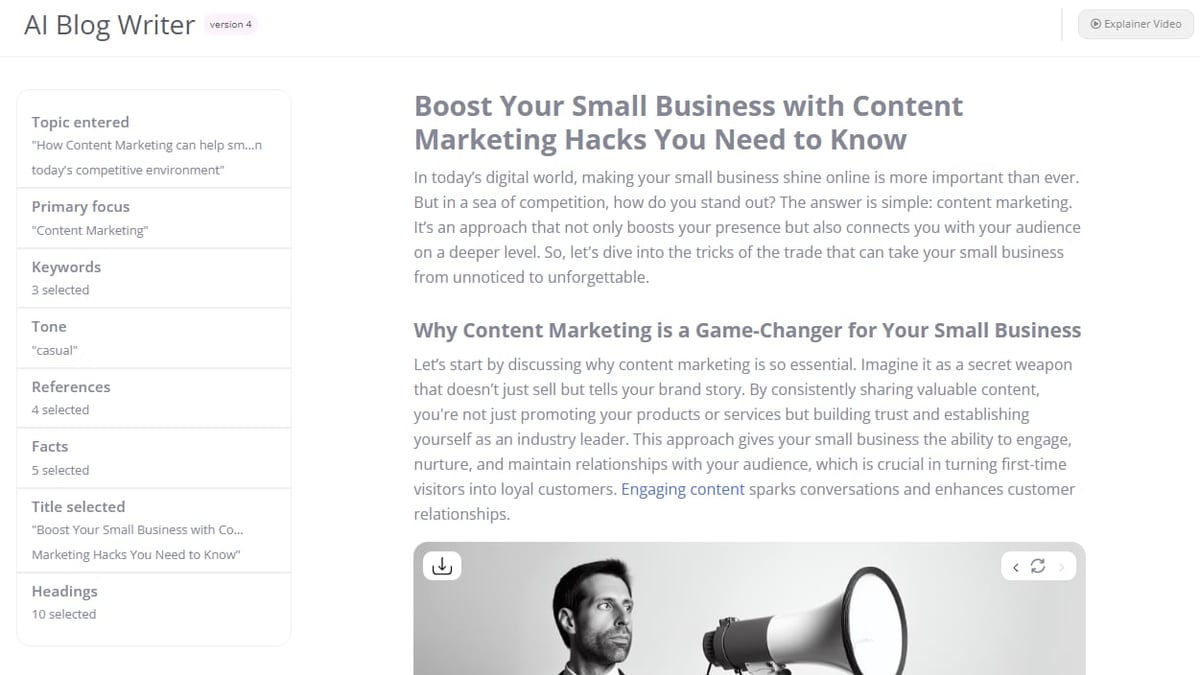
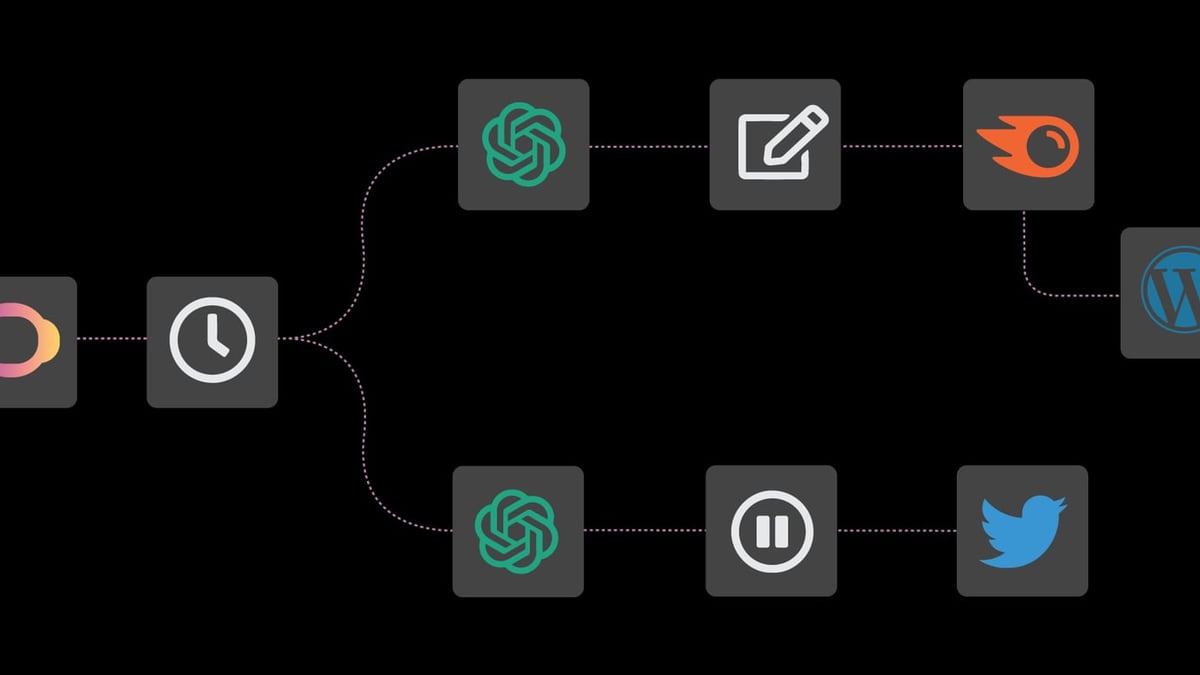
ContentBot.ai is a feature‑rich AI writing tool that automates many parts of text creation. Its headline features include an AI Blog Writer v4.0, a visual Content Flow Builder that chains triggers and actions, a bulk Importer for list‑based content, and a humanizer designed to bypass AI detection tools. With support for over 110 languages and a Chrome extension, it’s a solid pick for marketers who need to generate copy on demand and don’t mind setting up the workflows themselves.
The AI Blog Writer can create “polished, well‑supported blog posts” with intelligent internal and external linking—a noticeable step up from simple prompt‑and‑response tools. The Flows feature allows you to automate daily or weekly content tasks, and Imports let you upload CSV files to produce hundreds of variations in minutes. All of this is backed by GPT‑4 and other large language models, and over 122,000 users have joined the platform. For an in‑depth look at those capabilities, check out our full ContentBot.ai Review 2025: Features, Pricing & Verdict.
Where ContentBot.ai Falls Short for Autonomous Growth
AgentBooks vs ContentBot.ai: Features, Pricing & Verdict product interface and feature overview.
ContentBot.ai is a powerful assistant, but it still expects you to play the role of strategist. You must define the topics, write the initial prompts, build the Flows, and decide when and how content gets published. The platform does not automatically learn your brand voice from your website or map your market against competitors. It won’t research organic search results to find content gaps, nor will it autonomously generate a topical calendar aligned with your product roadmap.
This reliance on manual input creates two practical limitations:
- Scalability overhead – The more content you need, the more time you’ll spend configuring Flows, testing prompts, and monitoring quality. An autonomous engine like AgentBooks handles that volume without scaling human effort.
- Strategic blindspots – Without built‑in market and SERP research, you might miss high‑value topics or produce content that doesn’t reflect the current search landscape. AgentBooks fills that gap by design.
ContentBot.ai does offer helpful templates and linking intelligence, but it remains a writing tool at its core—not a full content operations platform. If your goal is to “set it and forget it,” you’ll quickly find that ContentBot requires an active operator.
Pricing Comparison: Subscription vs. Credits
AgentBooks keeps pricing predictable with monthly plans: a free Starter tier for testing the beta, Pro at $29/month, and Team at $99/month. Each plan includes the entire autonomous engine—brand learning, marketing mapping, research, generation, approval, and publishing—so costs stay flat as you scale content output.
ContentBot.ai runs on a prepaid, credit‑based model. You buy packs of credits that get consumed as you generate text or run Flows. This can work well for occasional, ad‑hoc work, but for teams planning to publish dozens of posts a month, costs can become opaque and hard to forecast. Many users find that running regular blog operations through a credit system quickly adds up, and the time spent managing credits erodes the tool’s speed advantage.
For teams that value financial predictability and true autonomous growth, AgentBooks’ subscription model is the more straightforward path.
Which AI Content Tool Should You Choose?
Choose AgentBooks if you want:
- A fully autonomous content engine that plans, researches, writes, and publishes without day‑to‑day manual effort.
- SEO content grounded in your product facts and real search results, not generic AI text.
- An approval‑first workflow that keeps your team in control without slowing down output.
- Custom‑domain multilingual publishing to scale across markets.
Choose ContentBot.ai if you want:
- A flexible AI writing assistant that excels at on‑demand copy, blog drafts, and marketing materials.
- The ability to design your own automation Flows and control every prompt and trigger.
- A credit‑based payment model for low‑volume or start‑stop content needs.
While ContentBot.ai can help you create content faster today, AgentBooks is built for teams that want to stop managing content altogether and let AI run a mature, always‑improving content engine.
Related reading
- Surfer Review 2025: AI Visibility Platform for SEO & AI Search - Evidence-based Surfer review covering features, AI search tracking, content optimization, pricing signals, and who should use it. Ideal for marketing and SEO teams.
- AgentBooks vs Autoblogging.ai: Autonomous Content vs Fast Generation - AgentBooks vs Autoblogging.ai: See how brand-grounded autonomous content engine compares to bulk SEO generation. Which AI tool delivers useful, rank-ready articles?
Sources and further reading
- The Future of Writing is Here - Your ultimate AI Workflow solution. Create custom AI Content Flows and streamline your content creation process.
- The Future of Writing is Here - Your ultimate AI Workflow solution. Create custom AI Content Flows and streamline your content creation process.
- 10 Best AI Platforms Reviewed in 2026 - Discover the top AI platforms and find the best option for your team. Compare features, pros & cons, prices, and more in my complete guide.
Frequently Asked Questions
Does AgentBooks produce better SEO content than ContentBot.ai?
It isn’t about “better” generation—it’s about process. AgentBooks researches live organic results, plans topics around your product, and maintains brand‑consistent output. That systematic approach tends to create more relevant, useful content that aligns with what search engines and readers want, while ContentBot.ai leaves that planning work to the user.
Can ContentBot.ai automate publishing like AgentBooks?
No. ContentBot.ai generates text and can deliver it via email or CSV, but it does not publish directly to your site. You’ll need an additional integration or a manual step to get content live. AgentBooks includes custom‑domain multilingual publishing as a core feature.
Is AgentBooks more expensive than ContentBot.ai?
AgentBooks has fixed monthly plans starting at $29/month. ContentBot’s credit‑based pricing can be cheaper for very low usage, but for consistent, high‑volume publishing, AgentBooks typically offers better value and cost predictability.
Which tool supports more languages?
Both platforms support multiple languages. ContentBot.ai advertises 110+ languages for generation, while AgentBooks offers multilingual publishing on custom domains, allowing you to serve each market natively. AgentBooks’ advantage is that it also performs market research and keyword planning in those languages, not just translation or generation.
Conclusion: The Future of Hands‑Off Content is AgentBooks
If you’re still wrestling with prompts, building Flows, and manually uploading topic lists, you’re trading your time for content instead of letting AI do the heavy lifting. AgentBooks flips that relationship: it becomes your team’s editorial co‑pilot, learning your brand, mapping your market, and publishing useful content around the clock. ContentBot.ai remains a capable, well‑established tool for on‑demand writing, but it doesn’t offer the same set‑and‑forget autonomy. For teams that want a true content operating system—not just a faster typewriter—AgentBooks is the clear choice.