
Bulk Content Creation: A Practical Guide for 2025
Producing one great piece of content is a craft. Producing hundreds without losing quality is an operations problem. That's what bulk content creation solves: it turns ad-hoc publishing into a repeatable system that can feed a blog, a social calendar, or a product catalog without a proportional increase in headcount.
This guide explains how bulk content creation actually works, where it fits, and how to build a workflow that scales without turning your brand into generic noise.
What bulk content creation really means
Bulk Content Creation: A Practical Guide for 2025 - What bulk content creation really means.
Bulk content creation is the practice of generating multiple content assets from a single structured process. Instead of writing one article, designing one graphic, or recording one video at a time, you prepare a template and a data source, then produce variations in batches.
The concept is well established in design. Canva's Bulk Create feature, for example, links rows of spreadsheet data to placeholder elements in a design template, so one file can generate hundreds of localized or personalized graphics. Each row becomes one finished asset; each column becomes one data field.
The same logic applies to written content. A structured brief, a keyword list, or a product feed can drive the production of many articles, landing pages, or email sequences. The unit of work shifts from "write this post" to "build the system that writes these posts."
The three inputs every bulk workflow needs
- A template or structure — the reusable skeleton: a design layout, an article outline, an email framework.
- A data source — the variable content: names, keywords, product specs, locations, quotes.
- A production engine — the tool or process that merges the two and outputs finished assets.
If any of these is missing, you're not doing bulk creation. You're just doing regular creation faster, which rarely ends well.
Why teams adopt bulk content creation

Bulk Content Creation: A Practical Guide for 2025 - Why teams adopt bulk content creation.
The appeal is straightforward: scale, consistency, and cost control. But the real driver is usually a content gap that manual production can't close.
- SEO coverage. A site with 50 pages can't rank for 500 topics. Bulk workflows let you cover long-tail keyword clusters systematically.
- Localization. Translating and adapting content for multiple markets is a batch problem, not a one-off task.
- Personalization. Sales decks, onboarding emails, and landing pages often need the same structure with different details.
- Social volume. A consistent posting cadence across platforms requires a pipeline, not inspiration.
A practical example: an e-commerce store with 200 product categories. Writing a unique buying guide for each category manually would take months. With a structured template and a product data feed, the same output can be produced in days, then reviewed and refined by an editor.
How bulk content creation works in practice
Bulk Content Creation: A Practical Guide for 2025 - How bulk content creation works in practice.
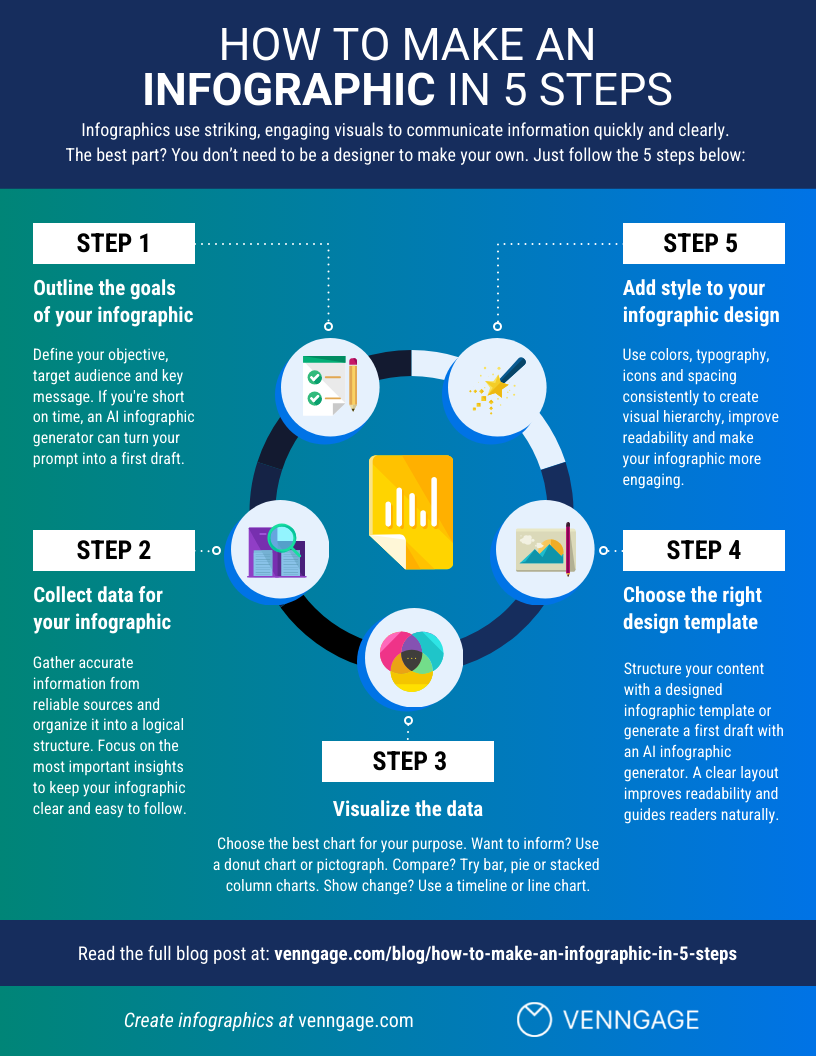
Most bulk workflows follow a similar sequence, whether you're producing graphics, articles, or videos.
Step 1: Define the structure
Decide what stays constant and what changes. In an article, the constant might be the intro format, the section order, and the conclusion style. The variables are the topic, the examples, and the data points.
Step 2: Build the data layer
This is where most bulk projects succeed or fail. Your data source needs clean, consistent fields. For content, that often means a keyword list with search intent, target audience, and angle for each entry. For design, it's a spreadsheet with columns for text and images.
Step 3: Generate at scale
This is the step AI has transformed. Tools can now draft articles, product descriptions, and social posts from structured inputs. The output quality depends heavily on the quality of the brief and the data behind it.
Step 4: Review and approve
Bulk doesn't mean unreviewed. A human approval step catches factual errors, brand-voice drift, and duplicate angles before anything goes live. The best workflows make review fast by flagging only what needs attention.
Step 5: Publish and update
Publishing is not the end. Content that ranks needs maintenance. A bulk workflow should include a plan for refreshing outdated pieces, updating statistics, and expanding thin sections.
Tools and approaches: choosing the right fit
Bulk Content Creation: A Practical Guide for 2025 - Tools and approaches: choosing the right fit.
There's no single best tool for bulk content creation. The right choice depends on what you're producing and how much control you need.
Design-first bulk tools
Canva's Bulk Create is the reference example. It's excellent for visual assets: social graphics, invitations, business cards, localized marketing materials. It requires Canva Pro or higher and works on desktop. The limitation is obvious: it produces designs, not articles.
AI writing and drafting tools
General-purpose AI writers can generate text in bulk from prompts or spreadsheets. They're useful for first drafts, but they often lack product context, keyword planning, and publishing infrastructure. You can read a practical comparison in this guide to AI article writers to understand where drafting tools end and content engines begin.
Full content engines
A newer category connects the entire pipeline: product understanding, keyword research, article creation, approval, and publishing. AgentBooks is an example of this approach. It crawls a company's website to build a reusable source of truth, maps the market, plans topics, and publishes content to a hosted site with custom domain support. The goal isn't just volume; it's volume that stays aligned with the brand and the product.
If you're evaluating tools, the key question is whether you need a drafting assistant or a production system. Drafting assistants help you write faster. Production systems help you publish consistently without rebuilding the process every week.
Quality control at scale
The biggest risk in bulk content creation is that scale amplifies weakness. One bad template becomes a hundred bad pages. One factual error becomes a hundred published mistakes.
Here's how to keep quality high without slowing down:
- Use a source of truth. Every claim should trace back to a product spec, a research source, or a verified data point. AgentBooks builds this by crawling the website first, so the content engine has something accurate to work from.
- Set approval gates. Not every piece needs a full editorial review, but high-stakes content does. Workflows with approval steps prevent accidental publishing.
- Check for duplication. Bulk generation can produce near-identical pieces if the inputs are too similar. Vary the angle, the examples, and the structure.
- Monitor performance. Track which bulk-generated pieces earn traffic, conversions, or engagement. Use that data to refine the next batch.
A useful benchmark: if you can't explain why a piece of content exists in one sentence, it probably shouldn't be in the batch.
Bulk content creation for different use cases
SaaS teams
SaaS content marketing lives on long-tail keywords. A bulk workflow can cover feature comparisons, integration guides, and use-case articles systematically. The challenge is keeping technical accuracy high, which is why product-aware tools matter.
E-commerce
Product descriptions, category pages, and buying guides are natural bulk candidates. The data source is usually the product catalog. The risk is thin, repetitive content, so differentiation by angle and audience is essential.
Agencies
Agencies often need to produce content for multiple clients without mixing brand voices. Bulk workflows help, but they require clear separation between client data, templates, and publishing destinations.
Solo founders and independent sites
For solo creators, bulk creation is a way to compete with larger teams. The trade-off is time spent building the system versus time spent writing. Most founders find that a hybrid approach works best: automate the research and first draft, then edit personally.
Common mistakes and how to avoid them
- Starting with tools instead of strategy. Decide what you're trying to achieve before choosing a platform.
- Ignoring search intent. Bulk content that doesn't match what people are searching for won't rank, no matter how much of it you produce.
- Skipping the data layer. Garbage in, garbage out. Clean inputs are non-negotiable.
- Publishing without review. Even a light approval step catches embarrassing errors.
- Forgetting maintenance. A hundred published articles become a liability if half of them are outdated.
Related reading
- ContentBot.ai Demo: What You Can Actually Test in 2025 - A practical walkthrough of the ContentBot.ai demo: the inline autocomplete editor, workflow templates, bulk imports, and when to move to a full content engine.
- QuickCreator Pricing 2025: Plans, Credits & Real Costs - QuickCreator pricing explained: Personal $29, Professional $129, Plus $249, Enterprise custom. Compare credits, features, and true cost per article.
- QuickCreator Free Trial: What You Get in 7 Days - QuickCreator's free trial gives you 7 days, 600 credits, and no credit card. See what you can build, how credits work, and whether it fits your workflow.
Sources and further reading
- Bulk Create Content With Chatgpt And Canva in Minutes - Bulk Create Content With Chatgpt And Canva in MinutesIt has never been easier to bulk create content for your social media! In this video, I'll teach you how...
- Refresh, Refocus, Reimagine Training Group | WHAT IS BULK CONTENT | Facebook - WHAT IS BULK CONTENT?
{Bulk Content} — means you’re creating multiple pieces at once! It’s basically a big photo/video shoot!
Some examples:
💡 Making a few YouTube Videos to post periodically...
FAQ
What is bulk content creation?
Bulk content creation is the process of producing multiple content assets from a single structured workflow, typically using a template, a data source, and a generation tool. It's used for articles, social posts, designs, and product descriptions.
Is bulk content creation good for SEO?
It can be, if the content matches search intent and provides genuine value. Bulk production helps you cover more topics, but quality and relevance still determine rankings. Thin or duplicated content can hurt more than help.
How many pieces can you create in one batch?
It depends on the tool and the workflow. Canva's Bulk Create supports up to 300 rows and 150 columns per batch. AI writing tools vary widely; some handle dozens of articles per run, others are designed for continuous publishing.
Do I need AI to do bulk content creation?
No. Spreadsheets, templates, and manual effort can produce bulk content. AI speeds up the drafting and research stages, but the structure and review process matter more than the tool.
How do I keep bulk content from sounding generic?
Use a strong source of truth, vary the angle and examples, and review for brand voice. The more specific your inputs, the less generic the output.
Conclusion
Bulk content creation is less about producing more and more about building a system that produces consistently. The teams that do it well treat content like an operation: structured inputs, clear templates, automated generation, human review, and continuous improvement.
Start small. Pick one content type, build a template, gather your data, and run a batch of ten. Measure the results, refine the process, then scale. The goal isn't to flood the internet; it's to build a content engine that works while you focus on everything else.