Content Clustering: How to Build Topic Clusters That Rank
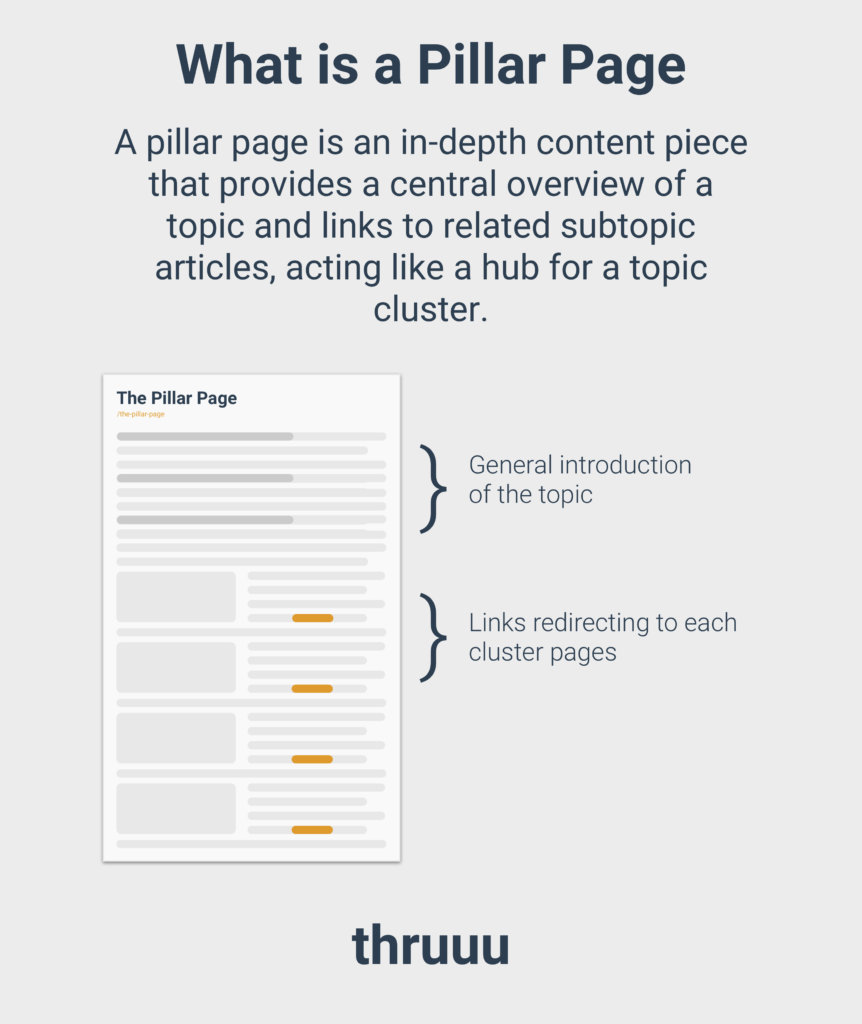
Content clustering is the practice of grouping related pages around one central topic and connecting them with internal links. A pillar page covers the broad subject, cluster pages go deep on individual subtopics, and the links between them tell search engines and readers how the pieces fit together.
The payoff is not a single ranking win. It is a structure that keeps producing results as you publish: broader coverage, clearer site hierarchy, and stronger signals of expertise. This guide explains how content clustering works, how to build your first cluster, and where the common mistakes happen.
What Is Content Clustering?
Content Clustering: Build Topic Clusters That Rank - What Is Content Clustering?.
A content cluster is a set of pages organized around one topic. It has two layers:
- A pillar page (also called a cornerstone page): a comprehensive overview of the main topic, usually targeting a broader, higher-volume keyword.
- Cluster pages: supporting articles that answer specific questions, cover use cases, or explore subtopics in depth, usually targeting long-tail keywords.
Internal links connect the cluster pages back to the pillar and often between related cluster pages. That link pattern is what turns a pile of articles into a recognizable topic structure.
A useful distinction: content clustering is the structure, while topical authority is the outcome. You build the structure deliberately; authority accumulates as the cluster grows and stays current.
Why Content Clustering Matters

Content Clustering: Build Topic Clusters That Rank - Why Content Clustering Matters.
Publishing isolated articles creates two problems. Each new post competes with your existing posts for overlapping queries, and search engines have no clear signal about which page is your most important resource on a subject.
Clustering fixes both:
- Coverage compounds. A pillar page can rank for broad terms while cluster pages capture specific, less competitive queries.
- Link equity flows with intent. Internal links pass authority to the pages you want to rank and help crawlers understand relationships between URLs.
- Expertise becomes visible. A cluster that answers many related questions demonstrates depth in a way that one long article cannot.
- AI systems cite structured content more confidently. When a topic is comprehensively covered and clearly linked, retrieval systems have more reliable context to work with.
This is also why clustering fits naturally into a broader content marketing strategy rather than sitting apart from it.
Content Clustering vs Siloing vs Topical Authority
Content Clustering: Build Topic Clusters That Rank - Content Clustering vs Siloing vs Topical Authority.
These terms get used interchangeably, but they describe different things:
| Concept | What it is | Key difference |
|---|---|---|
| Content clustering | An organizational structure | Groups related pages around a topic with internal links |
| Siloing | A stricter structure | Keeps topic areas fully separate, with minimal cross-linking |
| Topical authority | An outcome | The trust and coverage a site earns over time |
| Content strategy | The overall plan | Clustering is one method inside it |
Siloing can be useful when topic areas must stay strictly separate, such as distinct product lines or regulated subjects. Clustering is usually more flexible because it allows strategic cross-links between related clusters without diluting focus.
How to Build a Content Cluster

Content Clustering: Build Topic Clusters That Rank - How to Build a Content Cluster.
Step 1: Choose pillar topics you can genuinely own
Start with the themes your business should be known for. Ask what your audience is trying to solve and where you can offer first-hand experience, not just summaries.
A practical test: if you cannot write five to ten distinct subtopics under a topic, it is probably not a pillar. It is a single article.
Step 2: Run keyword research and group by intent
Collect keywords for the pillar and its subtopics, then group them by search intent rather than by volume alone. Someone searching "what is content clustering" wants a definition. Someone searching "content cluster template" wants a tool or example. Someone searching "how to fix cannibalization in topic clusters" wants troubleshooting.
Each intent group usually becomes one page. This grouping step is the actual "keyword clustering" work, and it prevents two pages from targeting the same query.
Step 3: Build the pillar page
A pillar page should give a complete but high-level overview of the topic. It should touch every subtopic in the cluster, link out to the deeper pages, and stand on its own for a reader who never clicks further.
Pillar pages are typically longer than cluster pages, but length is not the goal. Coverage is.
Step 4: Write cluster pages that go deep
Each cluster page should answer one specific question thoroughly. Keep the scope narrow enough that the page has a single clear purpose. If a draft starts covering three unrelated questions, split it.
Step 5: Connect everything with internal links
This is where most clusters fail. Follow these rules:
- Link from every cluster page back to the pillar using descriptive anchor text.
- Link from the pillar to each cluster page in context, not just in a list at the bottom.
- Add links between closely related cluster pages where it genuinely helps the reader.
- Avoid linking the pillar to every page on your site. Focused linking preserves topical signals.
Step 6: Expand and maintain the cluster
A cluster is not finished when the first batch publishes. Add new pages as you find keyword gaps, update the pillar as subtopics grow, and refresh older pages when information changes. Content that is never revisited tends to decay in rankings.
A Worked Example
Imagine a SaaS company selling project management software. One pillar could be "remote team management." Cluster pages might cover:
- How to run async standups
- Time zone overlap scheduling
- Remote onboarding checklists
- Tools for distributed team documentation
Each page targets a distinct long-tail query, links back to the pillar, and links to one or two sibling pages where relevant. The pillar links out to all four. Over time, the company adds pages on remote performance reviews and hybrid meeting norms, strengthening the same cluster instead of starting unrelated topics.
Notice that the cluster maps to a topic, not a product. A single product might appear across several clusters, and that is fine.
Common Content Clustering Mistakes
- Treating clustering as only an internal linking task. Links are the connective tissue, but the real value is comprehensive coverage.
- Creating one cluster per product. Clusters should follow audience topics. Product-led clusters often end up thin and overlapping.
- Building clusters too early. On a site with fewer than roughly 10 to 15 solid pieces of content, focus on publishing quality first. Clustering infrastructure can wait.
- Forcing clusters across unrelated topics. If your business spans genuinely separate subjects, artificial clusters can confuse rather than clarify.
- Ignoring cannibalization. If two pages target the same intent, consolidate or differentiate them.
Where Content Clustering Fits in Your Workflow
Clustering is an editorial planning decision as much as an SEO one. Every new article should either belong to an existing cluster or deliberately start a new one. That means your keyword plan, your briefs, and your internal linking rules need to live in the same place.
This is where automation changes the math. AgentBooks is an AI content marketing automation platform that crawls your website to build a reusable source of truth, maps your market, and produces a categorized keyword plan. From there it generates articles with approval workflows and publishes them to a hosted content site with custom domain support. For teams running several clusters at once, that pipeline keeps pillar pages and cluster pages aligned instead of drifting apart.
If you are evaluating tooling, it helps to understand where plugins stop and automation begins. A comparison of AI content marketing platforms can clarify which layer you actually need, and a closer look at AgentBooks vs ContentBot.ai vs SEO Writing covers the trade-offs in automation depth and pricing.
Related reading
- Parasite SEO in 2026: Risks, White-Hat Uses & Safer Alternatives - Parasite SEO borrows another site's authority to rank fast. Learn how it works, where Google draws the line, and safer ways to build durable rankings.
- Yoast SEO Features Explained: Free vs Premium vs AI+ (2026) - A practical tour of Yoast SEO features in 2026: free plugin basics, Premium tools, AI+ additions, plan comparison, and where plugins stop.
- Brand Sentiment Tracking: Metrics, Tools & Playbook - Learn how brand sentiment tracking works: sentiment scores, topic-level analysis, social listening vs surveys, tools, and a step-by-step playbook.
Sources and further reading
- Content Clustering - Averi AI - What Is Content Clustering?
Content clustering is an organizational strategy where related content pieces are grouped around a central pillar page and connected through internal links. The pillar provides comprehensive topic coverage while cluster pages address specific subtopics in depth. Together, they signal topical authority to search engines and AI systems.
Why Content Clustering Matters for Modern Startups
Content clustering transforms random blog posts into strategic assets. Instead of 50 orphaned articles competing against each other, you have interconnected clusters where each piece strengthens the others.
The benefits compound: pillar pages rank for high-volume head terms while cluster pages capture long-tail queries. Internal links distribute page authority throughout the cluster. AI systems recognize the comprehensive coverage pattern and cite clustered content more confidently.
For startups with limited content resources, clustering maximizes the impact of every piece published.
How Content Clustering Works
Identify pillar topics representing core themes your business should own
Create pillar pages providing comprehensive overviews (2,000-4,000 words)
Map cluster content addressing specific questions, use cases, and subtopics
Build internal links from clusters to pillars and between related clusters
Expand systematically adding new cluster content based on keyword gaps and user questions
Content Clustering vs Related Terms
Content Clustering vs Topical Authority: Content clustering is the structure. Topical authority is the outcome. Effective clustering builds topical authority over time.
Content Clustering vs Siloing: Siloing strictly separates topic areas. Clustering allows strategic cross-linking between related clusters while maintaining topical focus.
Content Clustering vs Content Strategy: Content strategy is the overall plan. Content clustering is a specific organizational approach within that strategy.
Common Misconceptions About Content Clustering
"Pillar pages should link to everything." They should link to cluster content, not every page on your site. Focused internal linking preserves topical signals.
"One cluster per product." Clusters should map to topics, not products. A product might be relevant across multiple topical clusters.
"Clustering is just about internal links." Links are the connective tissue, but the real value is comprehensive topic coverage that signals expertise.
When Content Clustering Is Not the Right Focus
For sites with fewer than 10-15 pieces of content, clustering infrastructure is premature. Focus on creating quality content first, then organize into clusters.
If your business spans genuinely unrelated topics (a holding company, for example), forcing artificial clusters may confuse rather than clarify topical signals.
How This Connects to Modern Workflows
Content clustering integrates into editorial planning—ensuring every new piece has a home in an existing cluster or deliberately starts a new one.
FAQ
What is the difference between a content cluster and a pillar page?
A content cluster is the whole group: the pillar page plus all supporting pages and the internal links between them. The pillar page is the central, broad overview within that group.
How many pages should a content cluster have?
Most clusters work well with one pillar page and five to ten cluster pages. Fewer than five often means the topic is too narrow to justify a pillar; more than ten is fine if the subtopics stay genuinely distinct.
Do content clusters still work for SEO?
Yes. Clustering improves site structure, internal linking, and topical coverage, all of which support rankings. It is not a shortcut, and it does not replace content quality or search intent matching.
Can a page belong to more than one content cluster?
Yes. A subtopic page can reasonably sit in two related clusters if it addresses overlapping questions. Just avoid duplicating the same intent across multiple pages.
How long does it take to see results from content clustering?
Expect months, not weeks. Cluster pages targeting long-tail queries often gain traction first, and pillar page rankings tend to improve as the cluster fills out.
Is content clustering the same as keyword clustering?
No. Keyword clustering is the research step where you group keywords by intent so each page targets a distinct query set. Content clustering is the publishing and linking structure built on top of that research.
Conclusion
Content clustering turns scattered posts into a structure that compounds. Pick topics you can own, group keywords by intent, build one strong pillar per topic, write focused cluster pages, and link them deliberately. Then keep expanding and updating rather than starting over.
The teams that win with this approach treat clustering as an ongoing operating system, not a one-time project. If you want to see how that works end to end, explore AgentBooks and how it connects keyword planning, article creation, and publishing in one workspace.
For further reading on the fundamentals, see Yoast's guide to content clusters and Mightybytes' breakdown of content cluster elements.