Brand Sentiment Tracking: Metrics, Tools & Playbook
Brand sentiment tracking measures the emotional tone people attach to your brand — trust, frustration, enthusiasm, indifference — and how that tone shifts over time. It matters because sentiment usually moves before behavior does. Churn, advocacy, and purchase intent tend to follow perception, not lead it.
This guide explains how sentiment is measured, which metrics are worth tracking, how social listening compares with survey research, and how to build a repeatable tracking process that produces decisions rather than dashboards.
What brand sentiment tracking actually measures
Brand Sentiment Tracking: Metrics, Tools & Playbook - What brand sentiment tracking actually measures.
Brand sentiment is the collective emotional attitude people associate with your brand. It is usually expressed in one of three ways:
- Positive — praise, recommendations, enthusiasm
- Neutral — factual mentions, comparisons without judgment
- Negative — complaints, disappointment, backlash
The critical nuance: sentiment is rarely uniform. A customer can love your product quality and resent your pricing. An overall score that averages those two signals hides the most actionable insight. That is why mature programs track sentiment at the topic level — product, price, support, values, reliability — rather than as a single number.
Sentiment is also contextual. The word "cheap" is a compliment for a value brand and a criticism for a premium one. Any tracking system that ignores positioning will misclassify both.
Why sentiment works as a leading indicator
Brand Sentiment Tracking: Metrics, Tools & Playbook - Why sentiment works as a leading indicator.
Traditional brand metrics — awareness, consideration, intent — describe outcomes. Sentiment explains the direction those outcomes are heading.
Tracking it consistently helps you:
- Catch reputational risk early, before complaints become a public narrative
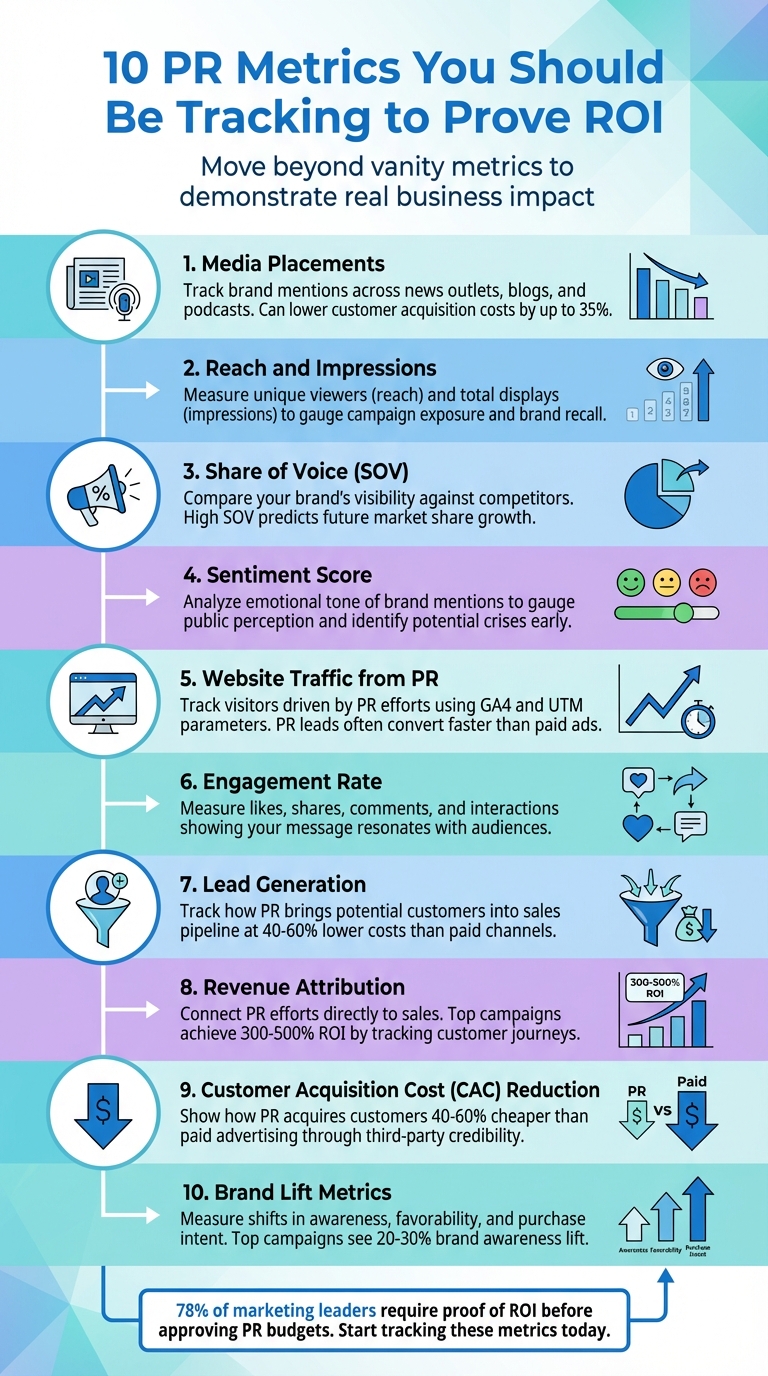
- Evaluate campaigns on emotional response, not just reach
- Monitor trust and credibility as competitive differentiators
- Distinguish short-term reactions (a pricing change) from sustained shifts (a values conflict)
- Benchmark against competitors to find positioning gaps
Because sentiment shifts before loyalty and churn move, it functions as an early-warning system for brand health.
How to measure brand sentiment: three data layers

Brand Sentiment Tracking: Metrics, Tools & Playbook - How to measure brand sentiment: three data layers.
Reliable sentiment tracking combines three sources. Each has blind spots the others cover.
1. Social listening and public conversation data
Listening tools monitor mentions, keywords, hashtags, and competitor conversations in real time. This captures unprompted opinion — what people say when nobody asked.
Its limitation: public conversation overrepresents the most vocal audiences. Quiet, satisfied customers rarely post. Treat listening data as a signal, not a census.
2. First-party feedback: surveys and open-ended responses
Survey-based measurement captures feedback from defined, representative audiences, which makes results comparable over time. Open-ended questions are especially valuable because they let people describe sentiment in their own words rather than picking from a preset scale.
This is the most defensible foundation for a tracking program, because you control the sample and the cadence.
3. Text analytics and sentiment classification
Natural language understanding (NLU) models classify emotional tone across large volumes of text — survey verbatims, support tickets, reviews, social posts. Modern systems reach high accuracy levels and, more importantly, can assign sentiment per topic rather than per document.
That topic-level view is what turns a score into a decision. "Sentiment is down 4 points" is a headline. "Sentiment on support response time dropped 12 points while product sentiment held steady" is an action item.
How to calculate a sentiment score
Brand Sentiment Tracking: Metrics, Tools & Playbook - How to calculate a sentiment score.
A simple, transparent scoring model beats an opaque one. The standard approach:
- Label each mention as positive, neutral, or negative
- Assign values: positive = +1, neutral = 0, negative = −1
- Sum the values across your sample
- Normalize by volume so periods with different mention counts stay comparable
A common normalized metric is net sentiment:
net sentiment = (positive − negative) / total mentions × 100
This produces a range from −100 to +100. Track it weekly or monthly, and always segment it — by topic, channel, and audience — before drawing conclusions.
What "good" sentiment looks like
There is no universal benchmark. "Good" depends on your positioning and audience expectations. Strong sentiment generally reflects:
- Reliable, high-quality products or services
- Transparent, trustworthy behavior
- Responsive, helpful support
- Fair perceived value relative to price
Negative sentiment typically clusters around:
- Product or service disappointment
- Perceived conflict with brand values
- Frustration with communication or service
- Backlash to messaging or campaign execution
Compare your score against your own history and your direct competitors — not against an arbitrary industry number.
Text analytics vs sentiment analysis
These two techniques are complementary, and confusing them leads to weak programs:
| Technique | Question it answers |
|---|---|
| Text analytics | What are people talking about? |
| Sentiment analysis | How do they feel about it? |
Run together, they tell you both the theme and the emotional charge — for example, that "onboarding" is the most discussed topic and the most negatively charged one. That combination is what drives prioritization.
Building a repeatable tracking workflow
Sentiment programs fail when they are one-off reports. A durable workflow looks like this:
- Define scope — which brands, competitors, topics, and markets you track
- Set cadence — continuous listening plus quarterly or monthly survey waves
- Classify and score — apply consistent labeling rules and document them
- Segment — break results down by topic, channel, and audience
- Route insights — send findings to product, support, and marketing owners
- Close the loop — review whether actions moved the metric
Step five is where most programs stall. Sentiment data only creates value when it reaches the team that can act on it.
Where content operations connect to sentiment
The topics that generate positive sentiment are also the topics worth publishing about. If sentiment analysis shows consistent praise for a specific product capability or value, that is evidence for doubling down on related content. If it surfaces recurring friction — confusing pricing, unclear setup — that is a content gap worth addressing directly.
This is where an always-on publishing workflow helps. Tools like AgentBooks turn a website into a continuous content engine: it crawls your site to build a reusable source of truth, maps the market, plans topics, and publishes in your brand voice. When sentiment data identifies a theme, that pipeline can respond with content rather than a slide in a quarterly deck. If you are evaluating how automation fits alongside manual SEO tooling, our Yoast SEO setup guide covers the plugin layer, and the AI content platform comparison covers the automation layer.
Common mistakes to avoid
- Relying on a single overall score. Topic-level detail is where the insight lives.
- Treating social listening as the whole picture. It skews toward the loudest voices.
- Ignoring context. Sentiment words mean different things for different positioning.
- Measuring without a cadence. Fragmented snapshots cannot show trends.
- Reporting without owners. Insights with no action path decay into noise.
Related reading
- QuickCreator.io Review: AI Content Team for Solo Founders - A practical QuickCreator.io review covering its AI agents, brand voice, E-E-A-T scoring, pricing, and how it fits alongside AgentBooks for content teams.
- What Is an SEO Plugin? How to Choose the Right One (2026) - Learn what an SEO plugin does, how to choose between Yoast, Rank Math, AIOSEO and others, plus where plugins stop and content automation takes over.
Sources and further reading
- Brand sentiment analyzer [FREE TOOL] - Understand the power of your brand online with this free brand sentiment analysis tool. Plus, measure the sentiment of hot topics.
- What is Brand Sentiment Tracking? - Brand sentiment tracking measures how people feel about your brand. Learn how sentiment is measured, tracked over time, and used in brand strategy.
- Sentiment Analysis Solutions for Deeper Brand Insights - Monitor social activity & organic online sentiment from your audience. Enrich your understanding of what makes them tick. Start your sentiment analysis today.
FAQ
Is brand sentiment a KPI?
It is best treated as a diagnostic metric rather than a standalone performance KPI. Its main value is explaining why awareness, consideration, or loyalty are moving — not replacing them.
Is brand sentiment tracking limited to social media?
No. Public conversation provides useful context, but the most reliable tracking combines survey-based first-party feedback with structured research inputs.
How often should sentiment be tracked?
Many organizations run continuous listening with quarterly or monthly survey waves. The right cadence depends on how quickly perception can shift in your market.
Can sentiment predict business outcomes?
Yes. Changes in sentiment often precede shifts in loyalty, advocacy, and churn, which makes it a leading indicator rather than a lagging one.
What accuracy can sentiment analysis tools achieve?
Leading natural language processing systems report sentiment accuracy in the low 90s percentage range. Accuracy varies by language, domain, and how much sarcasm or industry jargon appears in the text.
How does sentiment tracking fit into brand measurement?
It adds emotional context to traditional brand health metrics. Reviewed together, sentiment explains the drivers behind awareness, consideration, and loyalty trends.
Conclusion
Brand sentiment tracking is not a dashboard exercise. It is a system for detecting perception shifts early, understanding which topics drive them, and routing that insight to people who can act. Start with a defined scope, combine listening data with first-party surveys, score consistently, and always segment by topic.
The teams that get the most from sentiment data are the ones that can respond quickly — with product fixes, support changes, or content that addresses what audiences actually care about. Sentiment tells you what to say next. The faster you can say it, the more the signal is worth.