Copy.ai Review 2025: GTM Platform or Just AI Writer?
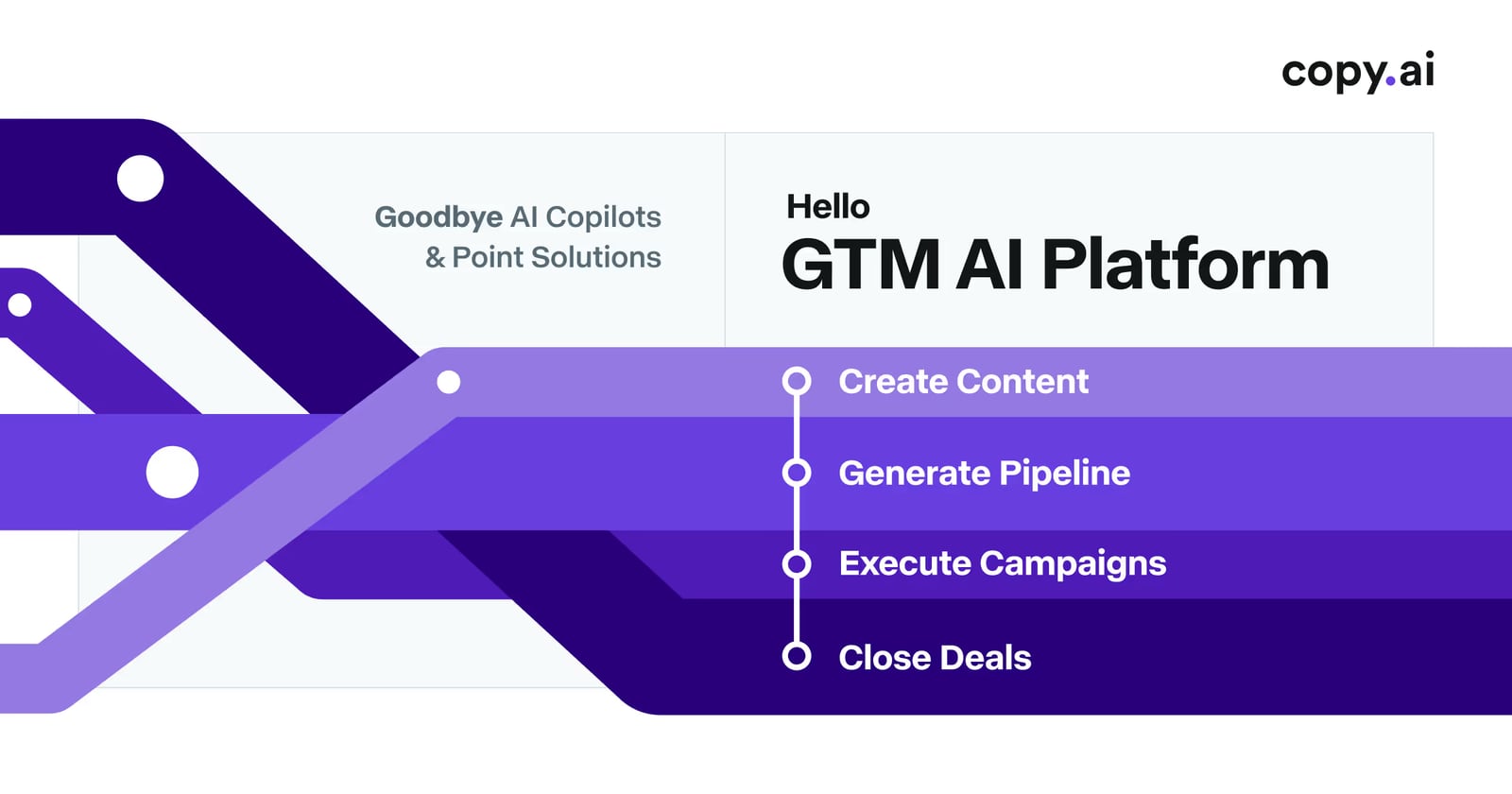
Copy.ai started as a straightforward AI copywriting tool, but in 2025 it positions itself as something far more ambitious: the first AI-native Go-To-Market (GTM) platform. The promise is compelling—replace a scattered collection of AI copilots and point solutions with a single system that unifies data, codifies best practices, and automates work across sales, marketing, and operations. After testing the platform and analyzing user experiences, this review separates the GTM vision from the day-to-day reality.
Who Is Copy.ai Actually For?
Copy.ai product interface.
Copy.ai has shifted its focus from solo creators toward revenue teams. The platform makes the most sense for three specific groups:
- Mid-market sales and marketing teams that want to automate prospecting, lead enrichment, and outreach without juggling five different tools.
- Revenue operations leaders who need workflows that connect CRM data, content generation, and deal coaching in one place.
- Content marketers who still want AI writing assistance but can benefit from the Content Agent Studio and brand voice controls.
Freelancers and small business owners who only need blog drafts or social captions may find the platform overbuilt for their needs. The tool has evolved beyond its original writing-assistant identity, and that evolution comes with complexity.
Core Capabilities and Use Cases

Copy.ai product interface.
Sales Prospecting and Outreach
Copy.ai’s prospecting features pull deep account and contact research into automated outreach sequences. Instead of manually researching a prospect and then writing a cold email in a separate tool, teams can run the entire process inside Workflows. The platform claims customers generate 5x more meetings—a stat that depends heavily on data quality and workflow design, but the integration logic is sound.
Content Creation and the Content Agent Studio
The Content Agent Studio lets marketing teams spin up a content engine from just three sample inputs. This goes beyond template-based generation. The system learns your brand voice and can produce SEO articles, thought leadership pieces, and social content that feels more consistent than what generic AI writers output.
However, users on Trustpilot and Bitcatcha note that long-form content still requires significant fact-checking. The blog post wizard, while improved, can produce talking points that feel random. For short-form copy—ad headlines, landing page sections, email subject lines—the output quality is more reliable.
Inbound Lead Processing and ABM
Copy.ai enriches inbound leads automatically and triggers engagement workflows. For account-based marketing, it generates hyper-relevant assets based on account insights. This moves the platform well beyond what standalone AI writers like Jasper or Writesonic offer, pushing it into territory closer to a lightweight marketing automation hub.
Translation and Deal Coaching
Real-time native-level translations are built into the platform, which is useful for global teams. The deal coaching features analyze sales call transcripts, score deals, and predict close dates—capabilities that normally require a dedicated revenue intelligence tool.
What Works Well
Unified workflows replace tool sprawl. The biggest value proposition is consolidation. Teams that currently use separate tools for content, prospecting, enrichment, and deal analysis can collapse those into one platform. This reduces context-switching and subscription costs.
Brand Voice controls are genuinely useful. Unlike basic tone selectors, Copy.ai’s Brand Voice feature learns from your existing content and applies consistent style across all outputs. This matters when multiple team members generate customer-facing copy.
Templates cover real marketing frameworks. AIDA (Attention, Interest, Desire, Action) and PAS (Problem, Agitation, Solution) frameworks are built into the template library. This gives less experienced marketers guardrails that follow proven conversion principles.
Interface remains approachable. Despite the platform’s expanded scope, the left-navigation workspace and template-first approach keep the learning curve manageable. Most users can start generating useful output within the first session.
Limitations and Frustrations
Fact-checking is non-negotiable. Across multiple reviews, users consistently flag that Copy.ai can produce incorrect dates, names, and statistics. This is a common AI limitation, but it feels more pronounced when the platform positions itself as a GTM command center where accuracy directly impacts revenue.
Long-form content still struggles. The blog post wizard has improved since its beta days, but generating a complete, coherent long-form article often requires multiple regeneration rounds. For teams that need volume blog content, dedicated AI SEO tools like Koala AI or AgentBooks may produce more reliable first drafts.
Generation lag on complex tasks. When running multi-step workflows or generating large batches of content, processing times can stretch noticeably. This isn’t a dealbreaker for scheduled campaigns, but it frustrates users who want real-time iteration.
Random awkward outputs appear. Even with brand voice settings, the platform occasionally inserts off-tone sentences or factually strange claims. This requires vigilant human review—ironic for a tool that promises to automate tedious tasks.
Pricing Signals and Setup Experience
Copy.ai does not publish transparent pricing on its main site, which is a deliberate signal that it targets mid-market and enterprise buyers rather than self-serve individuals. The setup process reflects this: onboarding includes workflow configuration, CRM integration, and brand voice training rather than a simple sign-up-and-generate flow.
For teams evaluating the platform, expect a sales conversation. The 7-day money-back guarantee mentioned in some reviews applies to subscription plans, but pricing tiers are customized based on seat count and feature access. This is standard for GTM platforms but a departure from Copy.ai’s earlier days as an affordable writing tool.
How Copy.ai Compares to Alternatives

Copy.ai product interface.
Copy.ai now competes in a different category than pure AI writers. Here’s how the comparison breaks down:
- Vs. Standalone AI writers (Jasper, Writesonic): Copy.ai offers more workflow automation and sales features but less depth in pure content generation. If you only need blog posts and ad copy, lighter tools may suffice.
- Vs. Revenue intelligence platforms (Gong, Clari): Copy.ai’s deal coaching is lighter but included in a broader platform. Dedicated tools offer deeper analytics.
- Vs. Content-focused AI platforms (AgentBooks, Contentpen): For teams weighing Copy.ai against content-first alternatives, our AgentBooks vs Contentpen vs Copy.ai comparison breaks down which tool fits different content goals and automation needs.
Decision Criteria: Should You Choose Copy.ai?

Copy.ai product interface.
Choose Copy.ai if:
- Your team currently uses 3+ separate tools for content, outreach, and lead management.
- You want workflows that connect CRM data to content generation automatically.
- Brand voice consistency across sales and marketing matters to your organization.
- You’re willing to invest setup time in exchange for long-term workflow automation.
Look elsewhere if:
- You only need an AI blog writer or social media caption generator.
- Transparent, self-serve pricing is a requirement.
- Your primary need is long-form, research-heavy content with minimal editing.
- You prefer best-of-breed tools over an all-in-one platform.
Related reading
- AgentBooks vs Machined vs SEO Writing: 2025 Comparison - Compare AgentBooks, Machined, and SEO Writing across autonomous content engines, AI SEO workflows, and 1-click publishing. Find the best fit for your strategy.
- Canva Review 2025: Is It Right for Your Visual Content? - An evidence-based Canva review covering ideal users, AI design tools, pricing, security, and real-world strengths and limitations for teams and solo creators.
Sources and further reading
- Reviews of Copy.ai - See what users are saying about Copy.ai!
- Read Customer Service Reviews of copy.ai - It had a paid subscription and used it a bit, but my login stopped working. Reached out to support via email and via the website form.Read more
- Copy.ai Review: 7 Pros and 4 Cons of Using Copy.ai - Copy.ai is the latest addition to an expanding list of artificial intelligence (AI) writing tools. Not just for run-of-the-mill content, though. The service is smart enough to distinguish between content intent such as slogans, marketing copy, or even punchy headlines. Copy.ai can be an excellent way for busy marketers and small business owners to get […]
Frequently Asked Questions
Is Copy.ai still just an AI writing tool?
No. While content generation remains a core feature, Copy.ai has evolved into a GTM platform that includes sales prospecting, lead enrichment, deal coaching, and workflow automation alongside its writing capabilities.
How accurate is Copy.ai’s content output?
Output quality is strong for short-form copy, ad headlines, and email templates. Long-form content requires fact-checking. The platform can produce incorrect dates, statistics, and occasionally awkward phrasing that needs human review.
Does Copy.ai offer a free trial?
Copy.ai offers a free tier with limited usage. For full platform access, pricing is customized based on team size and needs. Expect a sales conversation rather than transparent self-serve plans.
Can Copy.ai replace my CRM or marketing automation tool?
Copy.ai integrates with CRMs and marketing tools rather than replacing them. It adds an AI layer that automates tasks across those systems, but it does not function as a standalone CRM.
How does Copy.ai handle multiple languages?
The platform includes real-time translation and localization features that support native-level output across multiple languages. This is particularly useful for global sales and marketing teams.
What’s the learning curve for Copy.ai Workflows?
The interface is approachable, but building effective workflows requires understanding your existing processes. Teams should budget time for configuration and testing, especially when connecting CRM data and designing multi-step automations.
Bottom Line
Copy.ai has successfully transformed from an AI copywriting tool into a legitimate GTM platform, but that transformation comes with trade-offs. The platform excels at unifying workflows that would otherwise require multiple subscriptions. Its brand voice controls and marketing framework templates add real value for teams producing customer-facing content at scale.
The limitations are real: long-form content still needs heavy editing, fact-checking remains mandatory, and the enterprise-focused pricing model won’t suit everyone. For teams that fit the ideal profile—mid-market sales and marketing groups drowning in tool sprawl—Copy.ai offers a compelling consolidation play. For solo creators or teams that only need writing assistance, lighter, more focused alternatives may deliver better value.
Before committing, map your current tool stack and identify which workflows you actually want to automate. If Copy.ai can replace three or more point solutions while improving output consistency, the platform earns its place. If you only need an AI writer, you’re paying for capabilities you won’t use.