Multilingual Content: A Practical Guide to Strategy, Localization, and Scalable Workflows
Multilingual content is no longer a nice-to-have for companies eyeing international growth. It is the difference between being visible in a new market and being invisible to everyone who does not search, read, or buy in your primary language. Research consistently shows that most consumers prefer to buy in their native language, and businesses that ignore this preference leave a measurable share of revenue on the table.
This guide breaks down what multilingual content really means, how it differs from simple translation, and how to build a workflow that stays consistent as you scale. You will learn how to choose the right markets, avoid the most expensive localization mistakes, and use modern AI-assisted publishing without losing your brand voice.
What Is Multilingual Content?
Multilingual content is any content published in more than one language. That includes blog posts, product pages, help documentation, email campaigns, social posts, and even customer support scripts. The goal is not just to duplicate words in another language, but to make your message understandable and persuasive for a specific audience.
There is an important distinction between two terms that are often used interchangeably:
- Translation converts text from one language to another while preserving the original meaning.
- Localization adapts content to a specific culture, region, or market. It accounts for idioms, humor, units of measurement, currency, imagery, social norms, and even legal requirements.
A well-localized page may change the headline, swap out an example, adjust the call to action, and use different imagery from the source version. Translation alone rarely achieves that.
Why Multilingual Content Matters for Growth

Multilingual Content: Strategy, Localization & AI Workflows - Why Multilingual Content Matters for Growth.
The business case is straightforward. When customers can read about your product in their own language, they are more likely to trust you, complete a purchase, and return. CSA Research found that 65% of consumers prefer content in their own language even when the quality is imperfect, and 75% are more likely to repurchase when after-sales support is available in their language. Another widely cited finding is that companies can lose up to 40% of potential business by failing to localize the buying journey.
Beyond conversion, multilingual content also improves organic visibility. Search engines index pages per language and region, which means a localized page can rank for queries that your English-only site will never capture. When you publish useful content in German, Spanish, Japanese, or Portuguese, you are creating new entry points for discovery in markets where competitors may still be publishing only in English.
Translation vs. Localization: Where Most Teams Go Wrong
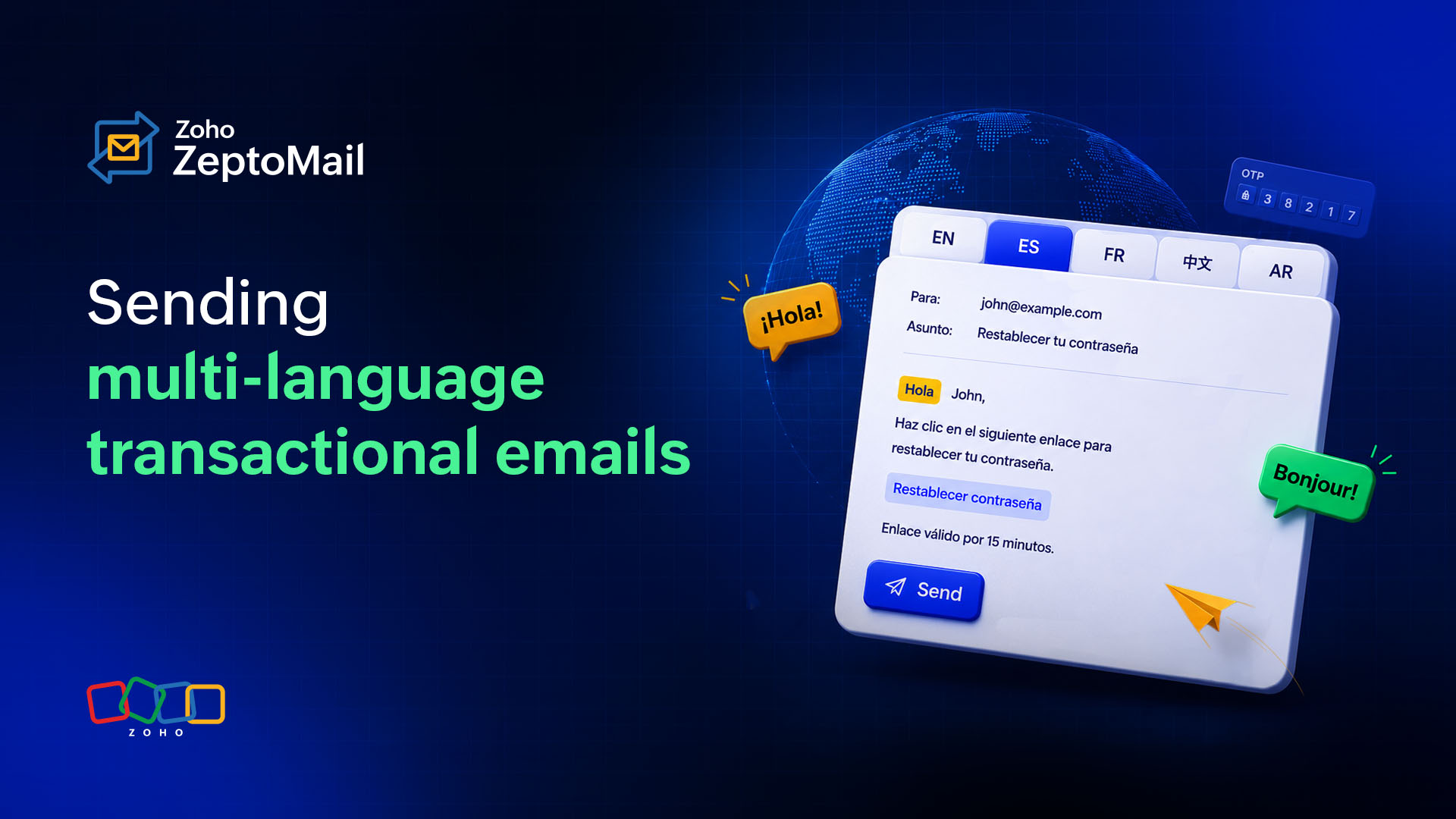
Multilingual Content: Strategy, Localization & AI Workflows - Translation vs. Localization: Where Most Teams Go Wrong.
The most common failure in multilingual content is treating localization as a final step rather than a strategic input. Teams write a piece in English, run it through a translation tool, and publish the result. The outcome is often grammatically correct but culturally flat, with examples that do not resonate and calls to action that feel generic.
Effective localization starts before the first sentence is written. It asks questions such as:
- What pain points matter most in this market?
- Which competitors dominate local search results?
- What tone is appropriate for B2B audiences in this region?
- Are there local regulations, holidays, or cultural references to respect?
- Which payment methods, units, and formats should appear on the page?
A classic cautionary tale is the American Motors car named the Matador, which translates to "killer" in Spanish. The lesson is not that translation is dangerous, but that language choices must be validated by native speakers who understand the market.
How to Build a Multilingual Content Strategy
Multilingual Content: Strategy, Localization & AI Workflows - How to Build a Multilingual Content Strategy.
A sustainable multilingual strategy has five components: market selection, content prioritization, localization workflow, technical SEO, and quality control.
1. Choose Markets Based on Data, Not Assumptions
Do not translate your entire site into ten languages on day one. Start with the markets where you already see demand signals: existing traffic from a country, customer support requests in a language, or sales inquiries from a region. Use search volume data to confirm that people in that market are actively searching for your category.
A practical approach is to score potential markets on three factors:
- Demand: search volume, existing traffic, and lead quality from that region.
- Competition: how many local competitors already publish in that language.
- Operational readiness: whether you can support customers in that language after the sale.
2. Prioritize High-Impact Content First
Not all content deserves translation. Start with pages that drive revenue and trust:
- Product and pricing pages
- Feature comparisons and buying guides
- Onboarding and help documentation
- High-traffic blog posts that already convert
Low-performing or purely internal content can wait. A focused launch in one or two languages with excellent localization will outperform a broad launch in ten languages with mediocre quality.
3. Design a Repeatable Localization Workflow
Your workflow should separate three roles clearly:
- Source content owner creates the original piece and documents intent.
- Localization specialist adapts the content, not just translates it.
- Reviewer checks tone, terminology, and cultural fit before publishing.
A multilingual glossary is essential. It defines how key product terms, feature names, and brand phrases should be rendered in each language. This prevents the drift that happens when multiple translators or tools interpret the same term differently over time. Digital.gov offers a useful introduction to multilingual glossaries that explains how shared terminology improves consistency across large organizations.
4. Get Technical SEO Right
Multilingual SEO requires more than translated pages. The technical foundation includes:
- Hreflang tags that tell search engines which language and region each page targets.
- Dedicated URLs using subdirectories (
/es/), subdomains (es.example.com), or country-code domains (example.es). - Language switchers that are visible and easy to use, never relying on automatic IP-based redirects alone.
- Localized metadata including titles, descriptions, and alt text in the target language.
Search engines treat each language version as a separate page. That means keyword research must be done per market, not translated from English. A direct translation of a high-volume English keyword may have almost no search demand in German or French.
5. Measure Quality, Not Just Output
Track both performance and quality. Performance metrics include organic traffic per language, conversion rate by market, and rankings for localized keywords. Quality metrics include review pass rates, customer feedback, and support ticket volume from each region. If a language version generates traffic but no conversions, the problem is usually localization quality or a broken post-purchase experience, not the market itself.
AI and Multilingual Content: Where Automation Helps
AI has changed the economics of multilingual publishing. What once required a large team of translators and editors can now be produced faster, but the technology works best when it is paired with clear brand rules and human oversight.
The most effective AI-assisted workflows share a common pattern: the system learns the product and brand voice first, researches what already ranks in each target market, and then generates localized content that follows an approval process. This is the approach behind platforms like AgentBooks, which positions itself as an autonomous content growth platform for multilingual publishing. Instead of translating a single English article word by word, it maps topics per market, researches local search results, and produces content in the brand voice for each language.
That distinction matters. Translation tools convert text. Content engines that understand search intent can create a German comparison page that answers the questions German buyers are actually asking, rather than a translated version of an American comparison page.
For a deeper look at how AgentBooks handles this workflow, see this AgentBooks review or the comparison of AgentBooks vs. Machined vs. Copy.ai.
Common Multilingual Content Mistakes to Avoid
Publishing Machine Translation Without Review
Raw machine translation is fast but risky. It can produce awkward phrasing, inconsistent terminology, and cultural missteps that damage credibility. Always include a native-speaker review step for customer-facing content.
Ignoring Local Search Behavior
Keywords do not translate one-to-one. A term that drives volume in the United States may be irrelevant in Mexico or Spain. Perform keyword research in each target language and region before creating content.
Mixing Languages on the Same Page
Keep each language version fully self-contained. Avoid pages that mix English navigation with translated body text, or that leave untranslated elements such as buttons, forms, and error messages.
Neglecting the Post-Click Experience
Multilingual content creates expectations. If a visitor reads a localized page but then encounters an English-only checkout or English-speaking support team, trust erodes quickly. Align your content strategy with your operational capacity in each market.
Treating All Markets the Same
What works in Germany may not work in Brazil. Tone, formality, imagery, and even the structure of a sales argument can vary significantly. Localization requires market-specific judgment, not a single global template.
Multilingual Content Workflow: A Practical Example
Imagine a SaaS company that sells project management software. Its English site ranks well for "project management tools for remote teams." The company wants to enter the German market.
A translation-only approach would convert the existing article into German and publish it. A localization-first approach would:
- Research what German buyers search for, discovering that "Projektmanagement Software für Teams" and related terms about GDPR compliance carry significant volume.
- Identify that German B2B audiences expect more formal language and detailed data-protection information.
- Create a German comparison page that addresses local competitors, includes GDPR-specific sections, and uses case studies from German-speaking customers.
- Publish the page with proper hreflang tags, German metadata, and a language switcher.
- Review performance after 90 days and iterate based on rankings and conversion data.
The second approach requires more upfront work but produces a page that can actually compete in the German market.
How to Scale Multilingual Content Without Losing Quality
Scaling is where most multilingual programs break down. The manual workflow that works for two languages becomes unmanageable at five or ten. Three practices help:
Document Brand Voice Per Language
Create a style guide for each target language that covers tone, formality, terminology, and formatting preferences. This guide should be maintained by native speakers and updated as the brand evolves.
Use a Centralized Content Operations System
Keep source content, translations, glossaries, and review status in one place. This prevents version drift and makes it clear what has been published, what is in review, and what needs updating.
Automate Research and Drafting, Keep Human Review
The highest-leverage use of AI is in research and first drafts. AI can analyze top-ranking pages in each market, identify content gaps, and produce a localized draft in minutes. Human reviewers then focus on cultural nuance, factual accuracy, and brand alignment. This hybrid approach is exactly what autonomous platforms like AgentBooks are designed to support, with an approval-first workflow that lets teams publish confidently at scale.
For teams exploring the broader AI content landscape, this breakdown of ContentBot.ai features and this guide to AI SEO in 2026 provide useful context on where automation fits into a multilingual strategy.
Related reading
- Surfer Demo: Try the SEO Tool Before You Commit - Explore your Surfer demo options: the 14-day Golden Software trial, live SEO webinars, and beginner tutorials. Learn what each demo includes and how to choose.
- ContentBot.ai Features: Full 2026 Breakdown & Workflows - A practical breakdown of ContentBot.ai features: AI Flows, Importer, Blog Writer, Humanizer, multilingual output, pricing, and where the platform fits.
- Enterprise Content Governance: Framework, Models & AI - Learn how enterprise content governance turns content chaos into controlled workflows, reduces risk, and keeps AI-generated content on-brand.
Sources and further reading
- Multilingual Content Marketing: A Guide to Success | NYTLicensing - Read this complete guide to discover everything you need to know about multilingual content marketing, from translation tips and localization to demographics research. Learn more.
- Multilingual content marketing that drives engagement in every market - Mar 18, 2026 ... Multilingual content marketing is the practice of delivering structured content across multiple languages while preserving brand consistency and ...
Frequently Asked Questions
What is the difference between multilingual and bilingual content?
Bilingual content exists in two languages, while multilingual content exists in three or more. In practice, the terms are often used loosely, but the strategic principles are the same: each language version should be localized, not just translated.
How many languages should I start with?
Start with one or two languages where you already see demand signals, such as existing traffic, customer inquiries, or sales from that region. Expand only after you have a repeatable workflow and evidence that the first languages are performing.
Does multilingual content help SEO?
Yes. Each language version creates new opportunities to rank for localized search queries. Proper hreflang implementation, localized metadata, and market-specific keyword research are essential for capturing that visibility.
Can AI replace human translators for multilingual content?
AI can dramatically speed up research and drafting, but human review remains important for customer-facing content. The most effective workflows use AI for scale and native speakers for cultural validation and brand consistency.
What is a multilingual glossary?
A multilingual glossary is a shared reference that defines how key terms, product names, and brand phrases should be rendered in each target language. It ensures consistency across translators, tools, and content types.
How do I measure multilingual content performance?
Track organic traffic per language, rankings for localized keywords, conversion rate by market, and quality signals such as review pass rates and customer feedback. Compare performance across languages to identify what needs improvement.
Conclusion
Multilingual content is a growth lever, not a translation task. The companies that succeed treat it as a strategic function: they choose markets based on data, localize rather than translate, invest in technical SEO, and build workflows that can scale without sacrificing quality.
AI has made multilingual publishing more accessible than ever, but the fundamentals still apply. Know your audience, respect cultural differences, document your terminology, and measure what actually happens after you publish. When those pieces are in place, multilingual content stops being a cost center and becomes a reliable source of organic growth across every market you serve.