Surfer Pricing: Plans, Costs, and Smarter Alternatives
Surfer pricing looks simple at first glance, but the real cost depends on how many documents you optimize, whether you pay monthly or annually, and which features your workflow actually requires. This guide breaks down every Surfer plan, explains what you get at each tier, and compares it with a different approach: an autonomous content platform that removes the manual optimization bottleneck entirely.
What Is Surfer SEO?
Surfer Pricing: Plans, Costs, and Smarter Alternatives - What Is Surfer SEO?.
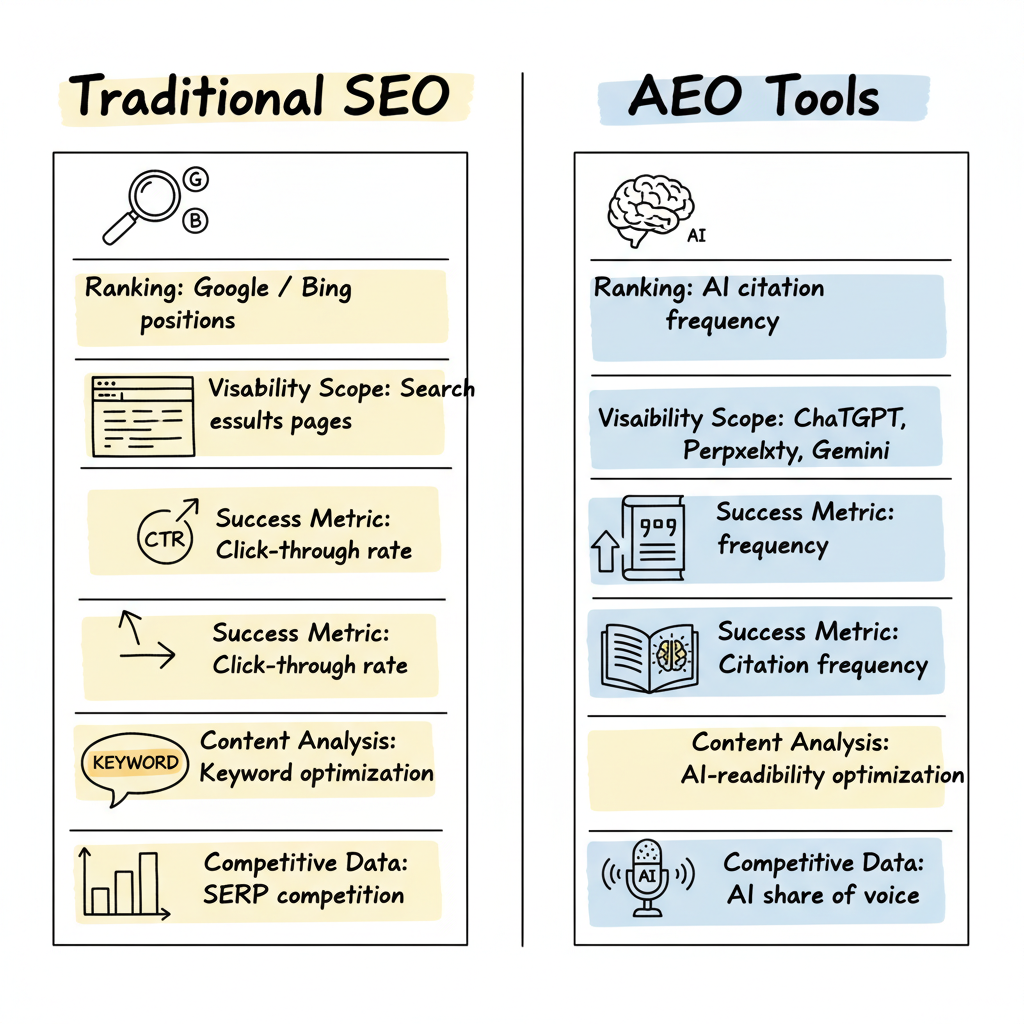
Surfer is an AI SEO toolkit built around a proprietary metric called the Content Score. It analyzes top-ranking pages using NLP, machine learning, and over 500 web and AI signals to generate real-time, competition-based guidelines for writers and editors. Teams use it to optimize drafts, brief writers, audit existing pages, and track AI visibility across platforms like ChatGPT and Google AI Overviews.
The core promise is predictable organic growth through data-backed suggestions rather than guesswork. That makes Surfer especially popular with agencies, in-house SEO teams, and freelance content marketers who want a structured optimization workflow.
Surfer SEO Pricing Plans Explained

Surfer Pricing: Plans, Costs, and Smarter Alternatives - Surfer SEO Pricing Plans Explained.
Surfer's pricing page lists several tiers, but the three flagship plans are Standard, Pro, and Peace of Mind. There are also Discovery and Enterprise options that appear further down the page, which is why many users find the structure confusing.
Standard Plan
Priced at $99 per month billed annually or $119 month-to-month, Standard is Surfer's entry-level paid tier. It includes the core optimization toolkit and is positioned for small teams that want to improve visibility in AI search.
Key limits:
- Create or optimize up to 360 documents
- 25 AI prompts refreshed weekly
- Basic AI visibility tracking
This plan works for solo SEOs or small marketing teams with moderate content volume. If you publish more than a handful of optimized pieces per month, the document cap can become restrictive quickly.
Pro Plan
At $182 per month billed annually, Pro is Surfer's recommended tier. It targets teams that need faster AI prompt refresh cycles and broader AI visibility tracking.
Key upgrades over Standard:
- 50 AI prompts refreshed daily instead of weekly
- AI visibility tracking across ChatGPT, Google AI, and other platforms
- Everything included in Standard
Pro makes sense for agencies managing multiple clients or in-house teams producing content at a steady weekly cadence. The daily prompt refresh is a meaningful difference if you rely on Surfer's AI writing features throughout the day.
Peace of Mind Plan
Priced at $299 per month, Peace of Mind is designed for larger companies and agencies. It removes most usage caps and adds enterprise-grade support.
Key features:
- Uncapped optimization
- API access
- 100 AI prompts refreshed daily
- VIP support
- Zapier and additional integrations
- Unlimited documents
This tier is for organizations where Surfer sits at the center of a scaled content operation. The API access enables custom workflows, while unlimited documents remove the anxiety of overage charges.
Discovery and Enterprise Plans
Below the main three tiers, Surfer lists a Discovery Plan as the true entry-level option and an Enterprise Plan for custom requirements. Discovery is useful for testing the platform with limited features, while Enterprise pricing is quote-based and tailored to large organizations with specific security, compliance, or multi-team needs.
Annual vs. Monthly Billing: The Real Cost Difference
Surfer Pricing: Plans, Costs, and Smarter Alternatives - Annual vs. Monthly Billing: The Real Cost Difference.
Surfer discounts every plan for annual billing. The savings are substantial:
| Plan | Monthly Billing | Annual Billing (per month) | Annual Savings |
|---|---|---|---|
| Standard | $119 | $99 | $240/year |
| Pro | ~$218 | $182 | ~$432/year |
| Peace of Mind | ~$359 | $299 | ~$720/year |
If you commit to Surfer for a full year, the annual plan is the obvious financial choice. However, the upfront payment is significant, and switching costs increase if your needs change mid-cycle.
What Surfer's Pricing Doesn't Tell You
Surfer Pricing: Plans, Costs, and Smarter Alternatives - What Surfer's Pricing Doesn't Tell You.
The listed price is rarely the full cost. Consider these factors before committing:
Document Limits Create Hidden Overage Pressure
Standard's 360-document cap sounds generous until you factor in revisions. Each optimization pass, content audit, or re-optimization of an existing page can count against your limit. Teams that iterate heavily on drafts often hit caps faster than expected.
AI Prompts Are a Separate Constraint
Surfer separates document limits from AI prompt limits. On Standard, 25 prompts refreshed weekly means roughly three to four AI-assisted actions per day. If your workflow depends on AI-generated briefs, outlines, or rewrites, you may need Pro just to avoid daily friction.
Team Seats Are Not Always Included
Surfer's pricing is primarily usage-based rather than seat-based. For agencies with multiple writers and editors, the effective cost depends on how many people share a single account versus how many need separate logins. Clarify seat policies before purchasing.
Content Score Is a Tool, Not a Guarantee
Surfer's Content Score measures alignment with top-ranking pages, but a high score does not guarantee rankings. Google's ranking systems consider hundreds of factors beyond on-page optimization. Treat the score as a diagnostic tool, not a promise of traffic.
Surfer Pricing vs. Autonomous Content Platforms
Surfer optimizes content that someone still has to write. An autonomous content platform like AgentBooks takes a different approach: it learns your product, researches organic search results, plans topics, and continuously publishes useful content in your brand voice—without manual draft bottlenecks.
The pricing difference reflects the workflow difference:
| Factor | Surfer | AgentBooks |
|---|---|---|
| Core function | Content optimization and auditing | Autonomous content creation and publishing |
| Starting price | $99/mo (Standard, annual) | Free beta tier (Starter) |
| Pro-level tier | $182/mo (Pro, annual) | $29/mo (Pro) |
| Team tier | $299/mo (Peace of Mind) | $99/mo (Team) |
| Manual effort | High—you write, Surfer scores | Low—platform drafts, you approve |
| Best for | Teams with existing writers | Teams that want always-on content growth |
Surfer is an optimization layer. AgentBooks is a content engine. If you already have a strong writing team and just need data-driven guidelines, Surfer's pricing may be justified. If the bottleneck is producing content at all—running out of topics, waiting on drafts, losing brand context—an autonomous platform addresses the root cause.
Who Should Pay for Surfer?
Surfer's pricing makes the most sense for specific use cases:
- Agencies managing multiple client sites that need consistent optimization standards and client-facing reports
- In-house SEO teams with dedicated writers who can act on Surfer's recommendations quickly
- Content auditors who need to evaluate existing pages against current SERP competition
- AI visibility trackers who want to monitor brand mentions in ChatGPT and Google AI Overviews
If you fall outside these categories—especially if you're a founder, solo marketer, or small team without dedicated writers—the $99 monthly entry point may be hard to justify.
When an Autonomous Alternative Makes More Sense
Consider AgentBooks when your content problem is production, not optimization. The platform's free Starter tier includes brand research, keyword planning, and a hosted content site, which lets you test the autonomous approach without upfront cost. The Pro tier at $29/mo adds advanced SEO optimization and multilingual publishing, while Team at $99/mo supports multiple workspaces.
The key difference: AgentBooks doesn't ask you to write and then optimize. It learns your product, maps your market, and publishes useful content continuously. For teams comparing the best AI writing tools, the decision often comes down to whether you want a scoring tool or a publishing engine.
How to Choose the Right Plan
Before committing to any Surfer tier or alternative, answer three questions:
What's your monthly content volume? If you publish fewer than 10 optimized pieces per month, Standard may suffice. If you're pushing 30+ pieces, Pro or Peace of Mind becomes necessary.
Who's doing the writing? If you have in-house writers, Surfer's guidelines add value. If you don't, you're paying for optimization without having anything to optimize.
What's the actual bottleneck? If drafts stall in review cycles or topics run dry, a scoring tool won't fix that. An autonomous platform that plans and drafts for you might.
Related reading
- WordPress Auto-Publish: Automate Posts, Social Sharing & Content - Learn how WordPress auto-publish works for scheduled posts, social sharing, and AI-assisted content. Compare plugins, workflows, and setup steps.
- Contentpen Integrations: Connect Your Full Content Stack - See how Contentpen integrations connect WordPress, Shopify, Webflow, Ghost, Wix, and ContentStudio for one-click publishing, webhooks, and social distribution.
- ContentBot AI Login: Step-by-Step Access and Troubleshooting - Learn how to log in to ContentBot.ai, reset your password, fix common sign-in problems, and decide if an autonomous content platform fits your workflow better.
Sources and further reading
- Pricing | Products | Golden Software - Golden Software Product Pricing Our software solutions bridge the gap between complex data and meaningful communication. Get ready to transform dense information into clear and understandable visuals that foster clear conversations and facilitate “AHA” moments.
We offer flexible pricing solutions that balance value and convenience, ensuring you get the best tools aligned with your budget
- Surfer SEO Pricing: How Much Does Surfer Cost? (Worth It?) - 🏄♂️ Write content that ranks with Surfer SEO — free trial → https://mattbusiness.com/recommends/surfer-seo/Surfer SEO pricing can be a bit tricky to naviga...
FAQ
Is there a free Surfer plan?
Surfer offers a free start option that lets you create or optimize a limited number of documents and track AI visibility with a small set of AI prompts. It's designed as a trial rather than a long-term free tier.
How much does Surfer cost per month?
Surfer's paid plans start at $99 per month billed annually for Standard, $182 per month billed annually for Pro, and $299 per month for Peace of Mind. Monthly billing costs more at each tier.
Does Surfer offer a money-back guarantee?
Surfer's refund policy varies by region and billing cycle. Check the current terms on the official Surfer pricing page before purchasing, as policies can change.
Can I cancel Surfer anytime?
Monthly plans can typically be canceled at any time, but annual plans are paid upfront and may not offer prorated refunds. Review the cancellation terms before committing to annual billing.
Is Surfer worth the price for small businesses?
For small businesses with dedicated writers and a clear SEO strategy, Surfer's Standard plan can be worthwhile. For those without writing resources, a lower-cost autonomous platform like AgentBooks may deliver more content output per dollar.
What's the difference between Surfer and AgentBooks?
Surfer is an optimization tool that scores content against top-ranking pages. AgentBooks is an autonomous content growth platform that plans, researches, drafts, and publishes content continuously. Surfer requires writers; AgentBooks replaces the manual drafting bottleneck.
Conclusion
Surfer pricing is competitive for what it does: data-driven content optimization with a proven methodology. The Standard plan at $99/month is a reasonable entry point for teams that already produce content and need better on-page guidance. Pro and Peace of Mind scale for agencies and larger operations.
But Surfer solves an optimization problem, not a production problem. If your content growth stalls because topics run dry, drafts pile up, or brand context gets lost between freelancers, paying $99–$299 per month for a scoring tool won't fix the root cause. An autonomous platform like AgentBooks—starting free and scaling to $29 or $99 per month—attacks the bottleneck directly by turning your website into an always-on content engine.
The right choice depends on where your content operation actually breaks. Optimize what exists, or automate what doesn't yet exist. Both have a place; only one fits your current bottleneck.