
Top 10 AI Content Marketing and SEO Platforms 2026
Search no longer happens in one place. Buyers still type into Google, but they also ask ChatGPT, Perplexity, Gemini, Copilot, and Google's AI Overviews, and those systems answer with a short list of brands instead of ten blue links. That split is why "AI content marketing and SEO platform" has become a real buying category in 2026 rather than a marketing label. The tools below now compete on how much of the loop they own: research, drafting, optimization, publishing, and post-publish visibility in both classic search and AI answers.
This review ranks ten products that genuinely belong to that category. Each entry states what the tool is built to do, what evidence supports its position, and where it stops. Pricing is a signal, not a verdict, and every plan detail should be re-checked on the vendor's site before you commit.
How We Ranked These Platforms
First viewport screenshot of contentpen.ai.
We scored each product on five criteria, weighted toward whether the tool actually helps a team ship and improve content rather than just measure it.
- Coverage of the content loop. Does the platform support research, briefs, drafting, optimization, publishing, and post-publish monitoring, or only one stage?
- AI-search (AEO/GEO) capability. Does it track or improve citation in AI answers, or is it purely built for Google rankings?
- Evidence of real use. Named customers, published testing, funding and company maturity, or documented methodology rather than feature lists alone.
- Actionability. Does it tell you what to change, or only show a dashboard?
- Price-to-value and transparency. Public pricing, sensible tier limits, and a free trial or free tier where possible.
A quick note on scope: tools that only generate copy, or only audit technical SEO, were excluded unless they also support the content marketing workflow. Adjacent automation platforms such as AgentBooks sit outside this category, and we mention them only where a complementary workflow makes sense for a reader.
The Top 10 AI Content Marketing and SEO Platforms in 2026
First viewport screenshot of contentpen.ai.
1. Frase
Best for: teams that want one connected loop from research to post-publish fixes.
Frase is built around five stages: listen, create, publish, optimize, and fix. Its Answers product captures first-party questions on your own site, drafts are built from live SERP data and brand voice, and publishing runs through your CMS or FraseCMS. Content Guard watches Search Console signals and proposes fixes for pages that start slipping, while AI Visibility monitors whether engines like ChatGPT and Google AI Overviews cite your content.
Evidence: the vendor documents the full five-stage workflow, CMS integrations including WordPress, Sanity, Webflow, and Wix, an MCP server and CLI for agent-native use, and a published starting price of $49/month with a 7-day trial.
Where it stops: it is a content platform, not a replacement for a deep backlink or technical audit suite.
2. Semrush (Semrush One and AI Toolkit)
Best for: teams already living inside Semrush who want SEO and AI-visibility data in one place.
Semrush pairs its long-standing keyword, audit, and competitor data with an AI Toolkit that tracks brand presence across ChatGPT, Google AI Overviews, Gemini, and Grok. For content teams, the value is shared data: keyword research, briefs, and AI visibility sit next to the backlink and site-audit tools you already pay for.
Evidence: Semrush appears in independent 2026 roundups as the most comprehensive all-in-one option, with the AI Toolkit priced as an add-on starting around $99/month.
Where it stops: content creation and publishing are lighter than in dedicated content platforms, and the AI layer is an add-on rather than the core.
3. Surfer SEO
Best for: optimizing a single article against what is currently ranking.
Surfer's real-time SERP analysis and Content Editor remain the benchmark for on-page optimization, and the platform now includes AI mention tracking so writers can see how a draft lines up with both Google and AI answers.
Evidence: independent testers consistently name Surfer the strongest on-page optimization tool and credit the Content Editor with saving hours per article.
Where it stops: it does not own publishing or ongoing post-publish monitoring, so it works best paired with a CMS workflow and a separate visibility tracker.
4. Clearscope
Best for: editorial teams that want the cleanest content grading.
Clearscope's A-to-F scoring and term recommendations are widely trusted for grading drafts before they ship, and the platform now adds GEO scoring inside the content workflow so writers can see AI-search readiness alongside classic relevance.
Evidence: multiple 2026 comparisons describe Clearscope as the most trusted grader for editorial precision, with pricing starting around $199/month.
Where it stops: it grades and guides rather than generates or publishes, so volume drafting happens elsewhere.
5. Profound
Best for: enterprise programs that need deep AI-search visibility data.
Profound tracks 10+ engines, including GPT-5.2, and is built around its Prompt Volumes dataset, which estimates how often specific queries are asked across LLMs. That gives teams a prioritization signal closer to keyword volume for AI search.
Evidence: the company raised a $96M Series C in February 2026 at a $1B valuation, and its customer list includes Ramp, MongoDB, Figma, and DocuSign.
Where it stops: the $99 Starter plan is effectively ChatGPT-only, and real usefulness starts at the $399 Growth tier, which is overkill for small teams.
6. OtterlyAI
Best for: marketing-led teams and agencies that want fair pricing.
OtterlyAI tracks brand visibility and citations across ChatGPT, Google AI Overviews, Google AI Mode, Gemini, Perplexity, and Microsoft Copilot, and pairs that with a free GEO Audit, AI Crawler Simulation, AI Keyword Research, and Query Fan-Out tools.
Evidence: the Vienna-based company reports more than 15,000 marketing professionals served, was named a Gartner Cool Vendor for AI in Marketing 2025, and partners with Semrush. Pricing starts at $29/month with a 14-day free trial.
Where it stops: it monitors and advises rather than writing or publishing, and it lacks a native GA4 attribution dashboard.
7. AthenaHQ
Best for: teams that need to connect AI visibility to pipeline.
AthenaHQ tracks eight or more engines, including Claude and Grok, with all engines unlocked at the Starter tier. Its differentiator is ROI proof: native GA4 and Search Console integration tries to tie AI visibility lifts to actual revenue, and brand impersonation alerts catch AI hallucinations about your brand.
Evidence: it is Y Combinator-backed, built by former Google Search and DeepMind engineers, and lists SoFi, ZoomInfo, Wix, and Volkswagen as customers. Pricing starts around $295/month.
Where it stops: credit-based usage can get expensive under heavy tracking, and it is a monitoring and attribution layer, not a content production tool.
8. MarketMuse
Best for: site-level topical authority planning.
MarketMuse models where your whole site has content gaps against competitors and helps prioritize which topics to build next. That strategic layer sits above any single article and is the right starting point when the bottleneck is deciding what to write.
Evidence: 2026 roundups consistently describe MarketMuse as the deepest tool for topical-authority mapping at the site level.
Where it stops: it plans and scores; drafting and publishing happen in other tools.
9. Scalenut
Best for: smaller teams that want an approachable end-to-end workflow.
Scalenut bundles keyword research, briefs, and AI drafting into one lighter-weight workflow, which makes it a practical first platform for bloggers and small agencies that do not want an enterprise price tag.
Evidence: independent reviewers describe it as a solid end-to-end option for smaller teams starting out, with a lower entry price than enterprise suites.
Where it stops: depth in AI-search monitoring and post-publish optimization is thinner than in specialist tools.
10. Writesonic
Best for: volume drafting with a visibility layer attached.
Writesonic generates marketing copy and long-form drafts quickly across many formats, and its GEO features add tracking across ChatGPT, Perplexity, and Gemini so visibility and creation sit in one subscription.
Evidence: 2026 comparisons list Writesonic as a strong fit for teams that need output at scale, with GEO tracking starting around $49/month.
Where it stops: SERP-level optimization is lighter than Surfer or Clearscope, so plan to grade drafts elsewhere.
Comparison at a Glance
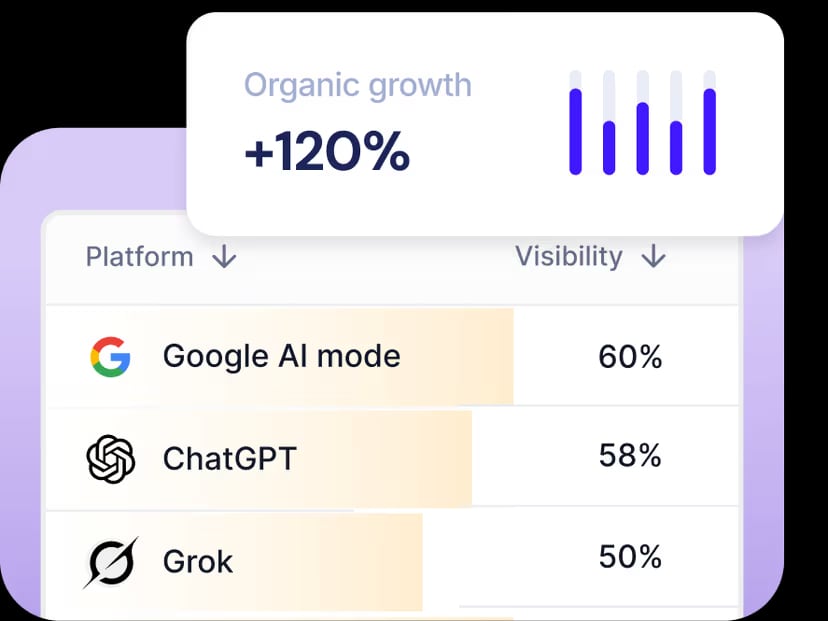
SEO and AEO tool: Get ranked and cited by AI (TRY FREE) product interface.
| Platform | Core strength | AI-search tracking | Publishing | Starting price signal |
|---|---|---|---|---|
| Frase | Full research-to-fix loop | Yes | Yes (CMS + FraseCMS) | $49/mo |
| Semrush | All-in-one SEO data | Yes (add-on) | Limited | ~$99/mo add-on |
| Surfer SEO | On-page optimization | Yes (mentions) | No | Paid only |
| Clearscope | Content grading | Yes (GEO score) | No | ~$199/mo |
| Profound | Enterprise AI visibility | Yes (10+ engines) | No | $99–$399/mo |
| OtterlyAI | AI visibility analytics | Yes (6 engines) | No | $29/mo |
| AthenaHQ | AI visibility to ROI | Yes (8+ engines) | No | ~$295/mo |
| MarketMuse | Topical authority | Limited | No | Custom/paid |
| Scalenut | Lightweight end-to-end | Partial | Limited | Lower entry |
| Writesonic | Volume drafting | Yes (GEO) | Limited | ~$49/mo |
How to Choose in 2026
First viewport screenshot of contentpen.ai.
Start with the bottleneck, not the feature list.
- If drafts are good but not ranking, a grader such as Clearscope or Surfer closes that gap fastest.
- If you do not know what to write next, MarketMuse's topical mapping is the stronger starting point.
- If you already pay for Semrush or Ahrefs, their content and AI-visibility modules cover the basics, with the AI-search side left to a specialist.
- If the bottleneck is the whole loop — research in one tool, drafts in another, no visibility into whether AI engines cite the result, no system for catching pages that quietly lose traffic — a platform like Frase is built to close that gap.
- If your problem is publishing cadence rather than research depth, an always-on automation layer can complement a monitoring tool. For example, teams that already track AI visibility sometimes pair it with a content automation engine such as AgentBooks to keep scheduled publishing running; that is a complementary workflow, not a substitute for the platforms ranked above. You can see how those approaches differ in this AgentBooks vs Search Atlas vs GravityWrite comparison.
Two practical checks before you buy: confirm that the tool's AI-visibility data covers the engines your buyers actually use, and test whether its recommendations survive a cross-check against Google Search Console. If keyword volumes are consistently off by more than 15–20%, or suggestions contradict GSC data, move on. For a closer look at how costs scale with tracked queries, see our tracked queries pricing breakdown.
Related reading
- AgentBooks vs GravityWrite: AI Content Automation Compared - Compare AgentBooks and GravityWrite for blogs, SEO, and copywriting. See how automation, brand voice, pricing, and workflow fit differ before you choose.
- Copymatic Review: AI Copywriting Tested for 2026 - Hands-on Copymatic review covering output quality, template range, pricing signals, setup, and who should choose it over other AI writing tools.
Sources and further reading
- The 10 Best SEO Content Platforms in 2026 - The 10 best SEO content platforms in 2026, compared honestly: what each one actually covers, where it stops, and who it's built for.
- The 25 Best AI SEO Tools in 2026 - Twenty-five tools below cover the serious end of the market. They range from $19/month indie tools to $5,000/month enterprise platforms
- 19 Best AI SEO Tools in 2026 (Tested 40+, Only These Made the Cut) - We've run SEO since 2018 and tested 40+ AI SEO tools on real client accounts. See which ones passed — and which to skip.
FAQ
What is the difference between an AI SEO tool and an AI content marketing platform?
An AI SEO tool usually does one job well: keyword research, backlink analysis, or content grading. An AI content marketing platform covers the lifecycle of a piece of content — research, drafting, publishing, optimization, and monitoring after it goes live — ideally in one workspace. Many products in this list sit somewhere between the two, which is why coverage of the loop is our first criterion.
Do I still need traditional SEO tools if I buy an AI visibility platform?
Usually yes. AI visibility platforms track whether engines cite you; they rarely replace backlink indexes, technical audits, or rank tracking. Most teams run a core SEO suite plus one content platform plus one AI-visibility monitor, and consolidate only when a single vendor covers enough of all three.
How much should a small team budget in 2026?
Entry points range from about $29/month for AI visibility monitoring to roughly $199/month for editorial grading, with full content platforms starting near $49/month. Enterprise AI-visibility programs commonly start at $295–$399/month. Annual plans often save 20–30%, so test monthly first.
Can one platform handle both Google rankings and AI citations?
Increasingly, yes. Frase, Surfer, Clearscope, Semrush, and Writesonic all now combine classic optimization with some form of AI-search scoring or tracking. The depth varies widely, so check which engines are covered on the plan you can actually afford rather than on the enterprise tier.
How do I know if AI visibility tracking is working?
Watch two numbers: the share of target prompts where your brand is cited, and the traffic or pipeline attributed to AI referrals. AthenaHQ's GA4 integration and OtterlyAI's prompt-level reporting are built for exactly this comparison. If neither number moves after a quarter of consistent publishing, revisit your prompt set before changing tools.
Conclusion
There is no single best AI content marketing and SEO platform in 2026, only the best fit for your bottleneck. Frase leads this list because it covers the most of the loop in one workspace, from first-party demand research through publishing and post-publish fixes. Semrush wins for teams already invested in its data, Surfer and Clearscope remain the sharpest graders, and Profound, OtterlyAI, and AthenaHQ own the fast-growing AI-visibility layer. Pick the stage where your content stalls, buy the tool that owns that stage, and add adjacent automation only once the core loop is working.