
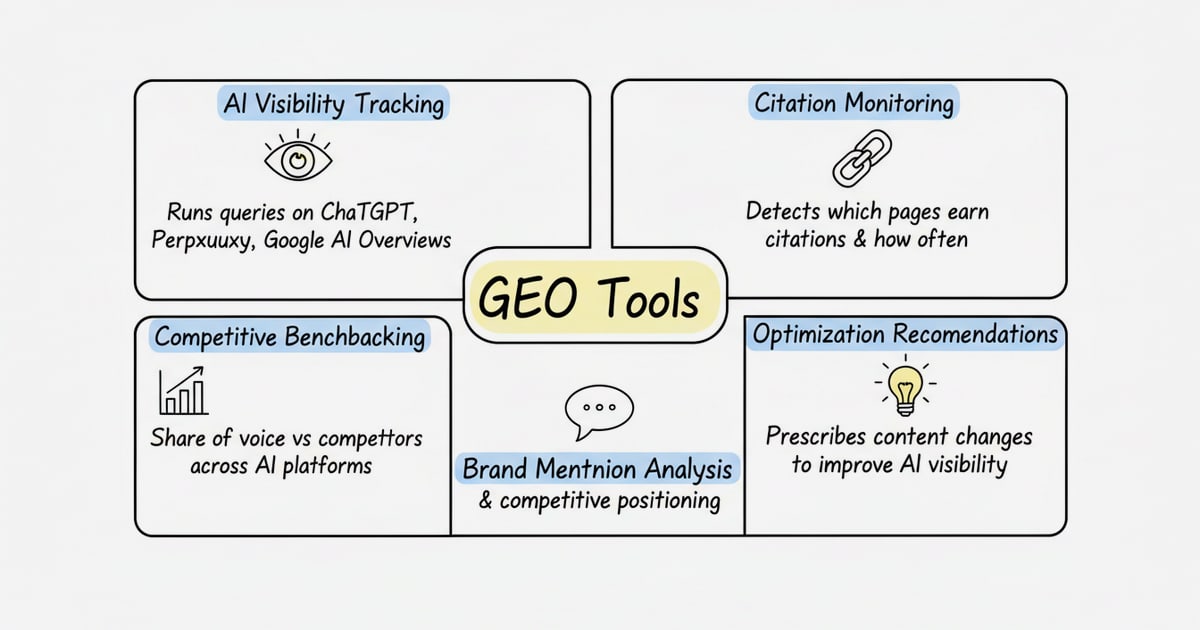
Topical Authority: How to Build It and Rank Higher
Topical authority is the difference between ranking for a single keyword and owning an entire subject. When search engines recognize your site as the go-to source on a topic, you earn more visibility, more resilience to algorithm updates, and more trust from readers. This guide explains what topical authority is, how Google measures it, and how to build it step by step.
What is topical authority?
Topical Authority: How to Build It and Rank Higher - What is topical authority?.
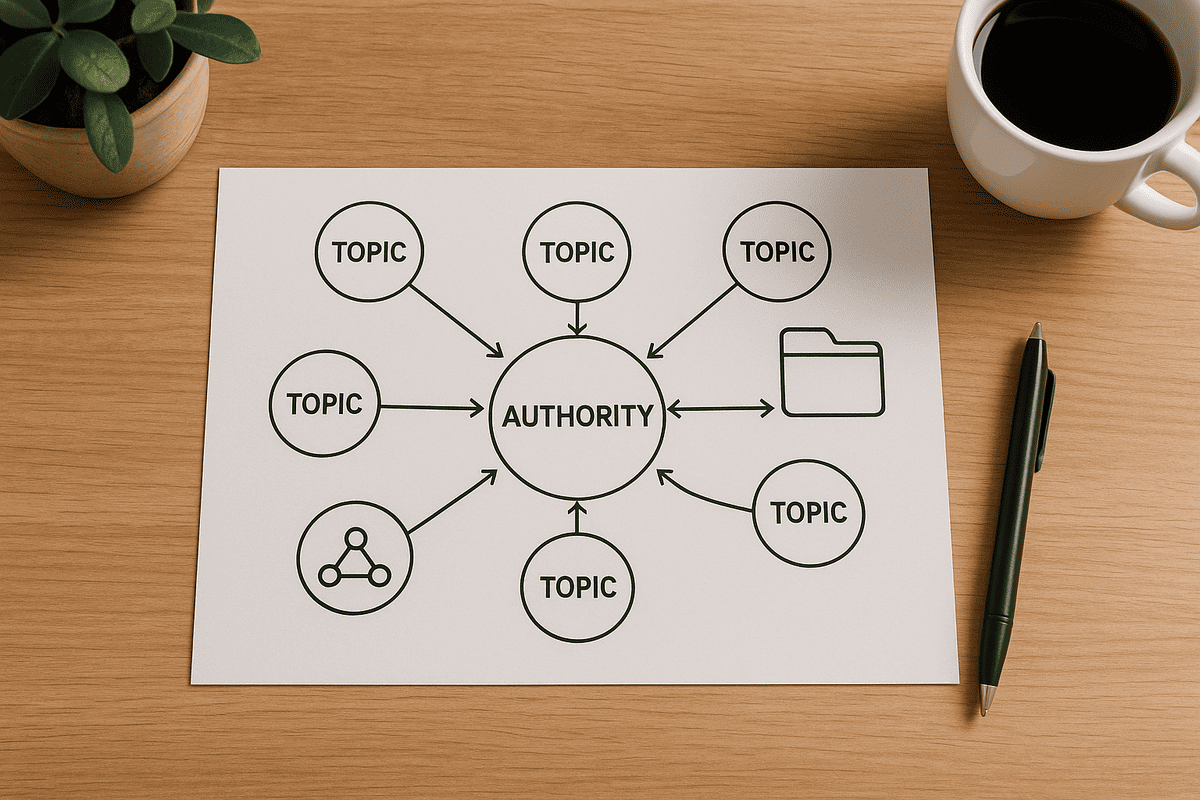
Topical authority is when search engines treat your site as an expert on a specific subject, not just for one page but across the full range of related queries. It is built by covering a topic comprehensively and connecting that content so search engines can understand how everything relates.
It is closely tied to E-E-A-T (Expertise, Experience, Authoritativeness, Trustworthiness) applied to a topic rather than your whole site. A site with low domain authority can outrank a much larger domain if it covers a niche more completely.
Example: A specialist e-bike retailer with a low Domain Rating can outrank Amazon for competitive e-bike keywords because it owns the topic better than a generalist with a diluted focus.
Topical authority is different from domain authority, which measures backlink strength. You can build topical authority even if your domain is new or small.
Why topical authority matters
Topical Authority: How to Build It and Rank Higher - Why topical authority matters.
When Google and AI search platforms associate your site with a core topic, they become more willing to rank your pages for a broader range of related queries, including ones you never explicitly optimized for.
- You rank for more keywords with less effort. Sites with strong topical authority naturally appear for a wider range of related searches.
- You are more resilient to algorithm updates. Helpful Content updates have consistently hit shallow, broad content strategies hardest. Sites with genuine topical depth tend to hold their positions.
- You can compete with much bigger sites. Topical authority is niche-specific. A small specialist can outrank a large generalist on the topics it owns.
- You earn natural links. When you are seen as an expert, other sites link to you without being asked, which reinforces your authority.
How Google measures topical authority

Topical Authority: How to Build It and Rank Higher - How Google measures topical authority.
Google does not have a single "topical authority score." Instead, it uses a combination of signals:
- Coverage of a topic. Do you have content that addresses the main subtopics and the questions people ask?
- Depth and originality. Does your content provide firsthand experience, original data, or a unique perspective?
- Internal linking. Do your pages link to each other in a logical way that shows how subtopics relate to the main topic?
- External links and mentions. Do other trusted sites reference your content as a source?
- Consistency. Do you publish regularly on the same topic, or do you jump between unrelated subjects?
- User engagement. Do readers spend time on your pages, click through to other pages, and return?
Google's algorithm updates over the years—from Panda to Hummingbird to the Helpful Content system—have all pushed in the same direction: reward sites that demonstrate real expertise and penalize thin, mass-produced content.
How to build topical authority

Topical Authority: How to Build It and Rank Higher - How to build topical authority.
Building topical authority is a repeatable process. Here are the steps.
1. Choose a focused seed topic
Pick a broad term that represents the topic you want to own. It should be specific enough to stay focused but broad enough to have meaningful subtopics.
| Good seed topic | Bad seed topic |
|---|---|
| Coffee roasting | Coffee |
| Dog care | Animals |
| Mountain biking | Bicycles |
Good seed topics clearly represent a niche. Bad ones are either too broad (pulling in irrelevant results) or too narrow (missing the bigger picture).
2. Do topic-based keyword research
Once you have a seed topic, expand it into a list of related keywords. Use keyword research tools to find:
- Subtopics: The main angles within your topic.
- Questions: What people ask about each subtopic.
- Comparisons: "X vs Y" searches that show decision-stage intent.
- Long-tail variations: Specific phrases that are easier to rank for.
You can also look at competitor sites to find topic gaps. If a competitor ranks for a subtopic you have not covered, that is an opportunity.
3. Map topic clusters and pillar pages
A topic cluster is a group of interlinked pages that cover the same subject from different angles. The pillar page covers the topic at a high level and links to cluster pages that go deeper.
For example, if your topic is "coffee roasting," your pillar page might be "The Complete Guide to Coffee Roasting." Cluster pages could include:
- How to roast coffee at home
- Best coffee roasters for beginners
- Coffee roasting profiles explained
- How to store roasted coffee
Each cluster page targets a specific keyword and links back to the pillar page. The pillar page links out to each cluster page. This structure shows Google that you cover the topic comprehensively.
Not every subtopic needs its own page. If two subtopics are closely related and neither has enough depth, combine them into one piece rather than publishing thin content.
4. Create content that meets search intent
For each page in your cluster, check what is already ranking. If the top results are guides, write a guide. If they are listicles, write a listicle. Match the format and depth that users expect.
Also, aim to provide something original: firsthand experience, data, examples, or a clear opinion. This is what separates authoritative content from generic content.
5. Build internal links
Internal links help search engines understand the relationship between your pages and distribute authority across your site. Link from your pillar page to each cluster page, and from cluster pages back to the pillar page. Also link between related cluster pages when it helps the reader.
Use descriptive anchor text that tells the reader what to expect. Avoid generic phrases like "click here."
6. Earn external links and mentions
When you publish genuinely useful content, other sites will link to it. You can also proactively build links by:
- Creating original research or data studies
- Writing guest posts on relevant sites
- Getting mentioned in industry roundups
- Building relationships with other experts in your niche
External links from trusted sites act as votes of confidence and reinforce your topical authority.
7. Keep content fresh and clusters complete
Topical authority is not a one-time project. Search intent changes, new questions emerge, and competitors publish new content. Review your clusters regularly, update outdated pages, and add new subtopics as you find them.
Example: Building topical authority for a SaaS product
Suppose you run a SaaS tool for project management. Your seed topic could be "project management for remote teams." Your pillar page might be "The Complete Guide to Remote Project Management." Cluster pages could include:
- Best remote project management tools
- How to run a remote stand-up meeting
- Remote team communication best practices
- Project management methodologies for distributed teams
Each page targets a specific keyword and links to the others. Over time, Google will recognize your site as an authority on remote project management, and you will rank for a wider range of related queries.
If you want to scale this process, an AI content engine can help. For example, AgentBooks crawls your website to learn your product, builds a categorized keyword plan, and generates articles with approval workflows. It is designed for teams that want to publish consistently without sacrificing quality. You can see how it works in this AgentBooks tutorial.
Common mistakes that hurt topical authority
- Writing about too many unrelated topics. If your site covers everything from gardening to cryptocurrency, Google will struggle to see you as an authority on anything.
- Publishing thin content. Pages with little value dilute your cluster and can drag down your whole site.
- Ignoring internal linking. Without links, search engines may not discover your cluster pages or understand how they relate.
- Chasing keywords instead of topics. Optimizing for a single keyword without covering the surrounding topic limits your upside.
- Neglecting updates. Old content that is no longer accurate or helpful can weaken your authority.
How to measure topical authority
There is no single metric, but you can track progress with:
- Keyword rankings: Are you ranking for more keywords within your topic?
- Organic traffic: Is traffic to your topic pages growing?
- Impressions in Search Console: Are you appearing for more queries?
- AI search visibility: Are you cited in AI Overviews or AI chat results?
- Backlinks: Are you earning links from relevant sites?
- Engagement: Are readers spending time on your pages and visiting multiple pages?
Use these signals together to see whether your topical authority is growing.
Related reading
- Enterprise Content Automation: A Practical 2026 Guide - Enterprise content automation explained: how AI pipelines capture, classify, govern, and publish content at scale, plus a decision framework and tool examples.
- Machinedramon Model Kit: Figure-Rise Standard Amplified Guide - Everything about the Machinedramon model kit: Figure-Rise Standard Amplified specs, build tips, posing challenges, pricing, and where to buy.
- QuickCreator Features: What It Does and Who It Fits - A practical look at QuickCreator features, from AI research and SEO writing to publishing, plus how the agent workflow compares to other content engines.
Sources and further reading
- Topical Authority: What It Is, How Google Measures It, and How to Build It - Here's everything you need to know.
- What is Topical Authority? (+ How to Build It) - Topical authority is a site’s expertise on a subject earned through quality content. Here’s how to improve it.
- Topical Authority: Build Trust & Dominate Search Rankings - Want to outrank competitors? Learn how to build topical authority, earn trust with Google, and become the go-to source in your niche—fast.
FAQ
How long does it take to build topical authority?
It depends on your starting point and competition. In a low-competition niche, you may see results in a few months. In a competitive niche, it can take a year or more of consistent publishing and link building.
Can I build topical authority with AI-generated content?
Yes, but quality matters. AI can help you scale research and drafting, but you still need human review, original insights, and a clear editorial process. Google rewards helpful content regardless of how it is produced, but it penalizes thin, mass-produced content.
Do I need a blog to build topical authority?
Not necessarily. You can build topical authority with any type of content: guides, videos, podcasts, tools, or documentation. The key is to cover a topic comprehensively and connect your content together.
What is the difference between topical authority and domain authority?
Domain authority measures the overall strength of your domain based on backlinks. Topical authority measures how well you cover a specific subject. A site with low domain authority can have high topical authority in a niche.
How many pages do I need for a topic cluster?
There is no fixed number. A cluster can be as small as a pillar page and three cluster pages, or as large as dozens of pages. The goal is to cover the topic comprehensively enough that users do not need to search elsewhere.
Conclusion
Topical authority is built by covering a topic deeply, connecting your content, and proving your expertise over time. Start with a focused seed topic, expand it into clusters, create content that meets search intent, and link everything together. As your authority grows, you will rank for more keywords, withstand algorithm updates, and earn the trust of both readers and search engines.
If you want to scale this process, consider how an AI content engine can help you plan, create, and publish consistently. The key is to keep quality high and stay focused on your topic.