Yoast SEO WordPress: A Practical Guide to Setup, Features, and Where It Fits
Yoast SEO is the most widely installed WordPress SEO plugin, active on more than 10 million websites. It promises to make on-page optimization approachable for people who do not have a technical SEO background, using a simple traffic-light system that tells you what to fix before you publish.
This guide walks through what Yoast SEO actually does, how to configure it, what changes when you upgrade to Premium, and where the plugin stops and broader content operations begin. If you are evaluating Yoast for a new WordPress site or wondering whether Premium is worth the cost, this is the practical breakdown.
What Yoast SEO Actually Does
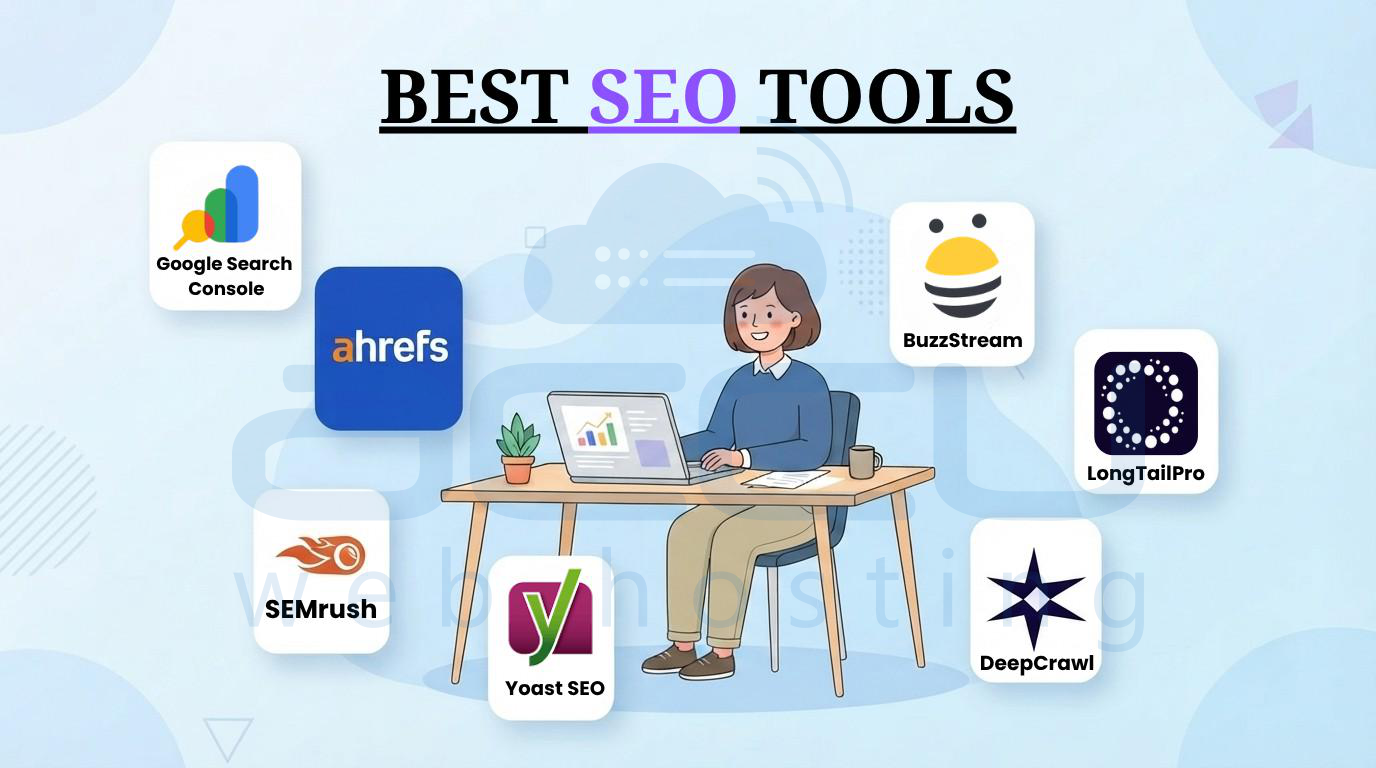
Yoast SEO WordPress: Setup, Features, and Honest Limits - What Yoast SEO Actually Does.
At its core, Yoast SEO is an on-page optimization layer that lives inside the WordPress editor. It does not build links, run outreach, or guarantee rankings. What it does well is make the technical and editorial basics visible and repeatable.
Real-Time Content Analysis
The plugin analyzes your post against a focus keyphrase and returns colored feedback: red for problems, orange for improvements, green for good. Checks include keyphrase placement in the title, headings, introduction, meta description, and image alt text, plus readability signals such as sentence length, paragraph length, and use of transition words.
The readability score runs on a 0–100 scale and adapts to more than 25 languages, including right-to-left scripts. This is useful for non-native writers or teams without a dedicated editor, because it enforces a consistent baseline across every author.
Automatic Technical SEO
Yoast handles several technical tasks in the background:
- Generates XML sitemaps that update automatically as you publish
- Adds canonical URLs to prevent duplicate content issues
- Outputs JSON-LD structured data for organization, website, webpage, article, and breadcrumbs
- Adds meta robots tags so you can control indexation per page
- Provides breadcrumb controls that improve navigation and appear in search results
For most WordPress users, this removes the need to install separate sitemap or schema plugins.
Social Preview Controls
Yoast lets you set separate titles, descriptions, and images for Facebook and X (Twitter) through Open Graph and Twitter Card metadata. You can preview how a link will look before sharing, which prevents awkward truncation or missing images on social platforms.
How to Set Up Yoast SEO on WordPress
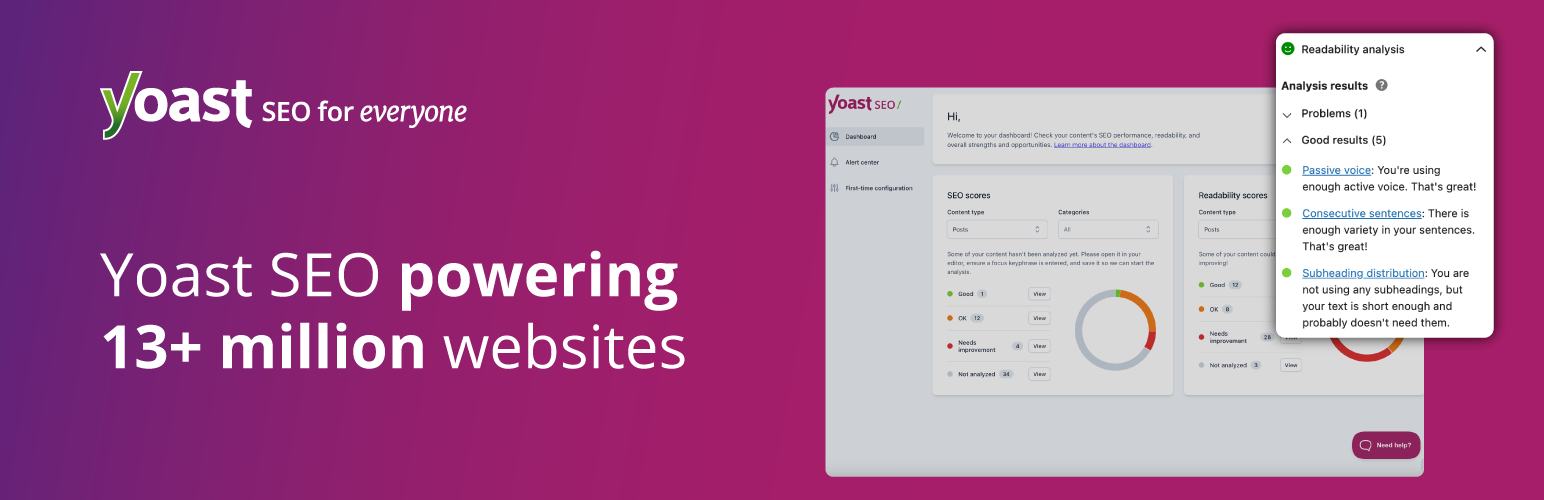
Yoast SEO WordPress: Setup, Features, and Honest Limits - How to Set Up Yoast SEO on WordPress.
Installation is straightforward, but the configuration wizard is where most of the value comes from.
- Install the plugin. Search for "Yoast SEO" in the WordPress plugin directory, or download the ZIP from the official repository and upload it manually.
- Run the configuration wizard. Yoast asks about your site type (blog, online shop, news site, local business, etc.), whether it represents a person or organization, and your social profiles.
- Set your site representation. Choose organization or person schema. This determines how Google understands your brand identity in search results.
- Connect search console tools. Link Google Search Console through the Site Kit integration to see indexing data inside WordPress.
- Review the sitemap. Yoast generates one automatically at
/sitemap_index.xml. Submit it in Google Search Console. - Set a default focus keyphrase workflow. Decide whether every post must have a keyphrase before publishing, which keeps the team consistent.
If you are switching from Rank Math, All in One SEO, or SEOPress, Yoast includes built-in import tools that transfer your existing titles, descriptions, and settings without manual re-entry. For a deeper walkthrough of the download and configuration process, see the Yoast SEO download and setup guide.
Free vs Premium: What Changes
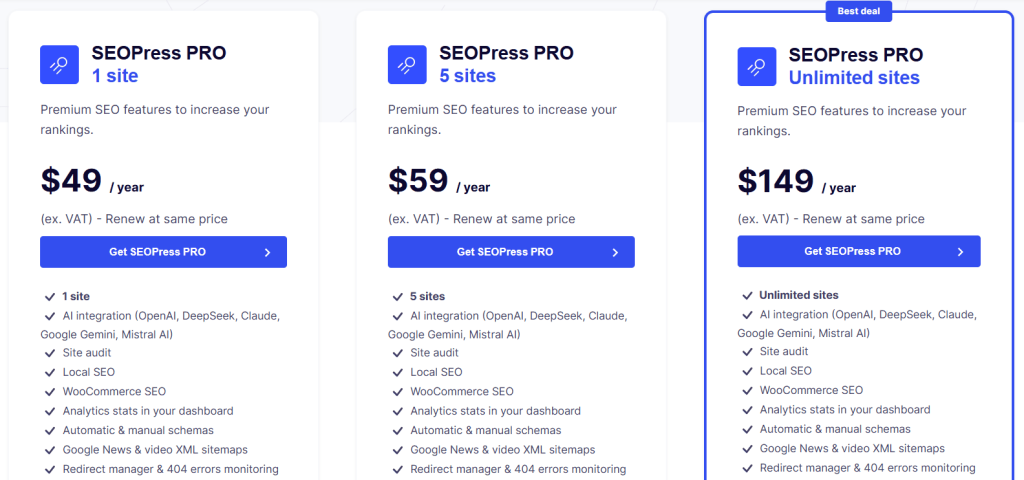
Yoast SEO WordPress: Setup, Features, and Honest Limits - Free vs Premium: What Changes.
The free version covers the essentials: one focus keyphrase, basic readability analysis, XML sitemaps, canonical URLs, base schema, and social previews. Premium adds several layers on top.
| Feature | Free | Premium |
|---|---|---|
| Focus keyphrases | 1 per page | Up to 5 per page |
| AI title and meta description drafts | No | Yes, page by page or in bulk |
| Redirect manager | No | Yes, with bulk CSV import |
| Internal linking suggestions | No | Yes |
| Orphaned content detection | No | Yes |
| Social previews | Facebook and X | Facebook and X with more controls |
| AI crawler bot blocker | No | Yes (GPTBot, CCBot, Google-Extended) |
| Schema aggregation | No | Yes |
| Local, Video, News SEO plugins | No | Included |
| 24/7 support | Community only | Premium support included |
Premium also includes the AI Content Planner, which suggests five site-specific post ideas and builds a structured starter draft when you open a new post. The AI tools are bundled into the subscription; there is no separate credit system or additional login.
Who Should Pay for Premium
Premium makes sense when:
- You publish frequently and spend noticeable time writing meta descriptions by hand
- You have moved or deleted pages and need redirects managed automatically
- You run a local business, publish video, or produce news content
- You want to control which AI crawlers can train on your content
- You manage a multi-author team and need consistent SEO standards
If you publish a handful of pages per month and already have a clean site structure, the free version covers the fundamentals well.
Where Yoast SEO Fits in a Broader Content Workflow
Yoast SEO WordPress: Setup, Features, and Honest Limits - Where Yoast SEO Fits in a Broader Content Workflow.
Yoast optimizes content that already exists. It does not research topics, map your market, or produce drafts from scratch. That distinction matters when you are planning a content operation rather than polishing a single post.
A common workflow combines both approaches:
- Topic and keyword planning. Identify what your audience searches for and which pages already rank. This is research work that happens outside the WordPress editor.
- Draft creation. Write or generate a first draft. Some teams use AI writing tools; others work from briefs.
- On-page optimization. Run the draft through Yoast's analysis, fix keyphrase placement, readability, and metadata.
- Publish and monitor. Use Search Console and analytics to track indexing and performance.
For teams that struggle with step one and two, autonomous content platforms like AgentBooks take a different approach: they learn your product, research organic search results, and publish content continuously in your brand voice. Yoast then becomes the quality gate inside WordPress, catching on-page issues before anything goes live.
This is not an either/or decision. Many sites run both: an autonomous engine for topic generation and drafting, plus Yoast for the final optimization pass. The plugin's real-time feedback works well as a safety net, especially when content volume increases and manual review becomes impractical.
Yoast SEO and AI Search
Yoast has expanded beyond traditional Google optimization. The plugin now includes features aimed at AI assistants and large language models:
- Schema aggregation (Premium) combines structured data into a single deduplicated graph, so AI agents can fetch a complete picture of your site in one request.
- LLMs.txt management lets you guide how language models interact with your content, including manual control over which pages are included.
- Bot blocker (Premium) controls which AI crawlers can use your content for training, including GPTBot, CCBot, and Google-Extended.
- Abilities API exposes SEO, readability, and inclusive language scores to external tools and automated workflows.
These features address a real shift: people increasingly ask AI assistants questions instead of typing queries into Google. If your content is not structured in a way machines can parse, it may not surface in either channel.
Common Yoast SEO Questions
Is Yoast SEO free?
Yes. The core plugin is free and includes keyphrase analysis, readability checks, XML sitemaps, canonical URLs, base schema, and social previews. Premium adds multi-keyphrase optimization, AI drafting tools, redirect management, and additional schema types.
Does Yoast SEO actually improve rankings?
Yoast does not directly influence rankings. It helps you follow on-page best practices that correlate with better performance: clear keyphrase targeting, readable content, proper metadata, and clean technical structure. The ranking outcome depends on content quality, competition, and authority.
Can I use Yoast SEO with page builders like Elementor?
Yes. Yoast integrates with Gutenberg, the Classic Editor, and Elementor. The analysis panel appears inside the builder interface, so you can optimize without switching back to the standard editor.
How many keyphrases can I optimize for?
The free version supports one focus keyphrase per page. Premium supports up to five, with synonym and word-form recognition across 20+ languages.
Does Yoast SEO include AI writing tools?
Premium includes AI tools for generating titles, meta descriptions, and summaries, plus a Content Planner that suggests site-specific post ideas and starter drafts. These are bundled into the subscription with no separate credits.
What happens if I switch from another SEO plugin?
Yoast includes import tools for Rank Math, All in One SEO, and SEOPress. Your existing titles, descriptions, and settings transfer automatically, reducing the risk of metadata loss during migration.
Can Yoast SEO block AI crawlers?
Premium includes a bot blocker that lets you control which AI crawlers can access your content for training, including GPTBot, CCBot, and Google-Extended. The free version does not include this feature.
Related reading
- Contentpen Demo: What You Can Actually Do in the Tool - A practical walkthrough of the Contentpen demo: what you can test, how the AI blog workflow works, pricing context, and where autonomous alternatives fit.
- Marketing Analytics: A Practical Guide to Data-Driven Growth - Learn what marketing analytics is, which metrics matter, how to collect first-party data, and how to turn insights into a repeatable growth strategy.
Sources and further reading
- Yoast SEO – Advanced SEO with real-time guidance and built-in AI - Real-time SEO guidance, schema, and AI built in. Help search engines and AI systems understand your content. All AI tools included, no hidden fees.
- Yoast SEO Premium - Designed for in-house marketers, creators, and entrepreneurs using WordPress. Get real-time SEO guidance, AI-assisted content optimization, and Local, News & Video SEO in Yoast SEO Premium. No expert knowledge needed.
- Yoast SEO - Yoast SEO helps you improve your site’s content and structure with built-in tools for keywords, schema and readability, no expertise required.
Conclusion
Yoast SEO remains the default choice for WordPress on-page optimization because it lowers the barrier to entry. The traffic-light system turns abstract SEO rules into actionable feedback, and the plugin handles enough technical groundwork that most site owners never need to touch sitemaps or schema manually.
Its limits are equally clear. Yoast does not generate topics, research competitors, or produce content. It optimizes what you bring to it. For teams that already have a steady content pipeline, that is exactly what they need. For teams that stall at the drafting stage, pairing Yoast with an autonomous content platform like AgentBooks creates a more complete system: one side generates and publishes consistently, the other ensures every piece meets on-page standards before it goes live.
The right question is not whether Yoast is good. It is whether your bottleneck is optimization or production. If it is optimization, Yoast solves it. If it is production, you need something upstream of the editor. Most growing sites eventually need both. For a closer look at how autonomous platforms compare to editor-focused tools, see the Surfer Content Editor comparison and the QuickCreator pricing breakdown.