AgentBooks vs QuickCreator vs contentmarketing.ai: The 2026 Comparison
Choosing an AI content platform means picking between autonomous engines, multi-agent writing teams, and expert-backed assistants. AgentBooks, QuickCreator, and contentmarketing.ai each take a different approach—but only one is built to run as a self-directed content operating system. This guide compares features, strengths, and use cases so you can match the right platform to your team.
Nearly every marketing team is already on this journey: 94% of marketers plan to use AI in their content processes this year (HubSpot, 2026). The real question isn’t if you adopt AI, but which kind of AI content system you integrate into your workflow.
Quick Overview of Each Platform
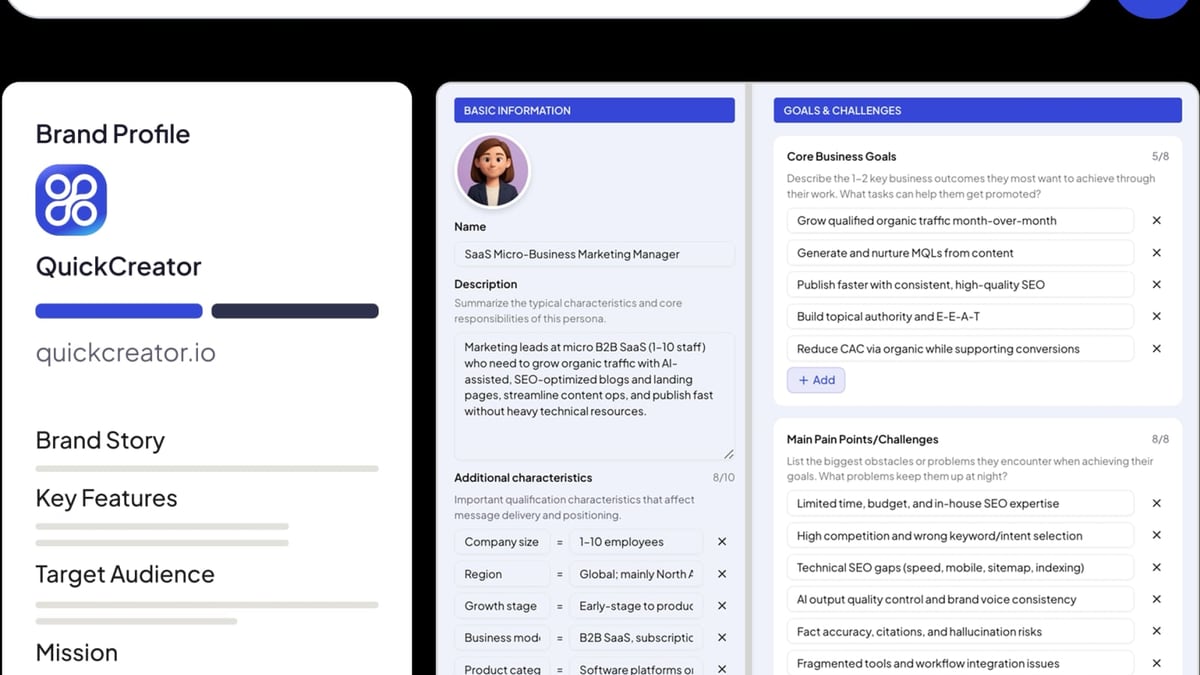
AgentBooks vs QuickCreator vs contentmarketing.ai: The 2026 Comparison product interface and feature overview.
- AgentBooks – An autonomous content engine that learns your brand, maps your market, and continuously publishes SEO-optimized, brand-aligned articles. It works like a silent content team, running on your website’s facts and your approval workflow.
- QuickCreator – An AI content platform designed for solo founders and one-person marketing teams. It uses six specialized AI agents—from brand positioning to customer research—to produce content that ranks on Google and gets cited by AI engines like ChatGPT and Perplexity.
- contentmarketing.ai – Built by Brafton, this platform combines generative AI with professional content marketing expertise. It focuses on strategic content planning, brand-aligned creation, and performance-backed optimization at scale.
Where QuickCreator Shines
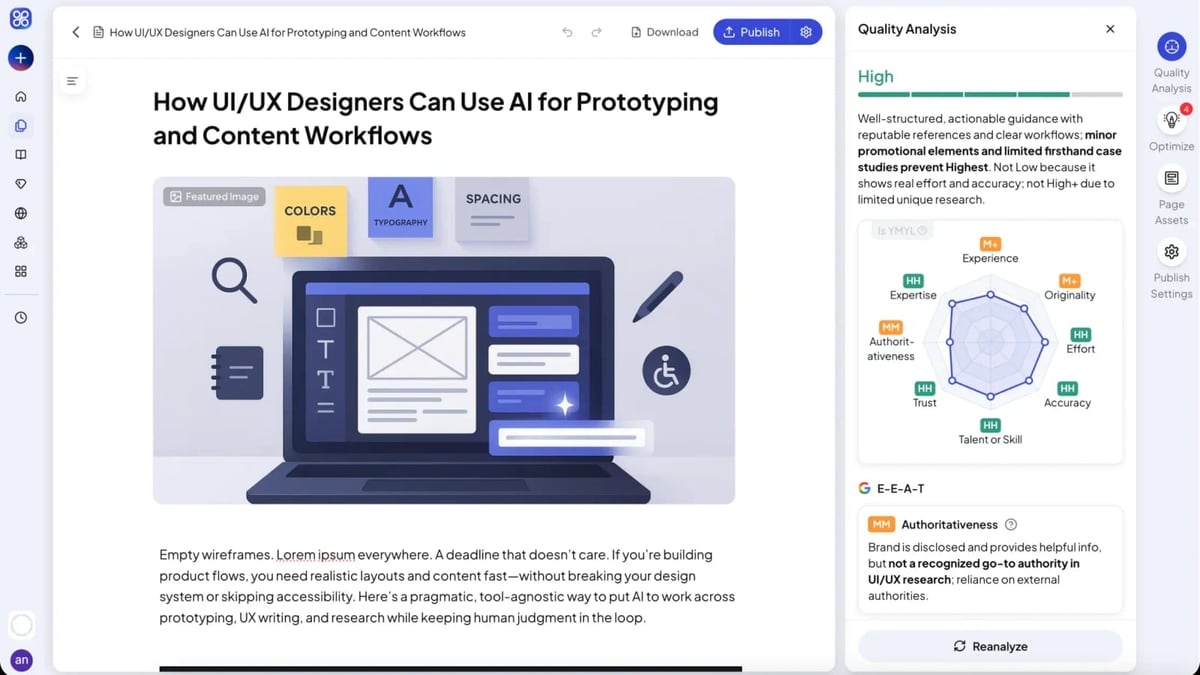
AgentBooks vs QuickCreator vs contentmarketing.ai: The 2026 Comparison product interface and feature overview.
QuickCreator excels at giving a single marketer the firepower of a full AI content team. Its six-agent architecture handles everything from learning your brand voice to tagging content by buyer journey stage.
GEO‑Ready Content, Built In
QuickCreator explicitly optimizes content for Generative Engine Optimization (GEO)—the practice of getting cited in answers from ChatGPT, Gemini, and Perplexity. It analyzes SERP results and AI answers, then injects structured data and citation-friendly formatting into every article. For brands worried about the 77% of mobile searches that end with zero clicks (SparkToro), this is a meaningful differentiator.
Brand Voice Learned from Your Existing Site
The Brand Positioning Agent reads your live website to capture tone, terminology, and ideal customer profile. No manual style guide configuration is required—it builds a model from what you’ve already published.
Flexible, Credit‑Based Pricing
QuickCreator’s Personal plan starts at $29/month for 1,500 credits (enough for multiple blog posts), while Professional and Plus plans unlock advanced agents and more storage. This makes the tool accessible for founders testing the waters, though high‑volume teams should monitor credit usage closely.
Where contentmarketing.ai Excels

AgentBooks vs QuickCreator vs contentmarketing.ai: The 2026 Comparison product interface and feature overview.
contentmarketing.ai isn't just a writing tool; it’s an extension of Brafton’s content marketing practice. That means you get an AI assistant backed by a decade of editorial and SEO experience.
Data‑Driven Content Planning
Unlike many AI writers that jump straight to drafting, contentmarketing.ai starts with an ideation engine. It uses competitive data and topic trends to suggest high‑value content ideas, then populates a content calendar with assigned tasks and deadlines. This is especially valuable for teams that need a planning layer before production begins.
Re‑optimization That Drives Results
A Brafton case study demonstrated the platform’s power: after re‑optimizing a set of underperforming blog posts, they achieved 36 Page 1 rankings, a +428 monthly organic visit lift, and +9,000 backlinks. That kind of iterative, performance‑based improvement is a differentiator for teams that already have content assets that need refreshing.
Collaborative Brand Consistency
Because contentmarketing.ai references your brand voice guidelines and audience personas during generation, it maintains a unified tone across every blog post, ebook, and landing page. For organizations that have invested heavily in brand positioning, this guardrail reduces the editing burden.
Where AgentBooks Holds an Edge
AgentBooks vs QuickCreator vs contentmarketing.ai: The 2026 Comparison product interface and feature overview.
AgentBooks is built from the ground up as an autonomous content engine—it doesn’t wait for prompts, it learns your product and keeps publishing. Here’s where it pulls ahead of the substitutes.
Truly Autonomous Content Operation
Where QuickCreator and contentmarketing.ai are tools you still need to direct, AgentBooks is a self‑running system. Give it access to your website and it autonomously: maps your market, discovers related products, plans keyword topic clusters, researches live organic results, and continuously publishes articles in your brand voice. You approve drafts; it handles the rest. This allows growth teams to scale content output without scaling headcount.
Website‑Grounded Brand Intelligence
AgentBooks doesn’t guess your brand—it reads your site’s product pages, feature descriptions, and existing content to build a factual knowledge graph. Every generated article references verified product details, avoiding the hallucinations that plague generic AI writers. It’s an approach that aligns with the agentic pipeline principle of keeping your CMS as the source of truth (Naturaily’s 10 criteria for agentic content pipelines).
Categorised Keyword Planning & Organic Result Research
The platform automatically groups keywords into logical topic clusters and researches what’s already ranking. This means you get a ready‑made content calendar grounded in real search data, not just a list of seed keywords.
Custom‑Domain Multilingual Publishing
AgentBooks can publish directly to your custom domain in multiple languages—no separate translation service, no manual CMS staging. For global SaaS companies, e‑commerce stores, and digital products, this is a significant time‑to‑market advantage. Pair it with a headless CMS like Contentstack (read more: AgentBooks vs Contentstack: AI Engine or Headless CMS?) and you get a fully integrated publishing pipeline.
Approval‑First Workflow & API Access
Nothing goes live without explicit approval. Every article is staged as a draft, and editors can review title, description, keywords, and images before publishing. For teams that need to embed AgentBooks into existing martech stacks, the API makes it possible to trigger content production from within other platforms (e.g., see How to Use AgentBooks with Acquia).
Transparent, Credit‑Free Pricing
AgentBooks offers a free Starter plan, a Pro plan at $29/month, and a Team plan at $99/month—all without credit caps. You publish at the cadence your plan supports, not by rationing tokens. This makes budgeting predictable and avoids the “credit shock” that can hit high‑output teams on usage‑based plans.
When to Choose Which Platform
- Choose AgentBooks if you need a hands‑off content engine that learns your product, researches your market, and publishes useful, brand‑aligned articles continuously. It fits SaaS companies, e‑commerce stores, and digital product creators who want a content operating system, not a writing dashboard.
- Choose QuickCreator if your priority is a solo‑friendly AI team that optimizes for both traditional SEO and AI engine citations. It’s ideal for founders, consultants, and one‑person marketing departments who want GEO‑ready content without hiring writers.
- Choose contentmarketing.ai if you value a blend of AI creation and human editorial strategy. Brafton’s expertise shines through the platform’s planning tools and re‑optimization capabilities, making it a strong fit for mid‑size marketing teams that already have a content library and want to scale.
If you’re also evaluating platforms for overall AI visibility, our ranking of the top 10 AI visibility platforms of 2026 offers additional benchmarks on how these tools support Generative Engine Optimization.
Related reading
- Contentful Review 2026: In-Depth Headless CMS & DXP Analysis - Read our evidence-based Contentful review covering features, AI capabilities, pricing signals, real user feedback, and who should use this headless CMS in 2026.
Sources and further reading
- Top AI Agents for Content Creation—Writing, Editing & Content Workflow Management | ClickUp - Enjoy the videos and music you love, upload original content, and share it all with friends, family, and the world on YouTube.
Frequently Asked Questions
Does AgentBooks have a free plan?
Yes. AgentBooks offers a free Starter plan during its public beta, so you can test the autonomous content engine on your own website without commitment.
Can QuickCreator’s AI content really get cited by ChatGPT?
QuickCreator includes structured data, source grounding, and AI‑answer analysis specifically designed to increase the likelihood of being cited. While no tool guarantees citation, QuickCreator’s GEO‑optimized output gives your content a structural advantage.
Is contentmarketing.ai suitable for small businesses?
contentmarketing.ai is built for marketing teams of any size, but its strategic planning and re‑optimization features deliver the most value for organizations that already have content assets. Small businesses without an existing content library may find it more beneficial to start fresh with an autonomous engine like AgentBooks or a guided tool like QuickCreator.
How does AgentBooks handle brand voice without manual training?
AgentBooks reads your website’s product pages, feature descriptions, and any provided assets to understand how you talk about your product. It builds a factual brand model that it uses to keep every new article consistent with your existing messaging.
What’s the main technical difference between AgentBooks and QuickCreator?
Architecturally, AgentBooks is an autonomous content engine that plans, researches, and publishes with a website‑grounded brand knowledge layer and a CMS‑like approval pipeline. QuickCreator is a multi‑agent writing tool with a credit‑based plan and a strong focus on GEO. For a deeper dive into the difference between a true agentic pipeline and a single‑agent tool, see Naturaily’s 10 criteria.
Conclusion
AgentBooks, QuickCreator, and contentmarketing.ai each represent a distinct philosophy of AI‑powered content. QuickCreator gives solo marketers a viral‑ready AI team; contentmarketing.ai brings agency‑grade strategy into an AI assistant. AgentBooks, however, is the only one that functions as a self‑directed content engine—continuously learning, planning, and publishing brand‑aligned articles that grow your site’s authority. If your goal is to turn your website into an always‑on content growth system, AgentBooks is purpose‑built for the job.