AI SEO in 2026: What Works, What Doesn't & How to Start
AI SEO has moved from a buzzword to a practical operating model. Marketers now use AI agents and platforms to research keywords, draft content, optimize pages, and even publish on autopilot. But the gap between a tool that produces text and a system that produces rankings remains wide. This guide breaks down what AI SEO actually does well, where it fails, and how to build a workflow that creates durable organic visibility across both Google and AI assistants.
What AI SEO Actually Means in 2026
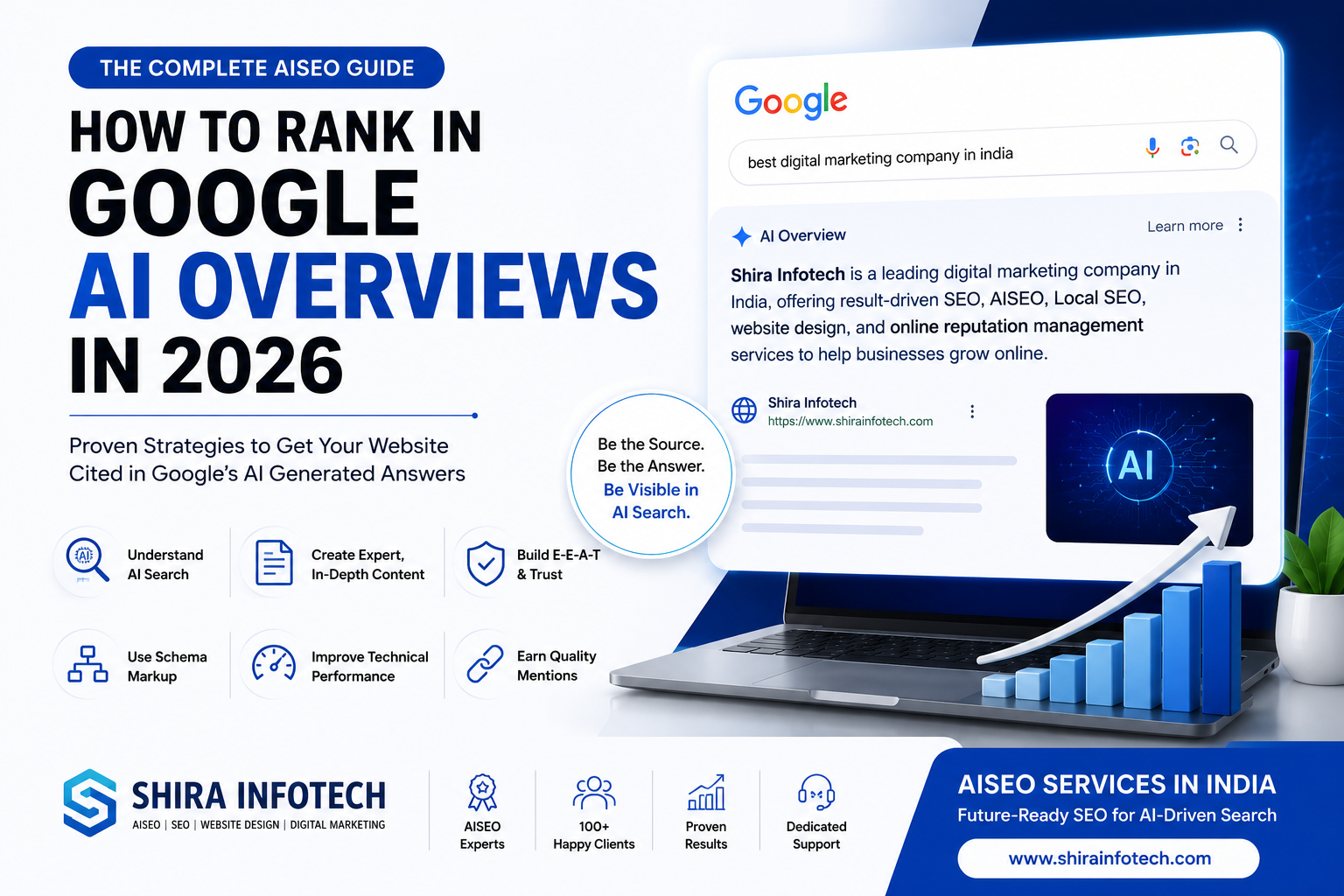
AI SEO in 2026: What Works, What Doesn't & How to Start - What AI SEO Actually Means in 2026.
AI SEO refers to using machine learning and autonomous agents to execute search optimization tasks that were once manual: keyword discovery, SERP analysis, content drafting, internal linking, metadata creation, and publishing. The shift from 2024 to 2026 is that AI no longer just suggests optimizations—it can execute them end to end.
Three distinct modes have emerged:
- Assistive AI: Tools that generate drafts, outlines, and recommendations while a human makes final decisions.
- Semi-autonomous AI: Platforms that research, write, and stage content for approval before publishing.
- Fully autonomous AI: Agents that plan, publish, and iterate on content with minimal human intervention.
Each mode suits a different team size and risk tolerance. A solo founder might prefer autonomy; a regulated brand may insist on approval-first workflows.
Where AI SEO Delivers Real Value

AI SEO in 2026: What Works, What Doesn't & How to Start - Where AI SEO Delivers Real Value.
1. Topic and Keyword Research at Scale
Traditional keyword research produces a spreadsheet. AI SEO platforms turn that spreadsheet into a prioritized content plan. Instead of manually grouping terms by intent, AI can cluster keywords, map them to funnel stages, and identify content gaps based on what competitors rank for.
For example, an e-commerce store selling standing desks might discover that its competitors rank for "standing desk for small spaces" and "standing desk assembly guide"—queries that never appeared in the brand's original keyword list. AI surfaces these gaps automatically.
2. SERP-Informed Content Creation
Modern AI SEO tools don't write in a vacuum. They analyze the top-ranking pages for a target query, extract the common structures and subtopics, and produce content that matches search intent. This is a meaningful upgrade from generic AI writing, which often produces fluent but intent-mismatched text.
The best systems also preserve brand context. They learn how a product works, what the company's voice sounds like, and which claims are accurate—then apply that knowledge to every new piece. This prevents the "generic AI blog" problem where every article sounds interchangeable.
3. Consistent Publishing Without Bottlenecks
The most common reason SEO fails isn't strategy—it's execution. Keyword research sits in a spreadsheet. Blog ideas never get written. Service pages don't get updated. AI SEO addresses this by removing the manual draft bottleneck.
Autonomous platforms can publish fresh, optimized pages weekly without a content team. For small businesses and lean marketing teams, this consistency is often the difference between a domain that compounds authority and one that stagnates.
4. AI Assistant Visibility
Search behavior is fragmenting. Users now ask questions in ChatGPT, Perplexity, and Google's AI Overviews. AI SEO increasingly includes optimizing content to be cited in these generative answers—sometimes called generative engine optimization (GEO).
Content that is clearly structured, factually precise, and semantically comprehensive is more likely to be referenced by AI assistants. Platforms that build this structure into every piece give brands a second channel beyond traditional blue links.
Where AI SEO Still Fails
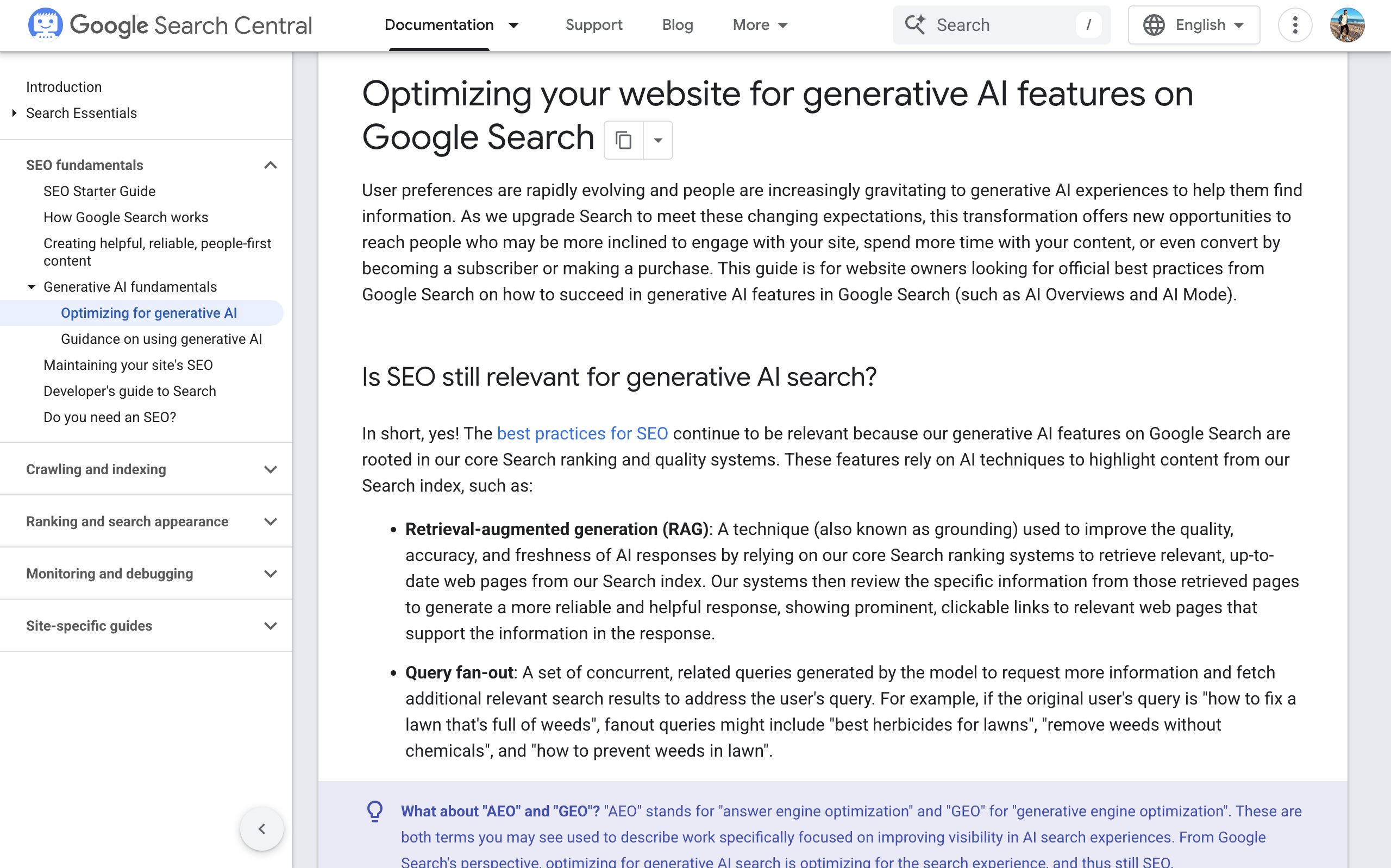
AI SEO in 2026: What Works, What Doesn't & How to Start - Where AI SEO Still Fails.
1. Expertise and First-Hand Experience
AI can synthesize existing information, but it cannot create genuine first-hand experience. A review of a SaaS tool written by AI will lack the screenshots, workflow observations, and edge cases that a real user would document. Google's E-E-A-T guidelines and increasingly sophisticated AI answer engines both reward content that demonstrates actual usage.
This is why the most effective AI SEO workflows pair autonomous research and drafting with human review for high-stakes content like product comparisons, pricing pages, and technical guides.
2. Brand Voice and Differentiation
Generic AI content is easy to produce and easy to ignore. Without strong brand context, AI-generated articles converge on the same phrasing, the same structure, and the same examples as every competitor. The result is a sea of near-identical content that ranks nowhere.
Platforms that extract product knowledge and brand voice before generating content solve this partially. But even the best systems benefit from occasional human editorial input to inject unique opinions, customer stories, and contrarian takes.
3. Link Building and Authority
Content alone doesn't rank. Domain authority, backlinks, and topical relevance still matter enormously. Most AI SEO tools focus on content production and on-page optimization, leaving link acquisition as a separate manual process. Some newer platforms include automatic link exchange networks, but the quality and relevance of those links vary widely.
4. Data Quality and Hallucination Risk
AI SEO is only as good as the data feeding it. If your product information, customer data, or brand guidelines are messy, the AI will produce messy content. Worse, autonomous systems can publish factual errors at scale if not constrained by accurate source material and human review checkpoints.
How to Build an AI SEO Workflow That Works

AI SEO in 2026: What Works, What Doesn't & How to Start - How to Build an AI SEO Workflow That Works.
Step 1: Define Your Content Model
Before choosing tools, define what content your business model actually needs:
- SaaS: Feature guides, comparison pages, integration documentation, use-case articles
- E-commerce: Buying guides, category descriptions, FAQ pages, product comparisons
- Independent websites: Niche educational content, affiliate reviews, resource hubs
- Digital products: Tutorial content, template showcases, audience-specific FAQs
Your content model determines which AI SEO features matter. A SaaS company needs comparison pages; an e-commerce store needs buying guides.
Step 2: Choose Your Autonomy Level
Decide how much control you need:
| Workflow | Best For | Trade-off |
|---|---|---|
| Approval-first | Regulated industries, established brands | Slower publishing |
| Hybrid | Most growing businesses | Requires weekly review time |
| Autopilot | Solo founders, lean teams | Higher factual risk |
Many platforms support multiple modes, letting you start with approval-first and graduate to autopilot as trust builds.
Step 3: Feed the System Quality Context
The single biggest determinant of AI SEO output quality is input quality. Before generating anything, ensure the platform has:
- Accurate product information and feature lists
- Clear brand voice guidelines and examples
- Defined target audiences and their pain points
- Existing top-performing content as reference
Platforms like AgentBooks take this seriously: you share your website once, and the system extracts product knowledge, maps the market, and builds a content plan from that foundation rather than from generic prompts.
Step 4: Layer Human Review Where It Matters
Not every piece needs human review. But these content types almost always do:
- Pricing and comparison pages with competitive claims
- Technical documentation where errors cause support tickets
- Thought leadership pieces that define your brand position
A practical rule: let AI handle volume content (FAQs, category descriptions, long-tail guides) and keep humans in the loop for high-stakes pages.
Step 5: Measure Beyond Rankings
Traditional SEO metrics still matter—impressions, clicks, average position. But AI SEO adds new signals:
- AI citation rate: How often your content appears in ChatGPT or Perplexity answers
- Publishing velocity: Number of new optimized pages per month
- Content-to-conversion rate: Which AI-generated pieces actually drive signups or sales
- Cost per published page: Total platform cost divided by pages published
AI SEO Tools: Choosing the Right Category
Autonomous Content Platforms
These systems handle the full pipeline: research, writing, optimization, and publishing. AgentBooks falls into this category, positioning itself as an autonomous content growth platform that turns a website into an always-on content engine. The key differentiator is whether the platform learns your product deeply enough to produce brand-consistent content without constant prompting.
AI Writing Assistants with SEO Features
Tools like ContentBot AI and Contentpen focus on the drafting layer, with varying degrees of SEO scoring and optimization. They require more manual orchestration but offer finer control over individual pieces.
Agency-Style AI Services
Platforms like Brafton blend AI production with human editorial oversight. They cost more but provide the expertise layer that pure AI tools lack. This category suits companies that want AI efficiency without managing the workflow themselves.
SEO Writing Specialists
Dedicated SEO writing tools, covered in our SEO Writing review, optimize for search intent and SERP structure specifically. They're narrower in scope than full platforms but often produce better-optimized individual articles.
AI SEO vs. Traditional SEO: A Practical Comparison
| Dimension | Traditional SEO | AI SEO |
|---|---|---|
| Keyword research | Manual, spreadsheet-based | Automated clustering and prioritization |
| Content production | Human writers, 2-5 pieces/month | AI-assisted or autonomous, 10-50 pieces/month |
| Optimization | Manual audits and updates | Continuous automated iteration |
| Cost per article | $150-$500+ | $5-$50 (platform amortized) |
| Brand consistency | High (human judgment) | Variable (depends on context quality) |
| Factual accuracy | High (human verification) | Moderate (requires review checkpoints) |
| Scalability | Limited by team size | Effectively unlimited |
The best 2026 strategies combine both: AI handles volume and consistency while human expertise handles differentiation and trust.
Common AI SEO Mistakes to Avoid
Publishing without brand context: Generic AI content that doesn't reflect your product or voice will not rank—and won't convert if it does.
Ignoring search intent: AI can produce fluent content for the wrong intent. A query like "best standing desk" needs comparison content, not a definitional article.
Skipping internal linking: AI-generated pages that aren't connected to your existing site structure leak authority and confuse crawlers.
Automating everything immediately: Starting with full autopilot before validating output quality is a recipe for publishing errors at scale.
Neglecting AI assistant optimization: Content that only targets Google blue links misses the growing share of queries answered directly in ChatGPT and AI Overviews.
Related reading
- Applied AI Lab for Agentic Systems | Ability.ai Review - Evidence-based Ability.ai review covering Cornelius, Trinity, ideal users, use cases, strengths, limitations, pricing signals, and decision criteria.
- Machined Demo: What It Is, Why It Matters & How to Plan One - Learn what a machined demo is, how CNC manufacturers use demo parts to prove capability, and how to plan, film, and promote a machining demonstration.
Sources and further reading
- AI for SEO: Your Guide for 2026 - Salesforce - What is AI SEO and how do you use it to improve your SEO strategies? Learn how to use AI to help rank higher in search engines here.
- AI SEO - done for you by an AI agent - AI SEO agent that plans, writes, and publishes content for you. Grow organic traffic month by month - on autopilot, with full control when needed.
- Is AI SEO Worth the Investment, and What Tools Are the ... - Reddit - Oct 17, 2025 ... AI SEO is starting to make sense for small businesses, but it's only worth it if you actually have clean, structured data to feed those tools.
Frequently Asked Questions
Is AI-generated content penalized by Google?
No. Google's guidance focuses on content quality and helpfulness, not production method. AI content that demonstrates expertise, matches intent, and provides unique value can rank well. AI content that's generic, thin, or factually unreliable will not—regardless of how it was produced.
How fast can AI SEO deliver results?
Most platforms report initial traffic growth within 1-2 months for domains with some existing authority. New domains typically need 3-6 months of consistent publishing before meaningful organic traction appears. The speed depends heavily on niche competition and content quality.
Do I still need a human SEO specialist with AI SEO?
For most businesses, yes—at least part-time. A human specialist provides strategic direction, validates AI output for high-stakes pages, and manages technical SEO elements that most AI platforms don't fully cover. The role shifts from execution to oversight.
Can AI SEO help my content appear in ChatGPT answers?
Yes, but indirectly. AI assistants reference content that is clearly structured, factually accurate, and semantically comprehensive. AI SEO platforms that optimize for these qualities improve your chances of being cited. However, no tool can guarantee AI assistant visibility.
What's the minimum budget for AI SEO?
Entry-level AI SEO platforms start around $29-$99 per month. Full autonomous platforms with custom domains and multilingual support typically fall in this range. Agency-style hybrid services start at $500+ per month. The right choice depends on whether you need a tool or a managed service.
Conclusion: AI SEO Is an Operating Model, Not a Magic Button
AI SEO in 2026 is best understood as a new operating model for organic growth, not a shortcut that replaces strategy. The technology excels at research, production velocity, and consistency—the areas where most SEO programs stall. It still requires human judgment for expertise, differentiation, and trust.
The businesses winning with AI SEO share a common pattern: they feed their platforms rich product context, start with approval-first workflows, layer human review on high-stakes content, and let autonomy handle the volume. The result is a content engine that compounds organic visibility across both traditional search and AI assistants—without requiring a full content team.
For teams ready to move beyond spreadsheets and manual drafts, exploring an autonomous content platform is the logical next step. The tools are mature enough to deliver real results; the remaining variable is how well you set them up.