What Is a Content Editor? Role, Skills & Workflow
A content editor is the person who looks at a draft and asks the uncomfortable question: does this actually work? Not whether the commas are in the right place, but whether the argument holds together, the structure flows, the tone fits the audience, and the piece achieves what it set out to do. If you have ever been told your writing is "hard to follow" or "feels off" without knowing exactly why, a content editor is the professional who can diagnose and fix that.
This guide explains what content editing involves, how it differs from copy editing and proofreading, the skills that make a strong content editor, and how the role is evolving as AI-assisted publishing becomes more common.
What Is a Content Editor?

What Is a Content Editor? Role, Skills & Workflow - What Is a Content Editor?.
A content editor reviews and improves a document at the level of structure, argument, clarity, tone, and overall effectiveness. The work is sometimes called substantive editing, comprehensive editing, or developmental editing, depending on the industry and the provider.
Unlike a proofreader, who catches typos and formatting slips, or a copy editor, who enforces grammar and style rules at the sentence level, a content editor works on the big picture:
- Does the document have a clear purpose?
- Is the information organized in a logical order?
- Does each section earn its place?
- Is the tone right for the intended reader?
- Does the argument stay consistent from beginning to end?
Content editing is less rule-bound than copy editing. There is no single handbook that dictates the "correct" structure for a business proposal or a blog post. Instead, the editor relies on judgment, audience awareness, and experience to make the text more understandable and effective.
What Does a Content Editor Do?
What Is a Content Editor? Role, Skills & Workflow - What Does a Content Editor Do?.
Content editing is a comprehensive review that touches several dimensions of a document at once. A professional content editor typically:
Reviews Structure and Organization
The editor checks whether the document follows a logical sequence. Sections that appear in the wrong order, arguments that are underdeveloped, and passages that disrupt the flow are all fair game. Sometimes the fix is as simple as moving a paragraph; other times, entire sections need to be cut or rebuilt.
Improves Clarity and Concision
Bloated writing, circular arguments, and passages that bury the key point are common problems. A content editor removes or revises unnecessary content so that every sentence contributes to the document's purpose. The goal is not to shorten everything, but to make the writing tighter and easier to follow.
Assesses Tone and Register
A grant proposal, a SaaS landing page, and a personal essay all require different tones. A content editor reads from the perspective of the intended audience and flags places where the register feels wrong — too formal, too casual, too technical, or too vague.
Preserves and Strengthens the Author's Voice
A good content editor does not rewrite the document in their own voice. The goal is to make the writing sound like the best version of the author's voice, not like the editor's voice. This is one of the hardest skills in editing and one of the most important.
Identifies Inconsistencies
Content editors track arguments, facts, terminology, and stylistic choices across the entire document. An argument that contradicts itself in chapter three, a product name that changes spelling halfway through a guide, or a statistic cited differently in two sections are all content editing concerns.
Flags Significant Language Issues
Deep grammar correction belongs to copy editing, but a content editor will note serious language problems that hurt readability or credibility. The distinction is one of depth: content editors flag the issues that matter for comprehension, while copy editors fix them systematically.
Communicates With the Author
Content editing is collaborative. The editor asks questions about the document's purpose, audience, and constraints, and explains the reasoning behind major changes. Tracked changes and margin comments are the standard tools for this dialogue.
Content Editing vs. Copy Editing vs. Proofreading
What Is a Content Editor? Role, Skills & Workflow - Content Editing vs. Copy Editing vs. Proofreading.
These three services are often confused because the boundaries overlap. Here is how they differ in practice:
| Editing type | Focus | Typical questions asked | When it happens |
|---|---|---|---|
| Content editing | Structure, argument, clarity, tone, audience fit | Does this make sense? Is this the right order? Does this match the audience? | Early, after the first full draft |
| Copy editing | Grammar, punctuation, spelling, style consistency, factual consistency | Is this sentence correct? Does this match the style guide? | After content editing, before layout |
| Proofreading | Surface errors in a near-final document | Are there typos, spacing issues, or formatting slips? | Last, right before publication |
A document often needs all three, in that order. Running a proofread on a draft that still has structural problems is a waste of effort because the text will change substantially during content editing.
Developmental editing is sometimes used interchangeably with content editing. In fiction publishing, developmental editing often refers to early-stage work on plot, character, and theme, while content editing may refer to a later structural pass. For nonfiction, business documents, and web content, the two terms usually describe the same service. When comparing providers, ask exactly what their content or developmental editing package includes.
Skills Every Strong Content Editor Needs
What Is a Content Editor? Role, Skills & Workflow - Skills Every Strong Content Editor Needs.
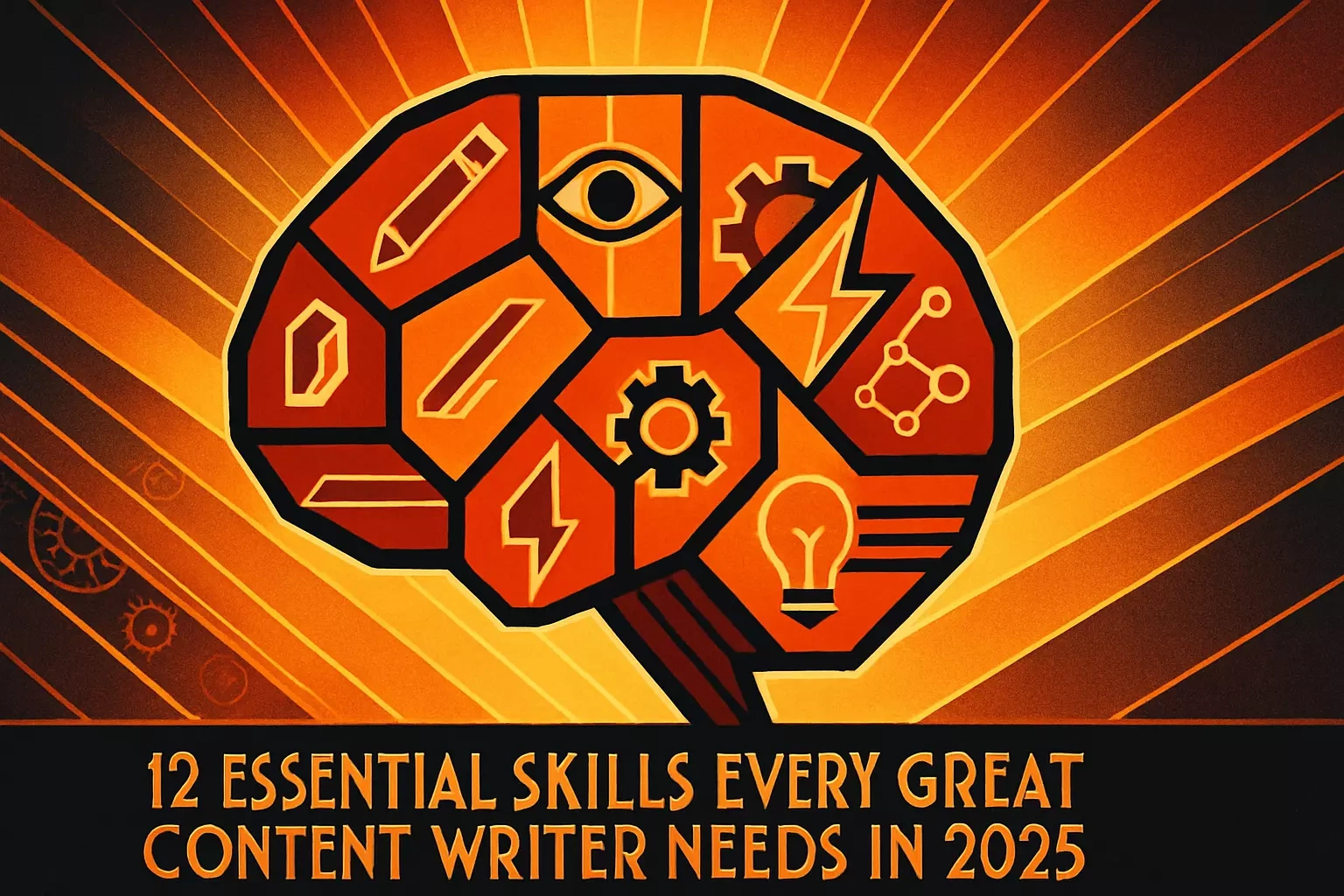
Content editing requires a combination of analytical, linguistic, and interpersonal skills. When evaluating a content editor — or building these skills yourself — look for:
- Exceptional writing and language ability. A content editor needs strong command of grammar, style, and the conventions of different document types.
- Structural thinking. The ability to assess a document as a whole, identify where the logic breaks down, and understand how parts relate to the whole.
- Audience awareness. The editor reads from the perspective of the intended reader and catches anything that assumes too much, explains too little, or misses the mark.
- Subject matter familiarity. For technical, academic, or specialist content, an editor who knows the field produces better results because they understand the terminology and audience expectations.
- Communication skills. Content editing is collaborative. The editor must explain reasoning clearly and work with the author rather than imposing preferences.
- Consistency tracking. The editor must hold arguments, facts, and terminology in mind across a long document.
- Tool proficiency. Professional editors work in tools like Microsoft Word or Google Docs using tracked changes and comments so authors can review every suggestion.
Most professional content editors hold at least a bachelor's degree in English, journalism, communications, or a related field, and many have advanced degrees or specialized industry experience.
When Do You Need a Content Editor?
Content editing is the right service when a document has problems that go beyond surface errors. Signs that a content editor would help include:
- Feedback that the document is "hard to follow," "disorganized," or "lacks a clear argument"
- A sense that the document is not working but an inability to identify exactly why
- A draft that has been through multiple rounds but still does not feel right
- A complex document — a business report, grant proposal, dissertation, or book manuscript — that needs to be structured for maximum impact
- A piece written for a specific audience where tone and register matter significantly
- A document where the author's voice needs to be strengthened and made consistent
If the document is already well-structured and the message is clear, you may only need copy editing or proofreading. If the structure, argument, or tone is in question, start with content editing.
The Content Editor's Role in Digital Publishing
The role of a content editor has expanded beyond books and business documents. In digital publishing, content editors often work on:
- Blog posts and long-form articles that need to rank in search engines while remaining genuinely useful
- Website copy where every section must guide the reader toward a clear action
- Email sequences and newsletters where tone and consistency across many pieces matter
- Product documentation and help centers where clarity directly affects customer success
- AI-generated drafts that need human judgment to verify accuracy, improve flow, and preserve brand voice
That last point is increasingly important. As AI writing tools produce more first drafts, the content editor's job shifts from writing everything from scratch to reviewing, structuring, and refining machine-generated material. The editorial judgment that content editing has always required — knowing what the audience needs, what the brand sounds like, and what actually makes a piece effective — becomes more valuable, not less.
How AI Is Changing Content Editing Workflows
AI-assisted publishing has introduced a new dynamic to content editing. Teams that once struggled with manual draft bottlenecks now face a different challenge: a flood of drafts that need consistent editorial oversight.
Platforms like AgentBooks approach this by automating parts of the content production pipeline while keeping an approval-first workflow. The platform learns a website's product, audience, and brand voice, researches organic search results, and generates content that a human editor can review, adjust, and approve before publishing. This shifts the content editor's role from producing every draft to making high-leverage editorial decisions: what to publish, how to structure it, and whether it meets the brand's standard.
For teams that publish at scale, this hybrid model — AI handles research and drafting, humans handle editorial judgment — is becoming the practical middle ground. The content editor remains essential, but the workflow changes from writing every word to directing and refining the output.
If you are building an automated content operation, understanding how autoblogging works without killing SEO is a useful starting point. The same editorial principles apply: structure, clarity, audience fit, and consistency still determine whether content performs.
How to Work With a Content Editor
If you are hiring a content editor for the first time, a few practices make the process smoother:
- Share the document's purpose and audience upfront. The more context the editor has, the better their judgment will be.
- Provide any style guides, brand guidelines, or reference documents. Consistency with existing materials matters.
- Be open to structural changes. Content editing often means moving, cutting, or rewriting sections. That is the point.
- Ask for tracked changes and comments. You should be able to see every edit and the reasoning behind it.
- Discuss the scope before work begins. Clarify whether the editor will also handle copy editing, fact-checking, or formatting, since these are separate services.
How to Become a Content Editor
If you want to move into content editing, the path usually combines formal training with deliberate practice:
- Build a strong writing foundation. You cannot edit what you cannot write well. Study grammar, style, and the conventions of the document types you want to edit.
- Practice structural editing. Take a rough draft and rewrite it for clarity and organization. Compare before and after versions to sharpen your judgment.
- Develop subject matter expertise. Editors who understand a specific field — technology, finance, healthcare, education — are in higher demand than generalists.
- Learn the tools. Master tracked changes, comments, and collaborative editing workflows in Word, Google Docs, and content management systems.
- Work with real authors. Editing is collaborative. Practice communicating feedback clearly and explaining your reasoning.
- Study how editing types differ. Understanding the boundaries between content editing, copy editing, and proofreading helps you position your services accurately.
For a deeper look at the academic and research-focused version of this work, the Wikipedia overview of content editing provides useful historical context and terminology. Editor World's guide on what a content editor does is also a practical reference for the service from a provider's perspective.
Related reading
- Autoblogging: How to Automate Blog Content Without Killing SEO - Learn how autoblogging works, which tools actually protect SEO, common mistakes to avoid, and a practical workflow for automated content that ranks.
- On-Page SEO: 11 Techniques That Still Work in 2026 - Learn what on-page SEO is, why it matters for Google and AI search, and how to optimize titles, content, internal links, and more with this practical checklist.
- Multilingual Content: Strategy, Localization & AI Workflows - Learn how to plan, localize, and scale multilingual content that ranks globally. Covers strategy, translation vs. localization, AI workflows, and common mistakes.
Sources and further reading
- What Is a Content Editor? | Indeed.com - Jun 16, 2026 ... A content editor is someone who oversees the publishing needs of a client, business or organization. Their work primarily involves delivering ...
- Editing Services | Proofreading | Writing Services | Editor World - A content editor improves a document's structure, clarity, tone, and effectiveness. Learn what they do, when you need one, and what to expect from the process.
Frequently Asked Questions
What is the difference between a content editor and a copy editor?
A content editor works on the big picture: structure, argument, clarity, tone, and audience fit. A copy editor works on technical correctness at the sentence level: grammar, punctuation, spelling, and style guide compliance. Content editing comes first; copy editing comes after the content is settled.
What is another name for a content editor?
Content editing is also called substantive editing, comprehensive editing, macro editing, or heavy editing. In fiction publishing, developmental editing is often used for similar early-stage structural work.
When should I hire a content editor?
Hire a content editor when your document has structural or clarity problems that go beyond surface errors — when it feels disorganized, hard to follow, or mismatched to its audience. If the structure is already solid, you may only need copy editing or proofreading.
Can a content editor also proofread?
Some editors offer both services, but they are separate tasks. Proofreading should happen after content editing and copy editing are complete, on a near-final document. Ask your editor whether their package includes proofreading or whether it is a separate service.
How is AI changing content editing?
AI tools can produce first drafts and handle research at scale, but human editorial judgment is still needed to verify accuracy, improve flow, and preserve brand voice. Many teams now use a hybrid workflow where AI drafts content and human editors review, structure, and approve it before publishing.
What skills does a content editor need?
Strong writing ability, structural thinking, audience awareness, subject matter familiarity, communication skills, consistency tracking, and proficiency with editing tools like tracked changes and comments.
Conclusion
A content editor is the professional who turns a rough draft into a document that works — structurally sound, logically organized, tonally appropriate, and clear to its intended reader. The role sits between writing and proofreading, and it requires a combination of analytical judgment, language skill, and collaborative communication that no style guide can fully codify.
As publishing becomes faster and more automated, the content editor's role is shifting rather than shrinking. AI can draft, research, and scale production, but someone still needs to decide what is worth publishing, whether the structure serves the reader, and whether the final piece sounds like the brand it represents. That editorial judgment is exactly what content editing has always been about.