Multi-Provider AI: How to Build Resilient LLM Infrastructure in 2026
Production AI applications rarely depend on a single model anymore. A typical agent run routes requests across OpenAI, Anthropic, AWS Bedrock, Google Vertex AI, and a growing list of specialized providers. That shift has turned multi-provider AI from a nice-to-have into a core infrastructure decision.
This guide breaks down what multi-provider AI actually means, why single-provider architectures break at scale, how AI gateways solve the operational mess, and how to evaluate your options without getting lost in vendor marketing.
What Is Multi-Provider AI?
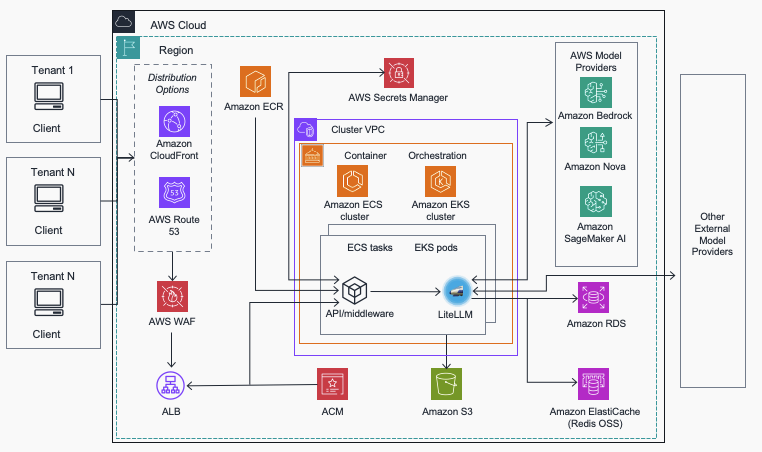
Multi-Provider AI: Gateways, Architecture & 2026 Guide - What Is Multi-Provider AI?.
Multi-provider AI is an architectural approach where an application uses models from several AI vendors through a unified access layer, rather than integrating each provider directly into application code.
At its simplest, it means your system can call GPT-4o for one task, Claude Sonnet for another, and Gemini Pro for a third—without rewriting integration logic for each. The key is that the application sees one consistent interface while the infrastructure handles the differences underneath.
Why Single-Provider Setups Break at Scale
Most AI applications start with one provider. A developer picks a model, integrates an API, and ships. At small scale, that works.
But as usage grows, four problems appear:
- Vendor lock-in: OpenAI, Anthropic, Azure, and Vertex each expose different APIs, authentication models, and request formats. Deep integration with one makes switching expensive.
- Cost blind spots: Without centralized tracking, teams unknowingly route high-volume workloads to expensive models.
- No failover: Even reliable providers experience outages. A single-provider app has no automatic fallback.
- Fragmented observability: Logs and metrics scatter across provider dashboards, making debugging painful.
Gartner forecasts that 40% of enterprise applications will embed task-specific AI agents by the end of 2026, up from less than 5% in 2025. That traffic needs a unified control plane—not a patchwork of direct integrations.
The Core Components of Multi-Provider AI Infrastructure
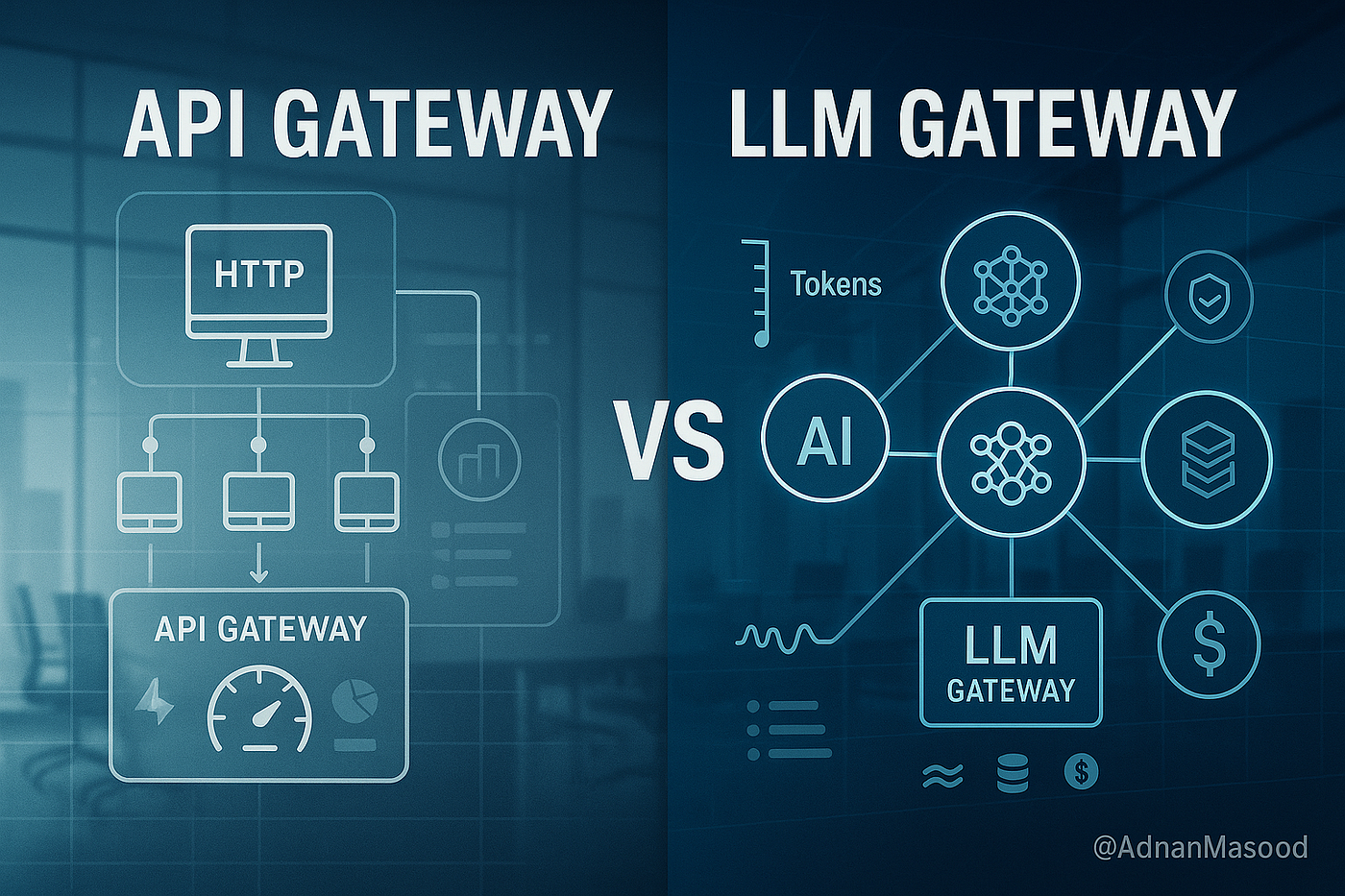
Multi-Provider AI: Gateways, Architecture & 2026 Guide - The Core Components of Multi-Provider AI Infrastructure.
A well-architected multi-provider setup has five layers that work together:
1. Unified API Abstraction
The gateway exposes a single OpenAI-compatible endpoint. Your application sends one request format, and the gateway translates it to whatever the target provider expects. This is what makes switching providers a configuration change instead of a code rewrite.
2. Intelligent Routing
Routing rules decide which provider handles each request. Common strategies include:
- Cost-based routing: Send high-volume classification to cheaper models, complex reasoning to premium ones.
- Capability-based routing: Route code generation to Claude Sonnet, large-context reasoning to Claude Opus, enterprise workloads to Vertex AI.
- Latency-based routing: Prefer the provider with the lowest current response time.
- Geographic routing: Keep requests in-region for compliance or latency reasons.
3. Automatic Failover and Load Balancing
When a provider returns errors or hits rate limits, the gateway retries with exponential backoff and fails over to a backup provider. Weighted distribution can also spread traffic across multiple API keys and providers to avoid exhausting any single quota.
4. Governance and Cost Control
Centralized governance means budgets, rate limits, and access permissions are enforced at the infrastructure layer—not scattered across application code. Teams can set monthly dollar budgets, token limits, and model allow-lists per user, team, or API key.
5. Observability
Every request flowing through the gateway can capture the input prompt, tool calls, provider and model used, token consumption, latency, total cost, and errors. That centralized view makes debugging dramatically easier than searching across multiple provider dashboards.
AI Gateway Architecture: How the Pieces Fit
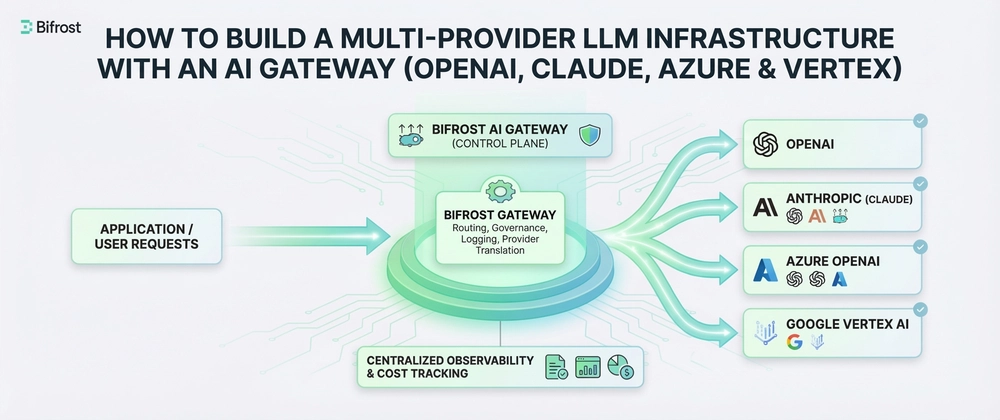
Multi-Provider AI: Gateways, Architecture & 2026 Guide - AI Gateway Architecture: How the Pieces Fit.
Without a gateway, applications connect directly to each provider. That architecture looks manageable at first:
Application
   │
   ├── OpenAI API
   ├── Anthropic API
   ├── Azure OpenAI
   └── Vertex AI
But once agents, MCP tools, and internal APIs enter the picture, the application ends up managing authentication for each provider, request routing logic, cost tracking, error handling, retry logic, and monitoring. That responsibility becomes unmaintainable inside the application layer.
A gateway architecture inverts this:
       Application
            │
        AI Gateway
            │
 ┌──────────┼──────────┬───────────────┐
 │          │          │               │
OpenAI  Anthropic  Azure OpenAI    Vertex AI
The application sends requests to a single endpoint. The gateway handles provider routing, API translation, authentication management, cost tracking, logging, rate limiting, and governance. From the application's perspective, the system becomes dramatically simpler.
Deployment Patterns That Matter
Multi-provider AI gateways support several deployment models depending on your security and latency requirements:
- Public-facing global deployment: Combine the gateway with a CDN and DNS layer for global user bases. This adds DDoS protection, simplified HTTPS management, and edge caching.
- Regional direct access: For single-region deployments prioritizing low latency, remove the CDN layer and access the gateway directly through a load balancer.
- Private internal access: Organizations requiring complete isolation can deploy the gateway within a private VPC without internet exposure, keeping model access inside the secure network perimeter.
Comparing Multi-Provider AI Gateway Options in 2026

Multi-Provider AI: Gateways, Architecture & 2026 Guide - Comparing Multi-Provider AI Gateway Options in 2026.
The gateway landscape has matured significantly. Here's how the major options compare on the dimensions that matter for production workloads.
Bifrost
Bifrost is a high-performance, open-source AI gateway built in Go by Maxim AI. It unifies access to 1,000+ models across 23+ providers through a single OpenAI-compatible API.
Its standout characteristic is performance: roughly 11 microseconds of overhead per request in sustained benchmarks at 5,000 requests per second. That keeps the gateway invisible to end-user latency even at high agent call volumes.
For agentic workloads, Bifrost functions as an MCP gateway that centralizes tool connections, authentication, and governance. Agent Mode handles autonomous tool execution with configurable approval, and Code Mode lets the model write Python to orchestrate multiple tools—cutting token usage by roughly 50% and latency by 40% versus sequential tool calls.
Governance is built in rather than bolted on. Virtual keys act as the primary control entity, with per-consumer budgets, rate limits, and access permissions enforced hierarchically. The Enterprise tier adds clustering, role-based access control, audit logs for SOC 2, GDPR, HIPAA, and ISO 27001, plus air-gapped and in-VPC deployment.
Best for: Enterprises running mission-critical AI workloads that require best-in-class performance, scalability, and reliability—especially regulated industries needing full data control.
LiteLLM
LiteLLM is an open-source, Python-based gateway that provides a unified, OpenAI-compatible API for dozens of model providers. It's widely adopted as an entry point for teams that want multi-provider access with minimal setup, and AWS offers a Multi-Provider Generative AI Gateway reference architecture built around LiteLLM for production deployment.
The trade-offs appear as workloads scale. The Python runtime introduces interpreter overhead under sustained concurrency, and multi-team governance, fine-grained access control, and compliance-grade deployment typically require additional infrastructure layers.
Best for: Single-team applications and rapid prototyping that need broad provider coverage without strict performance or governance requirements.
Cloudflare AI Gateway
Cloudflare AI Gateway extends Cloudflare's edge platform into the AI layer, offering a unified interface to multiple providers with caching, retries, rate limiting, and analytics integrated into Cloudflare's global network.
The main trade-off is flexibility. Adopting the gateway means buying into Cloudflare's ecosystem, and deep governance or self-hosted deployment outside that ecosystem is limited.
Best for: Teams already standardized on Cloudflare that want unified analytics and caching close to their existing infrastructure.
Kong AI Gateway
Kong AI Gateway extends Kong's established API gateway platform to support LLM routing through a plugin-based architecture. It brings mature API management capabilities—traffic control, authentication, and plugin extensibility—to AI traffic.
For organizations without an existing Kong footprint, the platform carries operational weight, and AI-specific features like semantic caching and MCP governance are layered onto a general-purpose API gateway rather than designed natively for LLM workloads.
Best for: Platform engineering teams already running Kong that want to consolidate AI routing into their existing API management stack.
OpenRouter
OpenRouter provides simplified access to a large catalog of models through a single endpoint, abstracting provider differences so developers can switch models with minimal effort.
As a hosted aggregation layer, it offers less control over data residency, self-hosting, and infrastructure-level governance than a gateway designed for enterprise deployment.
Best for: Developers prototyping across many models quickly who prioritize breadth and convenience over deployment control.
Quick Comparison Table
| Gateway | Architecture | Self-hosting | Native MCP Gateway | Enterprise Governance |
|---|---|---|---|---|
| Bifrost | Go, open source | Yes (OSS and enterprise) | Yes | Yes (RBAC, audit logs, VPC, air-gapped) |
| LiteLLM | Python, open source | Yes | Partial | Requires augmentation |
| Cloudflare AI Gateway | Managed edge | No | Limited | Tied to Cloudflare ecosystem |
| Kong AI Gateway | Plugin on API gateway | Yes | Limited | Via Kong platform |
| OpenRouter | Hosted aggregation | No | No | Limited |
Practical Example: Building a Multi-Provider Setup
Here's a concrete walkthrough of what building multi-provider LLM infrastructure looks like in practice, using Bifrost as the gateway layer.
Step 1: Start the Gateway
Run Bifrost locally with npm:
npx -y @maximhq/bifrost
Or with Docker:
docker run -p 8080:8080 maximhq/bifrost
Step 2: Route Requests Through a Single Endpoint
Once the gateway is running, applications send requests to:
POST http://localhost:8080/v1/chat/completions
The gateway becomes responsible for forwarding requests to the appropriate provider.
Step 3: Use Dynamic Model Routing
Instead of hard-coding a specific model into your application, the gateway determines which provider should handle each request:
/model openai/gpt-4o-mini
/model anthropic/claude-sonnet
/model vertex/gemini-pro
Because the gateway handles API translation, the application doesn't need to know the underlying provider format. This unlocks A/B testing across providers, instant provider switching, cost optimization per request, and model performance benchmarking.
Step 4: Enforce Cost Governance with Virtual Keys
Virtual keys define monthly dollar budgets, token usage limits, request rate limits, model allow-lists, and provider restrictions. For example, an engineering team might get:
- Monthly budget: $200
- Allowed models: Claude Sonnet, GPT-4o Mini
- Restricted models: GPT-4o Full
Requests are enforced using headers:
curl -X POST http://localhost:8080/v1/chat/completions \
  -H "x-bf-vk: vk-engineering-main" \
  -d '{ ... }'
Step 5: Monitor Everything Centrally
Each request flowing through the gateway captures the input prompt, tool calls, provider and model used, token consumption, latency, total cost, and errors. Logs are viewable through the built-in dashboard at http://localhost:8080/logs.
This centralized view makes debugging significantly easier. Instead of searching across multiple services, teams observe model behavior directly at the infrastructure layer.
How to Choose a Multi-Provider AI Gateway
Your choice depends on where you are in the AI adoption curve and what constraints you operate under.
Choose LiteLLM if...
- You're a single team prototyping quickly
- You need broad provider coverage with minimal setup
- You don't yet have strict performance or governance requirements
- You're comfortable with Python infrastructure
Choose Bifrost if...
- You're running mission-critical AI workloads
- Latency overhead matters because agents make dozens of calls per task
- You need native MCP governance for agentic workloads
- You operate in a regulated industry requiring audit logs and air-gapped deployment
- You want governance built into the gateway rather than layered on top
Choose Cloudflare AI Gateway if...
- You're already standardized on Cloudflare's edge platform
- You want unified analytics and caching close to existing infrastructure
- You don't need deep self-hosting or governance outside the Cloudflare ecosystem
Choose Kong AI Gateway if...
- Your platform engineering team already runs Kong
- You want to consolidate AI routing into your existing API management stack
- You can accept AI-specific features layered onto a general-purpose gateway
Choose OpenRouter if...
- You're prototyping across many models quickly
- You prioritize breadth and convenience over deployment control
- You don't need self-hosting or infrastructure-level governance
The Bigger Picture: Multi-Provider Thinking Beyond Infrastructure
The multi-provider principle extends beyond LLM gateways. The same logic—avoid single points of failure, route intelligently, centralize governance—applies to other layers of the AI stack.
For content and marketing teams, the equivalent challenge is avoiding dependence on a single AI writing tool or a single search channel. Just as production AI applications route across OpenAI, Anthropic, and Vertex to optimize cost and reliability, content operations increasingly need to publish across Google, AI assistants, and social discovery surfaces simultaneously.
That's where platforms like AgentBooks come in. AgentBooks operates as an autonomous content growth platform that turns a website into an always-on content engine for search and AI. Instead of manually managing topic research, draft creation, and publishing across channels, the platform learns your product, maps your market, and continuously publishes useful content in your brand voice. It addresses the same class of problems multi-provider AI gateways solve—fragmentation, manual bottlenecks, and inconsistent governance—but applied to content operations rather than model routing.
The through-line is architectural: centralize the control plane, keep the application layer simple, and let infrastructure handle the operational complexity. For deeper guidance on building AI-assisted workflows that actually rank, see our breakdown of AI SEO in 2026: what works and what doesn't.
Related reading
- AI Copywriting in 2026: Tools, Workflows & Realistic Results - Learn what AI copywriting actually does well, where it fails, and how to build a workflow that produces useful, brand-consistent copy without losing quality.
- SEO Writing Review 2026: Features, Pricing & Real Test - An evidence-based SEO Writing review covering real workflows, SERP analysis, pricing signals, ideal users, and limitations before you buy.
- Applied AI Lab for Agentic Systems | Ability.ai Review - Evidence-based Ability.ai review covering Cornelius, Trinity, ideal users, use cases, strengths, limitations, pricing signals, and decision criteria.
Sources and further reading
- How to Build a Multi-Provider LLM Infrastructure with an AI Gateway (OpenAI, Claude, Azure & Vertex) - Most AI applications start simple. A developer picks a model, integrates an API, and ships a...
Frequently Asked Questions
What is a multi-provider AI gateway?
A multi-provider AI gateway is a unified infrastructure layer that routes, authenticates, observes, and governs traffic to multiple LLM providers from a single API. It sits between an application and the underlying model providers, handling routing, retries, rate limiting, cost tracking, and caching so application code doesn't have to.
Why should I use multiple AI providers instead of one?
Different models excel at different tasks. Code generation may work best on Claude Sonnet, high-volume classification on GPT-4o Mini, and enterprise workloads on Vertex AI. A multi-provider setup lets you route dynamically based on cost, latency, or capability—and provides automatic failover when a provider experiences outages.
What's the difference between an AI gateway and a model router?
A model router handles basic request distribution. A full AI gateway adds governance (budgets, rate limits, access controls), observability (centralized logging and cost tracking), caching, retry logic, and often MCP tool routing. The bar for production AI has moved well beyond basic routing.
Is LiteLLM or Bifrost better for production?
For single-team applications and rapid prototyping, LiteLLM is a solid entry point with broad provider coverage. For mission-critical workloads requiring ultra-low latency, native MCP governance, and compliance-grade deployment, Bifrost's Go-based architecture and built-in enterprise governance make it the stronger production choice. The full gateway comparison covers the capability matrix in detail.
How does automatic failover work in multi-provider AI?
When a provider returns errors or hits rate limits, the gateway retries with exponential backoff and automatically fails over to a backup provider. Weighted distribution can also spread traffic across multiple API keys and providers to avoid exhausting any single quota, enabling zero-downtime routing without application-side code changes.
Can I self-host a multi-provider AI gateway?
Yes. Both Bifrost and LiteLLM support self-hosting. Bifrost offers OSS and enterprise self-hosting options including air-gapped and in-VPC deployment for regulated environments. AWS also provides a reference architecture for deploying LiteLLM in production.
Conclusion
Multi-provider AI has moved from experimental pattern to production standard. The reasons are structural: no single model wins every task, no single provider guarantees uptime, and no organization can afford fragmented cost tracking as AI usage scales.
The right gateway choice depends on your constraints. Teams prototyping quickly can start with LiteLLM or OpenRouter. Enterprises running mission-critical workloads—especially in regulated industries—should evaluate Bifrost for its performance, native MCP governance, and compliance-grade deployment options. Teams already invested in Cloudflare or Kong can extend those platforms into the AI layer.
Whatever you choose, the architectural principle holds: centralize routing, governance, and observability in a control plane, keep your application provider-agnostic, and let infrastructure absorb the operational complexity. That's how multi-provider AI delivers on its promise—resilience, cost control, and the freedom to use the best model for every task.