SERP Analysis: How to Read Google Results Like an SEO Strategist
A SERP analysis is the process of examining the search engine results page for a target keyword to understand what Google believes searchers want, who currently ranks, and what it will take to compete. Done well, it removes guesswork from content planning and helps you prioritize keywords where you have a realistic chance of ranking.
This guide walks through a repeatable SERP analysis workflow: identifying search intent, evaluating competitor strength, spotting SERP features, assessing content gaps, and turning findings into a content brief.
What Is a SERP Analysis?

SERP Analysis: How to Read Google Results Like an SEO Strategist - What Is a SERP Analysis?.
A SERP analysis is a structured review of the top-ranking pages for a keyword. Instead of looking only at search volume or keyword difficulty scores, you examine the actual results page to answer four questions:
- What does the searcher want? The format and angle of top results reveal intent.
- Who is already ranking? The domains and page types show the competitive landscape.
- What features appear? Featured snippets, People Also Ask boxes, map packs, and videos change how users interact with results.
- What is missing? Content gaps in top-ranking pages become your opportunity to provide more value.
Search results vary by location, device, and Google domain. A mobile search for a local service may show a map pack, while a desktop search for the same term might not. For accurate analysis, check the SERP under conditions that match your target audience.
Why SERP Analysis Matters Before You Write
SERP Analysis: How to Read Google Results Like an SEO Strategist - Why SERP Analysis Matters Before You Write.
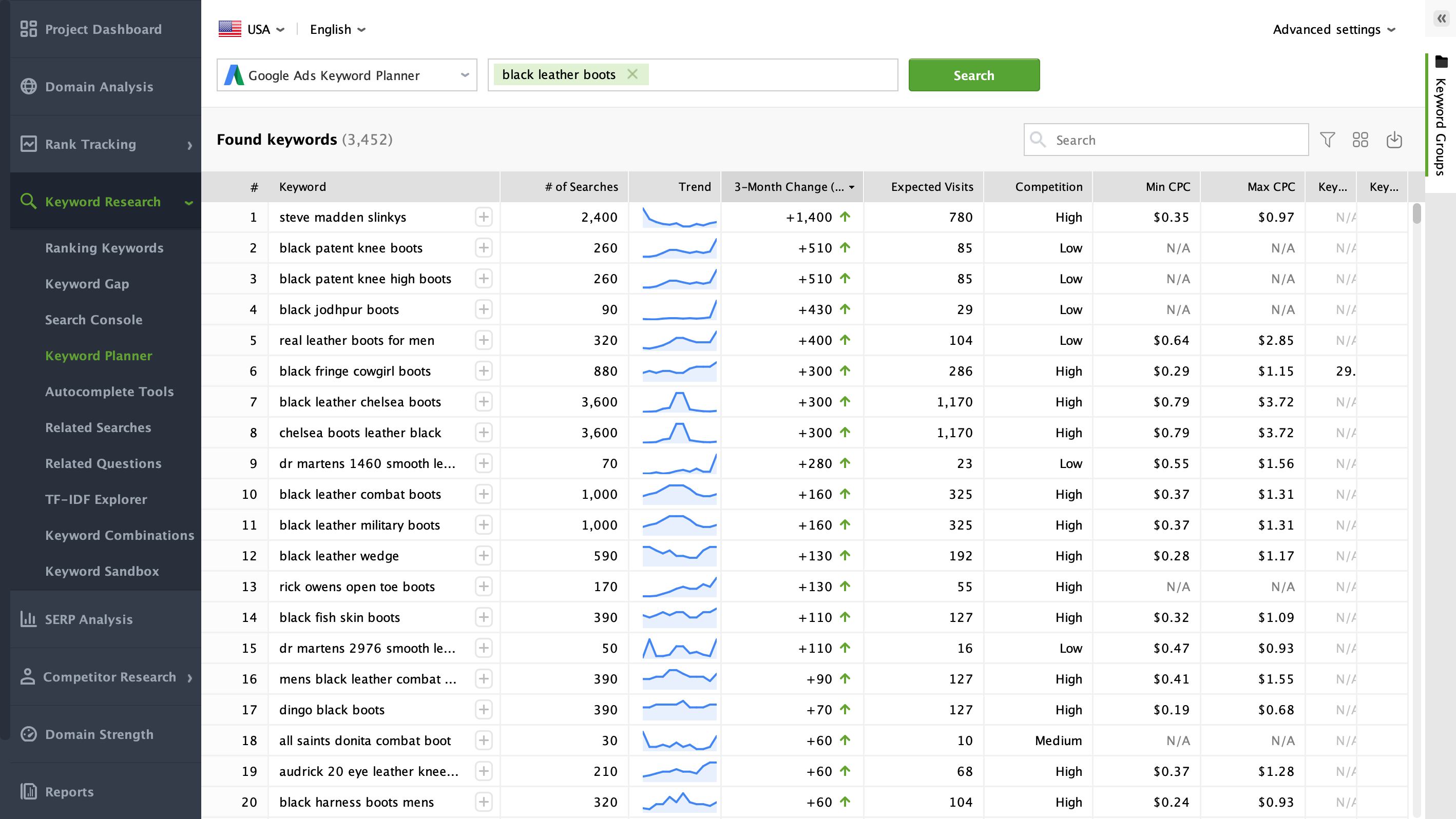
Keyword research tells you what people search for. SERP analysis tells you whether you can realistically rank for it and what kind of content Google expects to serve.
Consider two keywords that look similar on the surface: "kittens for adoption" and "new kitten." The first returns ads, a map pack, and adoption websites. The second returns checklists, care guides, and informational articles. The search intent is completely different. If you create a product page for the second keyword, you will not rank, no matter how well optimized it is.
SERP analysis also helps you avoid wasting resources on keywords dominated by high-authority sites where your page has little chance of breaking into the top 10. A keyword with medium difficulty but a SERP full of weak, outdated content may be a better target than a low-difficulty keyword where the top results are all authoritative brands.
How to Conduct a SERP Analysis: Step-by-Step
SERP Analysis: How to Read Google Results Like an SEO Strategist - How to Conduct a SERP Analysis: Step-by-Step.
Step 1: Determine Search Intent
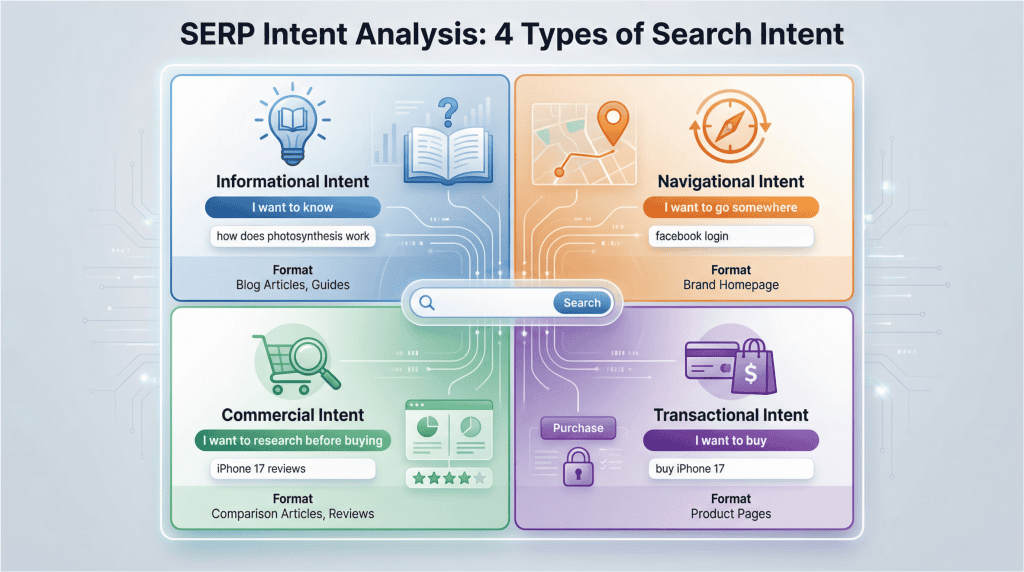
Search intent is the reason behind a query. There are four common types:
| Intent Type | Description | Example |
|---|---|---|
| Navigational | User wants a specific website or page | "agentbooks login" |
| Informational | User wants to learn about a topic | "how to do SERP analysis" |
| Commercial | User is researching options before deciding | "best SERP checker tools" |
| Transactional | User is ready to take action | "buy SEO tool" |
To determine intent, look at the top 10 results and ask what type of content dominates. Are they blog posts, product pages, landing pages, or tools? If nine out of ten results are interactive tools, writing a blog post will not help you rank.
Some keywords have fractured intent, meaning multiple intents coexist. For example, "business english vocabulary" may return both course landing pages and informational articles. In these cases, you may need to test different content formats or target a more specific long-tail variation.
Step 2: Identify SERP Features
SERP features are elements beyond standard blue-link organic results. Common ones include:
- Featured snippets: A highlighted answer box at the top of results, often pulled from a page with a clear H2 question and a concise answer.
- People Also Ask (PAA): Expandable questions that reveal related queries searchers have.
- Local map pack: A map with three local business listings, common for service-based and location-specific searches.
- Image packs and video carousels: Visual results that indicate multimedia content is expected.
- Knowledge panels: Information boxes about entities like people, companies, or concepts.
Each feature represents an opportunity. If a featured snippet appears, structure your content with clear subheadings and direct answers to capture it. If PAA boxes are present, mine them for questions to address in an FAQ section. If videos rank, consider creating video content alongside your article.
Step 3: Evaluate Competitor Strength
Once you understand intent and features, assess who currently ranks and how strong they are. Look at these metrics for each top-ranking page:
- Domain Authority (DA) or Authority Score: A measure of overall site strength. If the average DA of top results is 70 and your site is 20, ranking will be difficult.
- Referring domains: The number of unique websites linking to a page. This indicates how much link building may be required.
- Page-level traffic: How much organic traffic the ranking page receives, which signals the keyword's traffic potential.
- Keyword coverage: How many keywords the page ranks for, which can reveal additional terms to target.
Tools like MozBar, Semrush's Keyword Overview, or a free SERP checker can surface these metrics quickly. You can also manually review the SERP and note patterns in domain type, content depth, and publishing recency.
Step 4: Assess Content Format and Depth
Look at the top-ranking pages and catalog what they have in common:
- Format: Are they listicles, how-to guides, comparison posts, product pages, or interactive tools?
- Length: How comprehensive are they? A 500-word post competing against 3,000-word guides will struggle.
- Angle: What perspective do they take? Beginner-friendly, expert-level, data-driven, or opinion-based?
- Freshness: When were they last updated? Outdated content may signal an opportunity to publish something current.
Also note what top pages are missing. Do they skip practical examples? Do they lack original data or screenshots? Do they fail to address a specific audience segment? These gaps become your differentiation strategy.
Step 5: Calculate Realistic Ranking Potential
Combine your findings into a go/no-go decision. Consider:
- Keyword difficulty: A score from 1 to 100 indicating how hard it is to rank in the top 10.
- Your site's authority: Your current DA relative to the average of top-ranking pages.
- Content gap opportunity: Whether you can meaningfully improve on what exists.
- Business relevance: Whether ranking for this keyword would actually drive valuable traffic.
A high-volume keyword with difficulty 80 and top results from authoritative sites may be a long-term goal. A medium-volume keyword with difficulty 35, weak top results, and clear content gaps may be a better near-term target.
SERP Analysis Template
SERP Analysis: How to Read Google Results Like an SEO Strategist - SERP Analysis Template.
Use this checklist for each keyword you evaluate:
- Search intent: Informational, commercial, transactional, or navigational?
- Dominant content format: Blog post, product page, tool, video, or landing page?
- SERP features present: Featured snippet, PAA, map pack, images, videos, knowledge panel?
- Average authority of top 10: What DA or Authority Score range?
- Content gaps in top results: What are competitors missing?
- Keyword difficulty: What is the score, and does it align with your site's authority?
- Traffic potential: What is the estimated monthly organic traffic for ranking pages?
- Decision: Target now, target later, or skip?
Common SERP Analysis Mistakes to Avoid
Ignoring device and location differences. The SERP you see on desktop in one city may differ from what your audience sees on mobile elsewhere. Use a SERP checker that allows location and device simulation.
Overweighting keyword difficulty scores. Difficulty scores are estimates. A keyword with high difficulty but weak actual content in the top results may be more winnable than the score suggests. Always pair scores with manual SERP review.
Copying the top result's structure without adding value. Matching format is necessary, but differentiation is what earns rankings. If every top result is a listicle, a listicle with original examples, better visuals, and updated data can outperform them.
Skipping SERP features. If a featured snippet occupies the top of the SERP, the traditional #1 organic result gets fewer clicks. Optimizing for the snippet is often more valuable than chasing the #1 blue link.
Analyzing once and never revisiting. SERPs change as Google updates algorithms and competitors publish new content. Re-run your analysis quarterly for priority keywords.
How SERP Analysis Fits Into a Content Workflow
SERP analysis is most valuable when it directly informs content creation. The findings should translate into a content brief that specifies:
- The target keyword and secondary keywords from PAA boxes and related searches
- The content format and angle based on top-ranking pages
- The questions to answer, drawn from PAA and featured snippet opportunities
- The depth and length required to compete
- The differentiation strategy based on content gaps
For teams scaling content production, this research step is often where bottlenecks occur. Manually analyzing SERPs for dozens of keywords is time-consuming. Platforms that automate organic research can help, especially when they incorporate top-ranking pages into content planning. AgentBooks is an autonomous content growth platform that learns your product, researches organic search results, and continuously publishes useful content in your brand voice. Its organic research feature incorporates top-ranking pages into topic planning, which can streamline the SERP analysis step for teams that need to publish consistently without sacrificing search intent alignment.
If you are evaluating AI-powered content tools, a practical comparison of AgentBooks, ContentBot.ai, and QuickCreator can help you understand which workflows prioritize SERP research versus pure generation speed. For a broader view of how these tools fit into a search-driven content strategy, see this guide on choosing an SEO content generator.
Related reading
- AgentBooks vs ContentBot.ai vs QuickCreator: Honest Comparison - Compare AgentBooks, ContentBot.ai, and QuickCreator on workflows, autonomy, SEO research, pricing, and ideal users. Find the right AI content tool for your team.
- SEO Content Generator: How to Choose and Use One in 2026 - Compare the best SEO content generators, learn how they work, and get a practical workflow for producing search-ready content without sacrificing quality.
- QuickCreator Tutorial: From First Login to Published SEO Article - A practical QuickCreator tutorial covering login, AI writing modes, article types, SEO settings, and publishing. Learn the full workflow step by step.
Sources and further reading
- Free SERP Checker: Fast, Fresh Data Every Time - WhatsMySerp - Free SERP checker quickly checks, tracks, and graphs your search engine keyword ranking for multiple domains and keywords.
- How to Do a Competitor SERP Analysis - Master SERP analysis and outshine your competition! Learn how to evaluate search intent, identify SERP features, analyze competitor strength, and use Moz tools to find ranking opportunities. Ready to level up? Dive in now!
- What Is a SERP Analysis & How Can You Do One? - Learn how to do a SERP analysis. Study the top pages for a keyword to uncover ranking opportunities.
FAQ
What is the difference between keyword research and SERP analysis?
Keyword research identifies terms people search for, along with volume and difficulty metrics. SERP analysis examines the actual results page for those terms to understand intent, competitor strength, SERP features, and content gaps. Keyword research tells you what to target; SERP analysis tells you how to target it.
How often should I perform a SERP analysis?
Perform a SERP analysis before creating any new piece of content targeting a specific keyword. For priority keywords you already rank for, re-analyze quarterly or whenever rankings shift significantly. SERPs change as Google updates algorithms and competitors publish new content.
Can I do a SERP analysis without paid tools?
Yes. You can manually search your target keyword in an incognito window, review the top 10 results, note the content formats and angles, and identify SERP features. Free tools like MozBar or a free SERP checker can add link metrics and position data. Paid tools like Semrush or Ahrefs add deeper metrics like traffic estimates and keyword coverage.
What is a good keyword difficulty score for a new website?
For a new website with low domain authority, target keywords with difficulty scores below 30. As your site builds authority through content and backlinks, you can pursue progressively higher difficulty keywords. Always pair difficulty scores with manual SERP review, since the actual quality of ranking content matters as much as the score.
How do I find content gaps in a SERP analysis?
Read the top-ranking pages and note what they have in common, then identify what they collectively lack. Common gaps include missing practical examples, outdated information, no original data or screenshots, poor mobile formatting, unanswered questions from PAA boxes, and a lack of audience-specific guidance. Your content should fill those gaps while matching the format Google expects.
Conclusion
SERP analysis is the bridge between keyword research and content creation. It tells you what Google believes a searcher wants, who currently satisfies that need, and what you must do to compete. By systematically evaluating search intent, SERP features, competitor strength, and content gaps, you can prioritize keywords where your effort will actually pay off.
The most effective content teams treat SERP analysis as a repeatable process, not a one-time task. Whether you perform it manually or use tools that automate organic research, the goal is the same: publish content that matches search intent, fills genuine gaps, and earns rankings through usefulness rather than guesswork.