AgentBooks vs ContentBot.ai vs QuickCreator: Which AI Content Tool Fits Your Workflow?
Choosing between AgentBooks, ContentBot.ai, and QuickCreator can feel like comparing three different machines that all promise the same output: more content, faster. But each tool is built around a different philosophy. One automates the entire content engine from research to publishing. One gives you a flexible writing assistant with automation flows. One acts like a virtual AI marketing team for solo operators.
This comparison breaks down how each platform handles the work that actually matters: understanding your brand, researching what ranks, drafting in your voice, and getting content live without endless manual steps.
How the Three Platforms Approach Content Creation
ContentBot.ai product interface.
The core difference comes down to how much of the content process each tool owns.
AgentBooks positions itself as an autonomous content growth platform. You share your website once, and the platform learns your product, maps your market, plans topics, researches organic search results, and continuously publishes content in your brand voice. The emphasis is on removing manual bottlenecks: no more topic brainstorming sessions, no more draft queues, no more inconsistent publishing schedules.
ContentBot.ai is an AI content automation platform aimed at marketers, founders, copywriters, and SEO specialists who want to generate written content quickly. It offers an AI Blog Writer, AI Article Writer, a Flow Builder for multi-step automation, and templates for everything from landing pages to eCommerce copy. You get more granular control over individual pieces of content, but you also do more of the assembly work yourself.
QuickCreator is designed specifically for solo founders, consultants, and one-person marketing teams. It deploys six specialized AI agents that work together: a Brand Positioning Agent, Topic Strategy Agent, Market Research Agent, Content Writer Agent, Content Optimization Agent, and Customer Research Agent. The goal is to replicate an entire content team's output without hiring one.
Autonomy vs. Control: Where Each Tool Lands
If you want a tool that runs in the background and publishes without constant supervision, AgentBooks is the strongest fit. Its approval-first or autopilot workflow means you can review everything or let the system operate hands-off. The platform learns from your website and keeps producing content aligned with your product and market.
ContentBot.ai gives you more manual control. You can set up automated flows, but the platform is fundamentally a writing tool with automation features layered on top. You'll likely spend more time selecting templates, refining prompts, and reviewing drafts.
QuickCreator sits in the middle. The six-agent system automates research and drafting, but the workflow is still article-by-article. You initiate a project, the agents do their work, and you review the output. It's less autonomous than AgentBooks but more structured than ContentBot's open-ended writing environment.
Brand Voice and Context Retention
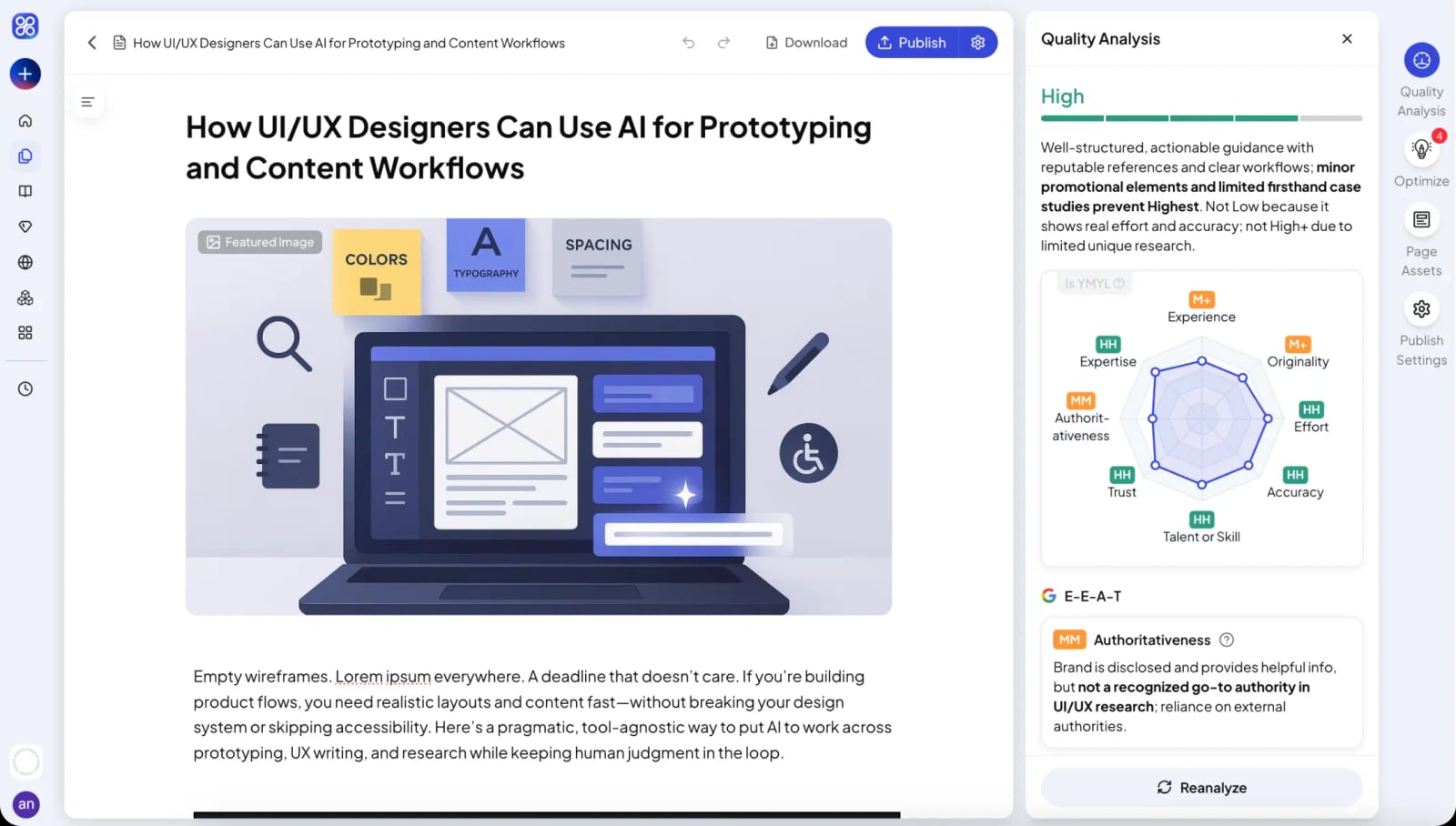
QuickCreator product interface.
One of the biggest failure points for AI content tools is losing your brand's voice after a few articles. All three platforms address this, but differently.
AgentBooks uses brand intelligence to extract product knowledge from your website. The platform learns what you sell, who you serve, and how you talk about it. That context persists across every piece of content, which matters when you're publishing dozens of articles per month.
QuickCreator also learns brand voice from existing site content through its Brand Positioning Agent. It ingests your private knowledge base and applies that context to every draft. For solo founders who have strong opinions about how their brand sounds, this is a meaningful feature.
ContentBot.ai relies more on prompt engineering and templates. You can create consistent outputs by saving prompts and using the Flow Builder, but the platform doesn't automatically build a persistent brand profile from your website the way the other two do. If you're disciplined about prompt management, you can achieve consistency; it just requires more ongoing effort.
If brand consistency across a large volume of content is a priority, read this practical guide on how to define, document, and scale your brand voice before committing to a tool.
SEO Research and Search Intent
All three platforms claim SEO capabilities, but the depth of research varies significantly.
AgentBooks incorporates organic research directly into its workflow. The platform examines top-ranking pages for your target topics and uses that data to shape what it writes. This isn't just keyword insertion; it's competitive analysis baked into the content planning process. The tool also maps your market and plans topics based on what's actually ranking, not just what a keyword tool suggests.
QuickCreator performs SERP and AI answer analysis through its Market Research Agent. It looks at reader intent and analyzes how AI engines like ChatGPT, Perplexity, and Gemini are answering related queries. This GEO (Generative Engine Optimization) angle is a differentiator: QuickCreator explicitly optimizes content to get cited by AI search engines, not just Google.
ContentBot.ai offers data-driven fact integration and intelligent internal and external linking. The platform emphasizes credibility and SEO performance, with a uniqueness score for generated content. However, the research component is less automated. You'll typically provide more direction on what to cover and which sources to reference.
For a broader look at how to evaluate SEO content tools, see this comparison of the best SEO content generators and how to choose one.
Workflow and Publishing
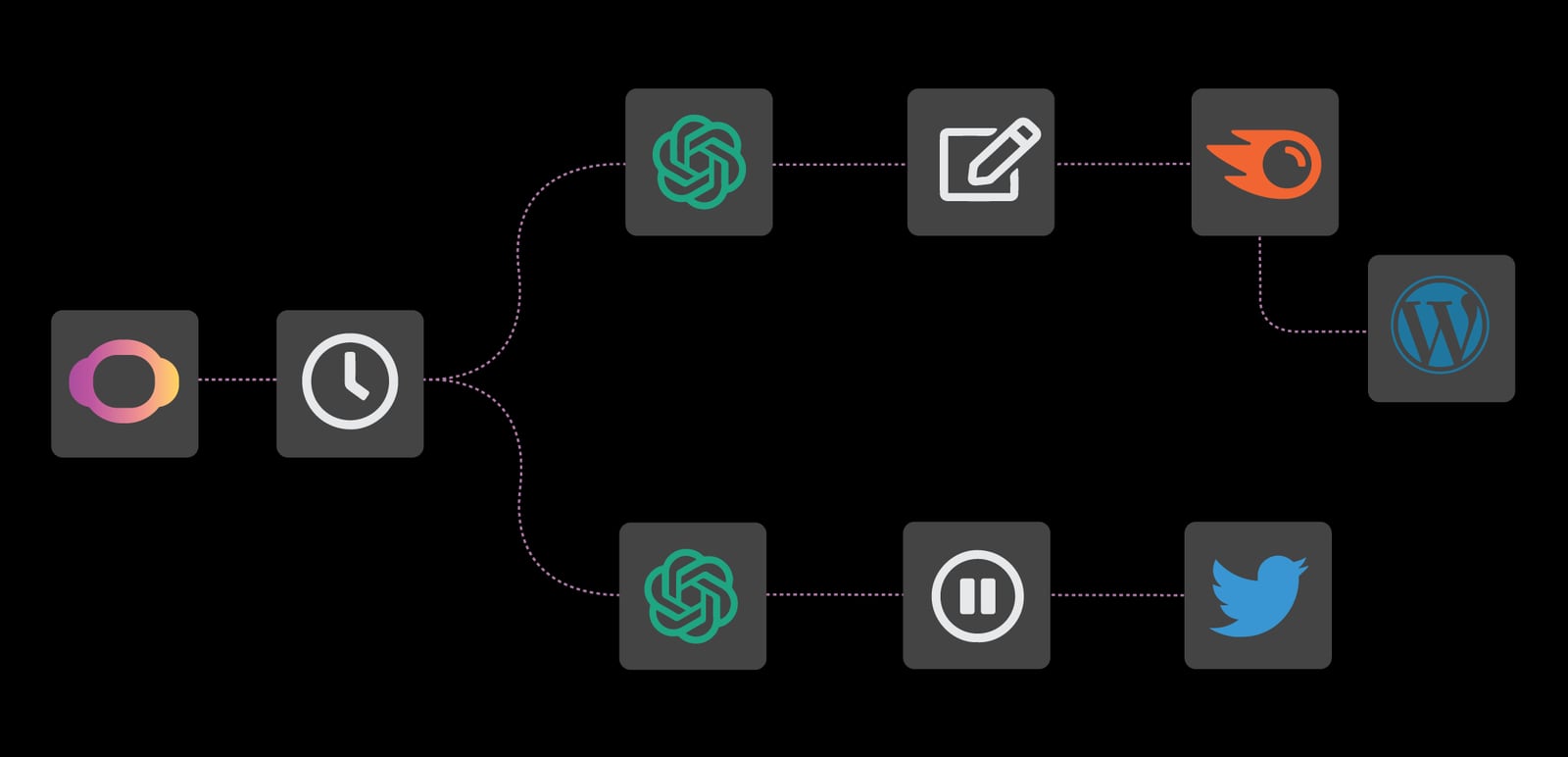
A diagrom of the Flow Editor in ContentBot that allows you to create blog posts and tweets and other marketing content automatically..
How content gets from idea to published post reveals the biggest practical differences.
AgentBooks offers custom domain hosting, which means published content lives on your own domain without manual export or integration steps. The autopilot mode can handle the entire pipeline: topic selection, research, drafting, and publishing. This is the closest any of the three tools comes to a true set-it-and-forget-it content engine.
ContentBot.ai is a writing environment first. You generate content, edit it, and then export it to your CMS or publishing platform. The Flow Builder can automate multi-step content creation, but publishing still happens outside the tool. The Chrome extension is useful for writing in other contexts, like composing social posts or emails while browsing.
QuickCreator provides a structured workflow from topic selection to publishing, with optimization checks along the way. It's designed to move you through a defined process rather than leaving you in an open canvas. For solo founders who want guidance, this structure is helpful. For teams that need to publish at high volume without manual review, it requires more hands-on time than AgentBooks.
If you want to see how QuickCreator's workflow operates in practice, this step-by-step QuickCreator tutorial walks through the full process from login to published article.
Pricing and Accessibility
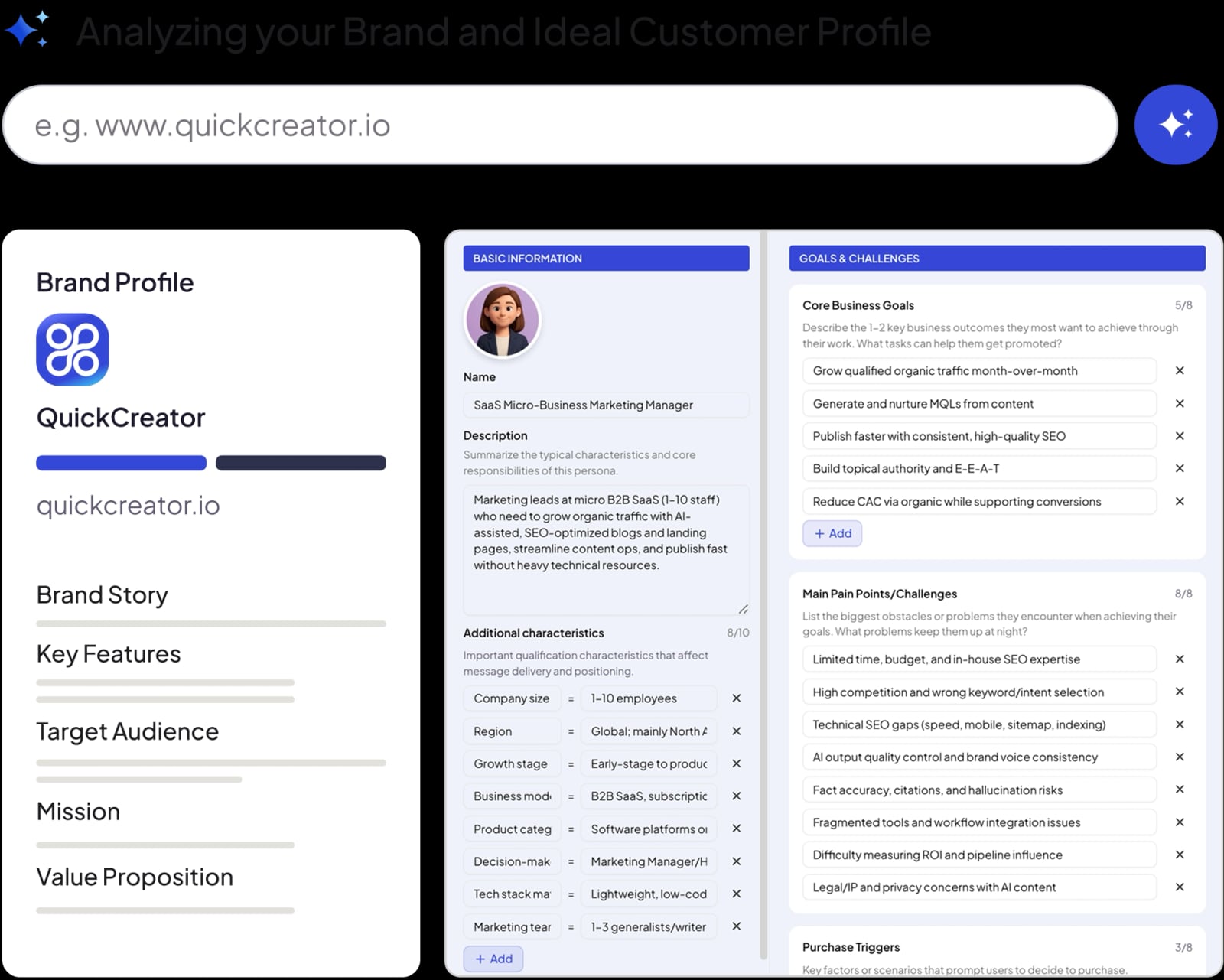
Brand Positioning Agent visual placeholder.
Pricing models reflect the different target users.
AgentBooks starts with a free beta tier (Starter) that includes brand research, keyword planning, and a hosted content site. The Pro plan at $29/month adds advanced SEO optimization and multilingual publishing. The Team plan at $99/month includes multiple workspaces and priority support. The free tier is a genuine entry point for testing the autonomous workflow.
ContentBot.ai uses a subscription model with a Pay-as-you-go option based on prepaid credits. This flexibility appeals to users who want to scale usage up or down without committing to a fixed monthly volume. The platform reports over 77,000 users and 430 million words generated, indicating a large, established user base.
QuickCreator starts at $29/month for the Personal plan with 1,500 credits and one blog site. The Professional plan at $129/month and Plus plan at $249/month add more agents and storage. The credit system means you need to monitor usage, especially if you're producing long-form content regularly.
Comparison Table
| Feature | AgentBooks | ContentBot.ai | QuickCreator |
|---|---|---|---|
| Primary focus | Autonomous content growth | AI writing automation | Solo founder content team |
| Brand learning | Automatic from website | Manual via prompts | Automatic from site + knowledge base |
| SEO research | Top-ranking page analysis | Data-driven fact integration | SERP + AI answer analysis |
| Publishing | Custom domain hosting | Export to CMS | Guided workflow |
| Autonomy | Autopilot mode available | Flow Builder automation | Article-by-article workflow |
| Best for | Teams wanting hands-off publishing | Writers wanting flexible tools | Solo founders wanting structure |
| Starting price | Free beta tier | Subscription + pay-as-you-go | $29/month |
Which Tool Should You Choose?
Choose AgentBooks if you want a content engine that runs with minimal supervision. The platform's ability to learn your product, research rankings, and publish continuously makes it the strongest option for teams that have domain expertise but lack the time or headcount to execute a consistent content strategy. The free beta tier makes it low-risk to test.
Choose ContentBot.ai if you prefer a flexible writing environment with automation options. It's well-suited for marketers and copywriters who want to generate specific types of content quickly—blog posts, landing pages, product descriptions—without committing to a fully automated pipeline. The pay-as-you-go option is practical for variable workloads.
Choose QuickCreator if you're a solo founder or consultant who wants structured guidance. The six-agent system provides a clear process, and the GEO optimization angle is valuable if you care about visibility in AI search engines. The brand voice learning is strong, but the credit-based pricing requires attention.
Related reading
- AI Workflow Builder: How to Choose and Use One in 2026 - Compare the best AI workflow builders for 2026, learn how natural-language automation works, and get a practical framework for choosing the right tool.
Sources and further reading
- AgentBooks vs QuickCreator vs ContentBot.ai: Honest Comparison - Jul 26, 2026 ... AgentBooks, QuickCreator, and ContentBot.ai each solve different parts of the content puzzle. QuickCreator gives you a virtual AI marketing team ...
- AgentBooks vs ContentBot.ai vs Copy.ai: Honest 2025 Comparison - Aug 2, 2026 ... AgentBooks vs QuickCreator vs ContentBot.ai: Honest Comparison - See how AgentBooks, QuickCreator, and ContentBot.ai compare for AI content ...
- I Tried EVERY AI Agent (Here's What's ACTUALLY Good) - Here's the Best AI Agents in 2026In this video, I break down the five AI agent tools that are actually worth using right now by comparing how they handle con...
Frequently Asked Questions
Is AgentBooks a full replacement for a content team?
AgentBooks automates the research, planning, drafting, and publishing pipeline, which covers the core execution work of a content team. However, strategic decisions about positioning, offers, and campaign direction still benefit from human input. The platform reduces the need for daily content operations staff but doesn't replace high-level marketing strategy.
Does ContentBot.ai produce SEO-optimized content?
Yes. ContentBot.ai includes intelligent internal and external linking, data-driven fact integration, and a uniqueness score for generated content. The platform is designed to produce credible, well-supported articles that can perform in search. However, you'll need to provide more SEO direction than you would with a platform that automatically researches top-ranking pages.
How does QuickCreator's GEO optimization work?
QuickCreator analyzes how AI engines like ChatGPT, Perplexity, and Gemini currently answer queries related to your target topics. The Content Optimization Agent then improves drafts to align with both traditional SEO signals and the patterns that AI engines use when citing sources. This dual optimization is QuickCreator's most distinctive feature.
Can I try these tools before committing?
AgentBooks offers a free beta tier with brand research, keyword planning, and a hosted content site. QuickCreator offers free writing tools like blog hook and title generators, though the full platform requires a paid plan. ContentBot.ai's pay-as-you-go credits let you test the platform with a small upfront investment.
Which tool handles multilingual content?
AgentBooks includes multilingual publishing in its Pro plan. ContentBot.ai supports multiple languages for content generation. QuickCreator's multilingual capabilities are less prominent in its core feature set. If you're targeting multiple markets, verify current language support before choosing.
The Bottom Line
AgentBooks, ContentBot.ai, and QuickCreator each solve real problems, but they solve different ones. AgentBooks is the closest to an autonomous content engine—share your site once and let it research, plan, and publish. ContentBot.ai is a flexible writing and automation toolkit for people who want control over individual pieces. QuickCreator is a structured AI team for solo operators who need guidance and GEO optimization.
The right choice depends on how much of the content process you want to own. If you want to eliminate manual bottlenecks entirely, AgentBooks is the strongest fit. If you want a powerful writing assistant with automation options, ContentBot.ai delivers. If you're a solo founder who wants a guided, brand-aware workflow, QuickCreator earns its place.
For a deeper comparison of AI content tools and how to build a sustainable workflow, explore this guide on choosing and using an SEO article generator.