Top 10 Digital Asset Management Platforms for 2026 (Compared & Ranked)
Managing a sprawling library of images, videos, brand guidelines, and marketing collateral without a central hub is a recipe for chaos. A modern Digital Asset Management (DAM) platform doesn't just store files—it becomes the single source of truth for your entire creative and marketing ecosystem. In 2026, AI-driven tagging, advanced analytics, and seamless integrations have transformed DAM from a nice-to-have into a strategic necessity.
We evaluated over 30 solutions and ranked the top 10 based on real user feedback, analyst reports, feature depth, and scalability. Every product on this list has verified evidence backing its position, from Gartner Peer Insights reviews to in-depth case studies. Whether you're a fast-growing startup or a global enterprise, this guide will help you pick the right DAM to keep your brand consistent, compliant, and creative.
Evaluation Criteria: How We Selected the Best DAM Tools
Top 10 Digital Asset Management Platforms 2026 (Ranked & Reviewed) product interface and feature overview.
Our 2026 rankings are built on transparent, evidence-based criteria. No vendor paid for placement, and every product was assessed using the same framework:
- Asset intelligence: AI auto-tagging, visual search, duplicate detection, and content analytics.
- User experience: Intuitive interfaces, role-based permissions, and fast onboarding.
- Integrations: Native connectors with Creative Cloud suites, CMS platforms, PIM solutions, and marketing automation tools.
- Scalability: Global deployment capabilities, multi-brand support, and enterprise-grade security.
- Proof of value: Customer testimonials, Gartner ratings, and recognizable reference accounts.
With that framework in mind, here are the top 10 DAM platforms you should consider in 2026.
1. Bynder – Best for Enterprise Brand Consistency
Top 10 Digital Asset Management Platforms 2026 (Ranked & Reviewed) product interface and feature overview.
Overview
Bynder has cemented its position as the go-to DAM for global brands that need tight control over brand identity. Headquartered in the Netherlands, Bynder combines asset management, brand guidelines, creative workflows, and video creation into a cohesive suite.
Key Features
- AI-powered search with automatic tagging and facial recognition.
- Built-in brand guidelines module to enforce style consistency.
- Video asset management with in-browser editing.
- Integrated analytics to measure asset usage and engagement.
Evidence & Recognition
Bynder’s customer list speaks for itself: Siemens Healthineers, Klarna, and Nordea rely on the platform daily. Gartner Peer Insights reviews consistently praise Bynder’s intuitive interface and robust permission controls. In a 2025 report, Bynder scored above average in “ease of administration” and “asset discovery.”
Pricing
Custom quotes based on users, storage, and modules. Enterprise plans typically include onboarding support and dedicated success managers.
[Source: Gartner reviews, Celum comparison blog]
2. Adobe Experience Manager (AEM) Assets – Best for Creative-to-Marketing Workflows
Overview
Adobe Experience Manager Assets is the powerhouse behind many large enterprises’ content supply chains. Deeply integrated with the Adobe Creative Cloud ecosystem, AEM Assets lets designers and marketers work in a unified pipeline.
Key Features
- AI-driven tagging and smart cropping powered by Adobe Sensei.
- Seamless connection with Photoshop, InDesign, and After Effects.
- Dynamic media delivery that auto-optimizes assets for any screen.
- Enterprise-grade audit trails and DRM protection.
Evidence & Recognition
Adobe reports that AEM Assets reduces time-to-market for campaign launches by up to 50% for customers like John Lewis and Telecom Italia. Gartner consistently places Adobe as a Leader in the DAM Magic Quadrant. The deep integration with Experience Cloud makes it a strategic choice for organizations already invested in Adobe’s ecosystem.
Pricing
Available upon request. Often part of broader Adobe Experience Cloud licensing; cost scales significantly with users and modules.
[Source: Adobe official site, Gartner]
3. Acquia DAM (formerly Widen) – Best for Open Digital Experience Stacks
Overview
After Acquia’s acquisition of Widen, the combined offering now bridges DAM and DXP (Digital Experience Platform) capabilities. Acquia DAM serves as the content backbone for over 660 organizations in 175 countries, from Fortune 100 firms to universities.
Key Features
- Auto-tagging, version control, and rights management.
- Content analytics to track asset performance and ROI.
- Extensive partner-developed integrations with Box, Dropbox, SharePoint, WordPress, and Drupal.
- Open API for custom workflow automation.
Evidence & Recognition
Customers highlight the platform’s reliability and speed of deployment. The integration with Drupal and Acquia’s own DXP makes it a natural choice for open-source stacks. FinancesOnline data indicates an enterprise subscription around $20,000 per year, though true pricing varies widely.
Pricing
Single enterprise pricing tier; exact cost tailored to storage and user counts.
[Source: Widen/Acquia documentation, Celum blog, FinancesOnline]
Adjacent Insight: If you’re using Acquia to manage your entire digital experience, an autonomous content engine like AgentBooks can feed your DAM with fresh, brand-aligned SEO content that’s ready to publish across channels. Learn how in our How to Use AgentBooks with Acquia: AI Content + DXP Workflow guide.
4. Brandfolder – Best for Intuitive UX and Brand Intelligence
Top 10 Digital Asset Management Platforms 2026 (Ranked & Reviewed) product interface and feature overview.
Overview
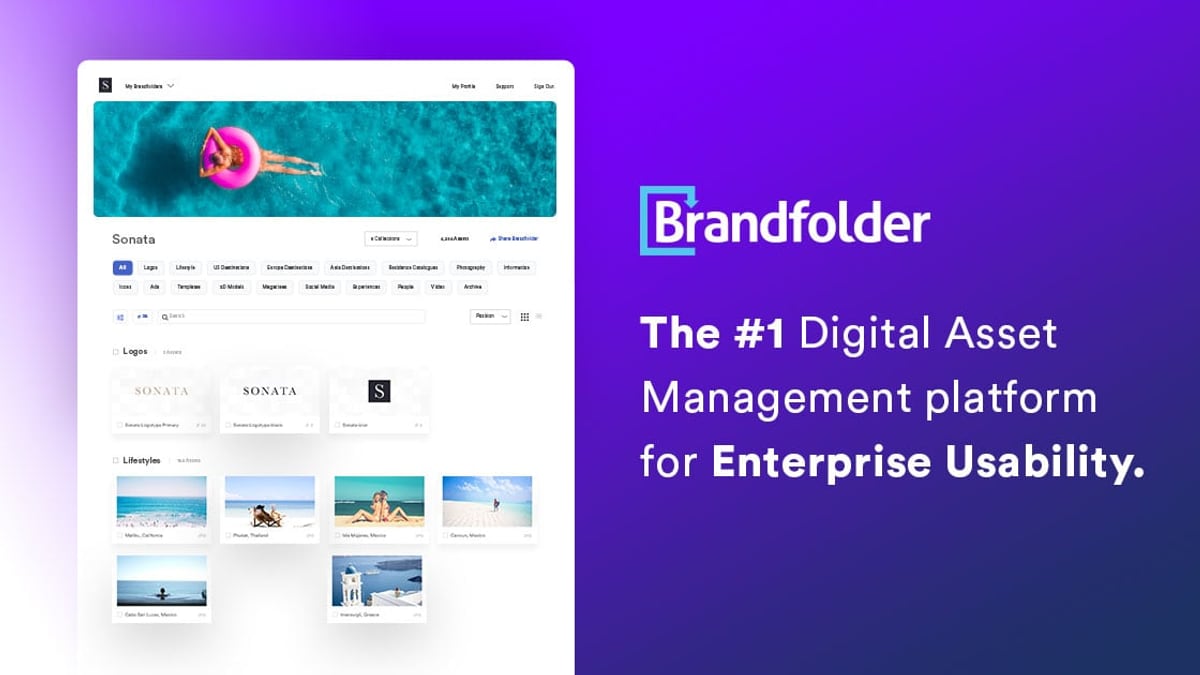
Brandfolder’s mission is to make DAM so frictionless that every stakeholder—from creative directors to franchise owners—actually uses it. The cloud-based platform centralizes assets, streamlines distribution, and provides deep insights into how assets perform.
Key Features
- Brand Intelligence: automated tagging, duplicate detection, and video AI.
- Privacy controls for secure external sharing with partners and agencies.
- Intuitive search with visual previews and zero training required.
- Scalable from small teams to global enterprises.
Evidence & Recognition
Customer feedback validates Brandfolder’s user-first design. Anthony Nguyen, Director of Global Marketing, notes significant time savings, while Kathryn Castle, Director of Creative & Design Strategy, credits the platform with tighter brand consistency. Internal surveys report 94% user interface satisfaction, 98% intuitive UX rating, and 92% time-saving implementation score.
Pricing
Three tiers: Premium, Enterprise, and custom plans. Pricing aligns with team size and storage needs.
[Source: Brandfolder customer case studies and satisfaction surveys]
5. CELUM – Best for High-End Manufacturing & Retail DAM
Overview
Austria-based CELUM targets large retailers and manufacturers with demanding product communication needs. The platform combines DAM, brand management, content templates, and a Product Content Studio to go beyond simple asset storage.
Key Features
- High-end DAM for the most demanding master-data and multi-channel scenarios.
- Tailored audience frontends for dealers, partners, and press.
- AI-driven content creation and analytics.
- Seamless integration with SAP, SharePoint, and major e-commerce systems.
Evidence & Recognition
CELUM counts BAUHAUS, Magenta Telekom, HiPP, and Redcare Pharmacy as customers. Industry analysts note its strength in handling complex multi-brand hierarchies. The platform’s “Product Content Studio” differentiates it for manufacturing firms that need to link assets to product data.
Pricing
Custom quoted plans designed to scale with customer requirements; often involves implementation services.
[Source: Celum.com official overview, Celum comparison blog]
6. Aprimo – Best for Content Operations & Workflow Automation
Overview
Aprimo extends DAM into full content operations. In addition to a centralized repository, Aprimo offers workflow automation, AI-driven tagging, and flexible metadata management to streamline the entire content lifecycle.
Key Features
- AI-based auto-tagging for rapid asset ingestion.
- Role-based permissions and flexible metadata fields.
- Aprimo Connect integration ecosystem for CMS, PIM, and marketing tools.
- Analytics to measure content effectiveness.
Evidence & Recognition
With customers including Red Hat, Ubisoft, and SOS Children’s Villages, Aprimo proves its versatility across industries. Reviews highlight the platform’s configurability and strong governance capabilities. It is frequently listed in Forrester and Gartner evaluations for digital asset management.
Pricing
Subscription model, priced based on users and location. Custom quotes required.
[Source: Aprimo official site, Celum blog]
7. Fotoware – Best for Metadata-Driven Workflows & Compliance
Overview
Norwegian-based Fotoware caters to media organizations, cultural heritage institutions, law enforcement, and manufacturing firms that rely on precise metadata governance. Its platform is built to handle high-volume, rights-sensitive content.
Key Features
- Advanced metadata management with automated ingestion and tagging.
- Rights and consent management, including GDPR compliance tools.
- Flexible UIs tailored for different user roles (from archivists to marketers).
- REST API and plugins for integration into existing tech stacks.
Evidence & Recognition
Fotoware serves over 800 customers, including the Rijksmuseum, The Economist, Breitling, and the UK’s Metropolitan Police. In analyst reviews, Fotoware consistently scores high on security and metadata depth. The platform is a go-to for organizations where asset provenance is critical.
Pricing
Tailored to organizational needs; contact Fotoware for a consultation.
[Source: Fotoware official website, Celum blog]
8. Censhare – Best for Universal Content Management (DAM + PIM + CMS)
Overview
Censhare positions itself as a universal content platform, bundling DAM, Product Information Management (PIM), and Content Management (CMS) into a single hub. It’s designed for large enterprises that want to break down silos between marketing content and product data.
Key Features
- Centralized repository for all digital marketing assets.
- Flexible tagging, bulk upload, and duplicate checks.
- Optional PIM and CMS modules for seamless data unification.
- Search functionality optimized for large, heterogeneous libraries.
Evidence & Recognition
Censhare powers content operations for Lufthansa, Allianz, and BMW. Third-party listing Capterra indicates a starting price of $1,000 per month, making it a consideration for mid-market to enterprise teams. Analysts note its strength in multi-domain content orchestration.
Pricing
Subscription starts around $1,000/month; custom enterprise plans available.
[Source: Censhare official overview, Capterra]
9. pIXX.io – Best for Flexible, Mid-Market DAM with Strong Integration Depth
Overview
German-born pIXX.io packs over 600 integrations into a user-friendly package. It’s designed for companies that need powerful admin features but don’t want to overwhelm casual users or external partners.
Key Features
- Granular user roles and single sign-on.
- License management for copyright-protected files.
- Automated workflows from content creation to approval to distribution.
- Brand-compliant media portals for dealers, press, and internal use.
Evidence & Recognition
More than 1,600 companies including Meggle, Liqui Moly, and Schneider Schreibgeräte rely on pIXX.io. Customer reviews frequently mention the speed of the native plugins for Adobe, Canva, and Microsoft 365. The platform’s transparent pricing makes it especially attractive for small to medium-sized businesses.
Pricing
Scalable packages starting with affordable entry points; custom quotes for enterprise requirements.
[Source: pixx.io official site, Celum blog]
10. Pics.io – Best Budget-Friendly DAM for Freelancers & Small Teams
Overview
Pics.io offers a remarkably cost-effective DAM by leveraging Google Drive or Amazon S3 as the storage layer. You get version control, metadata search, and collaboration tools without the enterprise price tag.
Key Features
- Permission-based access and asset analytics.
- Versioning and commenting for collaborative reviews.
- Pay-as-you-go pricing that starts with a free tier.
- Integrations with Google Drive, Zapier, and Slack.
Evidence & Recognition
While Pics.io doesn’t target Fortune 500 companies, it has carved out a loyal following among freelancers, small agencies, and budget-conscious teams. Its simplicity and transparent pricing earn consistently positive reviews on Capterra and G2.
Pricing
Free tier available; paid plans start at affordable monthly rates based on storage and features.
[Source: pics.io official site, Celum blog]
How DAM Platforms Complement Your Content Strategy (and Where AgentBooks Fits)
Top 10 Digital Asset Management Platforms 2026 (Ranked & Reviewed) product interface and feature overview.
A world-class DAM organizes and distributes your rich media assets, but it doesn’t produce the SEO-optimized articles, product stories, or landing pages that drive organic growth. That’s where a purpose-built content engine enters the picture.
AgentBooks is an autonomous content growth platform that learns your brand, researches your market, and continuously publishes useful articles in your voice. It integrates with headless CMS tools like Contentful and stacks like Acquia, pulling relevant product information and brand guidelines from your DAM to create accurate, on-brand content at scale. If you’re already using a DAM like Brandfolder to store approved images and logos, AgentBooks can reference those assets in generated articles, ensuring consistency across every published piece.
For teams that want to connect AI-powered content creation with their digital asset strategy, we’ve documented the exact steps:
- How to Use AgentBooks with Acquia: AI Content + DXP Workflow
- How to Use AgentBooks with Contentful: AI Content Meets Headless CMS
Think of your DAM as the library and AgentBooks as the writer. Together, they keep your brand publishing relevant, search-optimized content without overburdening your editorial team.
Related reading
- AgentBooks vs QuickCreator vs contentmarketing.ai: The 2026 Comparison - Compare AgentBooks, QuickCreator, and contentmarketing.ai on autonomous content production, brand voice, GEO optimization, pricing, and integrations. See which AI content platform fits your growth team.
- Contentful Review 2026: In-Depth Headless CMS & DXP Analysis - Read our evidence-based Contentful review covering features, AI capabilities, pricing signals, real user feedback, and who should use this headless CMS in 2026.
Sources and further reading
- Best Digital Asset Management (Transitioning to ... - Web resultsBest Digital Asset Management (Transitioning to ...Gartnerhttps://www.gartner.com › All Categories › MarketingGartnerhttps://www.gartner.com › All Categories › MarketingMediaValet is a powerful Digital Asset Management platform that makes your assets instantly more searchable, discoverabl
- Access to stockpress.co was denied - You don't have authorization to view this page.
- 11 Best Digital Asset Management Systems on the Market 2026 - A comparison of the best Digital Asset Management systems on the market. Find out what DAM tools fits your needs.
FAQ
What is a digital asset management platform?
A DAM platform is a centralized system that stores, organizes, and distributes digital files—images, videos, documents, creative files—with features like metadata tagging, access controls, and analytics. It serves as a single source of truth for marketing and creative teams.
How is DAM different from cloud storage like Google Drive?
Cloud storage lets you save and share files. A DAM adds structured metadata, AI auto-tagging, approval workflows, version control, rights management, and deep integrations with CMS and design tools—all essential for maintaining brand consistency at scale.
Which DAM platform is best for a small business?
Brandfolder and pIXX.io offer scalable plans suitable for small teams, while Pics.io provides a budget-friendly option that piggybacks on Google Drive. The right choice depends on your need for integrations, AI features, and custom branding portals.
Do I need a DAM if I already use a CMS?
Yes. A CMS manages web content, but a DAM centralizes all creative assets used across multiple channels—social media, print, email, partner portals. Many organizations use a DAM alongside a CMS (or a headless CMS like Contentful) to ensure consistent assets everywhere.
Can AI-generated content pull assets from a DAM?
Absolutely. Autonomous content platforms can reference DAM-stored images, product data, and brand guidelines to produce on-brand articles at scale. The integration between a DAM and an AI content engine creates a seamless pipeline from asset management to content publishing.
Conclusion: The Right DAM for 2026 Depends on Your Workflow, Not Just Features
The DAM market has matured, but the best platform for your organization still hinges on your specific creative workflow, compliance requirements, and existing tech stack. Bynder and AEM Assets dominate enterprise brand management; Acquia DAM excels in open-source DXP ecosystems; Brandfolder wins on user experience; CELUM and Fotoware lead for metadata-intensive industries. For smaller teams, pIXX.io and Pics.io deliver impressive value without the complexity.
No matter which DAM you choose, pairing it with an intelligent content engine will amplify its value. While your DAM ensures every team member has access to the right logo or product shot, AgentBooks ensures your website is continuously publishing fresh, fact-checked content that earns organic visibility. The combination turns asset management into a true growth driver.
Ready to explore how autonomous content creation can work with your DAM? Check our AgentBooks vs Contentstack: AI Engine or Headless CMS? comparison to see where a dedicated content platform fits into your digital experience stack.