Top 10 Digital Experience Platforms for 2026 (Ranked & Reviewed)
A digital experience platform (DXP) does more than manage content—it orchestrates the entire digital customer journey, from content creation and personalization to commerce, analytics, and optimization. According to Gartner’s 2026 DXP reviews, the best platforms unify these capabilities into one cohesive workflow, enabling teams to deliver consistent, high‑performing experiences across every touchpoint. But with so many options on the market, choosing the right DXP can feel overwhelming.
This ranking cuts through the noise. We analyzed the 10 most influential digital experience platforms in 2026, based on transparent evaluation criteria and real‑world evidence—not marketing claims. Whether you’re an enterprise scaling global websites or a mid‑market team modernizing your martech stack, you’ll find a solution mapped to your goals.
How We Evaluated the Top DXP Products
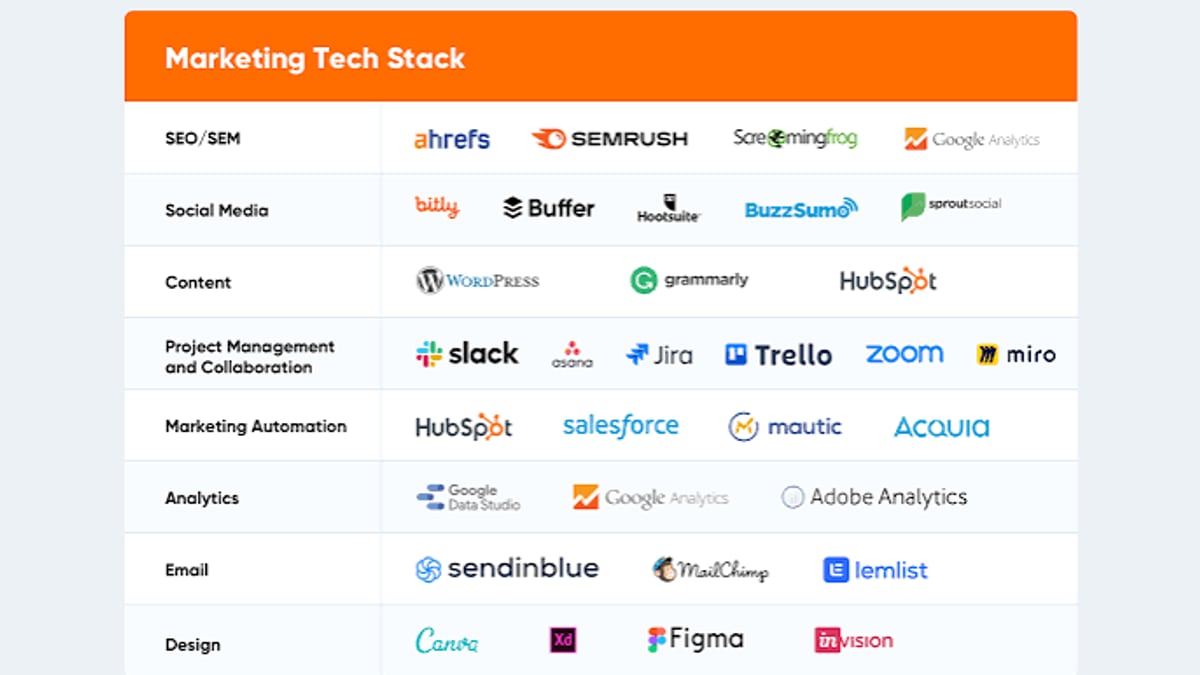
Top 10 Digital Experience Platforms (2026) Ranked & Reviewed - supporting product research image 4.
Every product on this list was assessed using the same five criteria:
- Analyst recognition – Placement in Gartner Magic Quadrant, Forrester Wave, and similar independent reports.
- Verified user reviews – Aggregated scores and detailed feedback from Gartner Peer Insights, G2, and customer references.
- Feature completeness – Must include core DXP pillars: content management, personalization, analytics, integrations, and either commerce or strong headless/omnichannel delivery.
- Market momentum & innovation – Evidence of continued investment, AI/automation capabilities, and roadmap execution over the past 12 months.
- Customer proof – Publicly available case studies with measurable outcomes (e.g., conversion lift, time‑to‑market reductions, operational savings).
All 10 platforms listed are genuine DXPs. Tools that only address a subset of DXP functionality (such as pure CMS or content marketing tools) were excluded, though complementary platforms are mentioned where relevant.
1. Adobe Experience Manager
Adobe Experience Manager (AEM) remains the gold standard for large enterprises that need a deeply integrated DXP. As part of Adobe’s Experience Cloud, AEM offers a hybrid CMS (headful and headless), AI‑powered personalization through Adobe Sensei, and native connections to Adobe Analytics, Target, and Marketo. Gartner Peer Insights reviewers consistently rank AEM among the top DXPs for its governance, scalability, and end‑to‑end journey orchestration.
Key evidence:
- Leader in the 2025 Gartner Magic Quadrant for DXP.
- Citibank used AEM to unify 120+ local websites, reducing page load times by 40% and cutting content management effort in half.
- 4.3/5 average rating on Gartner Peer Insights (as of early 2026).
Best for: Global enterprises with complex content supply chains, high personalization requirements, and an Adobe ecosystem already in place.
2. Optimizely Digital Experience Platform
Optimizely (formerly Episerver) blends a strong CMS with one of the industry’s most mature experimentation and personalization engines. Its DXP is built around the concept of “every experience tells a story,” enabling teams to A/B test, segment, and iterate without switching tools. The Optimizely One vision ties content, commerce, and AI together in a unified interface, making it especially attractive for B2B, media, and retail brands that prioritize data‑driven optimization.
Key evidence:
- Leader in the 2025 Forrester Wave for DXP.
- Harry’s used Optimizely to run over 500 experiments in a single year, achieving a 15% uplift in conversion rates.
- Native integration with Optimizely Data Platform for real‑time customer profiles.
Best for: Organizations where experimentation and personalization are the primary digital differentiation strategies.
3. Sitecore Experience Platform
Sitecore has long been a heavyweight in the DXP space, and its 2026 platform continues to deliver powerful content management, marketing automation, and personalization in a single package. Sitecore’s composable approach allows teams to adopt its headless SaaS solution (XM Cloud) alongside the full‑featured on‑premises version, giving enterprises flexibility while modernizing. The XP version excels at customer journey analytics and experience optimization with AI‑driven segmentation.
Key evidence:
- Named a Leader in the 2025 Gartner Magic Quadrant.
- L’Oréal implemented Sitecore to deliver personalized product recommendations across 34 countries, increasing average order value by 12%.
- Strong partner ecosystem with over 1,000 certified solution partners.
Best for: Mid‑market to large enterprises that need both a rich martech toolset and the option to transition to a composable SaaS architecture.
4. Acquia DXP
Acquia’s DXP is built on Drupal, the open‑source CMS that powers millions of sites. This gives Acquia a unique combination of flexibility, extensibility, and community‑driven innovation. With modules for personalization (Acquia Lift), customer data management (Acquia CDP), and cloud hosting (Acquia Cloud Platform), it delivers a complete enterprise DXP while avoiding vendor lock‑in. In 2026, Acquia has doubled down on low‑code site builders and AI‑assisted content workflows.
Key evidence:
- Leader in the 2025 Forrester Wave.
- The State of Georgia consolidated 55 agency websites onto Acquia, saving $3.6 million annually in operational costs.
- Over 4,000 enterprise customers, including Warner Music Group and NBC Sports.
Best for: Organizations that value open‑source agility, a large developer community, and the ability to customize every layer of the digital stack.
5. Bloomreach DXP
Bloomreach stands out by putting AI‑powered search and merchandising at the heart of its DXP. Its platform includes a headless CMS (Bloomreach Content), a commerce search and discovery engine (Bloomreach Discovery), and a customer data engine. This combination makes Bloomreach especially powerful for retailers and B2B distributors that rely on product findability and real‑time personalization. The AI algorithms continuously learn from customer behavior, optimizing search results, categories, and recommendations automatically.
Key evidence:
- Recognized as a Leader in the 2025 Gartner Magic Quadrant for DXP.
- Curry’s, a UK electronics retailer, increased revenue per visit by 11% after implementing Bloomreach Discovery.
- More than 400 billion customer interactions processed monthly across the customer base.
Best for: Commerce‑centric organizations where product discovery, SEO, and AI‑driven personalization are critical to revenue.
6. Contentstack
Contentstack is a headless DXP that has rapidly risen to prominence by pioneering the “agentic experience” concept—using AI agents to manage content at scale. Unlike traditional platforms, Contentstack separates content authoring entirely from delivery, allowing developers to build any front‑end while marketers get a clean, no‑code interface. Its 2026 platform includes AI‑powered content suggestions, automated variant creation, and real‑time preview for omnichannel orchestration. (For a full analysis, read our Contentstack Review 2026: The Agentic Experience Platform for Enterprise.)
Key evidence:
- Named a Strong Performer in the 2025 Gartner Magic Quadrant and a Leader in the 2025 Forrester Wave.
- ASICS reduced time‑to‑market for campaign pages from weeks to hours, launching 15 regional sites in under 60 days.
- G2 rating of 4.5/5 based on 1,200+ reviews.
Best for: Technology‑forward teams that need extreme front‑end flexibility, multi‑experience delivery, and a platform built for AI‑augmented content operations.
7. Salesforce Experience Cloud
Salesforce Experience Cloud extends the world’s №1 CRM into a full‑fledged DXP for building portals, communities, and self‑service experiences. Tight integration with Sales Cloud, Service Cloud, and Marketing Cloud means customer data flows seamlessly across sales, support, and digital properties. In 2026, Einstein AI powers next‑best‑action recommendations and intelligent content targeting, while the drag‑and‑drop builder enables business users to launch experience sites quickly.
Key evidence:
- Leader in the 2025 Gartner Magic Quadrant for DXP.
- Schneider Electric used Experience Cloud to create a customer community that cut support tickets by 25% and boosted self‑service resolution to 70%.
- Available in 30+ languages with built‑in translation management.
Best for: Companies already deeply invested in the Salesforce ecosystem that want to extend CRM‑powered personalization to authenticated portals and communities.
8. Liferay Digital Experience Platform
Liferay provides a developer‑centric DXP that excels in building digital experiences for complex, multi‑site, and multi‑tenant environments, particularly in the public sector, insurance, and banking. Its open‑source core, supported by a global community, offers a balance of flexibility and enterprise governance. Liferay’s 2026 release emphasizes headless APIs, low‑code forms, and out‑of‑the‑box personalization rules that work without heavy data science resources.
Key evidence:
- Included in the 2025 Gartner Magic Quadrant for DXP as a Niche Player, but with high customer loyalty scores.
- The European Commission’s portal for Horizon Europe funding uses Liferay to handle 30,000+ concurrent users.
- More than 200,000 community members worldwide.
Best for: B2B organizations, governments, and financial services firms that need secure, scalable portals with extensive integration capabilities.
9. Progress Sitefinity
Progress Sitefinity offers a versatile DXP aimed at mid‑market organizations and internal teams that want an easy‑to‑administer platform without sacrificing marketing automation and personalization. The platform’s hybrid CMS architecture gives marketers a block‑based editor while developers can go headless via REST APIs. Sitefinity Insight, its built‑in customer data platform, helps track user behavior and power 1‑to‑1 personalization without third‑party tools.
Key evidence:
- Included in the 2025 Gartner Magic Quadrant; praised for quick deployment and low administrative overhead.
- The City of San Diego rebuilt 10 department websites on Sitefinity, achieving a 60% reduction in page load times and full WCAG 2.1 AA compliance.
- Average implementation time of 8–12 weeks, according to partner case studies.
Best for: Mid‑sized businesses and government agencies that need a full‑featured DXP with a fast time‑to‑value and strong multisite management.
10. Siteimprove
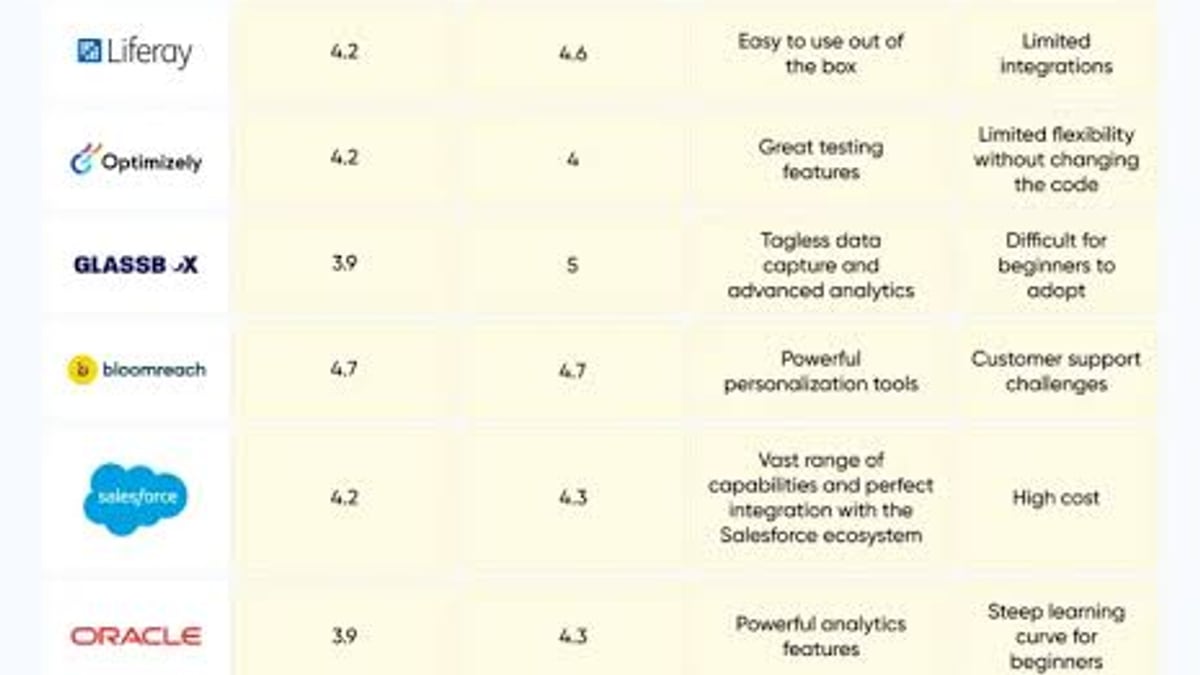
Top 10 Digital Experience Platforms (2026) Ranked & Reviewed - supporting product research image 2.
Siteimprove is a specialized DXP that makes accessibility, content quality, and SEO/AEO optimization its core value proposition. While it offers analytics, content workflow, and personalization features, its true differentiator is an AI‑driven engine that continuously scans digital properties for WCAG violations, broken links, readability issues, and SEO opportunities—and then helps teams fix them directly in the platform. This makes Siteimprove an essential DXP for organizations that must meet strict compliance and inclusivity standards.
Key evidence:
- Over 7,000 customers worldwide, including Camden, Swiss Post, and SIAG.
- Swiss Post achieved a 97% decrease in error fix time and an 85% reduction in broken links after adopting the platform.
- Evidence‑based ROI: average 12% boost in search visibility for customers using the SEO/AEO module.
Best for: Marketing and web teams in regulated industries, higher education, and government where digital accessibility, brand consistency, and content governance are non‑negotiable.
How to Choose the Right DXP for Your Organization
Top 10 Digital Experience Platforms (2026) Ranked & Reviewed product interface and feature overview.
With so many strong platforms, the final decision hinges on your specific context. Ask yourself these five questions:
- Composability vs. suite: Do you need an integrated suite (AEM, Sitecore) or a best‑of‑breed, API‑first stack (Contentstack, bloomreach)? Your existing technology landscape will often dictate this choice.
- Commerce depth: If product discovery, search, and merchandising drive your digital experience, Bloomreach or Salesforce Commerce Cloud integration will give you an edge. Otherwise, focus on CMS and personalization.
- Developer experience and headless maturity: Teams with strong DevOps resources may prefer headless platforms like Contentstack or Liferay, while marketing‑driven teams often thrive with hybrid CMS offerings (Optimizely, Sitefinity).
- Compliance and accessibility: When WCAG conformance, readability, and content governance are top priorities, Siteimprove’s platform may be your first stop—potentially combined with a broader DXP.
- Time‑to‑value: Platforms such as Progress Sitefinity and Salesforce Experience Cloud are designed for rapid implementation. If you need results in weeks rather than months, factor this into your evaluation.
Remember that a DXP is rarely an island. For high‑volume content production, AI‑driven content engines like AgentBooks can autonomously produce SEO‑rich, brand‑aligned articles that flow directly into your headless CMS—for example, when you connect AgentBooks with Contentful to automate publishing across locales. While AgentBooks is not a DXP itself, it complements the content supply chain of many platforms on this list.
Related reading
- AgentBooks vs contentmarketing.ai: Which Platform is More Autonomous? - Compare AgentBooks vs contentmarketing.ai in 2026. See which AI content platform offers true autonomy, brand voice consistency, and agentic publishing vs agency-led tools.
Sources and further reading
- Digital experience platform - A digital experience platform (DXP) is a software platform that manages digital experience across a broad range of digital touchpoints.
- Best Digital Experience Monitoring Reviews 2026 | Gartner Peer Insights - Find the top Digital Experience Monitoring Software with Gartner. Compare and filter by verified product reviews and choose the software that’s right for your organization.
FAQ: Digital Experience Platforms in 2026
What’s the difference between a CMS and a DXP? A CMS focuses on creating and managing web content, while a DXP integrates that content with personalization, analytics, commerce, and omnichannel delivery to manage the full digital experience lifecycle. Think of a CMS as a library; a DXP is the entire reader experience, from recommendations to checkout.
Which DXP is best for mid‑market companies? Progress Sitefinity and Acquia’s Drupal‑based offering frequently rank high for mid‑market teams thanks to their lower initial complexity and strong partner networks. Contentstack’s headless approach is also gaining traction among digitally mature mid‑market brands that want a future‑proof architecture.
Do I need a headless DXP? If you deliver content to multiple channels (web, mobile app, kiosk, IoT) and want complete front‑end freedom, a headless or hybrid‑headless DXP is essential. Otherwise, a traditional coupled platform may suffice. Contentstack, Bloomreach Content, and AEM’s headless modes all address this need.
How does AI factor into modern DXPs? AI is moving from an add‑on to a core capability. In 2026, the top DXPs use AI for predictive personalization, automated content tagging, SEO optimization, accessibility scanning, and even content generation—either natively or through integrations. Siteimprove, for instance, uses AI agents to surface accessibility and SEO fixes, while Bloomreach’s AI powers real‑time product discovery.
Can I use a DXP with an external AI content engine? Absolutely. Many organizations pair a DXP with autonomous content platforms like AgentBooks to accelerate content creation for blogs, landing pages, and product descriptions. The resulting content is published via the DXP’s CMS, ensuring brand governance and delivery are still managed centrally. Check our guide on how to use AgentBooks with Bynder for automated brand content if you’re also considering a DAM integration.
Building a Future‑Ready Digital Experience Stack
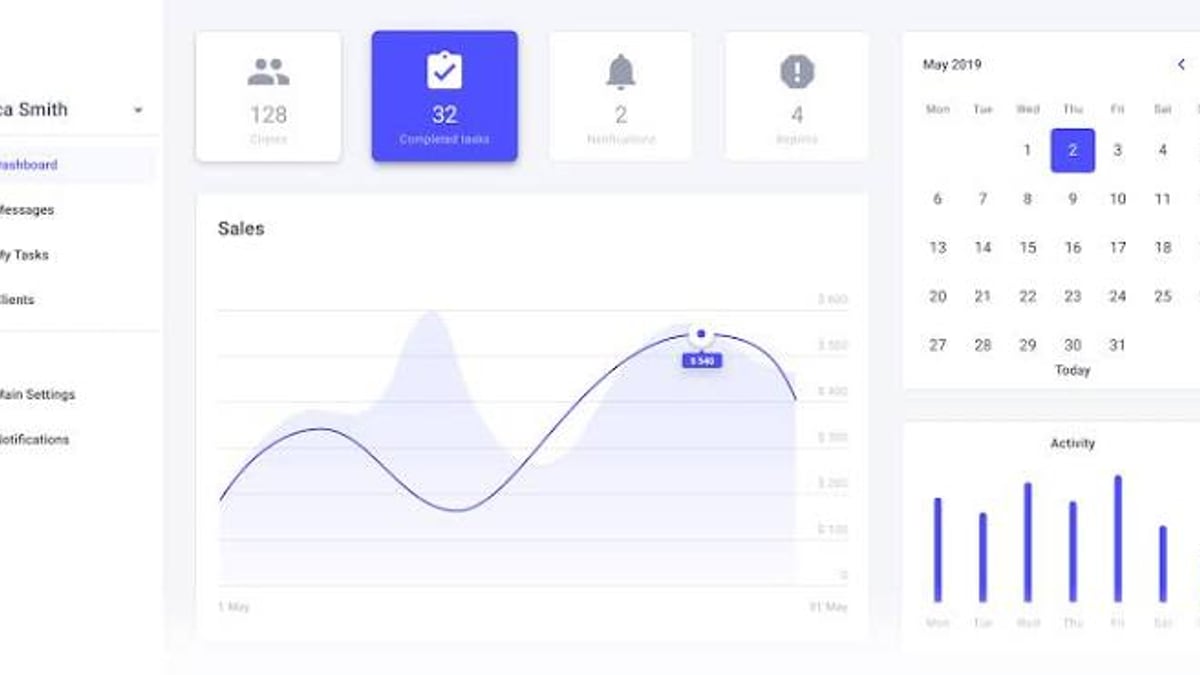
Top 10 Digital Experience Platforms (2026) Ranked & Reviewed - supporting product research image 3.
The 2026 DXP landscape is rich with options tailored to every digital ambition. Whether you’re drawn to Adobe’s enterprise heft, Optimizely’s experimentation DNA, Bloomreach’s commerce intelligence, or Siteimprove’s accessibility‑first approach, the common thread is a shift toward platforms that embed AI, embrace composability, and prove their value with measurable outcomes.
As you shortlist vendors, look beyond the feature checklist and stress‑test the partner ecosystem, community support, and the platform’s ability to adapt as your digital maturity grows. For teams that need to scale content production alongside a DXP deployment, an autonomous content growth platform like AgentBooks can act as the writing engine behind your CMS, freeing your creative team to focus on high‑impact strategy. (Compare how AgentBooks stacks up against other AI content tools in our AgentBooks vs Machined vs GravityWrite guide.)
Digital experience platforms will continue to evolve—but the foundational principle remains: know your audience, connect your channels, and measure everything. With the right DXP, you’re not just keeping up with 2026; you’re engineering the experiences that define the next decade.