Top 10 SEO & AI Search Visibility Platforms in 2026: The Only List You Need
Search is no longer a single blue-link library. It is a fragmented conversation happening across Google, ChatGPT, Perplexity, and Gemini. Your brand is either cited in those AI-generated answers, or it is invisible to a rapidly growing segment of buyers. This shift has created a new category of software that must unify traditional SEO with Generative Engine Optimization (GEO). The best platforms in 2026 don't just track rankings; they track brand presence, sentiment, and share of voice across both classical search engines and large language models (LLMs).
We evaluated the landscape against strict criteria to cut through the noise. Every ranked product had to demonstrate genuine dual capability in SEO and AI visibility, not just a rebranded rank tracker. We prioritized platforms with multi-model LLM coverage, source attribution, actionable optimization recommendations, and transparent pricing. Here are the top 10 SEO and AI search visibility platforms for 2026.
How We Evaluated These Platforms
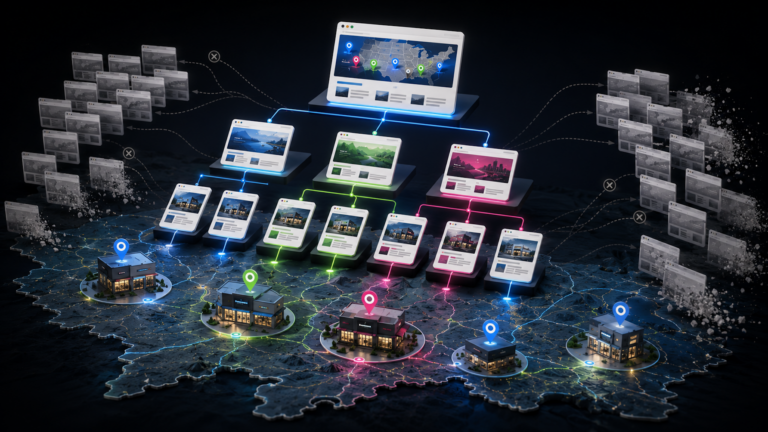
Top 10 SEO & AI Search Visibility Platforms 2026 - How We Evaluated These Platforms.
Before we dive into the list, transparency on our methodology is essential. The market is flooded with tools claiming "AI visibility," but many are simply traditional SEO suites with a single ChatGPT integration. We scored each platform against five core pillars:
- LLM & Search Engine Coverage: Does the tool monitor brand presence across Google, ChatGPT, Gemini, Perplexity, Claude, and emerging AI overviews?
- Actionable GEO Capabilities: Can it move beyond monitoring to recommend specific content changes that improve AI citations?
- Source Attribution: Does it trace AI mentions back to the specific web pages and domains that triggered them?
- Traditional SEO Depth: Does it still excel at keyword research, rank tracking, technical audits, and backlink analysis?
- Usability for Non-Technical Teams: Are insights accessible to content marketers and strategists, or locked inside complex data tables?
The Top 10 SEO & AI Search Visibility Platforms
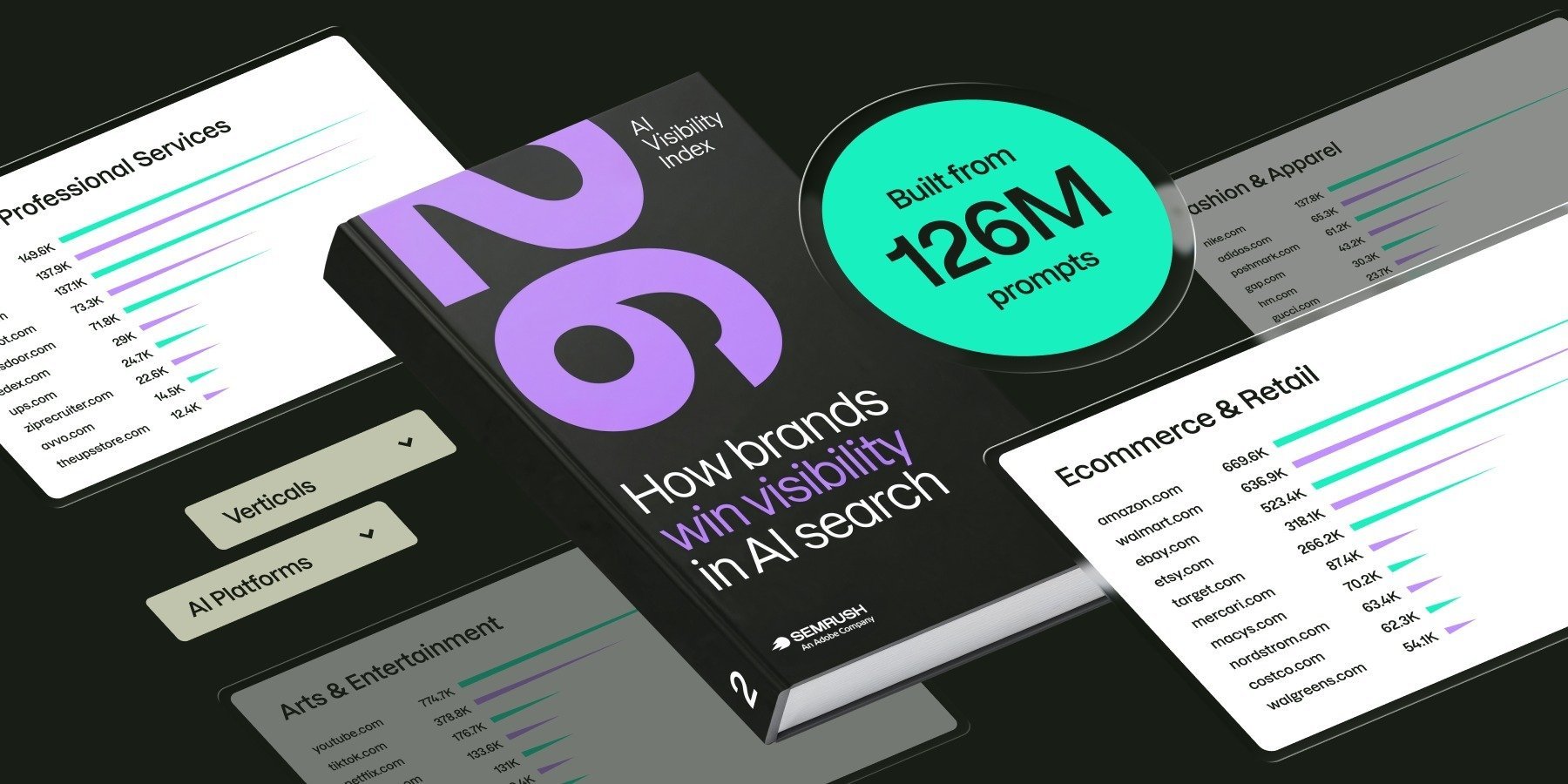
Top 10 SEO & AI Search Visibility Platforms 2026 - The Top 10 SEO & AI Search Visibility Platforms.
1. Semrush
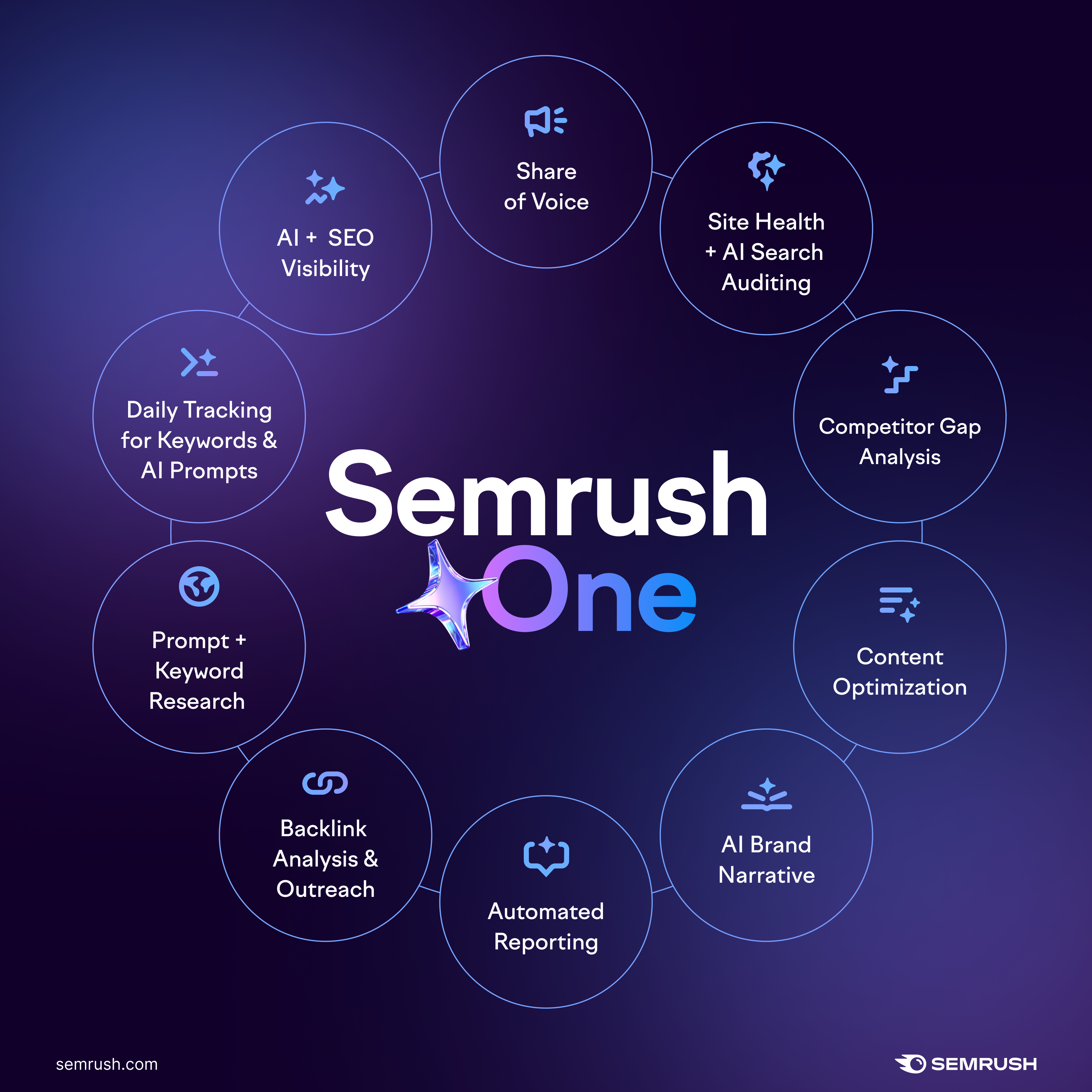
Semrush remains the most complete unified operating system for digital visibility in 2026. It bridges the gap between traditional SEO and the new AI-search landscape without forcing you to choose one over the other. The Semrush One offering merges classic keyword data with AI search insights, allowing you to track your share of voice inside ChatGPT, Google AI Overviews, and Gemini directly alongside your standard rank tracking.
Key Strengths:
- Unified Dashboard: View organic rankings, paid search performance, and AI citation metrics in a single project.
- AI Toolkit: Specifically monitors five major AI models and connects AI visibility data to your existing keyword and content workflows.
- Content Optimization: The SEO Writing Assistant now incorporates AI-prompt intelligence to help you structure content that LLMs prefer to cite.
- Competitive Research: Unmatched depth in analyzing competitor traffic sources, including their emerging AI referral traffic.
Ideal For: Marketing agencies and in-house teams that need a single source of truth for all search channels. If you want to understand how your Semrush review 2025 findings have evolved, the platform’s AI layer is now a core part of the experience.
2. Evertune
Evertune is a purpose-built AI visibility platform that has matured into a comprehensive GEO command center. It is not an SEO tool with AI features bolted on; it is an AI-first platform that treats LLMs as the primary search surface. Its proprietary AI Brand Index goes far beyond counting mentions to analyze sentiment, context, and competitive positioning across ChatGPT, Claude, Gemini, Perplexity, Meta AI, and DeepSeek.
Key Strengths:
- Source Attribution at Scale: Traces every AI mention back to the exact content piece that drove it, giving you a precise optimization roadmap.
- Statistically Rigorous Data: Uses a massive consumer panel and high-volume prompting to deliver statistically significant insights, not anecdotal snapshots.
- Actionable Playbooks: Provides specific content change recommendations prioritized by potential impact on AI visibility.
Ideal For: Enterprises and brands where AI-driven discovery is already a measurable revenue channel and requires dedicated, deep analysis.
3. Conductor
Conductor has successfully pivoted its enterprise SEO platform into a robust AI Experience Optimization (AEO) suite. It is designed for large organizations that need to maintain a dominant share of voice in generative search results while continuing to manage massive traditional SEO campaigns. The platform’s Creator tool now generates content specifically aligned with brand voice and AI citation patterns.
Key Strengths:
- AI Visibility Intelligence: Real-time analytics on brand portrayal across major LLMs.
- Technical AEO Monitoring: 24/7 audits to ensure critical assets remain accessible to AI crawlers.
- ROI Tracking: Connects AI-driven traffic and conversions directly to revenue, a critical feature for proving GEO’s value to the C-suite.
Ideal For: Fortune 500 companies and cross-functional marketing teams that require a unified workflow for SEO and AI visibility at scale.
4. KIME
KIME is a dedicated AI visibility platform built for teams that want to close the loop between monitoring and execution. Its standout feature is the Action Centre, an AI-generated, prioritized task list that tells your team exactly what to fix and why it will improve your visibility score. It tracks 10 AI models in real time, including Google AI Mode and Grok, with multi-seat access included even on entry-level plans.
Key Strengths:
- Prompt Volume Estimator: Focuses tracking on questions with real demand, not vanity queries.
- AI Perception Analysis: Shows how AI models describe your brand and which keywords they associate with you.
- Multi-Market Tracking: Manages prompts by country, language, and category, making it strong for international brands.
Ideal For: CMOs and marketing leaders who need a standalone GEO platform that offers both monitoring and a clear execution workflow without the overhead of a full SEO suite.
5. Profound
Profound is an enterprise-grade AI visibility platform known for its deep prompt research and unique CDN-based traffic attribution. By integrating with Cloudflare and Vercel, Profound can attribute actual AI-referred traffic to your site, not just track mentions. This moves the conversation from "are we visible?" to "is this visibility driving real users?"
Key Strengths:
- Real User Query Data: Uses panel data to track what actual users are asking AI models.
- CDN Integration: Directly measures AI referral traffic, providing a hard metric for ROI.
- Enterprise Security: SOC 2 compliance and SSO meet strict procurement requirements.
Ideal For: Large enterprises with complex brand portfolios and dedicated analytics teams that can act on dense, high-volume data sets.
6. Gauge
Gauge offers a full-stack GEO toolkit built around a "Track, Understand, Act" workflow. It monitors brand mentions across all major LLMs and pairs this with an agentic content engine that creates data-driven articles optimized for AI search. This makes it a strong choice for teams that want to fix visibility gaps immediately with new content assets.
Key Strengths:
- Deep Citation Analytics: Provides granular data on which sources AI models pull from.
- Agentic Content Engine: Automatically generates articles designed to capture AI citations based on identified gaps.
- Competitive Benchmarking: Clear side-by-side comparisons of AI share of voice.
Ideal For: Content-driven brands that want a combined intelligence and production engine for GEO.
7. Ranketta
Ranketta is the specialist pick for e-commerce and retail brands. While most AI visibility tools track brand-level mentions, Ranketta tracks individual product SKUs. It answers the critical question for online retailers: "Which of my specific products does AI recommend, and why?" Its product feed enrichment agent is a unique execution layer that fixes weak titles, missing GTINs, and thin descriptions directly in your catalogue.
Key Strengths:
- Product-Level (SKU) Tracking: Monitors which individual products appear in AI shopping recommendations.
- Product Feed Enrichment: An AI agent audits and rewrites product feeds to meet the requirements of AI shopping models.
- MCP Server: Exposes data for agentic workflows, allowing your own AI tools to query visibility data directly.
Ideal For: DTC brands, retailers, and marketplaces where AI-driven product discovery is becoming a primary sales channel.
8. Peec AI
Peec AI is a Berlin-based platform that has gained traction for its flexible model selection and transparent, seat-based pricing. It offers a clean, fast interface for monitoring brand mentions across up to 10 AI models, with daily tracking included on all plans. Its strength lies in source analysis, showing you the exact editorial and user-generated content shaping AI perception.
Key Strengths:
- Flexible Model Add-Ons: Pay only for the specific AI engines you need to track.
- Unlimited Seats: Every plan includes unlimited user seats, making it cost-effective for agencies.
- UI Scraping: Collects data through the web interface users actually see, reflecting real-world AI behavior.
Ideal For: Lean marketing teams and agencies that need strong monitoring and source analysis without enterprise complexity.
9. Ahrefs Brand Radar
Ahrefs, a titan of traditional SEO, entered the AI visibility space with its Brand Radar feature. It leverages Ahrefs’ massive web index to track brand mentions across AI-generated answers. For teams already living inside Ahrefs for backlink analysis and keyword research, this is a natural, low-friction addition that unifies SEO and AI citation tracking in one familiar interface.
Key Strengths:
- Massive AI Index: Tracks a huge volume of AI-generated answers.
- Citation Tracker: Shows which pages AI models are citing as sources.
- Unified Workflow: Combines traditional SEO metrics with AI share of voice in a single project.
Ideal For: Existing Ahrefs power users who want to layer AI visibility insights into their current SEO workflows without adopting a separate platform.
10. Otterly AI
Otterly AI is the accessible entry point for AI visibility monitoring. It offers transparent, low-cost pricing starting at $29 per month, making it possible for small businesses and startups to begin tracking their brand presence in ChatGPT, Google AI Overviews, and Perplexity. It focuses on core metrics like mention tracking, citation monitoring, and share of voice without overwhelming users with complexity.
Key Strengths:
- Lowest Entry Price: Removes the budget barrier to AI visibility tracking.
- Core Monitoring: Tracks essential metrics across 6 AI engines on higher plans.
- Ease of Use: A simple, intuitive dashboard designed for teams new to GEO.
Ideal For: Small brands and startups taking their first steps into measuring AI search visibility.
Bridging the Gap Between Monitoring and Content Creation
Top 10 SEO & AI Search Visibility Platforms 2026 - Bridging the Gap Between Monitoring and Content Creation.
A critical gap exists in many workflows: knowing you are invisible in AI search is one thing; fixing it sustainably is another. This is where the distinction between a visibility monitoring tool and a content creation engine becomes vital. Platforms like Semrush and KIME excel at telling you what to fix. But executing that fix requires a consistent stream of optimized, brand-accurate content.
For teams that find the content production bottleneck is the real barrier to improving AI visibility, an autonomous content engine can serve as a complementary execution layer. While not a visibility tracker itself, a platform like AgentBooks can operationalize the insights from your GEO tools by continuously publishing useful, brand-consistent content that targets the topics and source gaps your monitoring has identified. You can explore how to combine data with execution in this complete workflow guide for using AgentBooks with Semrush.
How to Choose Your Platform
Top 10 SEO & AI Search Visibility Platforms 2026 - How to Choose Your Platform.
Your choice depends entirely on your primary search surface and team structure:
- Choose Semrush if you need a single, all-in-one platform for SEO, PPC, and AI visibility.
- Choose Evertune or KIME if AI visibility is your dominant channel and you need dedicated GEO depth.
- Choose Conductor or Profound if you are a large enterprise needing to unify SEO and AI at scale with hard ROI metrics.
- Choose Ranketta if you are an e-commerce brand where product-level AI recommendations directly impact revenue.
- Choose Otterly AI if you are a small team starting your AI visibility journey with a limited budget.
Related reading
- AgentBooks vs SEO Writing: Which AI Tool Wins in 2025? - Compare AgentBooks autonomous content engine with SEO Writing's 1-click AI writer. See which platform fits long-term organic growth vs rapid article production.
- Top 10 B2B Buyer Intent Data & AI Content Platforms 2026 - Compare the 10 best B2B buyer intent data and AI content platforms for 2026. From Demandbase to BrandWell, find tools that unify signal detection and content creation.
- How to Use AgentBooks with BrandWell: Smarter B2B Content - Learn how to combine AgentBooks' autonomous content engine with BrandWell's B2B intent data to create content that targets ready-to-buy accounts and scales organic growth.
Sources and further reading
- The 10 Best AI Visibility Tools for 2026 - Compare the 15 best AI visibility tools for 2026, ranked by AI model coverage, monitoring depth, GEO features, and pricing. Updated May 2026.
- 9 Best AI Visibility Tools Compared for 2026 - This guide compares the 9 leading platforms on LLM coverage, pricing, features, and best-fit use case, based on publicly available information as of April 2026.
- The Best AI Visibility Platforms for E-commerce in 2026 - Ranketta Blog - Compare the top AI visibility platforms for e-commerce in 2026. Ranked by product-level tracking, feed enrichment, MCP support and AI engine coverage.
Frequently Asked Questions
What is the difference between SEO and GEO?
Traditional SEO optimizes for search engine rankings on Google and Bing. Generative Engine Optimization (GEO) optimizes for visibility inside AI-generated answers on platforms like ChatGPT, Perplexity, and Google AI Overviews. GEO focuses on becoming a cited source in synthesized responses, not just a blue link.
Can I use one platform for both SEO and AI visibility?
Yes. Platforms like Semrush and Ahrefs have integrated AI visibility modules directly into their traditional SEO suites. This unified approach is efficient for teams that want a single dashboard for all search channels.
Do AI visibility tools actually help improve my AI rankings?
The best tools do. Monitoring alone is passive. Platforms like KIME, Evertune, and Ranketta provide specific, prioritized recommendations for content changes, technical fixes, and product feed enrichment that directly aim to improve your AI citation rate.
Is AI visibility tracking only for large enterprises?
No. While enterprise tools like Profound exist, there are affordable entry points like Otterly AI and scalable platforms like Peec AI that make GEO accessible to small and mid-market teams.
How does AI visibility impact e-commerce specifically?
AI assistants are becoming shopping agents. They recommend specific products based on product feed data. If your feed has weak titles, missing GTINs, or thin descriptions, AI models cannot confidently identify or recommend your products, costing you direct sales.
Conclusion
The separation between SEO and AI search visibility is a temporary illusion. In practice, they are two sides of the same coin: ensuring your brand is discoverable wherever your customers are asking questions. The platforms on this list represent the best of both worlds in 2026. The right choice will integrate deeply into your workflow, provide actionable data instead of vanity metrics, and help you capture demand across both the open web and the closed doors of AI chat interfaces.