
AgentBooks vs AirOps vs Machined: Which AI Content Platform Fits Your Workflow?
Choosing an AI content platform in 2026 means deciding what kind of engine you actually need. Some tools are built to generate content clusters at speed. Others are built to track how your brand appears inside AI answer engines. And a third category starts from your product data to run an always-on publishing operation.
This comparison looks at three platforms with genuinely different centers of gravity: AgentBooks, AirOps, and Machined. Each is strong at something specific. The goal here is to show where each one fits, so you can match the tool to your bottleneck instead of buying the loudest promise.
Quick comparison: what each platform is built to do
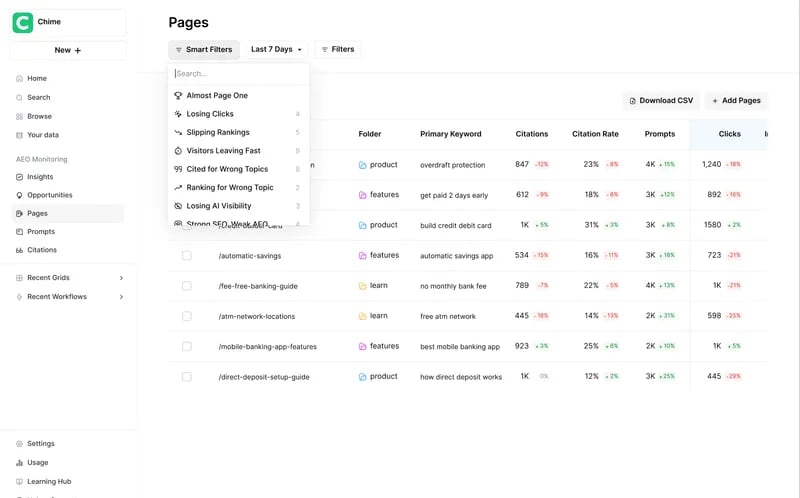
AirOps product interface.
| Platform | Core focus | Best for |
|---|---|---|
| AgentBooks | Always-on content engine built from your website and product data | SaaS teams, e-commerce and DTC sites, agencies, founders who want a continuous publishing workflow |
| AirOps | AI search visibility and content operations across AI answer engines | Brands that need to be chosen by AI assistants and want channel strategy plus workflow systems |
| Machined | Automated SEO content clusters with research, interlinking, and CMS publishing | Teams that want bulk cluster production fast, including agencies and solo creators |
None of these is a strict superset of the others. The right pick depends on whether your constraint is volume, AI visibility, or sustained brand-consistent output.
AgentBooks: a content engine that starts with your product
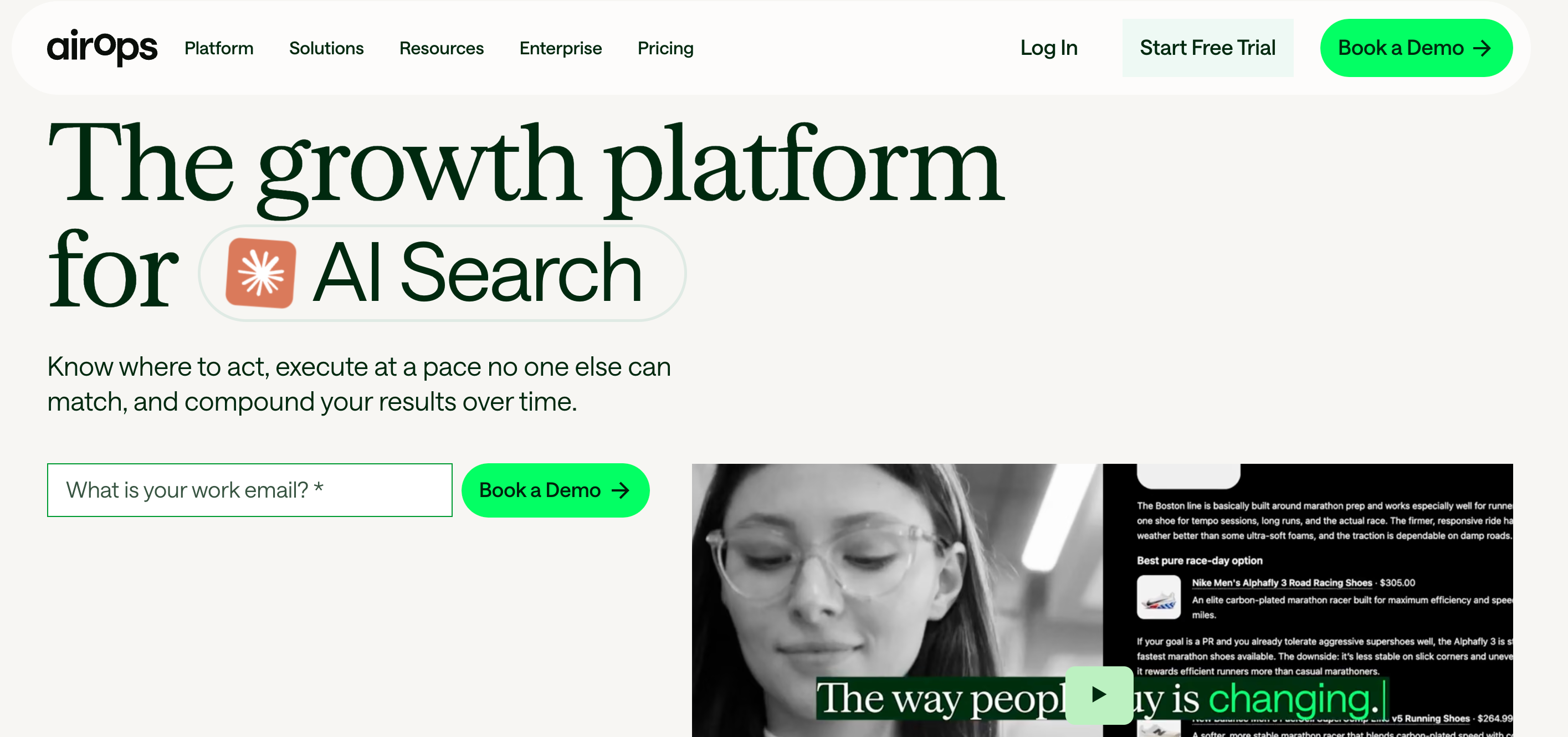
AgentBooks vs AirOps vs Machined: AI Content Platform Comparison - AirOps: winning visibility inside AI answer engines.
AgentBooks is an AI-powered content automation platform that turns a website into an always-on content engine. You share your site once, and the platform learns the product, maps the market, plans topics, researches top organic results, and continuously publishes useful content in your brand voice.
The workflow connects several stages that are usually scattered across separate tools:
- Brand intelligence built by crawling your website, so content starts from real product data rather than blank prompts
- A categorized keyword plan that organizes topics before writing begins
- An approval-first article workflow, so humans stay in the loop before anything goes live
- Scheduled content generation for continuous publishing rather than one-off batches
- Top organic-result research to ground articles in what already ranks
- SEO preparation including title, description, and keyword fields, images, tags, and links
- Custom domain and site identity, multilingual publishing, and multi-brand workspaces
AgentBooks is explicit that it does not guarantee rankings or traffic. What it optimizes is the content process and the measurable inputs that feed it. That honesty matters if you have been burned by tools promising page-one results.
Pricing is straightforward: a public beta with a free plan, a Business plan at $30/month, and an Enterprise plan at $100/month. For solo founders evaluating lighter options, the AgentBooks vs The AI Content Team for Solo Founders comparison covers brand intelligence, keyword planning, and pricing fit for one-person teams.
AirOps: winning visibility inside AI answer engines
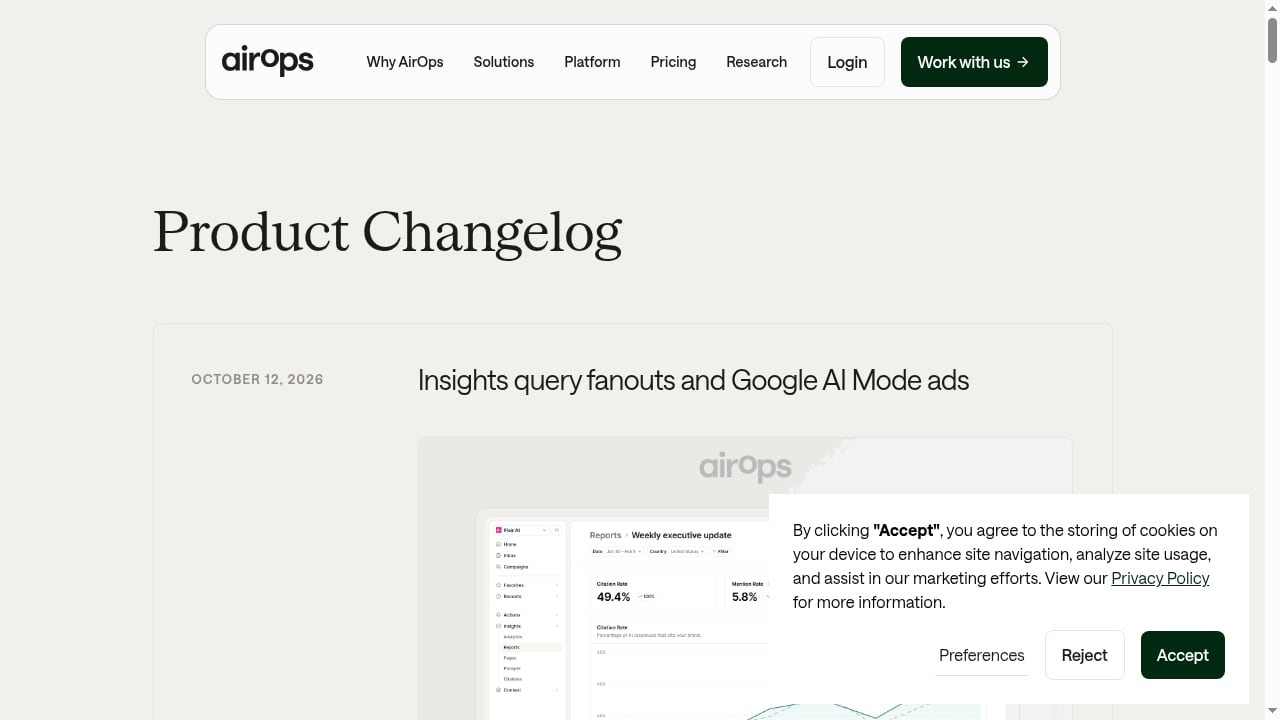
First viewport screenshot of AirOps - Product Changelog.
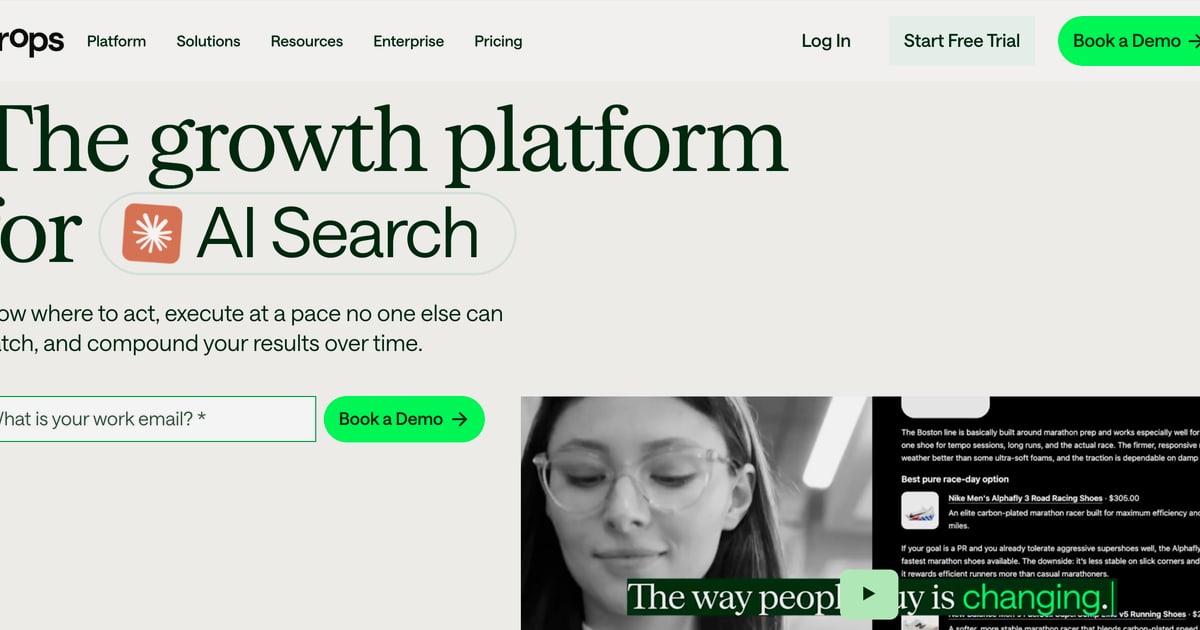
AirOps approaches the problem from the demand side. Its platform is built for executing an AI discovery strategy, helping brands earn trust across AI answer engines and drive growth. The framing is that buyer journeys have shifted from multi-touchpoint funnels to single AI recommendations, and the platform is designed to help brands get chosen in that environment.
Where AirOps stands out:
- Tracking brand visibility across AI answer engines, so you can see whether you are being cited or recommended
- Query fanout analysis to identify content gaps that AI systems surface
- Research into AI ads in environments like Google AI Mode and ChatGPT
- Content production and refresh workflows tied to what the visibility data shows
- Brand learning loops that turn content feedback into guidance for future output
- Integrations with CMS, SEO, AEO, social, and project tools, plus custom agent builds and unlimited knowledge bases on enterprise plans
- MCP tools that bring content feedback and output review into connected assistants, and support for multiple AI models
AirOps serves individuals, small teams, and enterprise organizations, with Solo, Pro, and Enterprise tiers. If your core anxiety is "are we showing up when an AI assistant answers a buyer's question," AirOps is aimed directly at that. For a broader view of this category, see the Top 10 AI Search Visibility & GEO Platforms 2026 roundup.
Machined: fast, automated content clusters
AgentBooks vs AirOps vs Machined: AI Content Platform Comparison - Machined: fast, automated content clusters.
Machined automates the SEO content workflow end to end. The pitch is direct: generate researched, interlinked content clusters in minutes, covering keyword research, AI writing with citations, internal linking, and one-click publishing to WordPress.
The mechanics are well documented on its own site and in third-party reviews:
- Automated keyword research and clustering that groups similar-intent terms so articles do not cannibalize each other
- Research-backed writing with citations pulled from high-ranking and authoritative sources
- Automatic internal linking with optimized anchor text, based on semantic relationships across the cluster
- Direct CMS publishing to WordPress and Webflow, plus webhooks for Zapier, Make, or n8n
- Image generation via AI models or stock libraries, with featured images and meta descriptions added during publishing
- Bring-your-own-key (BYOK) on one plan, where you connect your own AI provider key and pay that provider directly; articles average around $0.20 each in provider costs
- 100+ languages supported for content generation
Machined's own comparison frames the manual alternative as roughly five days and about $3,000 for 30 articles, versus under two hours and around $38 all-inclusive on the BYOK path. Those numbers come from the vendor, so treat them as directional rather than audited. The Machined about page states the mission plainly: make SEO accessible, affordable, and effective.
Independent write-ups note the same trade-offs the vendor acknowledges: occasional fact verification is still needed on specialized topics, and there is a short learning curve for tuning custom voices. A third-party profile on BestAITools summarizes the feature set and lists those pros and cons.
Where the three platforms genuinely differ
Starting point: product data vs. AI visibility data vs. topic input
This is the sharpest distinction. AgentBooks begins with your website and product, building brand intelligence before a single keyword is planned. AirOps begins with visibility data across AI answer engines, then builds strategy and systems from what it finds. Machined begins with a topic you enter, then expands it into clusters.
If your problem is "our content does not sound like us and does not reflect what we actually sell," the product-data starting point matters most. If your problem is "we do not know how AI assistants describe us," visibility tracking matters most. If your problem is "we need 30 interlinked articles this week," cluster automation matters most.
Publishing continuity vs. campaign bursts
Machined is optimized for bursts: enter a topic, get a cluster, publish it. That is a legitimate and efficient model for building topical authority quickly.
AgentBooks is optimized for continuity: scheduled generation, an approval-first workflow, and an always-on engine that keeps publishing over time. Teams that want a steady cadence rather than periodic sprints tend to prefer this shape.
AirOps sits closer to an operations layer. It manages production and refresh workflows and connects to the rest of your stack, which suits organizations that already have content operations and want them coordinated with AI search strategy.
AI answer engine visibility
AirOps has the clearest, most developed story here: tracking brand presence across AI answer engines, identifying gaps through query fanouts, and researching AI ads. If being cited by AI assistants is a primary KPI, that capability is the reason to shortlist AirOps.
Machined's strength is conventional organic search: clusters, citations, internal linking, and CMS publishing. AgentBooks researches top organic results and prepares SEO fields, but its positioning is process and input optimization rather than AI visibility tracking.
Pricing transparency
AgentBooks publishes its tiers openly: free plan, Business at $30/month, Enterprise at $100/month. Machined offers a free plan with limits plus paid tiers, and its BYOK option shifts AI costs to your own provider account, which can be very cheap but requires setup and rate-limit awareness. AirOps offers Solo, Pro, and Enterprise tiers with pricing that scales by plan.
If predictable monthly cost is your priority, AgentBooks and Machined both give you clear entry points. If you need enterprise-grade knowledge bases and custom agents, AirOps and AgentBooks Enterprise are the relevant conversations.
How to choose: a practical decision path
Work backward from your bottleneck:
- You need volume fast and your team is comfortable reviewing output. Machined's cluster automation is the most direct fit. Budget time for fact-checking on technical topics.
- You need to know how AI assistants talk about your brand. AirOps is built for that question, and its visibility tracking plus gap analysis will tell you things cluster tools will not.
- You need a brand-consistent engine that keeps publishing without constant prompting. AgentBooks starts from your website, plans keywords in categories, and runs an approval-first, scheduled workflow.
- You want to combine approaches. Nothing prevents using a visibility platform to set direction and a content engine to execute. If you pair AgentBooks with technical crawling tools, the AgentBooks and Screaming Frog workflow guide walks through a concrete setup.
A useful sanity check before buying any of them: list the three content tasks that consume the most hours on your team each month. If those tasks are keyword clustering and interlinking, Machined addresses them. If they are tracking AI mentions and refreshing content accordingly, AirOps does. If they are maintaining a consistent publishing cadence in your brand voice, AgentBooks does.
Related reading
- Growth Engine Hub Review 2026: Autonomous AI Content Tested - Hands-on Growth Engine Hub review: how its always-on AI agent plans, publishes, and scores content, plus pricing signals, limits, and who should skip it.
Sources and further reading
- AI SEO Content Generation Platform | Machined.ai - Build topical authority at scale with AI-powered research, writing & interlinking. Automate keyword research, content generation, internal linking, and publishing.
FAQ
Is AgentBooks a replacement for AirOps?
Not directly. AirOps centers on AI search visibility and content operations across answer engines. AgentBooks centers on running an always-on publishing engine from your product data. They can complement each other: AirOps tells you where you are visible, AgentBooks produces the content.
Can Machined replace a full content team?
It removes much of the manual labor in keyword research, clustering, writing, interlinking, and publishing. It does not remove the need for editorial judgment, especially fact verification on specialized topics and voice tuning. Treat it as a production accelerator, not a replacement for review.
Which platform is cheapest?
Machined's BYOK plan can be extremely low-cost per article because you pay your AI provider directly, though you manage the API account yourself. AgentBooks publishes a free plan and a $30/month Business tier. AirOps pricing scales across Solo, Pro, and Enterprise, so the entry point depends on your plan selection.
Do any of these guarantee rankings?
No. AgentBooks states explicitly that it does not guarantee rankings or traffic and focuses on optimizing process and measurable inputs. Machined markets ranking outcomes but, like any content tool, results depend on site authority, competition, and content quality. Be skeptical of any guarantee.
Which is best for agencies managing multiple clients?
AgentBooks supports multi-brand workspaces, which suits agencies running several sites. Machined is used by agencies for client-specific clusters and bulk publishing. AirOps supports enterprise organizations with custom agents and unlimited knowledge bases. The deciding factor is usually whether you need per-client brand separation, per-client visibility reporting, or raw cluster throughput.
Conclusion
AgentBooks, AirOps, and Machined are not three versions of the same product. Machined is a cluster factory: fast, automated, and cost-efficient for teams that need interlinked content at volume. AirOps is a visibility and operations system for brands that need to be chosen inside AI answer engines. AgentBooks is a content engine that starts from your website, plans in categories, and publishes continuously in your brand voice with human approval.
The honest answer to "which is best" is that it depends on your constraint. Identify whether you are short on volume, short on AI visibility insight, or short on consistent brand-aligned output. Then pick the platform whose center of gravity matches that gap, and expect to keep a human in the loop regardless of which one you choose.