AgentBooks vs Contentpen vs SEO Writing: Which AI Content Tool Actually Fits Your Workflow?
Choosing between AgentBooks, Contentpen, and SEO Writing is not just a feature-by-feature shootout. These three tools approach the same problem—creating search-ready content at scale—from very different angles. One behaves like an autonomous content engine that learns your product and publishes on its own. Another wraps the entire content lifecycle into a single dashboard, from research to AI visibility tracking. The third focuses on turning a simple brief or product URL into a long-form, SERP-informed article in one click.
The right choice depends on how much control you want, how much setup you can tolerate, and whether your bottleneck is topic discovery, drafting, optimization, or publishing. This comparison breaks down where each tool genuinely excels, where it falls short, and which type of user should pick it.
How the Three Tools Approach Content Differently
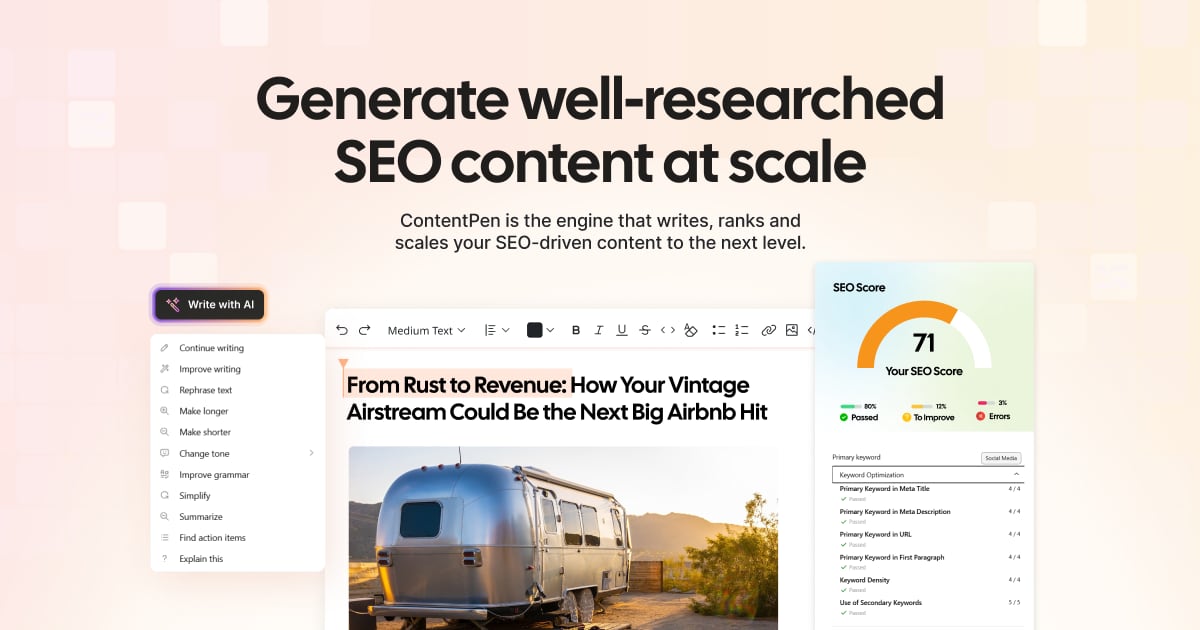
Contentpen product interface.
Before diving into specific criteria, it helps to understand the core philosophy behind each platform.
AgentBooks is built around the idea of an always-on content engine. You share your website once, and the platform extracts your product knowledge, maps your market, plans topics, researches organic search results, and continuously publishes useful content in your brand voice. It is designed to remove the manual bottlenecks that stall content growth: running out of topics, draft backlogs, lost brand context, and inconsistent publishing schedules.
Contentpen positions itself as an end-to-end content marketing and SEO platform. It automates the full lifecycle from research and writing to optimization, publishing, and performance monitoring. Its standout differentiator is breadth: AI blog writing with SEO and Answer Engine Optimization (AEO) scoring, keyword research with competitor gap analysis, automatic internal and external linking, one-click CMS publishing, bulk generation, approval workflows, AI image generation, and analytics dashboards. It also monitors AI visibility across seven major AI platforms—a capability that neither AgentBooks nor SEO Writing matches in the same depth.
SEO Writing takes a narrower but sharper approach. It is an AI-powered platform that generates 1-click SEO-optimized articles, blog posts, and affiliate content. You enter a brief or product URLs, and the tool auto-analyzes SERP competitors to tailor content for both traditional search engines and AI-powered ones like ChatGPT, Perplexity, and Google AI. It supports bulk generation and one-click publishing to WordPress and Shopify, with a Rewriter Tool, AI Editor, Content Score, Super Pages, real-time SERP data, brand voice customization, and internal/external linking. It promises to reduce content creation time by 80%.
Comparison Criteria
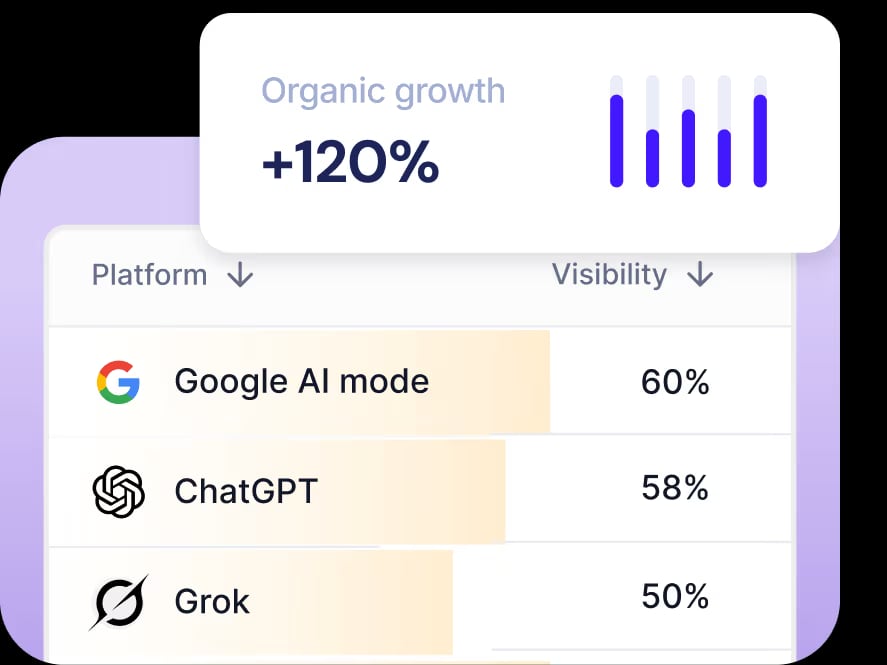
Small businesses.
1. Autonomy and Workflow Automation
This is where the three tools diverge most sharply.
AgentBooks is the most autonomous of the three. Once you share your website, it learns the product, maps the market, plans topics, researches organic search results, and continuously publishes content. You can choose an approval-first workflow or let it run on autopilot. This makes it well-suited for teams that want content growth without assigning a human to every draft. The platform also adapts to different business models—SaaS, e-commerce, independent websites, and digital products—shaping content operations around each model's unique needs, from feature guides and comparison pages to buying guides and audience-specific FAQs.
Contentpen offers strong automation but keeps the human in the loop more visibly. It supports bulk article generation, Kanban-style workflows, approval processes, and content sprint planning. You can upload keyword lists to generate dozens of blogs at once. However, the platform is designed as a dashboard where you manage tasks, review drafts, and track performance—less of a set-it-and-forget-it engine and more of a command center.
SEO Writing prioritizes speed of individual article creation over long-term autonomous operation. Its 1-click generation model means you can produce a long-form article from a brief or product URL in minutes. Bulk generation is available, but the platform does not position itself as an always-on content engine that plans and publishes without ongoing human input.
Verdict: If your primary need is to remove yourself from the daily content production loop, AgentBooks has the clearest advantage. If you want automation with granular control, Contentpen is stronger. If you want fast, manual article generation, SEO Writing is the most direct.
2. SEO and SERP Research Depth
All three tools incorporate SERP analysis, but the depth and application differ.
Contentpen offers the most comprehensive research layer. Its keyword research includes SERP and competitor gap analysis, and its AI research agents generate outlines with keywords, questions, and structure. The platform also tracks content decay, CTR gaps, and quick wins through its analytics dashboards. This makes it a strong choice for teams that want to continuously optimize existing content, not just produce new articles.
SEO Writing excels at real-time SERP data. The tool auto-analyzes SERP competitors and tailors content for both traditional search engines and AI-powered ones. Its Content Score gives writers immediate feedback on how well a draft aligns with ranking pages. This real-time feedback loop is particularly useful for affiliate content, product roundups, and reviews where SERP alignment is critical.
AgentBooks incorporates organic research that pulls in top-ranking pages as part of its topic planning and drafting process. The platform's brand intelligence extracts product knowledge, and its organic research informs what content gets created. However, AgentBooks does not offer the same granular, real-time content scoring that SEO Writing provides, nor the content decay and CTR gap analytics that Contentpen includes.
Verdict: Contentpen wins on research breadth and ongoing optimization analytics. SEO Writing wins on real-time SERP alignment during drafting. AgentBooks integrates research into its autonomous workflow but does not expose the same depth of manual optimization controls.
3. AI Visibility Monitoring
This is a category where Contentpen stands alone among the three.
Contentpen offers AI visibility monitoring across seven major AI platforms: ChatGPT, Grok, Claude, Copilot, Perplexity, Gemini, and Google AI. It includes sentiment scoring, share of voice analysis, and source gap analysis. For teams optimizing for Answer Engine Optimization (AEO) and AI-driven search, this is a significant differentiator.
SEO Writing tailors content for AI-powered search engines like ChatGPT, Perplexity, and Google AI, but it does not offer a dedicated AI visibility monitoring dashboard with sentiment scoring or share of voice analysis.
AgentBooks positions itself as a content engine for search and AI, but its product context does not specify a dedicated AI visibility monitoring feature comparable to Contentpen's.
Verdict: Contentpen is the clear winner for teams that need to track how their brand appears across AI platforms.
4. Publishing and Hosting
AgentBooks offers a distinct advantage here: custom domain hosting. The platform includes a hosted content site as part of its Starter plan, which means you can publish content without connecting an external CMS. This is particularly useful for new websites, independent creators, or teams that want a self-contained content operation.
Contentpen supports one-click publishing to WordPress, Wix, Webflow, Shopify, and Ghost. This broad CMS integration makes it a flexible choice for teams already invested in a specific platform.
SEO Writing supports one-click publishing to WordPress and Shopify. This covers the two most common platforms but is narrower than Contentpen's range.
Verdict: AgentBooks wins if you want built-in hosting. Contentpen wins if you need broad CMS integration. SEO Writing is sufficient if you use WordPress or Shopify.
5. Brand Voice and Context Retention
All three tools claim brand voice customization, but the mechanisms differ.
AgentBooks builds brand intelligence by extracting product knowledge from your website. Because the platform learns your product deeply, it can maintain context across hundreds of articles without requiring you to re-brief it each time. This is a structural advantage for long-term consistency.
Contentpen learns from your website, blogs, and uploaded documents to match tone, style, and messaging. It also builds custom brand profiles that serve as a knowledge base. This is a robust approach, though it requires more upfront configuration than AgentBooks' share-your-website-once model.
SEO Writing offers brand voice customization as a feature, but its product context does not detail the same depth of brand intelligence extraction. It is designed more for per-article customization than for building a persistent brand knowledge base.
Verdict: AgentBooks and Contentpen are both strong on brand context. AgentBooks has the edge in ease of setup; Contentpen offers more explicit control over brand profiles.
6. Multilingual Output
AgentBooks includes multilingual publishing as part of its Pro plan. This is a meaningful advantage for businesses targeting multiple language markets.
Contentpen and SEO Writing do not prominently feature multilingual output in their product contexts. While they may support multiple languages in practice, neither positions multilingual publishing as a core capability.
Verdict: AgentBooks is the strongest choice for multilingual content operations.
7. Pricing and Accessibility
Pricing is a critical factor for smaller teams and solo creators.
AgentBooks offers a free beta Starter tier that includes brand research, keyword planning, and a hosted content site. The Pro plan is $29/month for advanced SEO optimization and multilingual publishing, and the Team plan is $99/month for multiple workspaces and priority support. The free tier is a low-risk way to test the autonomous content engine model.
Contentpen starts at $27/month for the Starter plan, which includes 10 articles per month. It scales to custom enterprise plans. The pricing is competitive, but there is no free tier mentioned in the product context.
SEO Writing offers a free trial with 3 articles, then subscription-based plans for individuals, teams, and agencies. Specific pricing tiers are not detailed in the product context, but the free trial provides a low-commitment entry point.
Verdict: AgentBooks has the most generous free entry point. Contentpen and SEO Writing are comparably priced for paid plans, with SEO Writing offering a limited free trial.
Side-by-Side Comparison Table
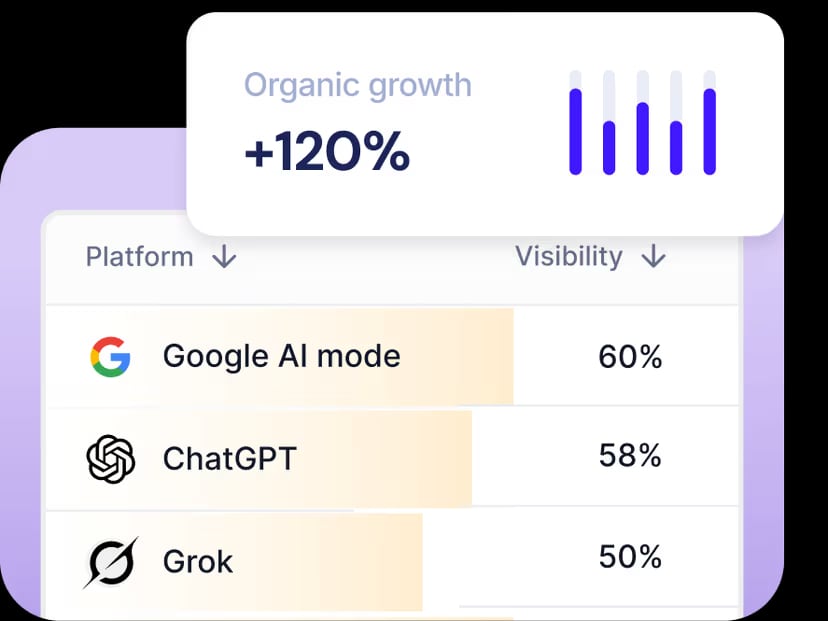
Contentpen product interface.
| Criteria | AgentBooks | Contentpen | SEO Writing |
|---|---|---|---|
| Core model | Autonomous content engine | End-to-end content lifecycle platform | 1-click SEO article generator |
| Topic planning | Automatic, market-mapped | Keyword research + gap analysis | SERP-driven per brief |
| SERP research | Organic research integrated | SERP + competitor gap analysis | Real-time SERP data |
| AI visibility monitoring | Not specified | 7 AI platforms with sentiment scoring | Tailors content for AI search |
| Publishing | Custom domain hosting | WordPress, Wix, Webflow, Shopify, Ghost | WordPress, Shopify |
| Brand voice | Brand intelligence from website | Brand profiles + document uploads | Brand voice customization |
| Multilingual | Yes (Pro plan) | Not prominently featured | Not prominently featured |
| Free tier | Free beta Starter | None mentioned | 3-article free trial |
| Starting paid price | $29/month | $27/month | Not specified |
| Best for | Teams wanting hands-off content growth | Marketers needing full lifecycle control + AI visibility | Writers needing fast SERP-aligned articles |
When to Choose Each Tool
Choose AgentBooks if:
- You want a content engine that runs with minimal ongoing human input.
- You need built-in hosting and don't want to manage a separate CMS.
- You're targeting multiple language markets.
- You want to test an autonomous content workflow without upfront cost.
- Your bottleneck is topic discovery, brand context, or publishing consistency.
Choose Contentpen if:
- You need to track AI visibility across ChatGPT, Gemini, Perplexity, and other platforms.
- You want content decay, CTR gap, and quick-win analytics in one dashboard.
- You manage multiple clients or brands and need multi-client workspaces.
- You publish across multiple CMS platforms, including Wix, Webflow, or Ghost.
- You want approval workflows and Kanban-style task management.
Choose SEO Writing if:
- You produce affiliate content, product roundups, or reviews that require tight SERP alignment.
- You want real-time content scoring as you draft.
- You primarily publish to WordPress or Shopify.
- You need a fast, low-friction way to turn product URLs into long-form articles.
- You prefer a simple, focused tool over a full content operations platform.
Practical Example: A SaaS Team's Decision
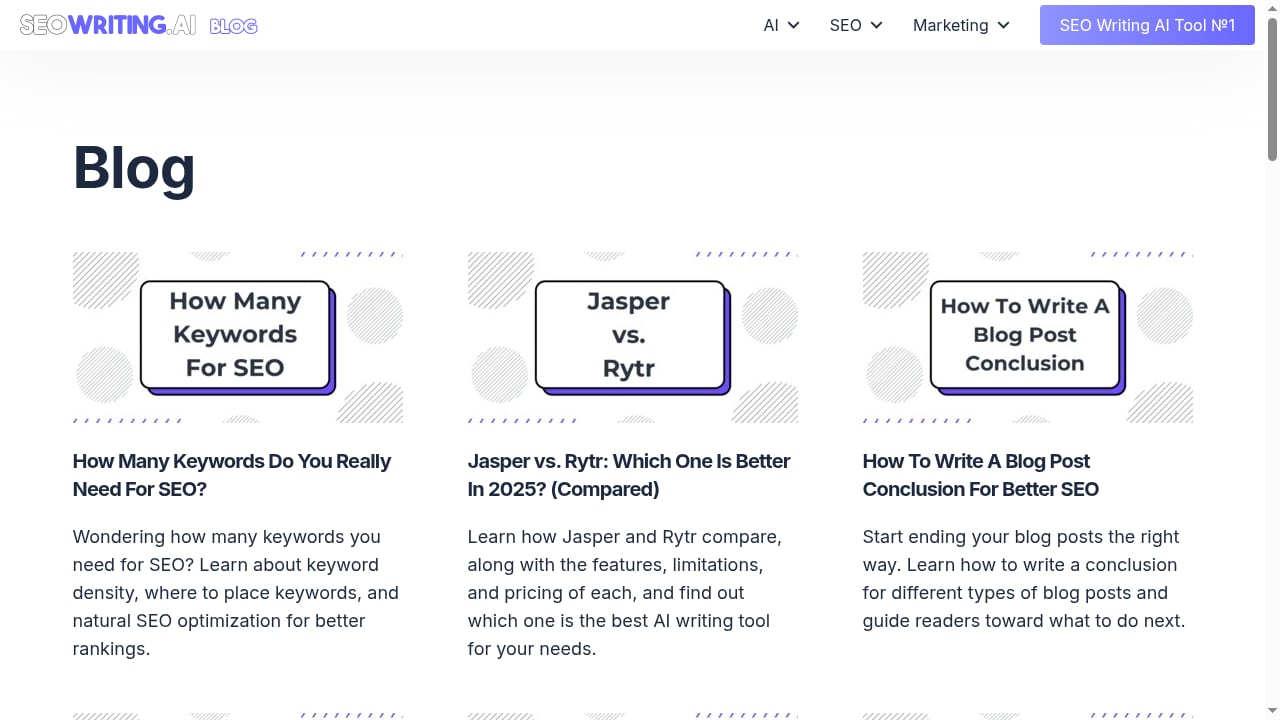
First viewport screenshot of Blog.
Imagine a small SaaS company with a two-person marketing team. They have a product website, a WordPress blog, and a goal to publish 12 articles per month.
With AgentBooks: They share their website once. The platform learns the product, maps the market, plans topics, and begins publishing useful content in their brand voice. The team reviews drafts on an approval-first workflow or lets autopilot run. They don't need to brainstorm topics or manage a content calendar manually. The hosted content site means they could even skip WordPress entirely.
With Contentpen: They set up brand profiles, upload keyword lists, and use the Kanban board to manage the pipeline. They generate articles in bulk, review SEO and AEO scores, and publish to WordPress with one click. They also monitor how their content appears across ChatGPT, Gemini, and other AI platforms, and use the analytics dashboard to identify content decay and CTR gaps.
With SEO Writing: They enter briefs or product URLs, generate articles in one click, check the Content Score against real-time SERP data, and publish to WordPress. The process is fast and focused, but they need to supply the topics and manage the publishing schedule themselves.
The Bottom Line
These three tools are not direct substitutes for each other. They solve different problems.
Contentpen is the most comprehensive content operations platform of the three. Its AI visibility monitoring, content decay analytics, multi-client workspaces, and broad CMS integrations make it a strong choice for agencies and marketing teams that need end-to-end control and measurement.
SEO Writing is the most focused drafting tool. Its real-time SERP data, Content Score, and 1-click generation model make it ideal for writers and affiliate marketers who need fast, search-aligned articles without the overhead of a full content platform.
AgentBooks occupies a distinct niche: autonomous content growth. It is the only tool of the three that offers built-in hosting, a free beta tier, multilingual publishing, and a workflow designed to run with minimal human intervention. If your goal is to turn your website into an always-on content engine, AgentBooks is the most direct path. If you want granular control over every stage of the content lifecycle, Contentpen is stronger. If you want speed and SERP alignment per article, SEO Writing is the most efficient.
Before committing to any tool, consider running a small pilot. Test how well the output matches your brand voice, how much editing is required, and whether the workflow fits your team's actual habits. For a deeper look at how to evaluate SERP data and competitor positioning, see our guide on SERP analysis. If you're still mapping out your content operations, our SEO content generator guide covers the broader landscape and selection criteria.
Related reading
- AgentBooks vs ContentBot.ai vs QuickCreator: Honest Comparison - Compare AgentBooks, ContentBot.ai, and QuickCreator on workflows, autonomy, SEO research, pricing, and ideal users. Find the right AI content tool for your team.
- QuickCreator Tutorial: From First Login to Published SEO Article - A practical QuickCreator tutorial covering login, AI writing modes, article types, SEO settings, and publishing. Learn the full workflow step by step.
Sources and further reading
- The ultimate list of SEO writing tools that actually improve rankings - This article presents a comprehensive list of the best SEO writing tools in 2026 that help improve search rankings and content performance. It compares leading platforms based on features like keyword research, SERP analysis, real-time optimization, and content generation. The guide highlights Contentpen as the top all-in-one SEO writing software and explains when to use other tools.
- WordRocket vs ContentPen: Which AI SEO Writer Gets Better Results? - Enjoy the videos and music you love, upload original content, and share it all with friends, family, and the world on YouTube.
- 7 Best SEO-Friendly Content Writing Services to Drive Pipeline in 2025 - RankingPen - We analyzed 35+ providers to find the 7 best SEO-friendly content writing services that rank and convert. See picks and pricing here
FAQ
Which tool is best for a solo blogger?
SEO Writing is often the most practical choice for solo bloggers because of its focused, low-friction workflow and real-time SERP alignment. AgentBooks is also worth considering if you want a free tier and built-in hosting.
Can Contentpen replace a human SEO writer?
Contentpen automates much of the content lifecycle, but it works best with human oversight for brand voice, strategic direction, and final approval. It is a powerful assistant, not a complete replacement for editorial judgment.
Does AgentBooks work with existing WordPress sites?
AgentBooks offers custom domain hosting as part of its platform, but its product context does not specify direct WordPress integration. Teams already invested in WordPress may find Contentpen or SEO Writing more compatible.
Which tool offers the best free option?
AgentBooks offers a free beta Starter tier with brand research, keyword planning, and a hosted content site. SEO Writing offers a free trial with 3 articles. Contentpen does not mention a free tier.
How important is AI visibility monitoring?
If your audience increasingly finds you through ChatGPT, Perplexity, Gemini, or other AI platforms, AI visibility monitoring becomes critical. Contentpen is the only tool of the three with a dedicated AI visibility dashboard covering seven major AI platforms.
Can I use more than one of these tools together?
Yes. Some teams use SEO Writing for fast affiliate content drafting, Contentpen for lifecycle management and AI visibility tracking, and AgentBooks for autonomous topic discovery and publishing. The tools are not mutually exclusive.
Conclusion
AgentBooks, Contentpen, and SEO Writing each bring credible strengths to the table. Contentpen offers the broadest content operations platform with unique AI visibility monitoring. SEO Writing delivers fast, SERP-aligned article generation for writers who want a focused tool. AgentBooks provides an autonomous content engine with built-in hosting, multilingual output, and a free entry point. The best choice depends on whether your priority is hands-off growth, full lifecycle control, or per-article speed. Match the tool to your actual bottleneck, and you'll get far more value than chasing the feature list with the most checkmarks.