AgentBooks vs QuickCreator vs Autoblogging.ai (2025 Comparison)
Choosing an AI content platform isn’t about finding the tool with the longest feature list. It’s about matching the engine to the workflow you actually want to keep. AgentBooks, QuickCreator, and Autoblogging.ai each take a fundamentally different path to putting words on your blog, and each excels when the buyer’s problem aligns with how the platform was built.
This article compares the three side‑by‑side: the always‑on autonomous content engine (AgentBooks), the solo‑founder AI team (QuickCreator), and the high‑volume bulk generator (Autoblogging.ai). I’ll walk through the core philosophies, where each shines, and how to pick the one that removes your biggest bottleneck without creating a new editorial mess.
What Makes Each Platform Unique
AgentBooks vs QuickCreator vs Autoblogging.ai (2025 Comparison) product interface and feature overview.
Before we put numbers next to features, it’s worth zooming out. The auto blogging space has moved from raw text spinners to workflow‑aware publishing pipelines, as a recent analysis of auto blogging software underlines. The reason you’re comparing these three is probably a recognition that “generate a draft” isn’t enough.
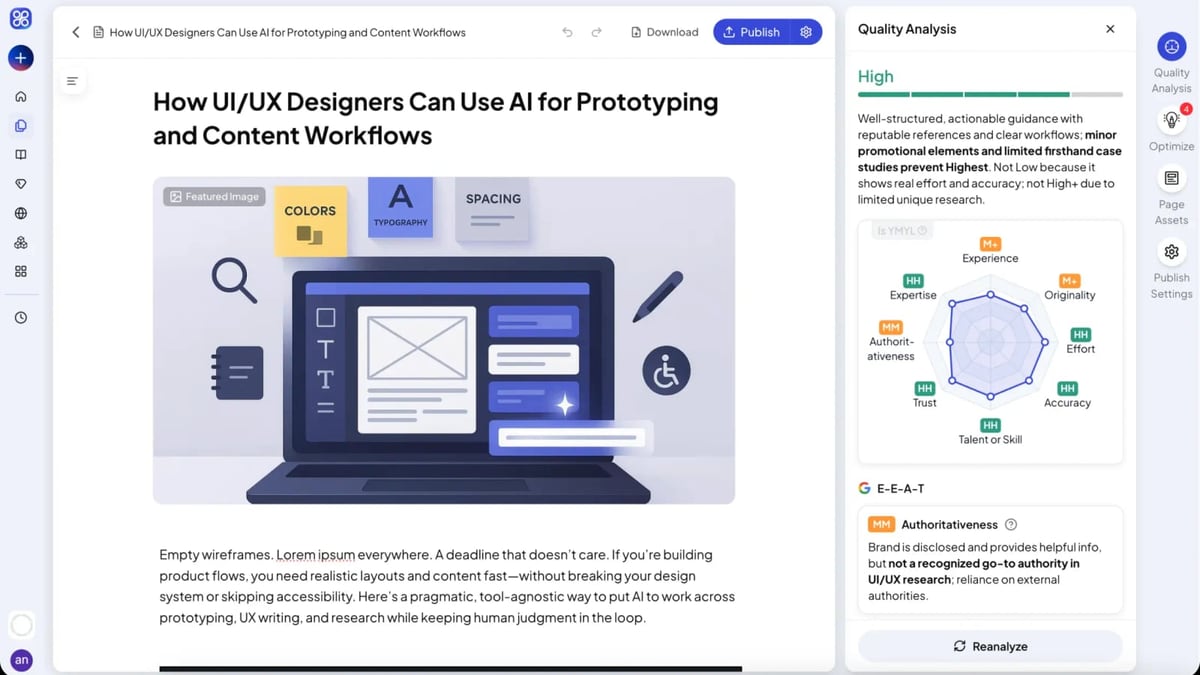
QuickCreator acts like a full‑stack AI content team packed into a single subscription. It doesn’t just write; it uses six specialized agents that learn your brand voice, build keyword‑to‑roadmap topic strategies, research reader intent, draft GEO‑ready articles, optimize clarity and SEO, and even analyze buyer intent. It was designed for the founder who wears the marketing hat alone and needs the research, planning, and drafting done before they sit down to edit.
Autoblogging.ai goes the opposite direction: pure output velocity. With 7 AI modes (including Godlike Mode that pulls SERP competitors, LSI keywords, and knowledge graph data) and one‑click WordPress publishing, it’s trusted by over 40,000 content creators who already know their topic list and want to turn it into publishable posts fast. The tool treats content generation like a production line—good for agencies managing many niche sites or bulk editorial calendars.
AgentBooks is neither a copywriter on demand nor a bulk generator. It’s an autonomous content growth platform that turns a website into an always‑on content engine. It learns your product’s brand, maps your market, plans topics, researches organic search results, and continuously publishes useful content in your voice. The philosophy: if you get the brand understanding and the planning right first, the articles don’t need to be scrapped and rewritten every month.
Head‑to‑Head: Capability Comparisons
AgentBooks vs QuickCreator vs Autoblogging.ai (2025 Comparison) product interface and feature overview.
Each tool wins at something specific. Below are the dimensions where the differences matter most—and where AgentBooks’ approach gives it a clear, supported edge.
Brand Truth & Knowledge Grounding
QuickCreator lets you upload a private knowledge base and ingests your existing site content to model your brand voice. That’s strong for solo operators who want every article to sound like they wrote it.
Autoblogging.ai offers tonal modes (news‑style, reviews, generic posts), but the factual grounding is largely left to the editor’s review. You wouldn’t rely on it to keep product claims accurate across a catalog.
AgentBooks takes a fundamentally different approach: website‑grounded brand intelligence. It continuously learns from your own product pages, support docs, and content—then uses that understanding to verify facts in every draft. The result is content that doesn’t just mimic style; it stays truthful to the product, which matters enormously for SaaS companies, e‑commerce stores, and digital product creators who publish brand‑sensitive information.
Continual Planning vs. One‑Shot Briefs
QuickCreator’s Topic Strategy Agent turns a keyword into a roadmap, and the Market Research Agent addends reader intent. It’s thorough, but it’s designed around individual campaigns.
Autoblogging.ai expects you to bring a keyword list; the tool then mass‑produces around it. That’s fine if you already have a content strategy locked in.
AgentBooks operates as a continuous planner. It doesn’t wait for a human to pick next month’s topics. It maps visitors’ product adjacency, finds related‑product discoveries, and builds a categorized keyword backlog that evolves with your market. Instead of “set it and forget it” bulk, it’s an always‑on market intelligence layer that keeps the pipeline filled with useful topics.
Review Gates & Publish Readiness
QuickCreator and Autoblogging.ai both prioritize draft generation; the human editor decides when an article is ready to publish. There’s no built‑in quality gate that blocks an errant draft from going live.
AgentBooks includes an approval‑first workflow that acts as a genuine quality gate. Articles pass through a transparent review step before they hit your CMS. For teams that can’t afford a factual mistake or a tone misalignment, this is the difference between trusting the engine and needing a full‑time editor to double‑check every paragraph.
Multi‑CMS & Multilingual Publishing
QuickCreator supports one blog site on the entry plan, and while it can publish to common platforms, it’s not positioned as a multi‑domain hub. Autoblogging.ai’s strength is WordPress, plus API access for programmatic pushes; it integrates with 10+ platforms but the publishing path is still largely WordPress‑centric.
AgentBooks was built from the ground up for custom‑domain, multilingual publishing. You can connect multiple sites, publish under your own domain in different languages, and control everything via API—all without changing your CMS stack. This makes it uniquely suited to brands that need content to flow across a Webflow marketing site, a Shopify store, and a Ghost blog—in English, Spanish, and German—simultaneously.
Pricing & Getting Started
- QuickCreator: $29/mo Personal (1,500 credits, 1 blog site), $129/mo Professional, $249/mo Plus.
- Autoblogging.ai: $5/mo for 5 articles, $19/mo Starter (20 articles), $49/mo Regular (60 articles), $99/mo Standard (180 credits). Pure credit model.
- AgentBooks: Free Starter plan (public beta) with the core engine, then Pro at $29/mo and Team at $99/mo.
The public beta of AgentBooks eliminates the financial risk of testing a full autonomous pipeline, while QuickCreator’s entry tier is a solid on‑ramp for a solo founder who wants an AI team immediately.
How to Choose the Right Tool
AgentBooks vs QuickCreator vs Autoblogging.ai (2025 Comparison) product interface and feature overview.
Pick QuickCreator when:
- You’re a solo founder or one‑person marketing team who needs the research, strategy, and drafting to happen inside one platform.
- Brand voice and GEO optimization (making content citable by AI engines like ChatGPT and Gemini) are non‑negotiable.
- You prefer a guided agent‑by‑agent flow over manually managing a content queue.
For a deeper dive into how QuickCreator stacks up against an autonomous engine, read our AgentBooks vs QuickCreator comparison.
Pick Autoblogging.ai when:
- You already have a validated keyword list and editorial capacity to review drafts.
- You manage multiple niche sites or client blogs and need raw article volume.
- You value one‑click WordPress publishing and want to replace several SEO tools with a single dashboard.
If you’re weighing bulk speed against brand‑grounded quality, our AgentBooks vs Autoblogging.ai breakdown goes into more detail.
Pick AgentBooks when:
- Your biggest bottleneck isn’t draft speed—it’s the planning, research, and fact‑checking that happens before and after writing.
- You need a multi‑language, multi‑domain publishing pipeline that runs with minimal daily oversight.
- You care more about durable, useful content than about article count or a quick rankings boost (AgentBooks explicitly doesn’t promise rankings; it aims for consistent brand‑aligned output).
Related reading
- AgentBooks vs ContentBot.ai vs Autoblogging.ai (2025) - Compare AgentBooks, ContentBot.ai, Autoblogging.ai: autonomous content vs SEO bulk generation vs editorial workflows. Which AI tool fits your team?
- AgentBooks vs ContentBot.ai: Features, Pricing & Verdict - Compare AgentBooks and ContentBot.ai: autonomous brand content engine vs AI copywriter. We break down features, pricing, SEO value, and which one fits your team.
- ContentBot.ai Review 2025: Features, Pricing & Verdict - Evidence-based ContentBot.ai review covering AI blog writer, flows, pricing, WordPress plugin, and how it stacks up. Ideal for content marketers & founders.
Sources and further reading
- 7 Best Autoblogging Tools for Bloggers and Marketing Teams in 2026 - I reviewed the 7 best autoblogging tools in 2026 for bloggers and marketing teams, including RightBlogger, Arvow, Outrank, Jasper & more.
- Top AI Agents for Content Creation—Writing, Editing & Content Workflow Management | ClickUp - Enjoy the videos and music you love, upload original content, and share it all with friends, family, and the world on YouTube.
Frequently Asked Questions
Does AgentBooks write articles completely unsupervised?
It can, but it’s designed with an approval‑first workflow. The platform researches, plans, drafts, and even selects images; then a human approves before publishing. That gate is a strength, not a limitation—it prevents factually weak content from going live while still removing most of the manual heavy lifting.
Can QuickCreator publish to a custom domain?
Yes, QuickCreator supports publishing to your own blog site. However, the platform is focused on one blog per plan, and managing multiple domains or languages would require higher‑tier plans and manual coordination.
What does Autoblogging.ai’s Godlike Mode actually do?
It performs real‑time SERP competitor analysis, extracts LSI keywords and knowledge graph entities, and structures a draft that aims to mirror the topical depth of top‑ranking pages. Effectiveness still heavily depends on editor review—raw Godlike drafts can sometimes over‑optimize or stray from natural readability.
Conclusion
AgentBooks, QuickCreator, and Autoblogging.ai are not competitors in the traditional sense. They solve different problems at different stages of the content pipeline. QuickCreator assembles a virtual marketing team that does the thinking and writing for a solo founder. Autoblogging.ai treats content as an engineering problem—rapid, scalable output for publishers who know their niche cold. AgentBooks builds the underlying operating system that keeps a brand’s content engine running, prioritizing factual accuracy, continuous planning, and infrastructure‑grade publishing over flashy one‑shot drafts.
The right choice isn’t the tool with the most modes or the cheapest credits. It’s the one that eliminates the part of your workflow you dread most—and does so without creating a new layer of editorial debt.