AgentBooks vs QuickCreator: Which AI Content Engine Drives Real Growth?
When a solo blog turns into a growth lever, you face a choice: do you hire an AI copywriter that needs prompting, or deploy an autonomous content engine that runs in the background? AgentBooks and QuickCreator both promise SEO‑ready content without a large editorial team, but they take fundamentally different paths. This comparison breaks down the architectures, target users, and workflows so you can pick the tool that aligns with how you actually want to publish.
What Is AgentBooks?
AgentBooks vs QuickCreator: Autonomous Engine or AI Content Team? product interface and feature overview.
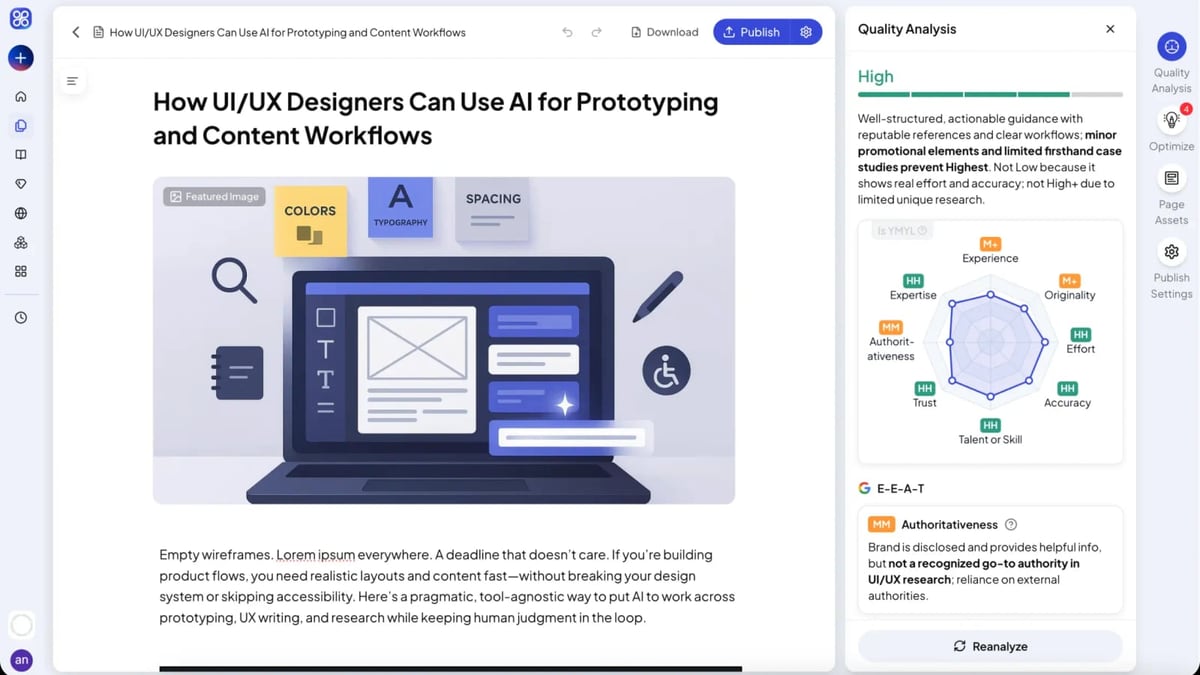
AgentBooks is an autonomous content growth platform that turns a website into an always‑on content engine. Instead of asking you to queue up titles one by one, it learns your brand, maps your market, plans topics, researches organic search results, and continuously publishes useful content — all in your voice and on your custom domain. You approve every article before it goes live, keeping a human in the loop.
The platform serves growth teams, SaaS companies, e‑commerce stores, and digital product creators who need consistent, brand‑aligned content without managing a large editorial operation. AgentBooks positions itself as a content operating system, emphasizing transparent workflows, verifiable product facts, and durable publishing infrastructure.
What Is QuickCreator?
AgentBooks vs QuickCreator: Autonomous Engine or AI Content Team? product interface and feature overview.
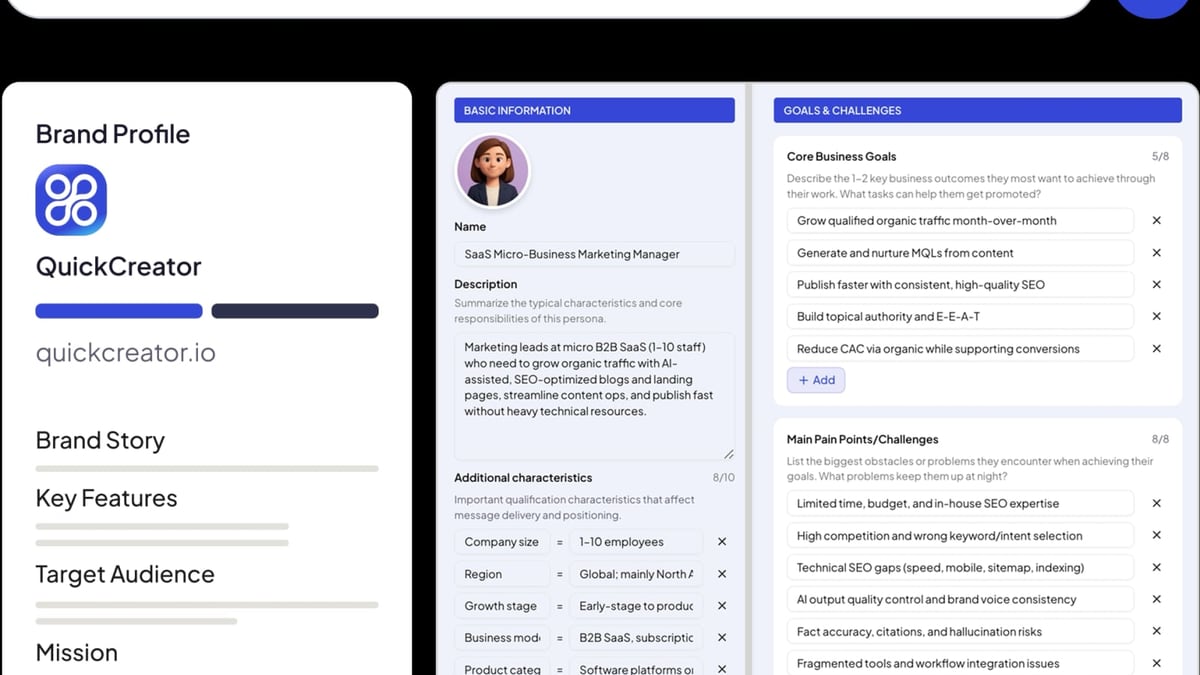
QuickCreator is an AI‑powered content marketing platform built for solo founders, consultants, and one‑person marketing teams. It acts like a full AI content team through six specialized agents — from Brand Positioning to Customer Research — that learn your voice, ingest your knowledge base, and draft articles optimized for Google and AI engines like ChatGPT and Perplexity.
The tool shines when an individual needs to produce credible, engine‑ready content fast. QuickCreator focuses on discrete tasks: punchy SEO blog posts, topic strategies, and comparison articles. Each output is the result of a hand‑off between AI agents, with you providing the initial direction and a credit allowance.
Key Differences at a Glance

AgentBooks vs QuickCreator: Autonomous Engine or AI Content Team? product interface and feature overview.
| Aspect | AgentBooks | QuickCreator |
|---|---|---|
| Core philosophy | Autonomous content engine that publishes continuously | AI copilot that generates articles on demand |
| Target users | Growth teams, SaaS, e‑commerce, product creators | Solo founders, consultants, one‑person marketing |
| Content production | Always‑on; plans, researches, and drafts without per‑article prompting | Agent‑assisted; you initiate each piece or campaign |
| Brand learning | Grounds itself on your actual website and product facts | Learns voice from site copy and a private knowledge base |
| Research depth | Scrapes organic SERP results, verifies facts against your product | Analyzes SERP and AI answers; includes buyer‑journey tagging |
| Publishing workflow | Approval‑first, custom‑domain multilingual publishing, API | Standard blog export/publishing; no built‑in multilingual domain support |
| Pricing model | Flat‑rate plans (Free, $29/mo Pro, $99/mo Team) | Credit‑based plans (from $29/mo Personal, credits scale) |
Feature Deep‑Dive: Autonomous Publishing vs Agent‑Assisted Creation
Always‑On Content Engine
AgentBooks operates like a content operating system. Once you connect it to your site, it continuously maps your market, plans topic clusters, and drafts articles — all without you entering a single keyword. The engine never stops researching, so your pipeline stays full. QuickCreator, in contrast, requires you to kick off each project, whether it’s a blog post or a topic strategy. For a founder who wants to write a few articles a week, that’s fine; for a growth team that needs fresh, SEO‑relevant content every week without babysitting a tool, the autonomous model matters.
Brand‑Grounded Intelligence
Both platforms learn your brand voice, but the depth differs. AgentBooks grounds its content in verifiable product facts pulled from your site — you get articles that don’t just sound like you, they accurately reference your features. QuickCreator’s six‑agent system does voice learning and can tap a private knowledge base, but the platform is optimized for fast, convincing prose rather than rigorous product‑fact grounding. If you’re publishing articles that will be read by analysts or highly informed buyers, AgentBooks’ fact‑first approach reduces the risk of brand‑damaging inaccuracies.
Workflow and Human‑in‑the‑Loop
Both tools let you review content, but the workflows differ. AgentBooks uses an approval‑first workflow: every article lands in a review queue and only goes live after you approve, giving you ultimate control. QuickCreator gives you editing windows, but the agent‑to‑agent handoffs happen under the hood. AgentBooks also extends the loop with an API, so your existing CMS or automation stack can plug directly into the publishing pipeline.
Multilingual, Custom‑Domain Publishing
AgentBooks supports multilingual publishing on your own custom domain — a crucial feature for brands growing internationally. QuickCreator’s documentation doesn’t highlight built‑in multilingual custom‑domain publishing; it concentrates on English blog output. For a SaaS company serving multiple geographies, this distinction alone can swing a decision.
Pricing and Plans
AgentBooks offers a straightforward, flat‑rate model: a free Starter plan, a Pro plan at $29/month, and a Team plan at $99/month. You get the full autonomous engine, and the price isn’t tied to a credit system. QuickCreator starts at $29/month for the Personal plan, which includes 1,500 credits and one blog site. Higher tiers ($129/mo Professional, $249/mo Plus) add more agents and storage, but you’re always managing a credit balance. For teams that want predictable costs and no unexpected throttling, AgentBooks’ flat plans simplify budgeting.
Who Should Choose Each?
Pick AgentBooks if:
- You lead a growth team or run a SaaS/ e‑commerce brand that needs a steady stream of useful, brand‑aligned content without daily manual input.
- You want transparent, approval‑first publishing with a fact‑grounded approach.
- You plan to publish in multiple languages on your own domain.
- You need an API to embed the engine into your existing marketing stack.
Pick QuickCreator if:
- You’re a solo founder or consultant who wants to act as an editor, not a writer, and you’re comfortable feeding the tool one project at a time.
- You value fast, agent‑crafted posts and GEO optimization for AI‑powered search engines.
- You have a limited knowledge base that you want to inject directly into the writing process.
- You prefer a credit‑per‑piece model and don’t need an always‑running engine.
For a broader look at how AgentBooks stacks up in three‑way comparisons, see our AgentBooks vs Contentpen vs QuickCreator showdown. If you’re considering bulk‑generation tools, you’ll also find value in understanding why AgentBooks’ brand‑grounded intelligence outperforms bulk generation.
QuickCreator’s Limitations (What the Data Shows)
AgentBooks vs QuickCreator: Autonomous Engine or AI Content Team? product interface and feature overview.
QuickCreator is a capable tool for a specific persona, but it carries trade‑offs that don’t fit every team:
- Credit‑gated output. The Personal plan’s 1,500 credits can disappear quickly if you run regular article production. Overages or pauses are part of the experience.
- No autonomous engine. Every article starts with a human prompt. The tool won’t discover new topic opportunities on its own between sessions.
- Limited team collaboration. Built for one‑person marketing teams, QuickCreator lacks the review queues and role‑based approvals that growth teams rely on.
- Narrow publishing infrastructure. Without built‑in custom‑domain multilingual support, you’ll need extra steps to serve a global audience.
As noted in hands‑on tests of AI agents for small business, human‑in‑the‑loop checkpoints are critical for avoiding costly mistakes. AgentBooks’ approval‑first design builds that checkpoint into every article, while QuickCreator leaves more of the verification burden on the solo operator.
The Architecture Behind the Engine vs the Agent Team
Understanding the underlying approach helps you see why these tools feel so different. AgentBooks functions as a content operating system — it has a persistent market map, a research loop, and a publishing schedule that runs independently. QuickCreator behaves like a swarm of specialized AI agents that activate when you call them, each handling one part of the content creation chain. Neither is “wrong,” but the operating system model scales with your business; the agent‑team model scales with your attention.
If you enjoy exploring the wider landscape, this AI agent builder categories guide breaks down where both products sit in the agent ecosystem.
Practical Scenario: A SaaS Growth Team Evaluates Both
Imagine a B2B SaaS company that wants to publish 12 SEO articles per month, in two languages, on separate country‑specific domains. With QuickCreator, the marketing lead must manually build a topic strategy, feed keywords, and launch each article. That’s manageable at first, but as the cadence grows, the manual orchestration becomes a bottleneck. The credit system also forces them to track consumption across languages.
With AgentBooks, the team connects the primary site, configures the brand guidelines, and sets the target locales. The engine plans the content roadmap across languages, researches relevant organic results, and delivers drafts to separate language‑specific approval queues. The marketing lead reviews and approves, and the articles go live on the correct domains. The rhythm is predictable, and the team can focus on strategy instead of prompting.
Pros and Cons Summary
AgentBooks
Pros:
- Autonomous, always‑on content engine
- Verifiable product facts reduce brand risk
- Approval‑first workflow with API access
- Multilingual custom‑domain publishing
- Flat‑rate pricing, no credit counting
Cons:
- Not ideal for one‑off, ad‑hoc articles outside the continuous plan
- Less emphasis on GEO/AI‑answer‑engine optimization out of the box
QuickCreator
Pros:
- Six specialized agents mimic a full content team
- Strong GEO optimization for AI‑powered search engines
- Fast article draft turnaround
- Private knowledge base ingestion
Cons:
- Credit‑based pricing can limit output or inflate costs
- Requires manual kick‑off for every project
- No built‑in multilingual custom‑domain publishing
- Less suited for larger teams and approval‑driven workflows
Related reading
- AgentBooks vs ContentBot.ai: Features, Pricing & Verdict - Compare AgentBooks and ContentBot.ai: autonomous brand content engine vs AI copywriter. We break down features, pricing, SEO value, and which one fits your team.
- ContentBot.ai Review 2025: Features, Pricing & Verdict - Evidence-based ContentBot.ai review covering AI blog writer, flows, pricing, WordPress plugin, and how it stacks up. Ideal for content marketers & founders.
- Surfer Review 2025: AI Visibility Platform for SEO & AI Search - Evidence-based Surfer review covering features, AI search tracking, content optimization, pricing signals, and who should use it. Ideal for marketing and SEO teams.
Sources and further reading
- AgentUI vs QuickCreator — Which AI Builder is Best? - Compare AgentUI and QuickCreator side by side. See features, pricing, ratings, and more to find the best AI builder for your needs.
Frequently Asked Questions
Can I use AgentBooks if I’m a solo founder?
Absolutely. The free Starter plan and $29/mo Pro plan are accessible to solopreneurs who want an engine that runs in the background rather than a tool they constantly feed. The approval‑first workflow gives you full control without demanding daily attention.
Does QuickCreator offer team plans?
QuickCreator’s focus is one‑person teams. Its higher‑tier plans add agents and storage but don’t introduce role‑based workflows or team‑level review queues. If you have multiple stakeholders, AgentBooks’ Team plan at $99/month is purpose‑built for that.
Which platform is better for AI‑powered search (GEO)?
QuickCreator explicitly optimizes for AI engines like ChatGPT and Perplexity with structured data and buyer‑journey tagging. AgentBooks prioritizes useful, fact‑verified content that tends to perform well across all search channels, but it doesn’t hyper‑optimize for AI answer citations the way QuickCreator does.
Can I switch from QuickCreator to AgentBooks later?
Yes. You can export your existing blog content and use AgentBooks’ API to integrate with your CMS. The scalable infrastructure means you won’t outgrow the platform as your content demands increase.
Final Verdict
Choose QuickCreator when you need a sharp, agent‑assisted copywriting partner that turns your prompts into finished posts — and you’re flying solo. Choose AgentBooks when you want a content operating system that keeps your brand’s publication engine running, grounded in facts, and ready to scale across languages and teams. The difference isn’t just features — it’s whether you want an assistant or an autonomous engine that grows with you.
Still weighing options? Read our detailed AgentBooks vs Contentpen vs QuickCreator comparison or see how AgentBooks’ brand intelligence differs from bulk‑generation tools.