Autoblogging.ai Demo: What It Shows and How to Test It
If you are searching for an Autoblogging.ai demo, you likely want to see the tool in action before committing time or money. You want to know what the dashboard looks like, how the automation works, whether the AI output is actually usable, and whether the setup is simple enough to manage alongside your other work.
This article walks through what a typical Autoblogging.ai demo covers, what to watch for during a walkthrough, and how to evaluate the tool against your actual publishing needs. It also shows where a more autonomous content platform can fit when you outgrow basic autoblogging.
What Is Autoblogging.ai?
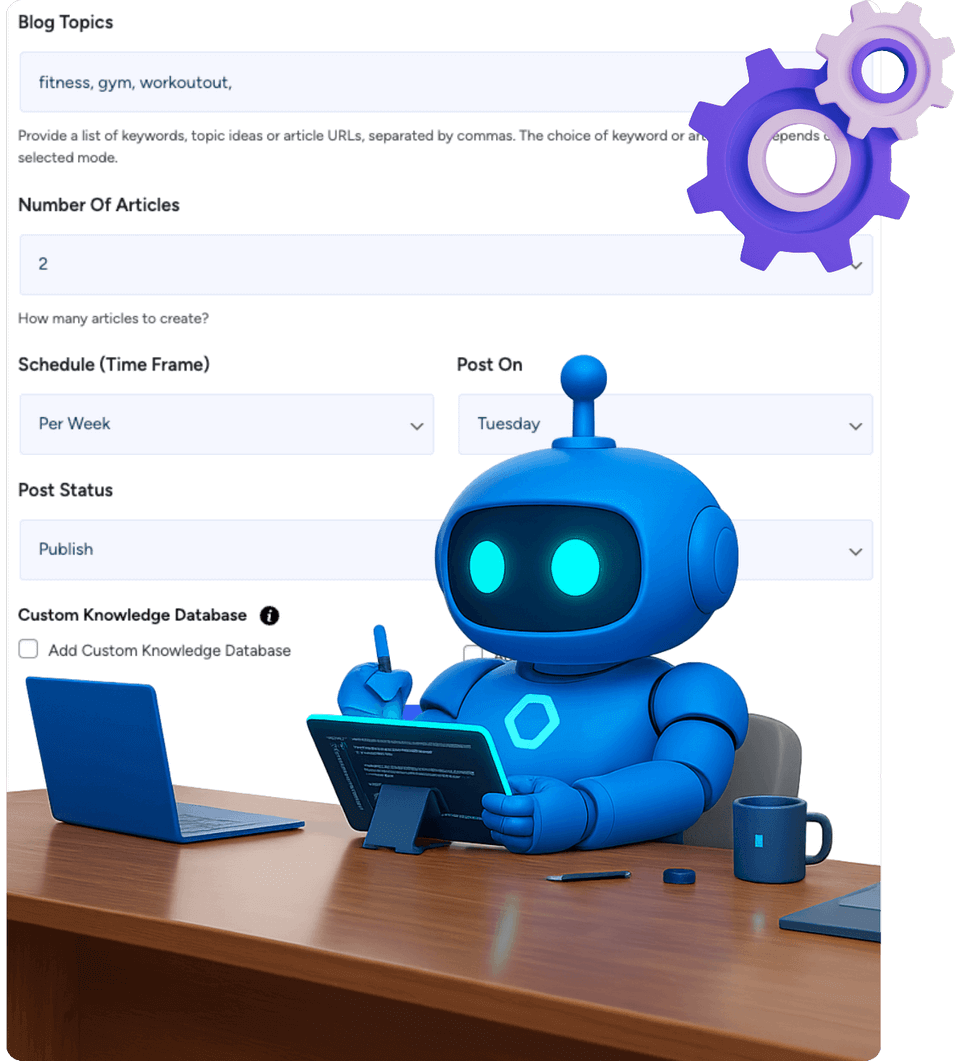
Autoblogging.ai Demo: What It Shows and How to Test It - What Is Autoblogging.ai?.
Autoblogging.ai is an AI-powered content generation tool designed to produce blog posts automatically. The core promise is simple: connect a website or blog, let the AI generate articles based on chosen topics or keywords, and publish them with minimal manual intervention.
The tool is marketed toward bloggers, affiliate site owners, and small content teams who want to keep a publishing schedule without writing every article by hand. It typically includes features such as:
- AI article generation from keywords or topics
- Bulk content creation
- Integration with WordPress and other CMS platforms
- SEO-focused article formatting
- Scheduled or one-click publishing
A demo of Autoblogging.ai usually highlights these features through a guided walkthrough, showing how a user moves from topic selection to a published post.
What an Autoblogging.ai Demo Typically Shows
Autoblogging.ai Demo: What It Shows and How to Test It - What an Autoblogging.ai Demo Typically Shows.
Most Autoblogging.ai demos follow a similar structure. Understanding this structure helps you compare it against other tools and spot what is missing.
1. Dashboard and Project Setup
The demo usually starts with the main dashboard. You see how to create a new project, connect a website, and choose basic settings such as language, tone, and target audience. This step matters because it determines how the AI will frame every article it generates.
2. Topic and Keyword Input
Next, the demo shows how to enter keywords or topics. Some versions of the tool let you paste a list of keywords, while others generate topic suggestions internally. Pay attention to whether the tool does any real keyword research or simply accepts whatever you type.
3. AI Article Generation
The core of the demo is the generation process. You watch the AI produce a full article from a single keyword or short prompt. The demo often highlights speed, article length, and the inclusion of headings, bullet points, and images.
4. Editing and Optimization
After generation, the demo usually shows an editing screen. You can adjust the text, add images, or tweak the title. Some demos include an SEO score or checklist that suggests improvements before publishing.
5. Publishing and Scheduling
The final step is publishing. The demo shows how to send the article to WordPress or another platform, either immediately or on a schedule. Some tools also offer automatic publishing on a set frequency, such as one post per day.
What to Look For When Watching a Demo

Autoblogging.ai Demo: What It Shows and How to Test It - What to Look For When Watching a Demo.
A polished demo can make any tool look impressive. To make a smart decision, watch for these specific details.
Does the AI Understand Your Brand?
Many autoblogging tools generate generic articles that could belong to any website. A strong demo should show how the tool learns your brand voice, product details, and audience. If the demo only shows generic output, ask whether the tool can maintain consistency across dozens of posts.
Is the Research Real or Superficial?
Some tools generate articles based only on the keyword you provide. Others pull in information from top-ranking pages to make the content more useful. A good demo should show where the information comes from and whether the tool cites sources or simply paraphrases existing content.
How Much Manual Work Remains?
The word "autoblogging" suggests hands-off publishing, but most tools still require editing, fact-checking, and formatting. A useful demo should be honest about how much manual work remains after generation. If the demo skips over editing, ask what the real workflow looks like.
What Happens When Topics Run Out?
Autoblogging tools are only as good as their topic pipeline. A demo that only shows you entering keywords manually does not solve the bigger problem of knowing what to write next. Look for tools that include topic planning and keyword research as part of the automation.
A Typical Autoblogging Workflow, Step by Step
Autoblogging.ai Demo: What It Shows and How to Test It - A Typical Autoblogging Workflow, Step by Step.
To make the demo easier to evaluate, here is a practical workflow you can compare against what you see.
Step 1: Connect your site. Link your WordPress, Shopify, or other CMS. The tool needs permission to publish on your behalf.
Step 2: Define your brand context. Enter your product details, audience, tone, and any topics to avoid. This step is often skipped in demos but matters more than anything else.
Step 3: Generate or import topics. Either paste keywords or let the tool suggest topics based on your niche and search data.
Step 4: Generate articles. Run the AI on one topic first. Review the output before generating in bulk.
Step 5: Edit and optimize. Fix factual errors, add internal links, and adjust the title and meta description.
Step 6: Publish or schedule. Send the article live immediately or add it to a queue.
Step 7: Review performance. After a few weeks, check which articles are getting traffic and refine your topic list.
Where Basic Autoblogging Falls Short
Autoblogging.ai and similar tools solve one part of the content problem: generating text quickly. But they often leave bigger challenges unaddressed.
Topic fatigue. After the first few weeks, you may run out of obvious keywords. The tool keeps generating, but the topics become repetitive or irrelevant.
Brand drift. Without strong brand context, AI output becomes generic. Articles start to sound like every other blog in your niche.
Manual bottlenecks. Even with automation, someone still has to review, edit, and approve every post. That bottleneck grows as you scale.
Inconsistent publishing. Autoblogging tools can publish on a schedule, but they do not plan the content strategy behind that schedule.
These gaps are why many teams eventually look for a more complete content engine rather than a simple autoblogging tool.
When a Content Engine Makes More Sense
If your goal is more than just publishing articles, an autonomous content growth platform like AgentBooks takes a different approach. Instead of asking you to feed it keywords every day, it learns your product and market once, then plans topics, researches organic search results, and publishes consistently in your brand voice.
The difference comes down to autonomy. A basic autoblogging tool generates text when you tell it what to write. AgentBooks builds the entire content operation: topic planning, keyword research, drafting, optimization, and publishing. This matters when you want organic growth that compounds over time rather than a stream of one-off posts.
For teams already using WordPress, the comparison is also practical. Many autoblogging tools require manual publishing steps or third-party connectors. AgentBooks includes custom domain hosting and an approval-first or autopilot workflow, so you can choose how much control to keep. If you are evaluating WordPress auto-publish options, the workflow differences are worth comparing side by side.
How to Test Autoblogging.ai Before Committing
If you decide to try Autoblogging.ai, use a structured test rather than relying on the demo alone.
Start With One Niche Topic
Pick a topic you know well. Generate one article and check it for factual accuracy, tone, and usefulness. If the AI gets a topic you know wrong, it will get unfamiliar topics wrong too.
Test Brand Consistency
Generate three articles on related topics. Do they sound like they came from the same website? Check for repeated phrases, contradictory claims, and tone shifts.
Measure the Editing Time
Track how long it takes you to make one article publish-ready. Multiply that by your monthly publishing goal. If the total editing time exceeds what you would spend writing manually, the tool is not saving you time.
Check the SEO Output
Look at the generated title, meta description, heading structure, and internal linking. Does the tool produce SEO-ready output, or do you have to rebuild every article?
Evaluate the Topic Pipeline
Ask the tool to suggest 20 topics for your niche. Are they specific and searchable, or generic and repetitive? A weak topic pipeline means the automation will stall after a few weeks.
Autoblogging.ai Demo vs. Full Content Automation
Here is a quick comparison to help you decide what you actually need.
| Capability | Basic Autoblogging Tool | Autonomous Content Platform |
|---|---|---|
| Generates articles from keywords | Yes | Yes |
| Plans topics automatically | Limited | Yes |
| Researches top-ranking pages | Sometimes | Yes |
| Maintains brand voice | Manual setup | Learned automatically |
| Publishes on schedule | Yes | Yes |
| Custom domain hosting | Usually no | Yes |
| Multilingual output | Sometimes | Yes |
| Approval workflow | Basic | Approval-first or autopilot |
If you only need to generate a few posts per week and have a clear keyword list, a basic tool may be enough. If you want a publishing system that keeps running without constant manual input, a platform like AgentBooks is designed for that.
Related reading
- Machined Tutorial: Learn CNC Machining From Zero to First Part - A practical machined tutorial covering CNC and manual machining basics, tool selection, setup, feeds and speeds, and your first project from raw stock to finished part.
- Machined Free Trial: What You Get and How It Works - Find out what the Machined free trial includes, how long it lasts, plan limits, and whether it fits your AI content workflow before you pay.
- AI Visibility Monitoring: Tools, Metrics, and Workflows - Learn how AI visibility monitoring works, which metrics matter, how to evaluate tools, and how to turn AI search citations into a repeatable content workflow.
Sources and further reading
- How THIS Autoblogging AI Tool Runs My Blog (500k Readers/Mo) - 🌟Try RightBlogger Today: https://rightblogger.com/?utm_source=youtube&utm_medium=organic&utm_campaign=zYFuXajwyAQI've been using RightBlogger's Autoblogging...
- Autoblogging: Automate Your Blog for AI SEO Traffic - Enjoy the videos and music you love, upload original content, and share it all with friends, family, and the world on YouTube.
- AI Auto Blogging - Find, Write & Publish in Minutes (No Code!) - ❤️ LIMITED TIME: Get 1 Year of GravityWrite at $97 🔥👉 Visit ➜ https://gravitywrite.com/❤️ Start here ➜ https://wl.tools/Make.com 💡 Blueprint ➜ https:/...
Frequently Asked Questions
Is there a free Autoblogging.ai demo?
Autoblogging.ai occasionally offers trial access or limited free credits, but availability changes. The best approach is to check the official website for current trial options and watch recent walkthrough videos to see the interface before signing up.
How long does it take to set up Autoblogging.ai?
Basic setup usually takes under 30 minutes: create an account, connect your CMS, and configure your first project. However, tuning the AI to match your brand voice and reviewing the first few articles can take several hours.
Does Autoblogging.ai publish directly to WordPress?
Yes, Autoblogging.ai supports WordPress publishing in most plans. Some setups require an API connection or plugin, so confirm the integration method during your test.
Can I use Autoblogging.ai for affiliate sites?
Many users run affiliate sites with autoblogging tools. The key is to review every article for accuracy and compliance, especially if you include product recommendations or affiliate links.
What is the biggest mistake people make with autoblogging?
The biggest mistake is publishing AI output without review. Even the best autoblogging tools produce factual errors, awkward phrasing, or thin content. A review step protects your site's reputation and search rankings.
How does AgentBooks differ from Autoblogging.ai?
AgentBooks is an autonomous content growth platform, not just an article generator. It learns your product and market, plans topics, researches search results, and publishes consistently in your brand voice. It also includes custom domain hosting and multilingual output, which basic autoblogging tools often lack.
Conclusion
An Autoblogging.ai demo is a useful starting point for understanding what AI blog automation can do. It shows the core workflow: connect a site, generate articles, edit, and publish. But the demo only tells part of the story. The real test is whether the tool maintains your brand voice, produces accurate content, and keeps delivering useful topics over time.
If you need a simple keyword-to-article generator, Autoblogging.ai may fit. If you want a system that handles topic planning, research, and consistent publishing without constant manual input, consider an autonomous platform like AgentBooks instead. Either way, test with real topics, measure your editing time, and make sure the automation actually saves you work rather than creating new bottlenecks.