Autoblogging AI Free: What You Can Actually Get Without Paying
Searching for an "autoblogging AI free" solution usually means one of three things: you want a free tier from a commercial platform, you want a no-code workflow built from free tools, or you want to know whether free AI autoblogging is even worth the effort. The honest answer is that free options exist, but they come with real trade-offs in quality, control, and scalability.
This guide breaks down what free autoblogging AI tools actually deliver, how to build a working free workflow, where free plans fall short, and when a paid platform becomes the smarter choice.
What "Free Autoblogging AI" Really Means
Autoblogging refers to automatically generating and publishing blog content with minimal human involvement. When people add "free" to the search, they usually want one of these:
- A free trial or credit allowance from a commercial AI writing platform
- A do-it-yourself automation using free tools like ChatGPT, Google Sheets, and a blogging platform
- A permanently free tier that supports a small number of posts per month
Most commercial tools offer a taste of their product for free. Autoblogging.ai, for example, gives new accounts 10 free credits per month with no credit card required, which is enough to test Quick Mode and a few basic features before committing to a paid plan. Other platforms follow a similar pattern: free entry, paid scale.
Free Autoblogging AI Tools Worth Testing
Autoblogging AI Free: 7 Tools & Workflows That Actually Work - Free Autoblogging AI Tools Worth Testing.
1. Autoblogging.ai Free Credits
Autoblogging.ai positions itself as a one-click article generator optimized for search rankings and AI visibility. Its free tier includes 10 monthly credits, which lets you try Quick Mode and generate a handful of customizable articles. The paid plans unlock Godlike Mode for SERP analysis, bulk generation, Amazon review articles, and AI visibility tracking.
Best for: Testing whether one-click SEO article generation fits your workflow before paying.
Limitation: 10 credits disappear quickly, and the most valuable features sit behind paid plans.
2. Auto-post.io Free AI Writer
Auto-post.io offers a free AI writer with no credit card required. Its focus is on fast draft generation, brand tone presets, SEO briefs, and built-in web research with source links. The free tier includes generous limits compared with many competitors, but advanced automation and team features require an upgrade.
Best for: Writers who want a free drafting assistant with citations and tone control.
Limitation: The free tier is aimed at individual drafting rather than fully autonomous publishing.
3. ChatGPT Free Plan
OpenAI's free ChatGPT tier remains the most flexible free writing tool available. You can generate outlines, drafts, meta descriptions, and FAQs without paying anything. The catch is that ChatGPT alone does not research live search results, publish to your blog, or maintain brand consistency across dozens of posts.
Best for: Manual drafting, brainstorming, and testing prompts before investing in automation.
Limitation: No built-in publishing, no SERP research, and output quality depends heavily on your prompts.
4. Google Sheets + Make + Blogger Workflow
A popular no-code approach combines ChatGPT, Google Sheets, Make (formerly Integromat), and Blogger to create a free autoblogging pipeline. The workflow stores topic ideas in Sheets, sends them to ChatGPT for generation, and schedules publishing to Blogger automatically.
Best for: Beginners who want to learn automation without paying for a dedicated platform.
Limitation: Requires manual setup, breaks when APIs change, and produces generic content unless you invest heavily in prompt design.
How to Build a Free Autoblogging Workflow Step by Step
Autoblogging AI Free: 7 Tools & Workflows That Actually Work - How to Build a Free Autoblogging Workflow Step by Step.
If you want to try autoblogging without spending money, here is a practical setup:
Step 1: Define Your Content Scope
Pick a narrow niche with clear audience questions. Autoblogging fails when it tries to cover everything. A focused site about indoor herb gardening, budget espresso machines, or small business bookkeeping will produce more coherent content than a general blog.
Step 2: Build a Topic Bank in Google Sheets
Create columns for topic, target keyword, search intent, target audience, and outline. Populate at least 20 topics before you start generating. This prevents the "random article" problem that makes autoblogs feel disjointed.
Step 3: Write a Strong Prompt Template
Your prompt is the real product. A weak prompt produces thin, repetitive content. A strong prompt includes:
- The audience and their problem
- The specific question to answer
- Required sections and word count
- Tone and formatting rules
- A ban on filler phrases and generic advice
Step 4: Connect the Pieces with Make
Use Make's free tier to connect Google Sheets, ChatGPT, and Blogger. The scenario triggers when a new row appears, sends the topic to ChatGPT, and posts the result to Blogger on a schedule. Start with one post per day and review output manually before scaling.
Step 5: Review Before Publishing
Even the best free workflow produces errors. Fact-check claims, fix awkward phrasing, and add internal links manually. Skipping this step is how autoblogs earn penalties and lose reader trust.
Free vs Paid Autoblogging AI: A Practical Comparison
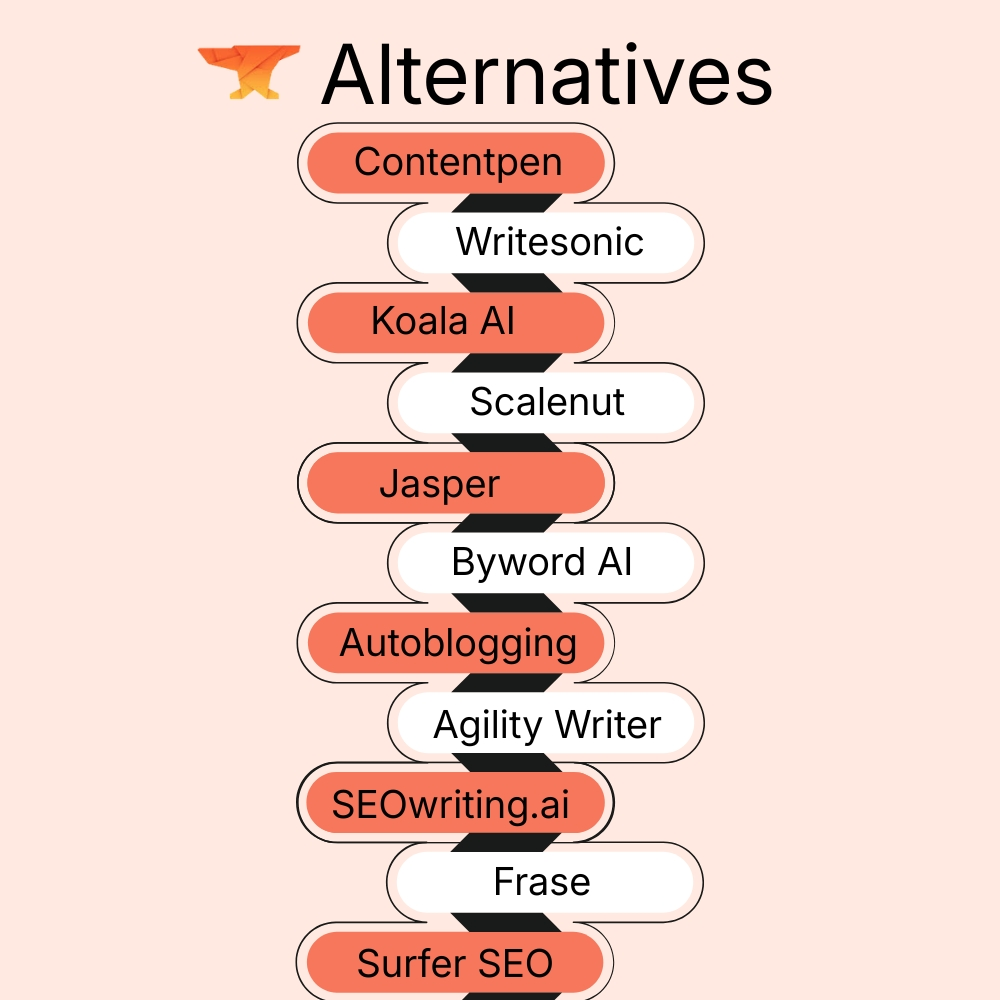
Autoblogging AI Free: 7 Tools & Workflows That Actually Work - Free vs Paid Autoblogging AI: A Practical Comparison.
| Capability | Free DIY Workflow | Free Tool Tier | Paid Autoblogging Platform |
|---|---|---|---|
| Draft generation | Yes, via ChatGPT | Limited credits | Unlimited or high-volume |
| SERP research | Manual | Rarely included | Built into Godlike modes |
| Brand consistency | Depends on prompts | Basic tone presets | Brand intelligence and memory |
| Auto-publishing | Via Make or Zapier | Limited integrations | One-click or scheduled |
| Quality control | Fully manual | Basic proofreading | Automated checks plus human review |
| Cost | Free but time-intensive | Free with caps | $12–$249+ per month |
Where Free Autoblogging Goes Wrong
Free tools solve the drafting bottleneck but create new problems if you skip quality controls:
Thin content penalties. Google's helpful content system explicitly targets low-value, mass-produced pages. If your autoblog publishes 50 shallow articles a week, expect rankings to suffer.
Factual errors. Free ChatGPT output can hallucinate statistics, product details, and dates. Without a fact-checking layer, you publish misinformation under your own domain.
Brand drift. Without a persistent memory of your product, voice, and positioning, AI output slowly becomes generic. This is why platforms like AgentBooks emphasize brand intelligence that extracts product knowledge once and applies it across every article.
Maintenance burden. Free automation stacks break when APIs change, tokens expire, or platforms update their terms. You become the unpaid engineer keeping the machine running.
When a Paid Autoblogging Platform Makes Sense
Free workflows work for learning and low-volume testing. A paid platform becomes worth it when:
- You need consistent publishing without daily manual review
- Your content must reflect deep product knowledge and brand voice
- You want SERP research and competitor analysis built into generation
- You publish in multiple languages or across multiple sites
- The cost of your time exceeds the monthly subscription fee
AgentBooks takes a different approach from credit-based article generators. Instead of charging per article, it learns your website once, maps your market, researches organic search results, and continuously publishes educational content in your brand voice. The free beta Starter tier includes brand research, keyword planning, and a hosted content site, making it a practical way to test autonomous content growth before upgrading to Pro or Team plans. For a deeper look at how it performs in practice, see this AgentBooks review.
Autoblogging AI Free: Frequently Asked Questions
Is there a completely free autoblogging AI?
Yes, but with limits. You can combine ChatGPT's free tier, Google Sheets, Make's free plan, and Blogger to build a no-cost pipeline. Commercial platforms like Autoblogging.ai and auto-post.io offer free credits or free tiers, but their most useful automation features require paid plans.
How many free articles can I generate with Autoblogging.ai?
Autoblogging.ai gives new accounts 10 free credits per month. Quick Mode costs 1 credit per article, while Godlike Mode costs 2 credits. The free allowance is designed for testing, not ongoing production.
Can I make money with a free AI autoblog?
Technically yes, through display ads, affiliate links, or sponsored content. Realistically, free workflows rarely produce the quality and volume needed for meaningful income. Most successful autoblogs invest in either a paid platform or significant manual editing time.
Will Google penalize my AI autoblog?
Google does not penalize AI content automatically. It penalizes low-quality, unhelpful content regardless of how it was produced. If your autoblog publishes useful, accurate, well-structured articles that answer real questions, AI involvement is not a ranking problem.
What is the best free AI writer for blog posts?
For pure drafting, ChatGPT's free tier is the most capable. For a dedicated writing interface with citations and tone presets, auto-post.io's free AI writer is worth testing. For testing an SEO-focused autoblogging platform, Autoblogging.ai's free credits are the obvious starting point.
How do I avoid publishing AI-generated fluff?
Build a detailed prompt template, keep a tight topical focus, fact-check every draft, and add original examples, data, or experience where possible. If you scale beyond manual review, choose a platform with built-in brand memory and quality controls rather than a raw text generator.
Related reading
- AgentBooks vs Machined vs Copy.ai: Which AI Tool Wins? - Compare AgentBooks, Machined, and Copy.ai across content automation, SEO workflows, GTM features, pricing, and ideal users to pick the right AI platform.
- Multi-Provider AI: Gateways, Architecture & 2026 Guide - Learn how multi-provider AI gateways unify routing, failover, governance, and cost control across OpenAI, Anthropic, Bedrock, and Vertex AI in 2026.
Sources and further reading
- Autoblogging.ai: Generate Articles Optimized To Rank in One-Click ... - In the digital age, content creation has evolved with the advent of AI technologies. One significant breakthrough in this domain is autoblogging, a method of
- Create a FREE AI Blogger Autoblogging website with ChatGPT and Google Sheets, and earn up to 1000$ - Unlock the secret to building a FREE AI-powered autoblogging website using ChatGPT and Google Sheets —and start earning up to $1000 monthly with minimal effo...
- Free AI Writer for Fast, Quality Content Automation | auto-post.io - Create blog posts in minutes. Our free AI writer automates content with SEO optimization, consistent tone, and error-free drafts.
Conclusion: Start Free, But Plan for Quality
Free autoblogging AI tools are genuinely useful for testing ideas, learning automation, and producing low-volume content. Autoblogging.ai's free credits let you sample a commercial platform, auto-post.io offers a capable free writer, and a ChatGPT plus Make workflow can teach you the mechanics of automation at zero cost.
The trap is treating free as a permanent strategy. Sustainable autoblogging requires brand consistency, factual accuracy, and search-aware topic planning—things free tools only partially deliver. Start with a free tier to validate your approach, then decide whether a paid platform like AgentBooks or a credit-based generator better fits your publishing goals. For a broader look at how AI fits into modern SEO, see this guide on AI SEO in 2026.