ContentBot.ai Tutorial: Automate Content Workflows Step by Step
ContentBot.ai is an AI-powered content toolkit designed to help marketers, founders, and agencies produce blog posts, ads, email campaigns, and long-form pieces without burning out their bandwidth. If you have seen the tool mentioned in AppSumo deals or YouTube walkthroughs and want to know exactly how to use it, this tutorial covers the practical side: account setup, core features, workflow automation, keyword research, long-form generation, and a few honest limitations to watch for.
What Is ContentBot.ai?
ContentBot.ai Tutorial: Automate Content Workflows Step by Step - What Is ContentBot.ai?.
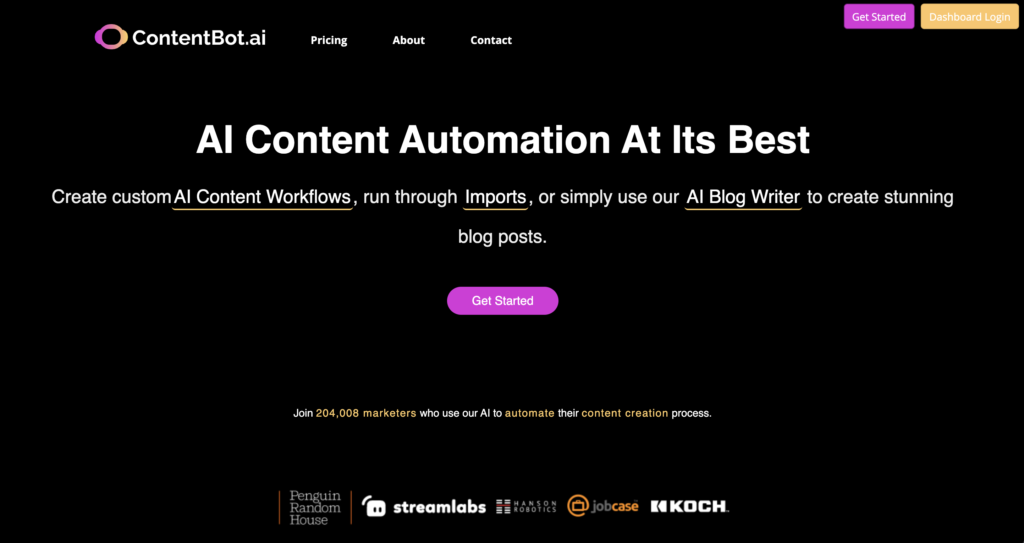
ContentBot.ai is a writing assistant built around automation. Rather than only generating one-off paragraphs, it lets you create repeatable workflows, import data in bulk, and schedule content. The platform positions itself as a way to scale content production while keeping a consistent brand voice.
Core capabilities include:
- AI copywriting for blog posts, ads, emails, and social captions
- Workflow builder that chains multiple prompts and outputs together
- Bulk import for generating many pieces from a spreadsheet
- Keyword research and SEO-focused content tools
- Long-form editor for guides, tutorials, and pillar pages
Getting Started with ContentBot.ai
ContentBot.ai Tutorial: Automate Content Workflows Step by Step - Getting Started with ContentBot.ai.
1. Create an Account
Go to ContentBot.ai and sign up. The platform typically offers a free trial or limited free tier, so you can test the interface before committing to a paid plan. After registration, you land on the main dashboard where the main tools are grouped by use case.
2. Set Up Your Brand Voice
Before generating anything, define your brand settings. ContentBot.ai lets you save tone, audience, and style preferences so outputs feel less generic. If you skip this step, the AI defaults to a neutral, slightly formal tone that may not match your site.
3. Explore the Dashboard
The dashboard organizes features into logical sections:
- Playgrounds for quick, single-output generation
- Workflows for multi-step automation
- Imports for bulk content jobs
- Projects for organizing campaigns
Spend ten minutes clicking through each section. The interface is straightforward, but knowing where the import and workflow tools live saves time later.
Using AI for Keyword Research in ContentBot.ai
ContentBot.ai Tutorial: Automate Content Workflows Step by Step - Using AI for Keyword Research in ContentBot.ai.
Keyword research is the foundation of any content strategy. ContentBot.ai includes AI-assisted keyword tools that help you move beyond guesswork.
How AI Improves Keyword Research
Traditional keyword research requires manually pulling data from search engines, competitor sites, and analytics tools. AI changes this by:
- Collecting and analyzing large datasets from search engines, social platforms, and competitor pages
- Discovering long-tail keywords that have lower competition but still attract targeted traffic
- Predicting keyword trends based on historical and current search behavior
- Analyzing competitor keyword strategies to find gaps in your own content
- Interpreting search intent through natural language processing
Search Intent Categories
AI tools categorize searches into four main types:
| Intent | User Goal | Content Match |
|---|---|---|
| Informational | Learn about a topic | Guides, tutorials, explainers |
| Navigational | Find a specific site or page | Brand pages, landing pages |
| Commercial | Compare options before buying | Reviews, comparisons, buying guides |
| Transactional | Complete a purchase | Product pages, checkout pages |
Matching your content to the right intent is what separates pages that rank from pages that sit on page five. For example, a search for "best AI writing tools" is commercial intent, so a comparison article works better than a dictionary-style definition.
Practical Keyword Workflow
- Enter a seed keyword related to your niche.
- Review the AI-generated keyword suggestions, including related and long-tail phrases.
- Check search volume and keyword difficulty for each suggestion.
- Look at the "people also ask" section in Google for question-based keywords.
- Group keywords by intent and map each group to a specific piece of content.
If you run a smaller site, prioritize long-tail keywords with moderate volume and lower difficulty. These are easier to rank for while you build domain authority.
Creating Long-Form Content with ContentBot.ai
Long-form content—generally 2,000 to 4,500 words—drives search traffic, builds authority, and improves conversion rates. ContentBot.ai includes tools specifically designed for longer pieces.
Why Long-Form Matters
Search engines favor comprehensive content that covers a topic in depth. A well-structured 3,000-word guide can target multiple related keywords at once and keep readers on the page longer. It also positions your brand as an expert rather than a surface-level content farm.
Step-by-Step Long-Form Workflow
- Choose a topic that warrants depth. If the keyword is too narrow, a shorter piece makes more sense.
- Define your objective. Are you educating, persuading, or entertaining?
- Research thoroughly. Read competitor articles, watch videos, and gather expert insights before generating.
- Create a detailed outline. Break the topic into H2 and H3 sections so the AI has a clear structure to follow.
- Generate section by section. Rather than asking for a full 3,000-word article at once, generate each section separately for better control.
- Edit and fact-check. AI output needs human review. Verify statistics, add personal examples, and refine the voice.
Structuring for Readability
Long content fails when it becomes a wall of text. Use these formatting techniques:
- Short paragraphs of two to four sentences
- Subheadings every 200–300 words
- Bullet points and numbered lists
- Bold text for key takeaways
- A table of contents for navigation
- Images, charts, or screenshots to break up text
Automating Content Workflows
The biggest differentiator for ContentBot.ai is its workflow automation. Instead of generating one piece at a time, you can build repeatable processes.
What Workflows Do
A workflow chains multiple AI steps together. For example:
- Input a topic or keyword
- Generate an outline
- Expand each outline section into full paragraphs
- Write a meta description
- Output everything into a formatted document
This turns a manual 30-minute process into a few minutes of setup followed by automated execution.
Bulk Imports
If you need 50 product descriptions or 30 blog intros, use the import feature. Upload a CSV or spreadsheet with your inputs, map the columns to the AI prompt, and let the tool process the entire batch. This is especially useful for e-commerce sites with many SKUs or agencies managing multiple clients.
ContentBot.ai Pricing Overview
ContentBot.ai uses a credit-based system. Plans typically include:
- Free trial with limited credits to test the platform
- Starter plans for individual creators with moderate volume
- Pro plans for marketers needing more credits and workflow access
- Agency plans for teams and bulk imports
Pricing changes periodically, so check the current rates on the official site. The AppSumo lifetime deal mentioned in some reviews can offer significant savings if it is still available.
Limitations to Consider
ContentBot.ai is a capable tool, but it is not a complete content strategy platform. Here are the gaps:
- Manual SEO analysis. You still need to check keyword difficulty, search volume, and SERP competition in separate tools.
- No built-in publishing. ContentBot.ai generates text but does not publish directly to your CMS.
- Brand context requires manual setup. The tool remembers what you tell it, but it does not automatically learn your product from your website.
- Quality depends on prompts. Generic prompts produce generic output. You need to invest time in writing good instructions.
If you want a more hands-off approach where the platform learns your product, researches organic search results, and publishes continuously, an autonomous content growth platform like AgentBooks may be a better fit. AgentBooks turns your website into an always-on content engine by extracting product knowledge, mapping your market, and publishing in your brand voice—without requiring you to manually manage every workflow.
ContentBot.ai vs. Autonomous Content Platforms
The choice depends on how much control you want:
| Factor | ContentBot.ai | Autonomous Platforms (e.g., AgentBooks) |
|---|---|---|
| Workflow control | High—you build every step | Low—platform handles strategy and publishing |
| Setup time | Moderate—requires prompt and workflow creation | Minimal—share your website once |
| SEO research | Manual or via separate tools | Built-in organic research |
| Publishing | Copy-paste to your CMS | Custom domain hosting and auto-publishing |
| Best for | Marketers who want granular control | Teams that want hands-off content growth |
Neither approach is universally better. If you enjoy building prompts and workflows, ContentBot.ai gives you that flexibility. If you would rather focus on your product while content gets researched, planned, and published automatically, AgentBooks is designed for that use case. For WordPress users who want to pair AI content with on-page SEO, check out this Yoast SEO setup guide to make sure your published content is properly optimized.
Tips for Getting Better Results
- Write specific prompts. Instead of "write a blog post about coffee," try "write a 1,500-word guide comparing pour-over and French press brewing for beginners, with a section on grind size."
- Use the brand voice settings. Consistent tone across pieces builds recognition.
- Generate outlines first. Review and approve the structure before expanding sections.
- Batch similar tasks. Use imports for repetitive content like product descriptions or meta tags.
- Always fact-check. AI can hallucinate statistics, quotes, and sources. Verify everything before publishing.
- Edit for personality. Add anecdotes, examples, and opinions that only you can provide.
Related reading
- Webflow Integration: Connect Your Site to the Right Tools - Learn how Webflow integrations work, which native apps and automation tools to use, and how to connect your CMS, forms, and ecommerce to your marketing stack.
- Yoast SEO Pricing: Free vs Premium vs AI+ Costs - A practical breakdown of Yoast SEO pricing: free vs Premium vs AI+ plans, what each tier includes, renewal costs, and which one fits your site.
Sources and further reading
- How To Use AI For Keyword Research: A Marketer’s Guide - Is keyword research still important for SEO? Let us put it this way… YES! To understand the importance of keyword research, we first need to understand the role of SEO in digital marketing. Search Engine Optimization (SEO) is the process of enhancing content in a way that improves your chances of ranking on search engine ... Read more
- Automate Content, Data Imports, and More with ContentBot.ai - ContentBot.ai is an Al-powered content toolkit that lets you automate content creation, build workflows, and import files in just a few clicks. Learn more at...
- The Ultimate Guide to Long-Form Content (2022) - Incorporating long-form content into your content marketing strategy can help you boost your search rankings, influence purchasing decisions
Frequently Asked Questions
Is ContentBot.ai good for beginners?
Yes. The interface is intuitive, and the playground tools let you generate content without learning complex workflows. Beginners can start with simple prompts and gradually explore automation features.
How is ContentBot.ai different from ChatGPT?
ContentBot.ai is purpose-built for content marketing. It includes workflow automation, bulk imports, brand voice settings, and SEO-oriented templates that a general chatbot does not provide out of the box.
Can ContentBot.ai publish directly to my website?
No. ContentBot.ai generates text that you copy into your CMS. If you want direct publishing to a hosted content site, consider an autonomous platform like AgentBooks, which includes custom domain hosting.
Does ContentBot.ai do keyword research?
Yes, it includes AI-assisted keyword tools that help with discovery, search intent analysis, and long-tail keyword suggestions. However, for detailed metrics like search volume and keyword difficulty, you may need to pair it with a dedicated SEO tool.
What types of content can I create with ContentBot.ai?
Blog posts, long-form guides, ad copy, email campaigns, social media captions, product descriptions, and more. The workflow builder lets you chain these into repeatable processes.
Is the output SEO-friendly?
The output can be SEO-friendly if you provide the right instructions and keywords. The tool does not automatically optimize for search engines, so you should review on-page elements like headings, meta descriptions, and internal links before publishing.
Conclusion
ContentBot.ai is a solid AI writing toolkit for marketers who want hands-on control over content generation. Its workflow automation and bulk import features make it stand out from basic chatbots, and the keyword research tools add genuine SEO value. The trade-off is that you still need to manage strategy, SEO analysis, and publishing manually.
If you prefer a more autonomous approach, AgentBooks offers an alternative: share your website once, and the platform learns your product, researches organic results, and continuously publishes brand-consistent content. For teams comparing multiple AI content tools, this Autoblogging AI alternatives guide provides a broader view of the landscape.
Whichever route you choose, the fundamentals remain the same: match search intent, structure long-form content for readability, and always review AI output before it goes live.