
How to Use AgentBooks with Fountain City: AI Content Workflow
AgentBooks and Fountain City solve two different halves of the same problem. AgentBooks is an AI content automation platform that turns a website into an always-on publishing engine. Fountain City is a Portland-based AI agency that designs, builds, and runs custom AI agents, automation, and retrieval-augmented generation (RAG) systems for mid-market and enterprise teams.
Used together, AgentBooks handles the repeatable content pipeline — brand learning, keyword planning, drafting, approval, publishing — while Fountain City builds the custom agent layer around it: private data retrieval, multi-step research, voice intelligence, and integrations with internal systems. This article explains how the pairing works, how to set it up, and where it makes sense.
Why combine AgentBooks with Fountain City?
First viewport screenshot of Case Studies Archive - Fountain City.
Most teams hit one of two walls:
- The volume wall. Publishing consistently across multiple brands, languages, or product lines is too slow for a small team.
- The context wall. Generic AI writing tools do not know the product, the market, or the internal knowledge that makes content credible.
AgentBooks addresses the first wall with structured automation: it crawls your site once, learns the product, maps the market, plans topics, researches top organic results, and publishes in your brand voice on a schedule. Fountain City addresses the second wall by building custom agents and RAG systems that connect your content operations to proprietary data — support tickets, sales call transcripts, internal documentation, product catalogs — and to workflows that off-the-shelf tools cannot reach.
The combination is most useful when you want AgentBooks to run the content engine at scale while Fountain City makes that engine smarter about your specific business.
How the two products fit together
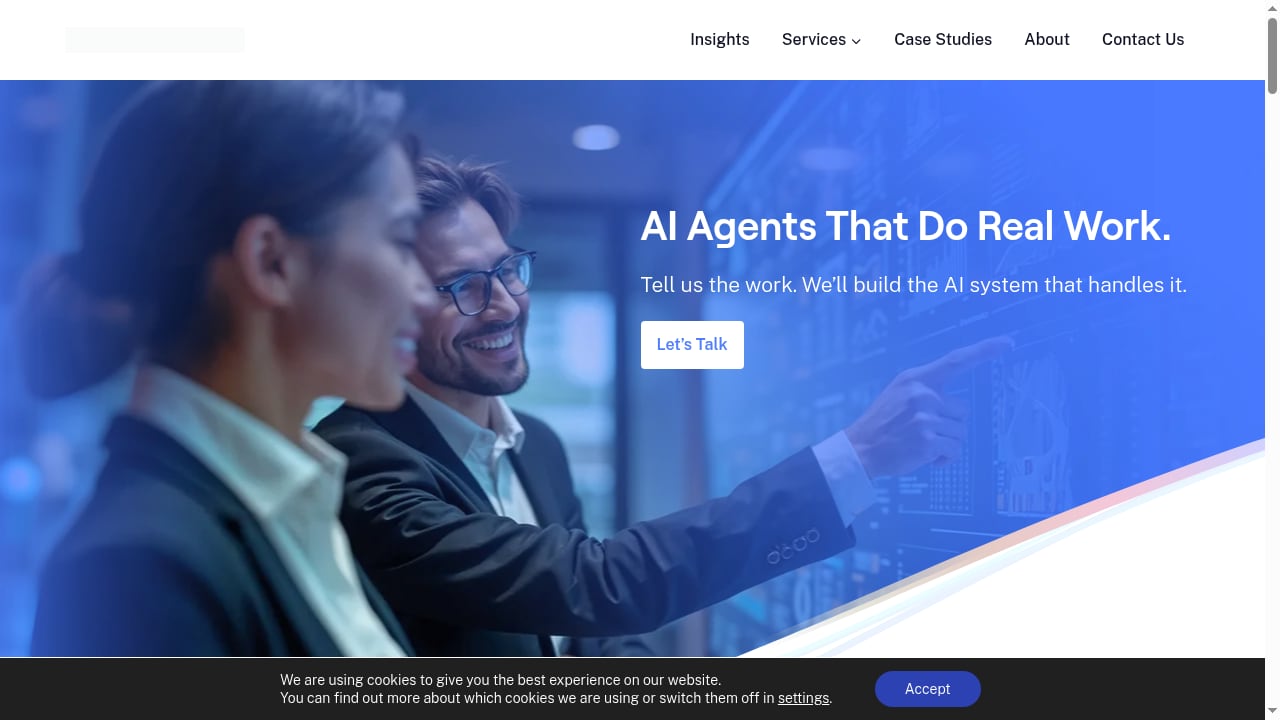
First viewport screenshot of Portland AI Agency — AI Agents & Automation | Fountain City ..
Think of the division of labor like this:
| Layer | AgentBooks | Fountain City |
|---|---|---|
| Brand understanding | Crawls the website, builds brand intelligence | Extends understanding with internal data via RAG |
| Topic planning | Categorized keyword plan from market research | Custom agents that prioritize topics against business signals |
| Research | Studies top organic results for each topic | Autonomous research agents that pull from private sources |
| Drafting | Approval-first article workflow in brand voice | Voice intelligence and tone systems tuned to your team |
| Publishing | Scheduled generation, custom domain, multilingual output | Integrations that push content into your CMS, CRM, or product |
| Scale | Multi-brand workspaces | Multi-agent systems powered by OpenClaw |
AgentBooks is the content engine. Fountain City is the custom automation and agent layer that makes the engine fit your operations.
Setup: a step-by-step workflow
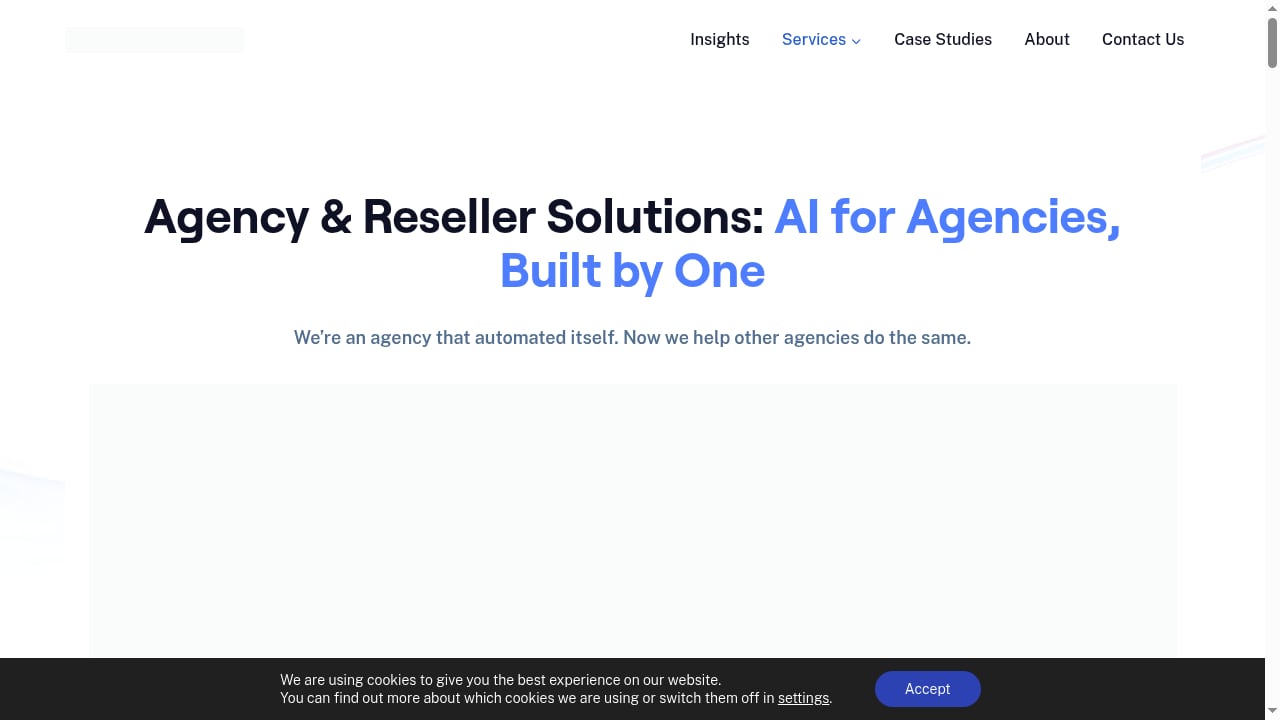
First viewport screenshot of Agency & Reseller Solutions - Fountain City.
Step 1: Get AgentBooks running first
Start with AgentBooks because it establishes the baseline. Share your website once. AgentBooks learns the product, maps the market, and produces a categorized keyword plan. From there, you review the plan, approve topics, and let scheduled generation produce articles in your brand voice. The platform handles SEO preparation — titles, descriptions, keywords, images, tags, and links — so each piece is publish-ready.
If you are still evaluating content engines, comparisons like AgentBooks vs The SEO Agent: Which AI Content Engine Fits? can help you decide whether AgentBooks is the right base layer before you add custom development.
Step 2: Define what Fountain City should build
Once AgentBooks is producing baseline content, identify the gaps that require custom work. Common examples:
- Private knowledge retrieval. A RAG system that lets content agents cite internal documentation, product specs, or compliance language.
- Multi-step research agents. Autonomous agents that gather competitive intelligence, summarize sales calls, or monitor industry sources.
- Voice intelligence. Systems that analyze how your team actually writes and speaks, then feed that into content generation.
- Workflow integrations. Connections between AgentBooks output and your CMS, CRM, or internal publishing tools.
Fountain City's services span autonomous AI agents for content operations, research, and voice intelligence, powered by OpenClaw multi-agent systems, so this step is a scoping conversation rather than a template.
Step 3: Connect the data sources
This is where the pairing earns its keep. Fountain City builds the retrieval layer that connects AgentBooks' content pipeline to data AgentBooks cannot see on its own — internal wikis, support macros, product databases, or historical campaign performance. The result is content that reflects what your company actually knows, not just what is publicly visible on your website.
Step 4: Tune the approval workflow
AgentBooks uses an approval-first article workflow. Keep that gate. As Fountain City adds custom agents and RAG sources, the approval step becomes more important, not less, because it is where a human checks that retrieved context is accurate and on-brand before publishing.
Step 5: Scale across brands and languages
AgentBooks supports multi-brand workspaces and multilingual publishing. If you operate several brands or sell in multiple markets, this is the point where the combination compounds: one content engine, multiple brand identities, and custom agents that handle market-specific research or localization rules.
Practical examples
Example 1: An agency serving multiple clients
An agency runs content for several mid-market clients. AgentBooks provides a separate workspace per brand, each with its own keyword plan and publishing schedule. Fountain City builds a reseller-style agent layer that standardizes research and reporting across accounts, so the agency improves margins without hiring proportionally. Fountain City explicitly offers agency and reseller solutions aimed at exactly this problem: meeting client demand for greater output while protecting profitability.
Example 2: An e-commerce brand with deep product data
An e-commerce company has thousands of SKUs, spec sheets, and customer questions. AgentBooks plans and publishes category and comparison content. Fountain City builds a RAG system over the product database and support history, so articles answer real customer questions with accurate specifications. This mirrors the kind of e-commerce and B2B infrastructure work Fountain City has done before, including a project with Vital Leaf that was associated with a 300% organic traffic increase.
Example 3: A B2B team with long sales cycles
A professional services or manufacturing firm wants content that reflects its actual expertise. AgentBooks handles the publishing cadence. Fountain City builds agents that mine call transcripts and internal documents for the insights that make each article credible to a technical buyer. Fountain City's industry experience includes manufacturing, professional services, and health and wellness, which reduces the learning curve on domain-specific requirements.
What problems does this combination solve?
- Content velocity without quality collapse. AgentBooks keeps the pipeline moving; Fountain City keeps the substance grounded in real data.
- Generic AI output. Brand intelligence from the website plus RAG over private sources produces content that sounds like you and knows what you know.
- Tool sprawl. Instead of stitching together a writer, a researcher, a keyword tool, and a publishing scheduler, you get one engine plus a custom layer built to your workflow.
- Agency margin pressure. Standardized agent workflows let agencies take on more output without linear headcount growth.
- Enterprise context requirements. Mid-market and enterprise teams often cannot use tools that ignore internal data. RAG systems solve that.
When to use each product alone
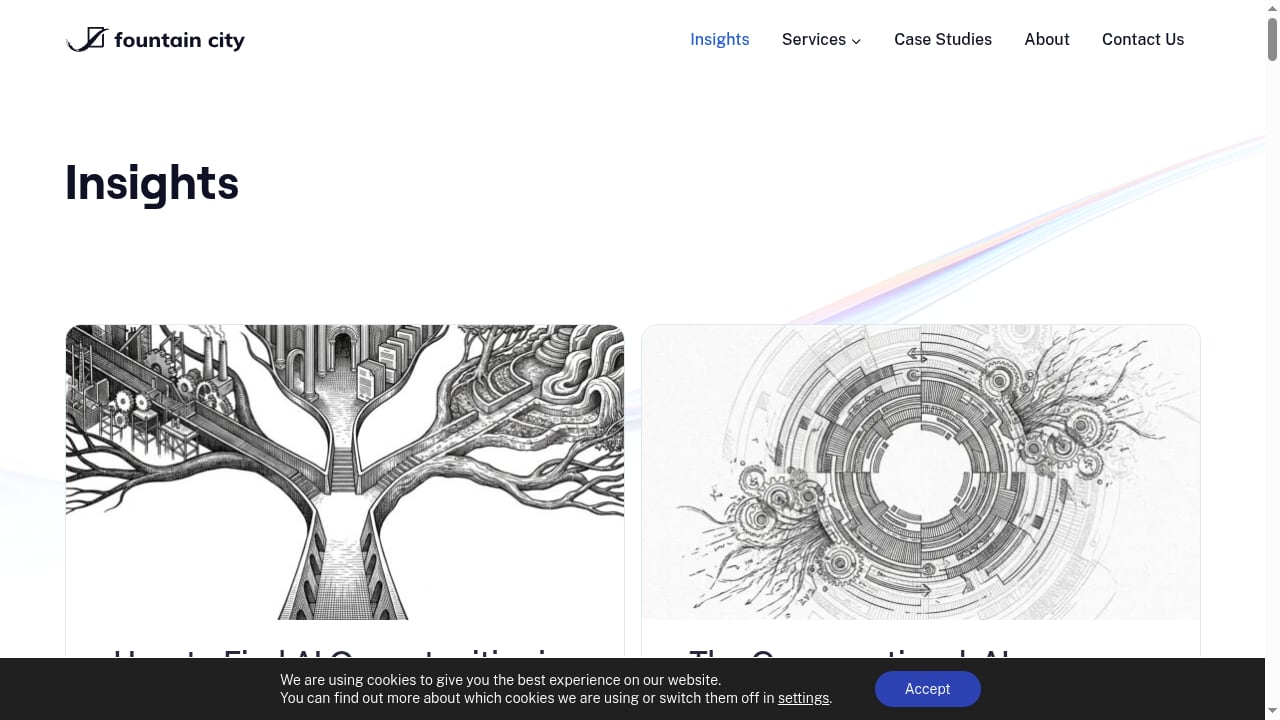
First viewport screenshot of Business Growth Blog: Strategies for Success | Fountain City.
Not every team needs both.
- Use AgentBooks alone if your content needs are primarily public-facing, your product is well described on your website, and you want an always-on publishing engine without custom development. The public beta includes a free plan, a Business plan at $30/month, and an Enterprise plan at $100/month.
- Use Fountain City alone if your problem is not content volume but a specific automation challenge — a research agent, a voice intelligence system, or an internal RAG application.
- Use both when you want scale and specificity at the same time. This is the common pattern for agencies, multi-brand operators, and mid-market teams with proprietary knowledge that must appear in their content.
If you are comparing content automation platforms before committing, reviews such as Averi Review 2026: Honest Look at the AI Content Engine and roundups like Top 10 AI Marketing Automation Software Products 2026 provide useful context on where AgentBooks sits in the market.
Related reading
- AgentBooks vs Brafton vs QuickCreator for Solo Founders - Compare AgentBooks, Brafton, and QuickCreator's AI content team for solo founders. See pricing, voice, automation, and which fits your workflow.
- BrightEdge Review 2026: Enterprise SEO & AI Search Fit - Evidence-based BrightEdge review: enterprise SEO and AI search features, pricing signals, setup effort, limitations, and who should choose or skip it.
Sources and further reading
- The Original City of Maricopa, AZ Page | How many of you hire a travel agent, was it affordable or cost efficient | Facebook - How many of you hire a travel agent, was it affordable or cost efficient? What are the pros of cons? I’m planning a big trip next year, I usually do all the planning myself. But I’m considering...
- Quest Diagnostics Incorporated - SEC.gov - We also have laboratory facilities in Mexico City, Mexico, San Juan, Puerto Rico and Heston, England. ... Fountain, Inc. with and into LabOne, with LabOne ...
- Global Vacations | Luxury Travel Agency | Protravel - From luxury cruises to African safari tours, our passionate & knowledgeable travel agents craft personalized vacations, private tours, and luxury spa getaways
FAQ
Does AgentBooks integrate natively with Fountain City?
There is no single-click integration. The pairing is a services relationship: AgentBooks provides the content automation platform, and Fountain City designs and builds the custom agents, RAG systems, and integrations that connect it to your internal data and workflows.
Do I need custom development to get value from AgentBooks?
No. AgentBooks works as a standalone content engine. Custom development becomes worthwhile when you need private data retrieval, multi-step research agents, or deep workflow integrations.
How long does a Fountain City build take?
Scope varies by project. Because Fountain City works on custom agents, automation, and RAG systems, timelines depend on the number of data sources, the complexity of the retrieval layer, and the integrations required. Expect a scoping phase before any build estimate.
Can this combination work for agencies?
Yes. Fountain City offers agency and reseller solutions, and AgentBooks supports multi-brand workspaces. Together they let an agency run consistent content operations across clients while building reusable agent workflows.
Does AgentBooks guarantee rankings or traffic?
No. AgentBooks optimizes content processes and measurable inputs — planning, research, drafting, publishing, and SEO preparation. It does not guarantee rankings or traffic, and no responsible content tool should claim to.
What is OpenClaw in this context?
OpenClaw is the multi-agent system framework Fountain City uses to power its autonomous AI agents. It is the technical foundation behind the custom agent work, not a separate product you buy directly.
Conclusion
AgentBooks and Fountain City are complementary by design. AgentBooks gives you a content engine that starts from real product data and runs continuously. Fountain City gives you the custom agent and RAG layer that makes that engine specific to your business, your data, and your workflows.
Start with AgentBooks to establish the baseline: connect your site, review the keyword plan, and get the publishing cadence running. Then bring in Fountain City for the parts that require custom engineering — private knowledge retrieval, autonomous research, voice intelligence, and integrations. That sequence keeps the project grounded in something that already works before you invest in customization.