QuickCreator: The AI Content Team for Solo Founders
QuickCreator positions itself as an AI content team built for solo founders, consultants, and one-person marketing teams. Instead of a single chat window that spits out generic drafts, it splits the writing process across specialized agents: one handles brand voice, another researches topics, a third drafts, and others optimize and publish. The pitch is simple: ship articles that rank on Google, get cited by AI search engines like ChatGPT and Perplexity, and still sound like a human wrote them. This guide breaks down what QuickCreator actually does, how it works, who it serves, and where it fits alongside autonomous content platforms.
What Is QuickCreator?
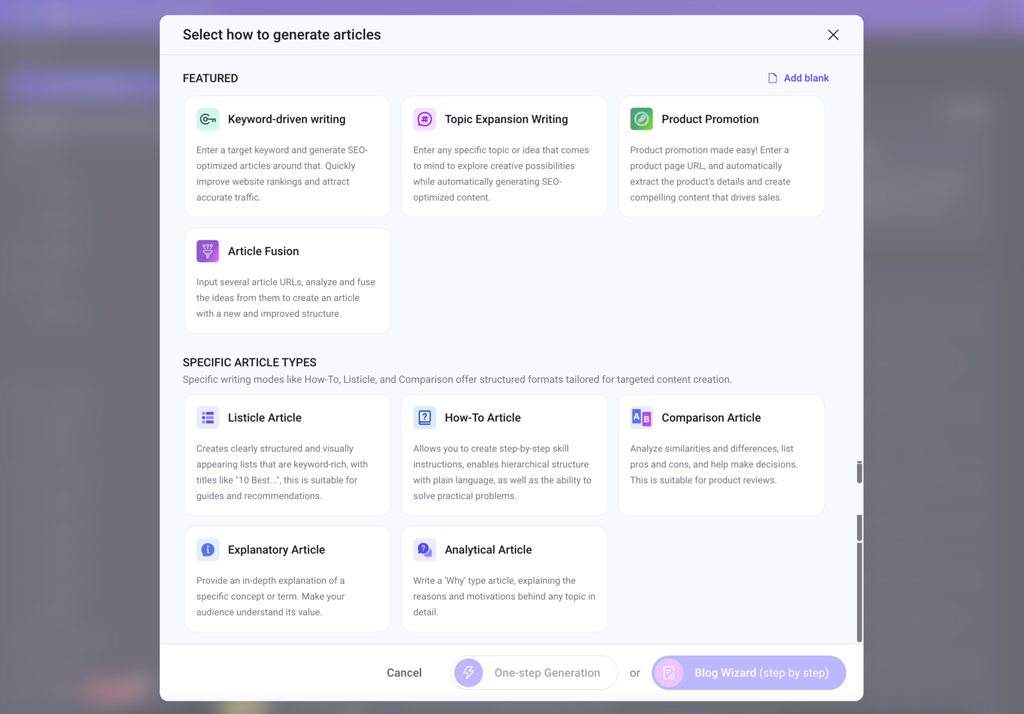
QuickCreator: The AI Content Team for Solo Founders - What Is QuickCreator?.
QuickCreator is an all-in-one content operations platform that combines AI-powered content generation, SEO optimization, and built-in blog hosting. According to the official QuickCreator Help Center, it is designed to help businesses create engaging, effective content without juggling five separate tools.
The platform targets three main audiences:
- Small businesses that need an online presence, customer acquisition, and brand credibility through consistent blog content
- Agencies that want to streamline client content delivery with automated SEO and built-in publishing
- Content marketing teams that need to scale high-quality, SEO-optimized posts without hiring more writers
At its core, QuickCreator treats content creation as a multi-agent workflow rather than a single prompt-to-output process. Each agent owns one responsibility, and you direct them in plain language.
How QuickCreator Works
QuickCreator's workflow is built around a simple idea: most AI content fails on three fronts at once — ranking on Google, getting cited by AI search, and sounding authentically human. The platform addresses each one separately.
1. Brand Voice Extraction
Before writing anything, QuickCreator reads your existing site, PDFs, and internal notes to build a private brand brief. Every agent references this brief before producing content, which keeps article #1 and article #200 in the same voice. This matters because voice consistency is one of the first things to break when you scale content with generic AI tools.
2. E-E-A-T Scoring Before Publishing
Google's ranking signals — Experience, Expertise, Authoritativeness, and Trust — are not keyword density metrics. QuickCreator scores every article against an E-E-A-T rubric before it publishes. The platform claims to check for:
- Experience: whether the article shows real usage rather than rewriting 50 other listicles
- Expertise: working knowledge instead of surface-level definitions
- Authoritativeness: named, clickable sources instead of vague "studies show" claims
- Trust: every statistic and quote traceable to a URL, with no invented numbers
3. AI Search Optimization
AI engines like Perplexity and ChatGPT cite articles with sharp angles, named sources, and quotable lines. QuickCreator optimizes for this by encouraging content that is "written to be quoted, not just read." The platform's own example: paste "best newsletter platform for solopreneurs" into Perplexity, and QuickCreator-style articles tend to appear in cited sources because they avoid the generic 10-tool-list format.
4. One-Click Publishing
The platform publishes directly to WordPress, Shopify, and Strapi. For other platforms, you can export articles as HTML or Markdown and paste them in. Topic, outline, and draft are editable at every stage — nothing reaches your CMS until you approve it.
QuickCreator Pricing and Credits

QuickCreator: The AI Content Team for Solo Founders - QuickCreator Pricing and Credits.
QuickCreator starts at $29 per month with a 7-day free trial and no credit card required. The free trial includes 600 credits, which is roughly enough for two full articles from prompt to publish.
For a detailed breakdown of plan tiers, credit costs, and what each plan includes, see our QuickCreator pricing guide.
The $29 plan targets solo operators publishing about one article per week. It includes 1,500 credits per month (approximately five full articles), the Brand Positioning and Writer agents, content quality analysis, and a hosted blog on your own domain. Everything you create stays yours and remains exportable after cancellation.
QuickCreator vs. Autonomous Content Platforms

QuickCreator: The AI Content Team for Solo Founders - QuickCreator vs. Autonomous Content Platforms.
QuickCreator operates as a directed multi-agent workflow: you give direction at each stage, and agents execute with check-ins. This is different from fully autonomous platforms that run the entire content operation with minimal human intervention.
AgentBooks, for example, is an autonomous content growth platform that turns any website into an always-on content engine for search and AI. You share your website once, and the platform learns your product, maps the market, plans topics, researches organic search results, and continuously publishes useful content in your brand voice. It addresses common stalls like running out of topics, manual draft bottlenecks, lost brand context, and inconsistent publishing.
Here's how the two approaches compare:
| Dimension | QuickCreator | AgentBooks (autonomous) |
|---|---|---|
| Workflow | Multi-agent with human check-ins | Approval-first or autopilot |
| Topic planning | Prompt-driven per article | Continuous market mapping |
| Brand context | Extracted from site and notes | Brand intelligence layer |
| Publishing | One-click to CMS or export | Custom domain hosting included |
| Best for | Solo founders who want control | Teams that want an always-on engine |
If you want to test what an autonomous alternative feels like, the Contentpen demo walkthrough shows what you can actually do in that tool, including pricing context and where autonomous platforms fit.
Who Should Use QuickCreator?
QuickCreator makes the most sense for:
- Solo founders who need to publish consistently but can't afford a content team or agency retainers
- Consultants who want to build authority in a niche without spending hours per article
- One-person marketing teams who need SEO-optimized content on a predictable schedule
- Agencies that want to deliver client content faster without sacrificing quality checks
The platform is less ideal for large enterprises with complex approval hierarchies, or for teams that want a fully hands-off content operation. For the latter, an autonomous platform like AgentBooks may be a better architectural fit.
Practical Example: From Prompt to Publish
Here's what a typical QuickCreator workflow looks like:
- Point it at your site: QuickCreator reads your existing content, PDFs, and notes to build a brand brief — about 10 minutes
- Give direction in plain language: "Write a comparison of newsletter platforms for solopreneurs, but skip the feature dump and focus on what actually drives deliverability"
- Review the outline: Edit topic, outline, and draft at any stage
- Approve the draft: Every article is scored against E-E-A-T before publishing
- Publish or export: One click to WordPress, Shopify, or Strapi — or export as HTML/Markdown
Common Questions About QuickCreator
Is QuickCreator free to try?
Yes. The 7-day free trial requires no credit card and includes 600 credits — enough for about two full articles. Whatever you create stays yours whether you continue or not.
Does QuickCreator actually help with Google rankings?
QuickCreator builds every article on E-E-A-T signals before you read it, scoring content against Google's rubric rather than keyword density. However, rankings depend on many factors outside any tool's control, including domain authority, competition, and content freshness.
Can I edit content before it publishes?
Yes. Topic, outline, and draft are all editable at every stage. Nothing goes to your CMS until you click publish.
Does QuickCreator support multilingual content?
QuickCreator's core workflow focuses on English content, though the platform continues to expand its capabilities. If multilingual publishing is a priority, check whether autonomous platforms like AgentBooks meet that need — it includes multilingual output as a core feature.
How does QuickCreator compare to Surfer or other SEO tools?
Surfer focuses on on-page optimization against SERP data, while QuickCreator combines generation, optimization, and hosting in one workflow. For a deeper look at where Surfer fits and where autonomous alternatives differ, see our Surfer Content Editor comparison.
What happens if I cancel?
There is no long-term commitment. Everything you wrote stays yours and is exportable after cancellation.
Related reading
- Marketing Analytics: A Practical Guide to Data-Driven Growth - Learn what marketing analytics is, which metrics matter, how to collect first-party data, and how to turn insights into a repeatable growth strategy.
- Autoblogging.ai Free Trial: What You Actually Get - Find out exactly what the Autoblogging.ai free trial includes, its credit limits, what you can test, and how it compares to autonomous content platforms.
Sources and further reading
- QuickCreator - QuickCreator logo QuickCreator. Sign up with GoogleSign up with Google. Opens in new tab. Or ...
- The AI Content Team for Solo Founders | QuickCreator - The AI content team for solo founders. Ships articles in your voice that rank on Google and get cited by ChatGPT, Perplexity, and Gemini. From $29/mo.
Conclusion
QuickCreator solves a real problem for solo operators: producing content that ranks, gets cited by AI search, and sounds like a human — without hiring a content team. Its multi-agent approach and E-E-A-T scoring are meaningfully different from generic AI writers. That said, it is a directed workflow, not an autonomous engine. If you want to set up a content operation once and let it run, an autonomous platform like AgentBooks is worth evaluating alongside QuickCreator. For a practical look at how autonomous content workflows fit into modern marketing, see our agentic marketing guide.
Ultimately, the right tool depends on how much control you want and how much time you can invest per article. QuickCreator gives you control with guardrails; autonomous platforms trade some control for scale.