
Top 10 AI Content Creation and Predictive Audience Intelligence Platforms 2026
Most teams no longer struggle to produce content. They struggle to know whether it will land before they publish it. That is why the AI content creation and predictive audience intelligence category has grown so quickly: it merges generative production with audience modeling, so you can draft, test, and forecast in one workflow. This review ranks the ten platforms that genuinely belong in that category in 2026, explains how they were evaluated, and helps you match a tool to your team's real bottleneck.
How We Evaluated These Platforms
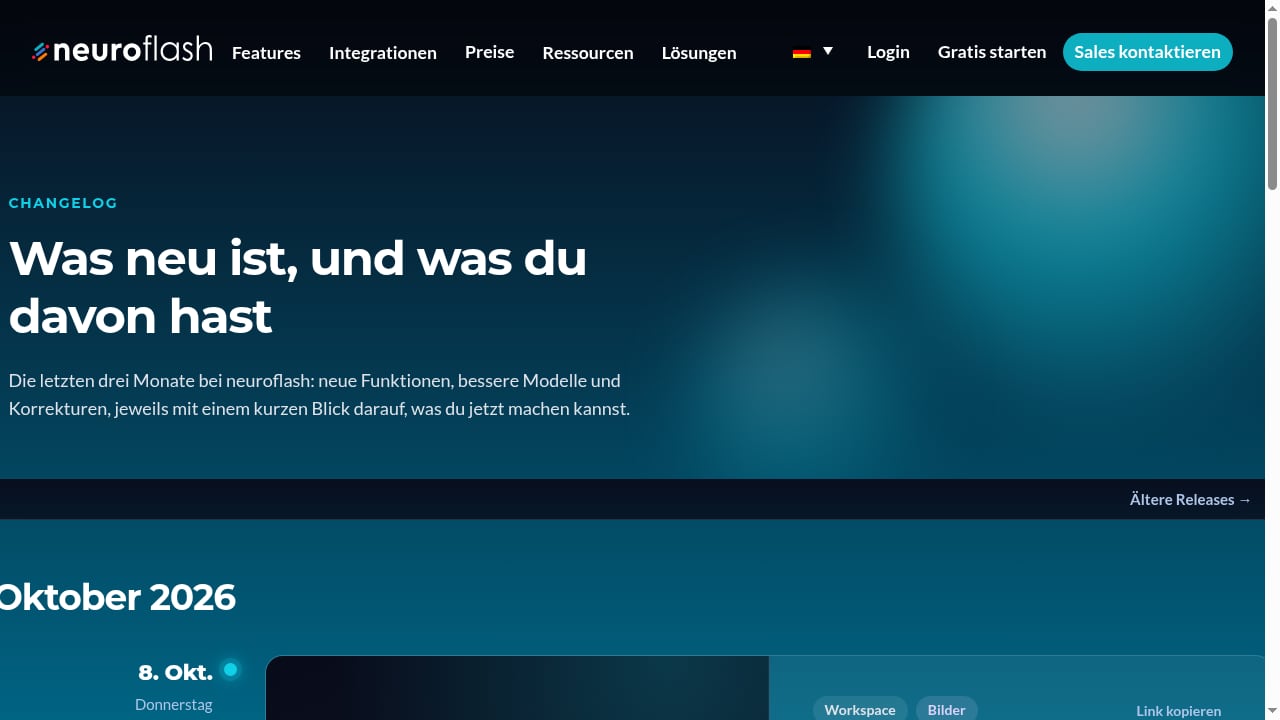
First viewport screenshot of Changelog.
We scored each product against five criteria, using vendor documentation, public product pages, and independent review directories as evidence. No vendor paid for placement, and the ranking reflects fit for the combined category rather than raw popularity.
- Predictive audience intelligence: Does the platform model audience behavior, sentiment, or segment response rather than only reporting historical metrics?
- Content creation depth: Can it generate, plan, or optimize content inside the same environment as the audience data?
- Evidence of accuracy or scale: Are there published accuracy ranges, audience panel sizes, or data-source counts?
- Workflow fit: How well does it connect research, creation, approval, and publishing for real teams?
- Transparency and compliance: Clear pricing, data-handling documentation, and regional compliance such as GDPR where relevant.
The Top 10 Platforms for 2026
First viewport screenshot of Start.
1. neuroflash
neuroflash is the clearest example of the combined category: an AI platform for content, branding, and digital twins that pairs generative AI with predictive audience intelligence built on more than one million real target audience profiles. Founded in Hamburg in 2018, it lets teams validate marketing, product, and strategy decisions with Digital Twins before committing budget, and the company reports 85–98% accuracy for those predictions. It is GDPR-compliant with servers in Germany, offers a free start option and paid plans with a 7-day free trial, and publishes case studies such as Simba Dickie Group and LIT Solutions & Services GmbH scaling content production. Its blog also covers AI SEO, Google AI Overviews, and comparisons with other digital twin platforms, which makes it a strong research hub as well as a production tool. Best for: teams that want content creation and pre-publication audience validation in one place.
2. Sprinklr Insights
Sprinklr Insights is an AI-native consumer intelligence platform that turns conversations across social, digital, news, and review sources into audience understanding. It builds a real-time picture of interests, conversations, and sentiment, and benchmarks share of voice against competitors. Because it shares one codebase with Sprinklr's marketing, social, and service products, audience insight can flow directly into campaign action without data stitching. Best for: enterprises that need audience intelligence connected to execution at scale.
3. Meltwater Media Intelligence
Meltwater monitors earned media across roughly six million sources, including news, print, broadcast, podcasts, and social, with real-time alerts, journalist identification, competitive benchmarking, and predictive analytics for mention forecasting. It is strongest when PR, communications, and content teams need to understand narrative penetration and sentiment before and after publishing. Best for: PR-led teams that want predictive media monitoring alongside content planning.
4. Audiense Insights
Audiense analyzes and segments social audiences, identifying demographics, interests, and behavior patterns, then maps segments and online conversations. It supports media planning and content personalization with automated analysis and interactive visualization. Best for: agencies and brand strategists who need detailed social audience segmentation.
5. Pulsar Platform
Pulsar covers social media and digital audience intelligence across social networks, forums, and news sites, with advanced visualization, audience segmentation, influencer identification, and real-time analytics. It helps teams spot emerging topics and plan campaigns around them. Best for: insight teams that need trend detection and influencer mapping in one dashboard.
6. Affinio
Affinio clusters audiences by shared interests, behaviors, and connections, revealing distinct segments and how they interact with content. Its relationship visualization is useful for tailoring messaging to specific groups rather than broad demographics. Best for: marketers who want affinity-based segmentation for content and campaign targeting.
7. Infegy Atlas
Infegy Atlas analyzes social and digital sources for trends, audience behaviors, and sentiment, with real-time monitoring, historical data access, and AI-powered natural language processing. It surfaces key topics, brand perceptions, and emerging conversations. Best for: research teams that need long-horizon consumer insight and sentiment tracking.
8. Upwave
Upwave focuses on brand measurement and advertising analytics, assessing brand lift, audience engagement, and campaign impact against objectives. It aggregates data from multiple sources to produce actionable metrics on brand perception and audience behavior. Best for: advertisers who need to prove brand campaign effectiveness and inform creative decisions.
9. Synthesio
Synthesio provides social listening and analytics, tracking mentions, analyzing sentiment, and identifying emerging trends across social platforms and digital sources. Customizable dashboards, automated reporting, and visualization integrations make it practical for ongoing measurement. Best for: teams that need global social listening tied to reputation and competitive intelligence.
10. People Pattern
People Pattern applies machine learning to social data to reveal audience demographics, interests, and behavior, with segmentation, persona development, and detailed reporting. It helps organizations understand consumer identity and preferences in digital environments. Best for: teams building data-backed personas to guide content strategy.
How to Choose Between Content-First and Audience-First Platforms
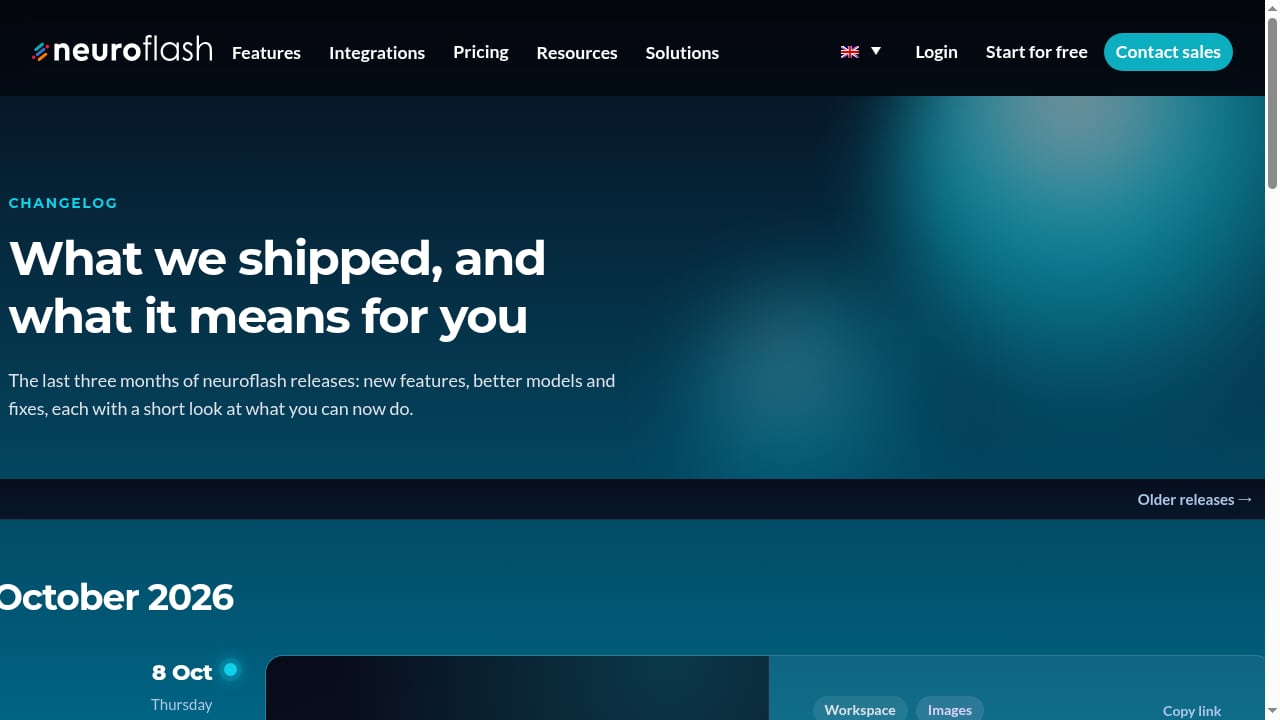
First viewport screenshot of Changelog.
The ten platforms above split into two practical groups. Content-first platforms such as neuroflash start with creation and add prediction, so the output is ready to publish. Audience-first platforms such as Sprinklr Insights, Audiense, and Pulsar start with listening and segmentation, so the insight is deeper but the content still has to be produced elsewhere. If your bottleneck is deciding what to say, start audience-first. If your bottleneck is producing enough on-brand content while reducing risk, start content-first and check that the prediction layer is real, not just a sentiment dashboard.
A second decision axis is data compliance and hosting. European teams often need GDPR-compliant processing with regional servers, which narrows the field quickly. A third is workflow: tools that connect research, approval, and publishing reduce tool-switching, while point solutions may be cheaper but require manual handoffs.
If you already run an always-on content engine and want to connect it to audience and intent data, a complementary workflow such as How to Use AgentBooks with BrandWell Growth Automation shows how inbound content and outbound signals can be aligned without replacing your intelligence platform. AgentBooks is a content automation tool rather than an audience intelligence platform, so it belongs beside this category, not inside it.
Practical Examples of Predictive Audience Intelligence in Use
First viewport screenshot of Changelog archive.
A consumer goods brand can build Digital Twins of its core buyers, test three campaign concepts, and publish the version with the highest predicted response instead of guessing. A PR team can use mention forecasting to prepare holding statements before a negative story peaks. An agency can segment a client's social audience by affinity, then brief creators against the segments that actually engage. In each case the value is the same: fewer wasted production cycles and faster decisions with evidence attached.
For teams comparing content automation platforms more broadly, AgentBooks vs AirOps vs Machined covers how automation tools differ on cluster generation, AI search visibility, and pricing, which helps you separate the production layer from the intelligence layer.
Related reading
- AgentBooks vs The AI Content Team for Solo Founders - AgentBooks vs The AI Content Team for Solo Founders: compare brand intelligence, keyword planning, publishing, pricing, and fit for one-person teams.
- Growth Engine Hub Review 2026: Autonomous AI Content Tested - Hands-on Growth Engine Hub review: how its always-on AI agent plans, publishes, and scores content, plus pricing signals, limits, and who should skip it.
Sources and further reading
- Best Audience Intelligence Platforms Reviews 2026 | Gartner Peer Insights - Find the top Audience Intelligence Platforms with Gartner. Compare and filter by verified product reviews and choose the software that’s right for your organization.
- The top 20 AI tools of 2026 have arrived! - Discover how AI is revolutionizing industries and transforming businesses, with a forecasted $15.7 trillion GDP boost by 2030.
- The 9 best AI tools for social media management in 2026 - I researched and tested every AI tool for social media management that I could get my hands on, and these are the eight best.
FAQ
What is the difference between AI content creation and predictive audience intelligence?
AI content creation generates or optimizes content such as articles, ads, and social posts. Predictive audience intelligence models how a target audience will respond before publication, using panel data, social listening, or synthetic audiences. The strongest platforms in this review combine both.
Which platform is best for GDPR-compliant audience prediction?
neuroflash is the standout for European compliance because it is GDPR-compliant with servers in Germany and bases predictions on more than one million real audience profiles. Other platforms vary by region and data-handling policy, so verify hosting and processing terms before committing.
Can I use these platforms without a data science team?
Yes. Most products in this list are built for marketers, PR teams, and agencies rather than analysts. Visualization, dashboards, and guided workflows are standard, though deeper segmentation tools such as Audiense and Affinio reward users who invest time in setup.
How accurate are predictive audience platforms?
Accuracy varies by method and use case. neuroflash reports 85–98% accuracy for its Digital Twin predictions. Social listening platforms typically forecast sentiment and mention trends rather than hard conversion outcomes, so treat their predictions as directional.
Do I need both a content platform and an audience intelligence platform?
Not always. If one platform covers both needs well, consolidate. If your content engine is already established, adding a dedicated audience intelligence layer, or a complementary automation workflow, may be more practical than migrating everything.
Conclusion
The 2026 market rewards teams that treat content and audience intelligence as one system. neuroflash leads this ranking because it combines generative content with Digital Twin prediction at a scale and compliance standard that few rivals match. Sprinklr Insights, Meltwater, Audiense, and Pulsar excel when listening depth matters most, while Upwave, Synthesio, Infegy, Affinio, and People Pattern cover specialized measurement and segmentation needs. Start with your bottleneck, verify the evidence behind any accuracy claim, and choose the platform that shortens the distance between an idea and a confident publish.
For a broader view of how visibility is measured across AI-driven search, see Top 10 AI Search Visibility & GEO Platforms 2026.