AgentBooks vs Contentpen: Which AI Content Engine Wins?
Choosing between an autonomous content platform and a full‑featured AI SEO suite isn't easy. Both AgentBooks and Contentpen promise to take the busywork out of content marketing, but they solve the problem from different angles. This comparison breaks down exactly where each tool shines, where it stumbles, and which one deserves a place in your stack.
Platform Overview
AgentBooks vs Contentpen: Which AI Content Engine Wins? product interface and feature overview.
AgentBooks is an autonomous content growth platform. You connect your website once; it learns your product, maps the market, plans topics, researches what already ranks, and continuously publishes useful, brand‑aligned content. Every article is grounded in verified product facts and the top three organic search results – not in generic prompts.
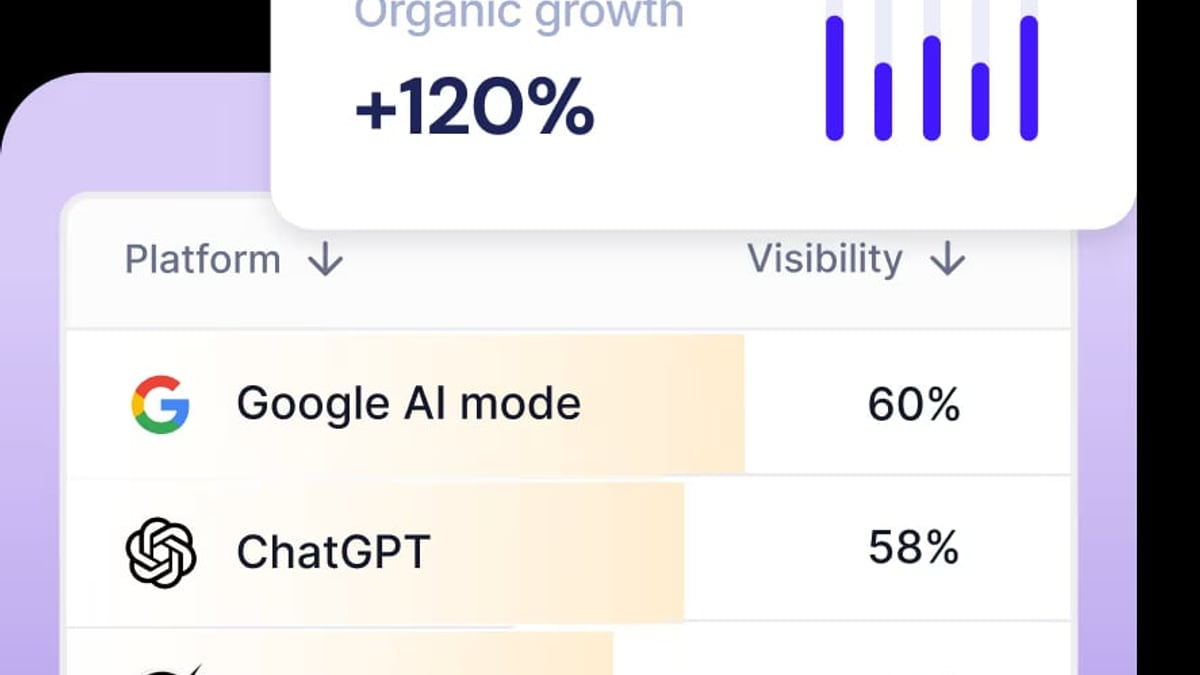
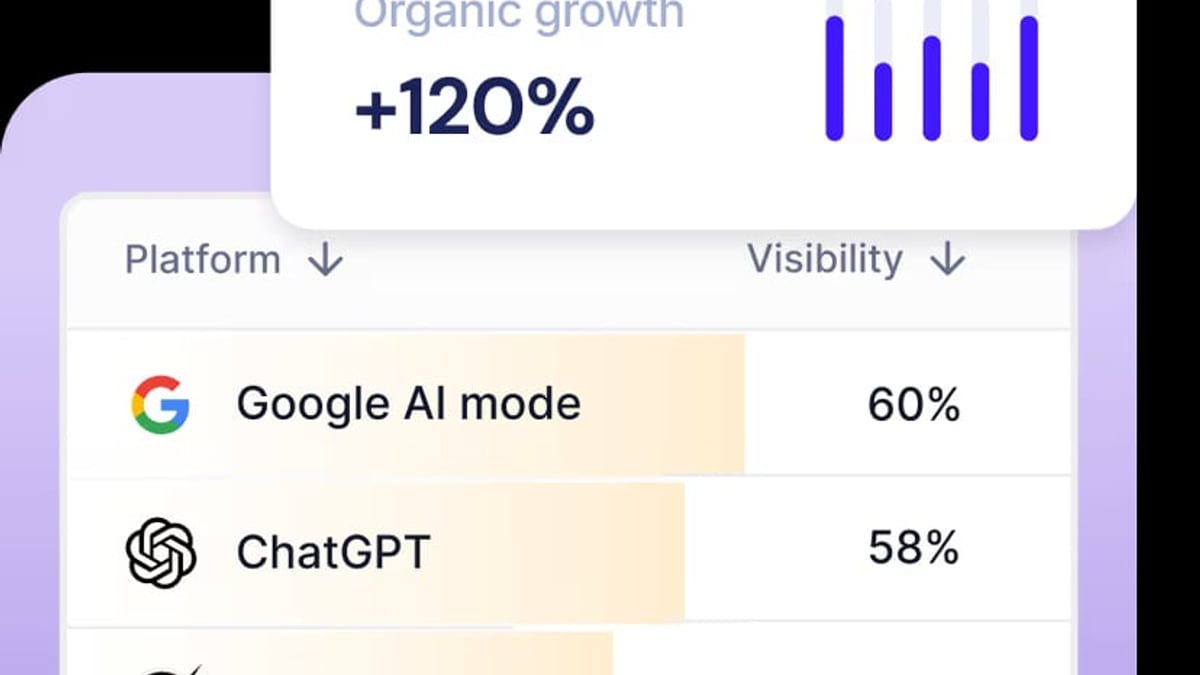
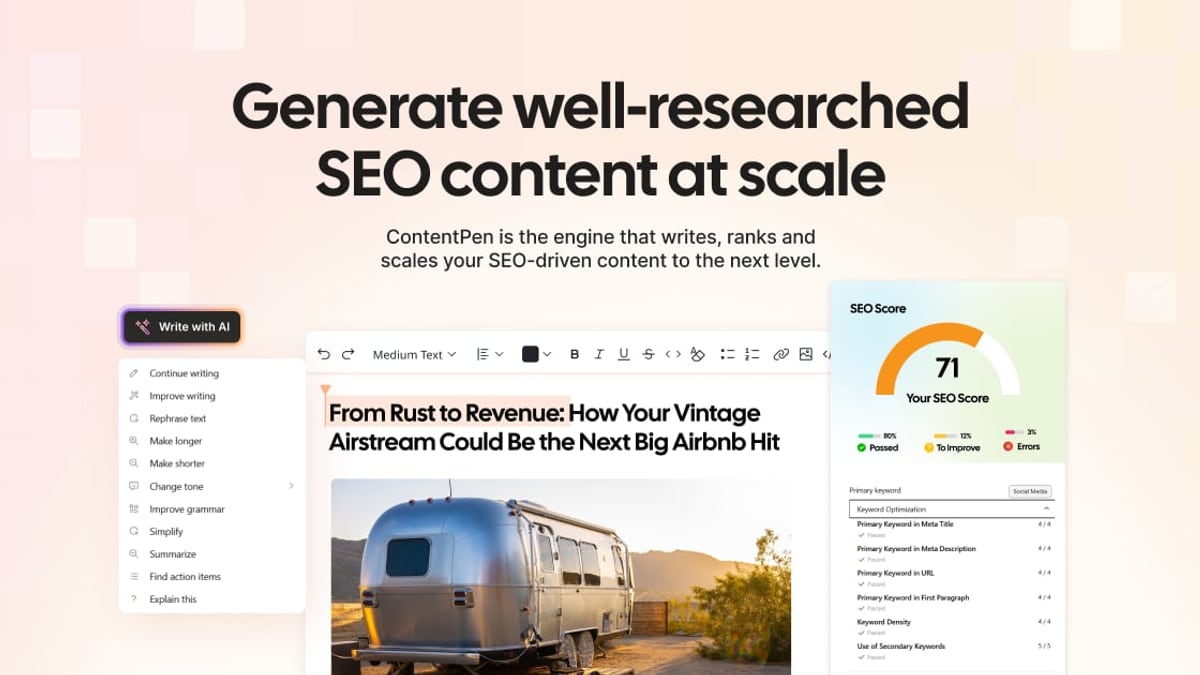
Contentpen positions itself as an end‑to‑end AI content and SEO platform. It automates research, writing, optimization, publishing, and performance monitoring. A standout feature is Answer Engine Optimization (AEO) scoring and AI visibility monitoring across seven major AI platforms, such as ChatGPT and Gemini. The tool also offers bulk generation, one‑click CMS publishing, and detailed analytics dashboards.
Side‑by‑Side Feature Comparison
AgentBooks vs Contentpen: Which AI Content Engine Wins? product interface and feature overview.
Brand Understanding and Content Foundation
AgentBooks builds a reusable brand profile straight from your website. It crawls pages, summarizes products, detects related products, and stores industry terms, logos, and factual boundaries. Every piece of content inherits that brand identity, so you never start from scratch. Contentpen relies on keyword research and SERP analysis, but it does not maintain a persistent brand dataset – more often you’re still telling it what your product does at the draft level.
Research and Topic Planning
AgentBooks maps the market mechanically: it identifies substitutes, complementary products, same‑audience tools, and same‑scenario products. The keyword plan combines product names, AI‑generated modifiers, Google autocomplete, categories, and Google Trends history. Before writing, the platform studies the top three organic results, excluding ads, to inform structure and angle. Contentpen offers keyword research with competitor gap analysis, but its research is not hard‑wired into every article generation. The result can be articles that check SEO boxes without being tightly related to what you sell.
Content Creation and SEO
Both platforms produce SEO‑ready articles. AgentBooks generates title, description, keywords (TDK), clean headings, internal links, nofollow external links, and contextual images. The operating model is queue‑based: you set a cadence, and the system publishes on a schedule. Contentpen adds AEO scoring, automatic internal/external linking, and bulk generation. It can push content directly to WordPress, Wix, Webflow, Shopify, and Ghost. However, AgentBooks’ differentiator is that each output is directly connected to your brand profile and the actual organic SERP, not just a keyword.
Publishing and Workflow
AgentBooks keeps a transparent, approval‑first workflow by default. You confirm the brand brief, approve the keyword strategy, and review drafts before anything goes live. It also supports custom‑domain multilingual publishing with responsive blog templates. Contentpen offers multi‑client workspaces, approval workflows, and one‑click CMS publishing. Both handle operational control well, but AgentBooks’ entire workflow is built around making brand standards easy to enforce at scale.
Analytics and Monitoring
Here Contentpen pulls ahead. It delivers granular analytics: content decay detection, CTR gap analysis, quick‑win identification, and AI visibility monitoring with sentiment scoring and share of voice analysis across seven AI platforms. AgentBooks, on the other hand, focuses on controllable inputs – keyword deduplication, document history, and publishing quality – rather than traffic dashboards. If real‑time monitoring is critical, Contentpen offers a richer analytics layer.
Pricing at a Glance
- AgentBooks: Free Starter plan, Pro at $29/month, Team at $99/month.
- Contentpen: Starter plan at $27/month (10 articles/month), with custom enterprise tiers.
The entry‑level cost is almost identical, but AgentBooks’ free tier lets you build a brand profile and test the autonomous workflow before paying anything.
Where AgentBooks Stands Out
AgentBooks vs Contentpen: Which AI Content Engine Wins? product interface and feature overview.
For product‑led teams, AgentBooks is the clear winner in three areas:
- True brand intelligence – not session memory, but a persistent, crawlable product profile that feeds every article.
- Research‑first creation – every piece of content is based on what actually ranks, not what a generic AI thinks should rank.
- Compounding content engine – the scheduling, deduplication, and approval‑first design mean your content operation can run with minimal human intervention while staying on‑brand.
Combine that with related‑product discovery and market mapping, and you get a content OS that grows stronger the more it publishes. For SaaS companies, e‑commerce stores, and digital creators who need content that truly represents their product, AgentBooks delivers what typical AI writers cannot.
If you’re weighing other autonomous tools, AgentBooks vs Machined vs GravityWrite: Which Tool Fits? gives a deeper feature breakdown across more alternatives.
Where Contentpen Might Fall Short
AgentBooks vs Contentpen: Which AI Content Engine Wins? product interface and feature overview.
Contentpen’s biggest asset – its breadth – can also be a drawback. While it offers AEO scoring and AI visibility monitoring, it lacks the early‑stage brand intelligence that prevents generic output. You might still spend time feeding product context into each batch of articles, and the research layer, while robust for keyword analysis, doesn’t systematically incorporate the top organic results into the drafting stage.
For teams that need a content engine that understands their product from day one, Contentpen can feel more like an advanced writing assistant than a strategic operator. It’s excellent at monitoring and optimizing existing content, but the creation phase still leans on manual direction. In contrast, AgentBooks treats every brand as a dataset to be learned and applied consistently across topics.
If you’ve been exploring AI writers, our QuickCreator Review: Does Its AI Content Engine Pay Off? looks at another platform that shares some similarities – and differences – with both tools.
Direct Comparison: Autonomy and Content Quality
What separation really comes down to is the underlying model:
- AgentBooks runs as a content operating system. You feed it a website, approve the strategy, and it operates a repeatable, brand‑grounded content workflow.
- Contentpen runs as a multi‑feature marketing suite. It covers the full lifecycle – from ideation to analytics – but still expects the user to supply the strategic brand context.
If your primary need is consistent, product‑led content that keeps publishing without daily oversight, AgentBooks offers a tighter, more defensible solution. If you need deep analytics, AEO‑optimized writing, and AI visibility tracking on top of content production, Contentpen can complement that, but you’ll likely still need a separate layer of brand management. For many product companies, that extra layer is precisely what AgentBooks automates.
And when you’re ready to supercharge your brand assets, How to Use AgentBooks with Bynder for Automated Brand Content shows how to connect the autonomous engine with a DAM for even faster, on‑brand creation.
Related reading
- Top 10 Digital Experience Platforms (2026) Ranked & Reviewed - See the 10 best digital experience platforms for 2026 based on analyst data, user reviews, and real‑world results. Compare Adobe, Optimizely, Sitecore, and more.
Sources and further reading
- AgentBooks — Autonomous Content Growth for Search and AI - Share your website once. AgentBooks learns your product, maps the market, plans topics, researches organic results, and keeps publishing useful content in your brand voice.
- Agentive SEO vs. Contentpen Comparison - Compare Agentive SEO vs. Contentpen using this comparison chart. Compare price, features, and reviews of the software side-by-side to make the best choice for your business.
- Compare ContentBlock vs. Contentpen in 2026 - What’s the difference between ContentBlock and Contentpen? Compare ContentBlock vs. Contentpen in 2026 by cost, reviews, features, integrations, and more
Frequently Asked Questions
Is AgentBooks a direct Contentpen alternative?
Yes, for teams that prioritize brand‑grounded, autonomous publishing. If your main goal is to turn your website into a self‑running content engine, AgentBooks is a purpose‑built alternative. If you also need advanced AI visibility monitoring, Contentpen offers that natively, while AgentBooks focuses on consistent, research‑backed output.
Does AgentBooks publish to third‑party CMS platforms?
AgentBooks provides a custom‑domain blog and multilingual publishing environment. It does not offer one‑click publishing to WordPress or Shopify like Contentpen, but it targets teams that want a separate content hub that’s fully managed by the platform.
Can Contentpen match AgentBooks’ brand intelligence?
Contentpen does not build a reusable brand profile from your website. It relies on the information you provide per project or per article, which can lead to drift over time. AgentBooks keeps product facts, positioning, and language uniform by design.
Which tool is better for a small team with no dedicated writers?
AgentBooks is built exactly for that scenario. After an initial strategy review, you can let the agents run on a schedule you choose, and the approval‑first mode keeps you in control without needing a constant editorial presence.
Final Verdict
Both AgentBooks and Contentpen are capable platforms, but they serve different growth motions. Contentpen aims to be a single dashboard for content marketing and AI visibility, while AgentBooks aims to be the content engine that runs in the background, compounding organic discovery around your actual product.
If what’s holding you back is the constant operational lift – topics running dry, brand context vanishing, drafts still needing a team – AgentBooks hands you a system that learns your product once, then keeps publishing useful, research‑backed content in your voice. For product‑led teams that want an always‑on content advantage without a large editorial staff, AgentBooks is the more strategic, lasting choice.