QuickCreator Review: Does Its AI Content Engine Pay Off?
QuickCreator pitches itself as a full AI content team for solo founders, consultants, and one-person marketing departments. Instead of juggling multiple tools, you get six specialized agents that learn your brand voice, research topics, draft articles, and optimize for both Google and AI engines like ChatGPT and Perplexity. But does it actually save time and produce content that ranks? In this evidence-driven review, we examine who it’s for, what it does well, where it falls short, and how it stacks up against alternatives like AgentBooks.
Who Should Use QuickCreator?
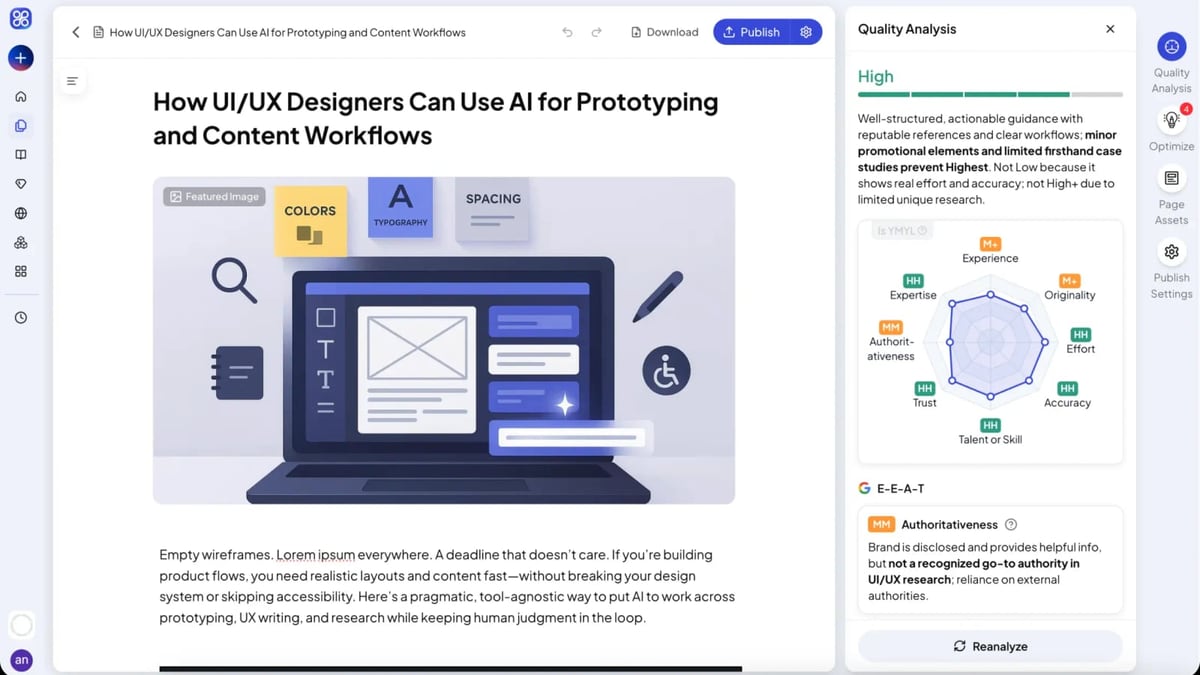
QuickCreator Review: Does Its AI Content Engine Pay Off? product interface and feature overview.
QuickCreator is built for independent operators who need a reliable blog presence without hiring writers or editors. Typical users include:
- Solo founders validating a product and publishing educational SEO content.
- Independent consultants who want to demonstrate expertise through regular articles.
- One-person marketing teams at small businesses managing a blog alongside other tasks.
- Side-hustlers building niche affiliate or informational sites.
If you already have a content team or require multi-channel campaign orchestration, you might look toward more autonomous platforms like AgentBooks vs QuickCreator vs contentmarketing.ai. But for a single operator who wants a guided, agent-driven writing process, QuickCreator’s focus makes sense.
Core Features: The Six AI Agents That Power QuickCreator
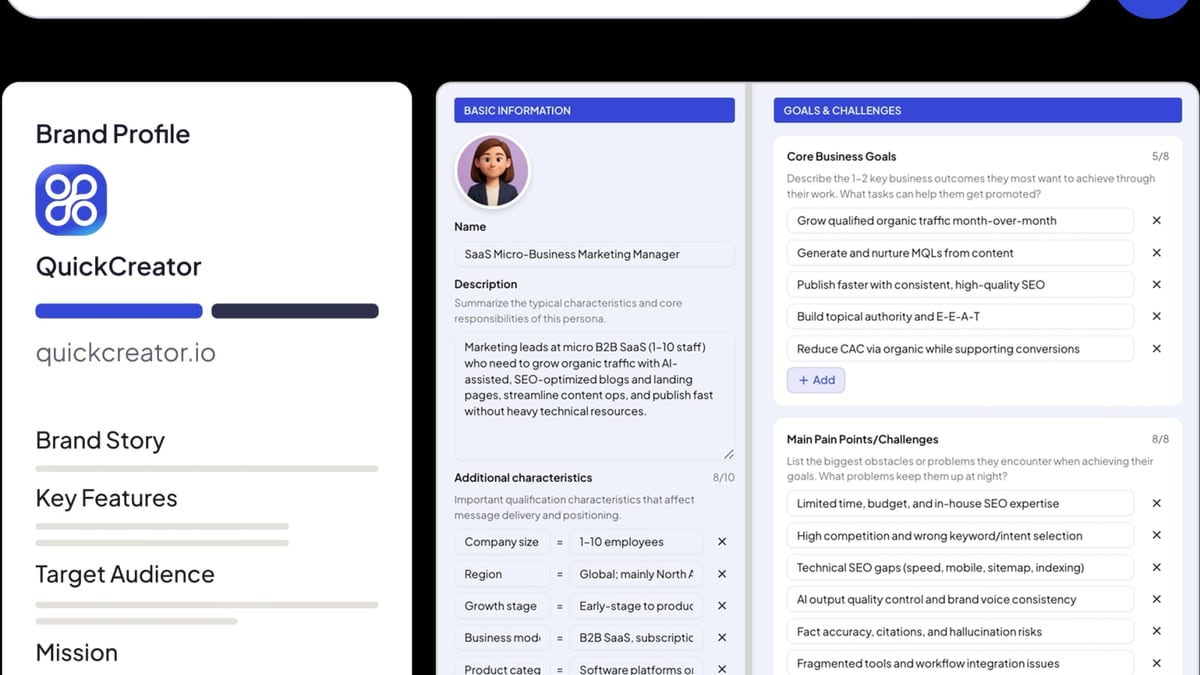
QuickCreator Review: Does Its AI Content Engine Pay Off? product interface and feature overview.
QuickCreator differentiates itself with six purpose-built AI agents that work sequentially:
- Brand Positioning Agent – scans your existing website to extract tone, style, vocabulary, and ideal customer profile. This is the foundation for brand-aligned output.
- Topic Strategy Agent – converts a seed keyword into a content roadmap. It suggests clusters and article angles, not just single keywords.
- Market Research Agent – analyzes reader intent from current SERPs and AI answer engines, ensuring the content addresses real questions.
- Content Writer Agent – drafts the article in your brand voice, embedding facts and structure optimized for Generative Engine Optimization (GEO).
- Content Optimization Agent – refines readability, semantic keyword usage, and clarity. It also tags buyer journey stages.
- Customer Research Agent – pulls in buyer intent signals so the content moves readers toward conversion, not just traffic.
The system ingests a private knowledge base you supply—proprietary data, case studies, positioning documents—and creates articles that can be cited by ChatGPT, Gemini, and Perplexity. That’s a meaningful advance for anyone worried about the shift toward AI-driven search.
Proof points: QuickCreator’s free writing tools (blog hook, title, idea generators) score 4.9/5 based on user ratings, and its blog hosts 151 educational articles on GEO and SEO—showing the team practices what it preaches.
How QuickCreator Works: From Setup to Published Article

QuickCreator Review: Does Its AI Content Engine Pay Off? product interface and feature overview.
Getting started requires minimal technical skill:
- Connect your site – the official WordPress plugin (source) binds your WordPress blog in a few clicks. A Shopify app is also available, though currently has no user reviews.
- Teach your brand – let the Brand Positioning Agent crawl your existing content or upload brand guidelines.
- Create a brief – give a topic or keyword; the agents then research intent, suggest a structure, and draft.
- Edit and optimize – use the built-in content editor to tweak the draft while the Optimization Agent scores every change against SEO and GEO best practices.
- Publish – push directly to WordPress with images, meta data, and structured data intact.
The workflow mirrors what a human editor would do, compressed into a single dashboard. No API knowledge is required, though the underlying API (api.quickcreator.io) can be used for custom integrations if you’re technically inclined.
QuickCreator Pricing: What You Get at Each Tier

QuickCreator Review: Does Its AI Content Engine Pay Off? product interface and feature overview.
QuickCreator uses a credit-based system across three paid plans (free tools are perpetual but limited to generators, not full articles).
| Plan | Monthly Cost | Credits | Blog Sites | Key Extras |
|---|---|---|---|---|
| Personal | $29 | 1,500 | 1 | Basic agents, 5 knowledge bases |
| Professional | $129 | 6,000 | 3 | Advanced agents, 20 knowledge bases |
| Plus | $249 | 12,000 | 5 | Full agent suite, priority support |
Credits refresh monthly on your subscription activation date, according to founder replies on AppSumo (source). The Personal plan fits a solo blog posting twice a week; heavy publishers will need Professional or Plus. Unlike some tools, there is no free trial tier for full articles, but the free generators let you test the AI’s core quality.
Strengths: Where QuickCreator Shines
- Truly brand-aware writing – by learning from your existing site, the articles sound like you, not generic AI.
- GEO-native content – built-in analysis of AI answer engines means your content is more likely to be cited in AI-generated summaries, which is critical for future-proofing.
- All-in-one for solopreneurs – replaces keyword research, briefing, drafting, and optimization tools with one workflow.
- Educational backbone – the 151-article blog and community resources (Facebook group, LinkedIn) help you improve your content strategy beyond the tool.
- WordPress integration – seamless publishing with proper metadata and image handling saves at least two plug-in steps.
Limitations: Gaps and User Feedback
Despite a solid concept, QuickCreator has real-world friction points:
- No batch creation – you generate articles one at a time. AppSumo users repeatedly asked for scheduled, bulk generation; the founder acknowledged scheduled posts are planned but expressed reluctance on batch quality (source). If you need 100 articles at once, this isn’t the tool.
- Shallow Shopify presence – the Shopify app has zero reviews as of now (source), suggesting either very low adoption or a lack of trust signals in that ecosystem.
- User account issues – at least one AppSumo lifetime buyer reported a deleted account without warning. While such incidents can happen with any SaaS, the lack of resolution on the Q&A board raises questions about support responsiveness.
- Credit limits can pinch – the Personal plan’s 1,500 credits may run out quickly if you also use the research agents intensively; each article consumes credits for research, writing, and optimization.
- Single-site focus on entry plan – managing two brand sites requires at least the Professional tier, which doubles the cost.
These limitations are typical of a platform still maturing; the core idea is strong, but operational polish is a work in progress.
QuickCreator vs. AgentBooks and Other Alternatives
QuickCreator excels for the solo blogger who wants an AI writing assistant that deeply internalizes brand voice. If your needs extend to autonomous multi-channel content production—automating not just blog posts but also social, email, and campaign assets—AgentBooks takes a broader approach. Its autonomous content engine integrates with enterprise DAMs like Bynder to keep brand assets consistent across every touchpoint (see how to use AgentBooks with Bynder). For a head-to-head comparison of autonomy, pricing, and GEO features, check our detailed AgentBooks vs QuickCreator vs contentmarketing.ai breakdown.
Other competitors like Machined and GravityWrite focus on different angles: Machined emphasizes SEO clustering with minimal human input; GravityWrite targets creative versatility. QuickCreator sits in the middle—guided agency that still requires manual oversight but produces brand-aligned, GEO-optimized articles.
Related reading
- Top 10 Digital Experience Platforms (2026) Ranked & Reviewed - See the 10 best digital experience platforms for 2026 based on analyst data, user reviews, and real‑world results. Compare Adobe, Optimizely, Sitecore, and more.
- AgentBooks vs Machined vs GravityWrite: Which Tool Fits? - Compare AgentBooks, Machined, and GravityWrite on autonomous content, SEO workflows, and creative versatility. See which AI platform fits your team.
- AgentBooks vs contentmarketing.ai: Which Platform is More Autonomous? - Compare AgentBooks vs contentmarketing.ai in 2026. See which AI content platform offers true autonomy, brand voice consistency, and agentic publishing vs agency-led tools.
Sources and further reading
- QuickCreator ‑ AI Blog Writer - Effortless blog writing with AI for better SEO | Shopify App Store - Generate high-quality, multilingual content quickly with built-in SEO optimization, verifiable data, and improved ranking and traffic.
- Quick Creator - Boost your blog visibility with AI - Take advantage of this AI SEO blogging platform to boost your blog’s visibility online. Discover the best deal for Quick Creator on AppSumo today.
FAQ
Does QuickCreator really improve SEO?
Yes. Its agents analyze SERP intent and AI answer patterns, then structure content with proper semantic keywords, headers, and structured data. Users report improved rankings because the content matches what both search engines and AI assistants look for.
Can I integrate QuickCreator with Shopify?
A Shopify app exists, but it has no user reviews yet. The integration appears functional for publishing blog posts to your Shopify store’s blog, but we recommend testing it on a staging store first.
Does QuickCreator support multilingual content?
Yes, the platform generates content in multiple languages natively, which is a strong point if you serve international audiences.
Is there a free plan?
There is no free plan that includes full article generation. You can use free tools like the blog title generator, but creating actual blog posts requires a paid subscription.
How does QuickCreator handle brand voice?
The Brand Positioning Agent crawls your existing website to learn tone, vocabulary, and ICP. You can also upload a style guide. Subsequent content consistently reflects that voice.
Can I schedule posts in advance?
Not yet. The founder confirmed that scheduled posting is on the roadmap, but as of now, you must publish manually.
Conclusion: Should You Use QuickCreator?
QuickCreator is a thoughtful, agentic AI writing platform for the solo content creator who values brand voice and wants content that’s ready for the generative search era. Its six-agent workflow mimics a small in-house content team, and the WordPress plugin makes publishing a breeze. The educational resources and GEO focus are genuine differentiators.
However, the lack of batch creation, sparse Shopify presence, and occasional user support hiccups mean it’s not yet a frictionless solution. If you publish multiple articles per week across several blogs, you may outgrow the Personal plan quickly, and competitors like AgentBooks offer more autonomous multi-channel capabilities.
Verdict: Try the free tools to gauge output quality. If you’re a solo founder or consultant who publishes 4–8 articles per month and needs brand-aligned, AI-search-optimized content, QuickCreator is a strong candidate. For teams or those needing fully automated content pipelines, explore the broader alternatives first.